
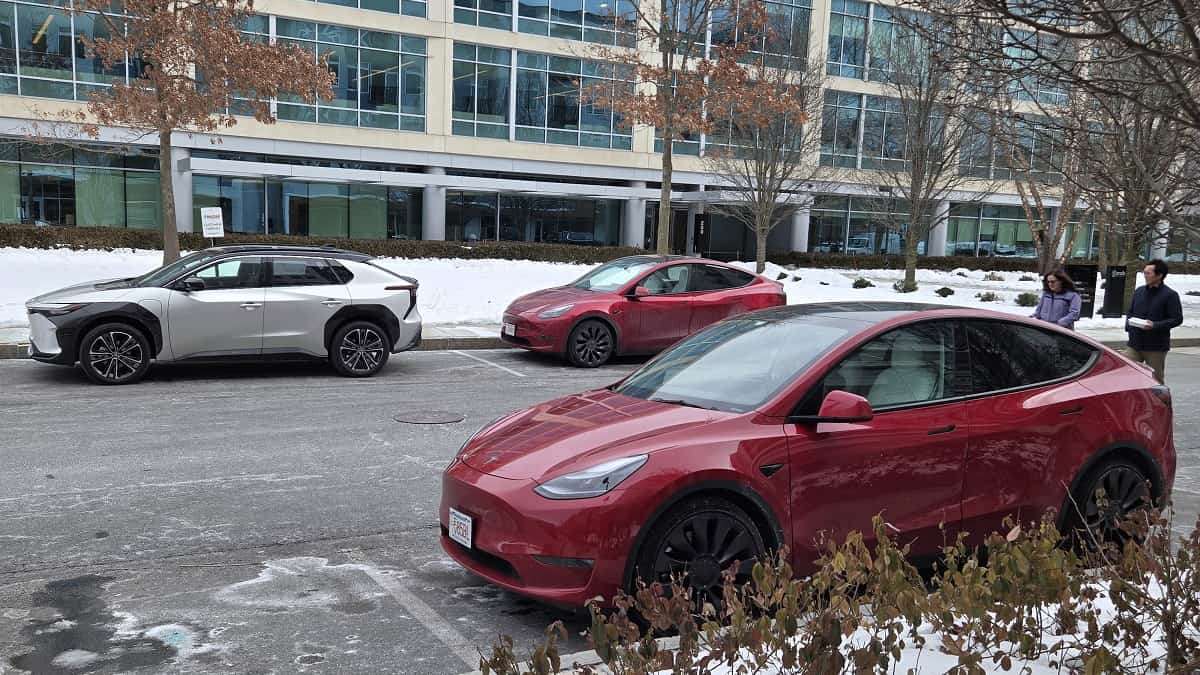

Now 30 years into the modern age of EVs and twelve winters since the Tesla Model S first began U.S. deliveries, many owners are still frustrated that their range is reduced significantly in winter. This is not an imaginary range reduction. When I studied EVs as an engineering student in the 1990s, my area of focus was battery thermal management. Even before EVs became mainstream, researchers were already aware that range reduction in winter would be a big challenge.
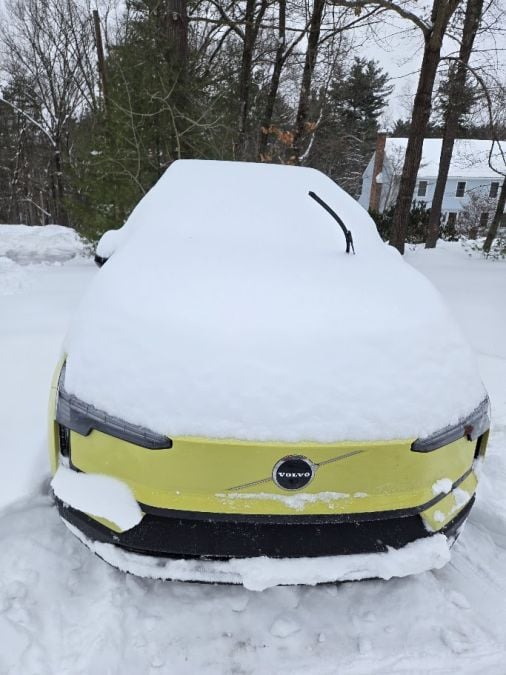
Every respectable automotive group that has tested EVs in winter has found that the range drops dramatically. Now that it’s a foregone conclusion that range is reduced, the only interesting part of the topics is how EV owners, Tesla owners in particular, think about the fact that EVs suffer such a drastic drop. Let’s hear first exactly what Tesla Model Y Juniper Owner H.Z. posted:
Winter range is brutal. I’m getting a 30-50% reduction this winter. Seriously, can’t drive out of town.
Our first step when we see an interesting post like this is to see if the person poster has a history with the group, and then to try to gauge if it is a real post. As evidence that it’s a real post, the person who placed the post is a Top Contributor in the group, and this is not the first post the person has made. Also, roughly half of the people who have commented on the post agree with H.Z.'s sentiment. We’re confident the topic is worth exploring, given that the post has earned well over 150 impressions.
Tesla Owners Who Think a 30-50% Range Reduction Is No Big Deal
Many of the members of this Tesla club read H.Z.’s post and responded along the lines of “So what’s the big deal?” They don’t dispute that the range is reduced. They accept that this is the case, but feel that if one lives the electric life, such inconveniences are minor and can be dealt with in an acceptable way. Here’s what some folks who expressed this view commented:
Tesla Owner CM - “I just drove 3 and a half hours at -40... hit the super charger and kept going another 8 with a few stops in between. It works great.”
JD - “Next time you'll do more research before purchase.”
JS - “We went on a 500-mile trip a couple of weeks ago, the temperature with wind chill was minus 47 below. Range dropped a lot at first, but after the pack warmed up, it only took about 10 percent more.”
JAS - “Move to Florida!! 75 degrees today!!”
JA - “All EVs suffer from battery loss in severe weather conditions. Extreme cold
Extreme hot.”
AA - “Being able to charge every day, it’s bearable, but it is quite more than I was expecting. Being a new EV owner, the rest of the year is gonna feel amazing lol.”
LL - “I've been driving one since 2018. Never had a problem.”
GO - “Yes. But is hitting a supercharger to top off that difficult? I had a 180-mile round trip. Just spent 15 minutes on the way back so I could safely get home. Had to use a bathroom, anyway. If I were young and/ or had no kids, the stop might be irritating."
The above group has come to accept and adapt to EVs with poor winter driving range. As some expressed, if a Supercharger is on your route, or if you have a home charger, topping up is a practical way to overcome this challenge. However, not all owners are thrilled with the idea that the range of their Tesla drops by hundreds of miles just because it is winter. Here are a few examples of folks with that viewpoint:
JG - “Winter is brutal for the range. I charge the car to 100%, 279 miles before starting the commute. My commute is 88 miles one way, and on my way home, I have to stop at a supercharger 60 miles from my house. My battery is between 2% and 4%. I never had range anxiety until this winter.”
CCW - “Here, about 100 miles from Chicago, I lose about 25-30%. Not enough to make me return to a gas auto, but I have to take the loss into account.”
JA - “This is why I keep a gas Lexus for my out-of-town distance drives even here in South Florida.”
AP - “Yes, almost half charge lost.”
Why Do EVs Lose Range In Cold Temps?
Electric vehicles and winter have a stormy relationship. When temperatures drop, EV range almost always declines. It’s not because manufacturers are hiding something. It’s the EPA that is hiding the winter numbers. It would have been simple for the EPA to publish a winter range estimate, but the group chose not to do so, sticking with the same basic policy that served it well for gas-powered and hybrid vehicles.
The lithium-ion batteries powering most modern EVs simply don’t perform well in cold weather. Inside every EV battery, chemical reactions move ions back and forth to store and release energy. Cold temperatures slow those reactions, which means the battery can’t deliver energy as efficiently. The result is reduced real-world capacity and less energy available for driving in colder temperatures. Even when the battery is “full,” less of that energy is actually accessible until the pack warms up.
Winter driving adds energy demands that gas cars barely notice. Cabin heat is the big one. Unlike most gasoline-powered vehicles, which use waste heat from the engine, EVs generate or move heat using electricity. Older or less-efficient EVs rely on resistance heaters, which can consume a lot of energy. It’s like driving around with a space heater running continuously. Heat pumps are better and can move heat more effectively than producing it, but they also use energy, and they are less efficient as temperatures go below single digits.
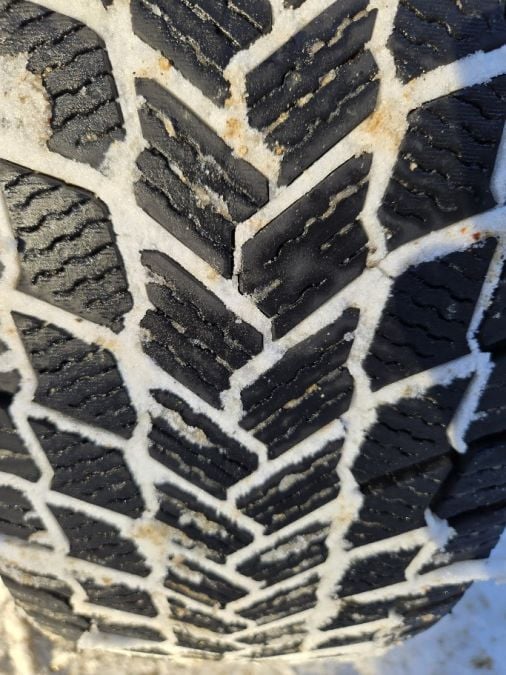
Colder air plays a role. Denser winter air increases aerodynamic drag, particularly at highway speeds. Snow-covered or slushy roads can increase drag, forcing the motors to work harder to maintain speed.
The interaction of winter and tires is a big contributor to range loss. Very few vehicle owners adjust the pressure in their tires as temperatures drop. Far fewer adjust the tires’ pressure yet again as temperatures go even lower. A few PSI difference in tire pressure can decrease range quite a bit. For owners who swap to winter tires, the range is often reduced dramatically. EVs with tires optimized for range simply cannot maintain their best range capability when a tire with much higher rolling resistance and added mass is in the mix.
Managing EV Range Reduction In Winter
There are countermeasures you can use to help deal with winter EV range drops. Here is a quick punch list:
1) Don't change tires and expect the same results as with the OEM tires. Winter tires sap range.
2) Ensure your tire pressure is always 1 PSI higher than the manufacturer suggests. Check pressure when temperatures change by 10F or more.
3) Modify your route. Google Maps will tell you which route is the most energy-efficient option. Avoiding the highway when practical will help keep the range up.
4) Use cabin heating wisely. Heated seats and steering wheels help make you comfortable, even if the cabin air is a bit chilly. It’s more efficient to use these than your car’s HVAC system. Layer up.
5) Ensure you ALWAYS precondition your battery and cabin before setting out if you have the luxury of a home charger.
6) Slow your roll. Assertive driving always uses more energy than a “chill” ride. Use your Eco mode and mellow out.
What’s your take on EV range reduction? Is it a problem for owners, or just a small bump in the road as EVs continue their evolution? Tell us in the comments below.
John Goreham is the Vice President of the New England Motor Press Association and an expert vehicle tester. John completed an engineering program with a focus on electric vehicles, followed by two decades of work in high-tech, biopharma, and the automotive supply chain before becoming a news contributor. He is a member of the Society of Automotive Engineers (SAE int). In addition to his fourteen years of work at Torque News, John has published thousands of articles and reviews at American news outlets. He is known for offering unfiltered opinions on vehicle topics. You can connect with John on LinkedIn and follow his work on his personal X channel or on our X channel. John employs grammar and punctuation software when proofreading, and he sometimes uses image generation tools.
Images by John Goreham
Set Torque News as Preferred Source on Google
Follow us today...



Comments
Kerosene burners for heat…
Permalink
Kerosene burners for heat.
Winter tires are worth range loss.
Original Elon cult stfu. (publish 3rd line or not, your choice)
We have two EVs a 21 mustang…
Permalink
We have two EVs a 21 mustang electric GT performance and a 23 model y all wheel drive long range. We had a brutal winner here in Pennsylvania and 25 days of single and low temperatures with EVs. We precondition before we leave and range loss is usually around 20%. Coming home after the car sits for 8 hours we lose 30%. This is very unusual with the weather being so cold. Daily driving of 30 mi being retired with a car that gets 260 mi and 305 mi range is a no-brainer. At 80% the GT gets 180 and the Tesla gets 238 plenty for driving always charging to 80% every couple days. We still have our 2006 Jeep Commander 7-seater 53,000 mi always been our third car and it's not gone anywhere. Fill ups s on the GT is $6 and on the Tesla $4 and on the Jeep $65.
Thanks for the very detailed…
Permalink
In reply to We have two EVs a 21 mustang… by Automotive (not verified)
Thanks for the very detailed overview!