
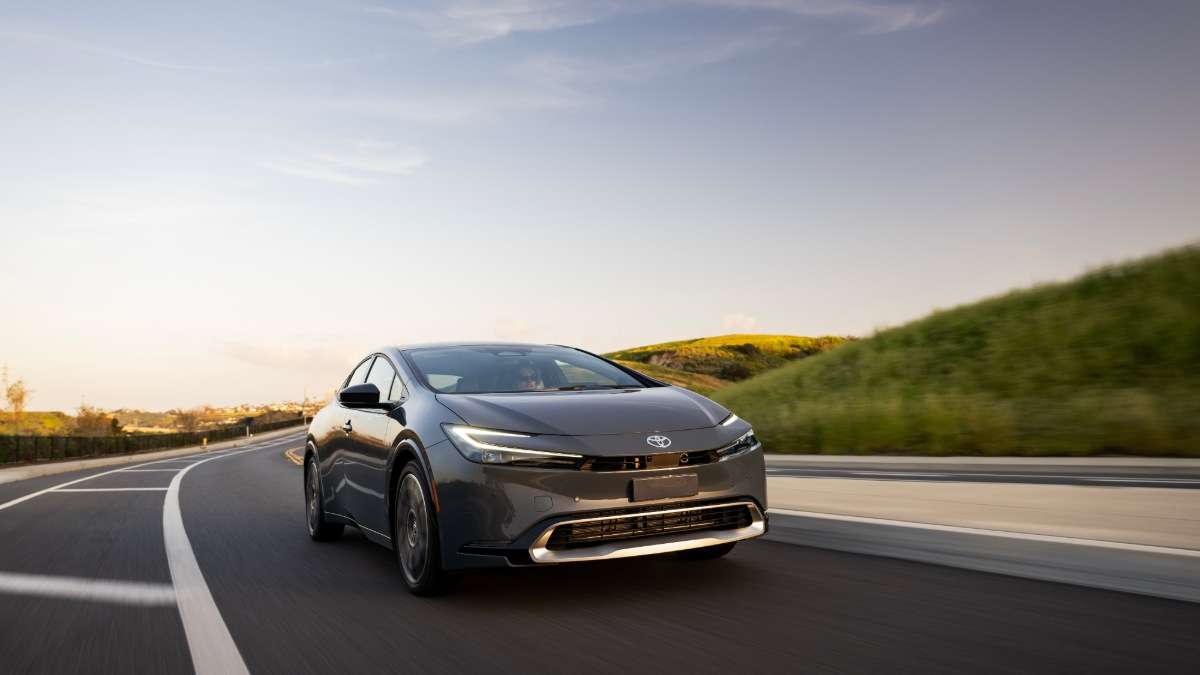

The promise of self-sustaining automotive technology often outpaces its real-world application, a reality keenly felt by some owners of the latest Toyota Prius.
For those investing in advanced features like the optional solar charging roof, the expectation is a tangible benefit, not merely a novelty.
Yet, recent owner experiences suggest that this particular innovation might be falling short of practical utility, prompting questions about its true value proposition beyond the initial intrigue.
A recent post in the "Toyota Prius 5th Gen Club" highlighted these concerns directly:
"Hello everyone! My car is a 2026 Plug-in XSE Premium with 5000 miles. I've recently been wondering if any new owners feel the "solar charging roof" is completely useless, like I do.
There's nothing wrong with spending $600 on something fun and intriguing, and I don't regret it. But honestly, I don't think it's practically useless.
For my next car, I probably won't spend that money again; I'll go for "AWD." Although I know Toyota's so-called all-wheel drive has minimal effect, it may help me get out of a dangerous situation someday.
Advertising
Oh, I forgot to ask a question. Does the solar panel only start working after the car is started? Not 24/7 as I imagined. Except at night, of course.
I discovered that the solar panel doesn't collect energy when the sun isn't shining directly on the roof. I know that sounds silly."
The owner, identified as GR CH, expressed a common sentiment among early adopters: the allure of innovative tech versus its actual performance. Spending $600 on a feature that delivers marginal returns, or operates under unexpected constraints, can quickly shift buyer priorities. This particular owner's immediate pivot to prioritizing all-wheel drive, despite acknowledging its "minimal effect" in Toyota's current hybrid applications, reveals a fundamental desire for tangible, safety-oriented benefits over perceived technological frills. It's a clear signal that for many consumers, practical utility still trumps novelty.
Toyota Prius Prime: Solar Roof Performance and Real-World Utility
- The optional solar charging roof on the Toyota Prius Prime is designed to provide supplemental power to the vehicle's battery systems. This feature aims to extend electric-only driving range or maintain auxiliary battery charge, depending on the model year and specific implementation. Its effectiveness is highly dependent on environmental factors like direct sunlight exposure and duration.
- Owners report varying levels of satisfaction, with some finding it "useless" for significant charging while others appreciate its contribution to battery maintenance during extended parking. The system's output is generally low, typically measured in watts, and is not intended to fully recharge the high-voltage traction battery from a depleted state.
- The solar panel operates whenever sufficient daylight is available, regardless of whether the vehicle's ignition is on or off, provided it is not in shade. However, its efficiency is significantly reduced in indirect sunlight or overcast conditions, leading to diminished power generation. This operational characteristic often leads to confusion among owners expecting continuous, high-output charging.
- For the 2026 Prius Prime, the solar roof option typically adds around $600 to the vehicle's purchase price. This cost-to-benefit ratio is a primary point of contention for owners who perceive the practical energy contribution as minimal compared to the investment. Many drivers prioritize other optional features, such as all-wheel drive, over the solar roof for tangible utility.
The initial query about the solar panel's operational window, specifically, whether it only activates with the car running, reveals a significant gap in consumer understanding. Modern automotive systems, especially those involving energy harvesting in the Prius, are often designed for continuous operation when conditions permit, regardless of ignition status.
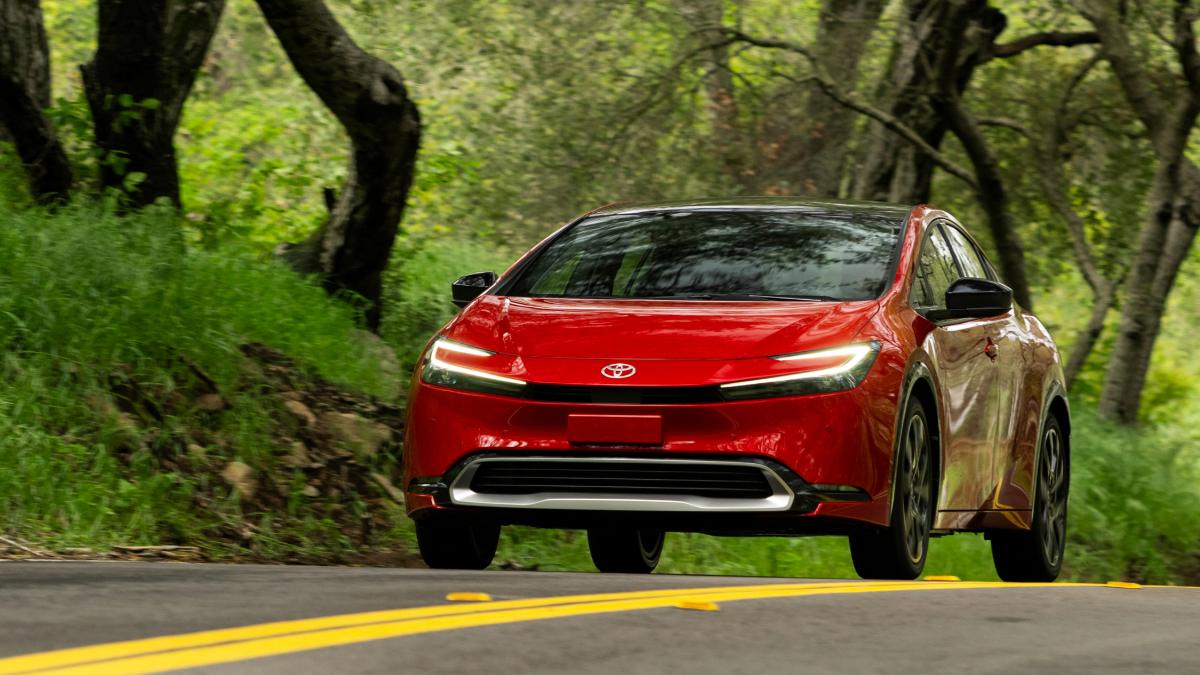
The assumption that the panel would function "24/7" (excluding night, naturally) is a reasonable one for a feature marketed as a charging solution. When reality diverges from such expectations, the feature's perceived value inevitably plummets.
One commenter, Ru Fio, offered a nuanced perspective, stating, "It’s pretty useless, but when I took a 3-week vacation internationally, I came back with it almost fully charged, parking at the top of a parking structure. So I guess you can say ' at least it’s functional'." This observation, while acknowledging the general sentiment of uselessness, provides a specific, albeit niche, scenario where the solar roof demonstrably contributed to battery maintenance. It shows that "useless" might be too strong a word, but "highly situational" is certainly appropriate.
This specific anecdote from Ru Fio suggests that while the solar roof might not actively charge the main traction battery in a meaningful way for daily driving, it could serve a valuable role in maintaining the 12V auxiliary battery or mitigating parasitic drain during extended parking. For a vehicle left dormant for weeks, preventing a dead 12V battery is a genuine convenience, saving owners from jump-starts or service calls. However, marketing a feature that primarily serves this limited, albeit important, function as a "charging roof" might set unrealistic expectations for its broader energy contribution.
Another commenter, Ed Bonny, directly addressed the operational question: "Mine charges whenever in daylight, with or without full sun. It does not charge in the shade. I consider it a small contributor to charging my vehicle, which is keeping me out of gas stations (I have yet to stop at one since I bought mine)." This comment clarifies that the panel does indeed function independently of the car's ignition, dispelling GR CH's initial concern. It also reinforces the idea that direct sunlight is a prerequisite, which, while obvious for solar technology, can still be a source of confusion for consumers expecting performance even under cloudy skies.
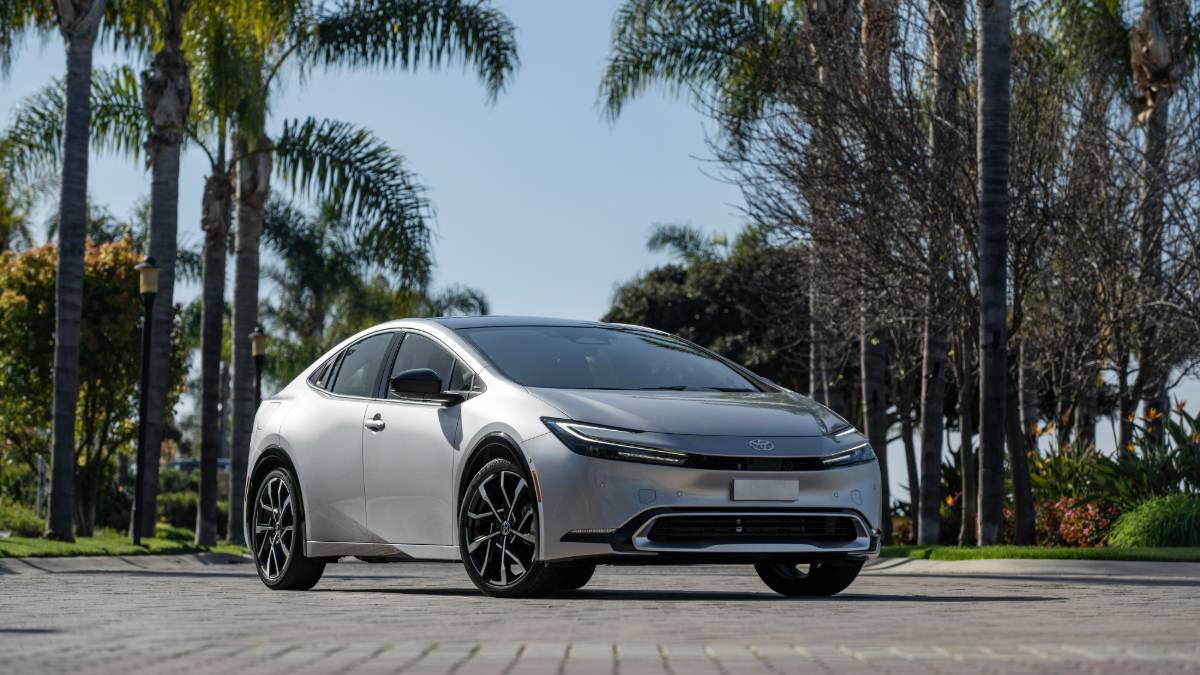
Ed Bonny's experience, particularly the claim of avoiding gas stations entirely, presents a stark contrast to the original poster's frustration. This could indicate significant differences in driving habits, access to charging infrastructure, or simply a more optimistic interpretation of the solar roof's contribution.
While the solar roof alone cannot power a modern PHEV for daily commutes, its "small contributor" status might be enough to top off the battery just enough to extend electric-only range for specific users, or perhaps more realistically, maintain the 12V battery and reduce the frequency of external charging for the main battery. The discrepancy in owner perception here suggests that Toyota Prius needs to be far more transparent about the exact capabilities and limitations of this optional feature to manage customer expectations effectively.
Image Sources: Toyota Media Center
Noah Washington is an automotive journalist based in Atlanta, Georgia. He enjoys covering the latest news in the automotive industry and conducting reviews on the latest cars. He has been in the automotive industry since 15 years old and has been featured in prominent automotive news sites. You can reach him on X and LinkedIn for tips and to follow his automotive coverage.
Set Torque News as Preferred Source on Google
Follow us today...







Comments
You mean a 200W panel won't…
Permalink
You mean a 200W panel won't fully power the car ? Guy should have done some basic math before spending $600. Even if it generated 2kwh on a bright summer day that's like 20-25 cents of power, maybe 0 to 0.2kwh on a dark rainy day.
Probably looking at a 10 year payback for that $600 depending on where he lives and how much sun the car gets. And can't park in a garage or carport or under trees.