
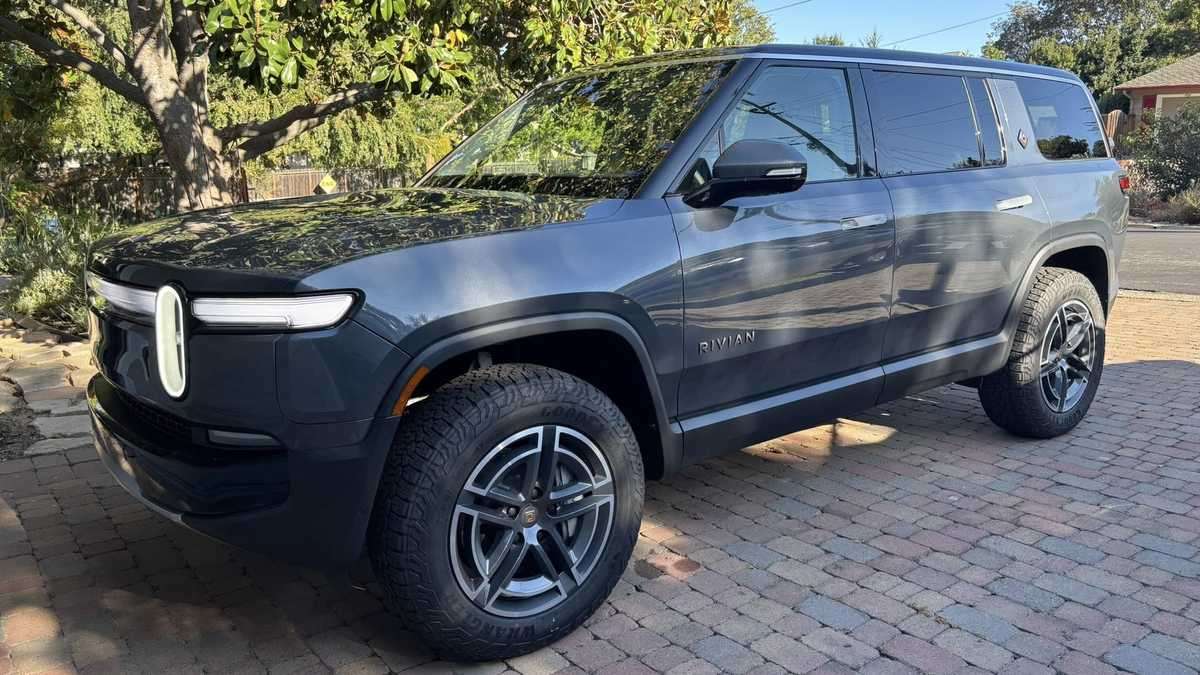

Every few years, the weather reminds us that modern life is held together by thin wires and optimistic assumptions.
Power goes out, plans wobble, and the old virtues of preparation and adaptability reassert themselves.
In northern climates, especially, winter storms turn self-reliance from a lifestyle choice into a short-term necessity. Increasingly, those moments are revealing something unexpected about electric vehicles, not as symbols of progress or politics, but as tools that can quietly step in when the grid steps out.
“The Prime ‘Ribian’ Christmas Dinner:
We went four days without power over Christmas. The big storms up here are always about self-reliance to begin with, but this year, I had nine people expecting Christmas dinner, too.
The oven is LP-fueled but still requires 120V. So I daisy-chained every extension cord I had and plugged it into the R1S to cook the roast. It came out medium rare with a perfect crust.
‘Saves Christmas dinner’ is now on the feature list with bonus points for providing juice to the coffee pot and the dishwasher.”
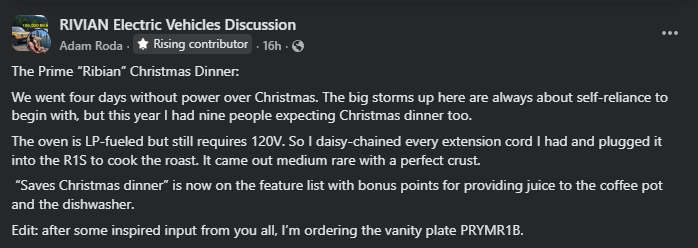
That reality came into focus over Christmas when Rivian owner Adam Roda shared a story that felt both improbably modern and deeply traditional. After losing grid power for four days during a major storm, Roda still had nine people expecting Christmas dinner. His oven ran on LP gas but required 120 volts to function, so he did what would have sounded absurd a decade ago.
He ran extension cords from his Rivian R1S and cooked the roast using the vehicle as the power source. The result was a medium-rare roast with a proper crust, plus enough electricity left over to run a coffee pot and dishwasher. “Saves Christmas dinner,” he wrote, has now earned a permanent spot on the vehicle’s feature list.
Rivian R1S: Suspension, Traction, and Minimalist Controls
- The R1S packages three rows of seating within a relatively compact electric SUV footprint, prioritizing interior flexibility while maintaining upright proportions.
- Its electric all-wheel-drive system delivers consistent traction and controlled power distribution, contributing to predictable handling on both paved and unpaved surfaces.
- Interior design blends minimalism with durable materials, relying heavily on touch-based controls while retaining a few physical inputs for frequently used functions.
- Suspension tuning balances comfort and capability, providing a stable ride at speed while transmitting some firmness over rough or broken pavement.
Strip away the novelty, and what remains is a simple point. Vehicles have always been about enabling life beyond the house. What changes here is the direction of the relationship. Instead of the home supporting the vehicle, the vehicle supports the home, at least temporarily. The Rivian R1S has a battery capacity that can reach roughly 140 kWh, depending on configuration. It is stored energy on wheels, ready to be used when circumstances demand it.
Naturally, the questions followed. How much range did the vehicle lose sitting unplugged in the cold for four days? How much energy do an oven, coffee maker, and dishwasher actually consume? One commenter asked directly, curious about the real cost in miles. Another pushed back, suggesting the more relevant question was whether the vehicle still had enough charge afterward to reach a fast charger. The exchange captured a broader shift in thinking, from treating range as a fragile number to treating stored energy as a flexible resource.

There was also a technical undercurrent to the discussion. Another Rivian owner pointed out that while the R1S battery is massive, its 120-volt output is limited to around 1,800 watts. That is enough to run household essentials carefully, but not to replicate a full home backup system. Comparisons to the Ford F-150 Lightning were inevitable, as that truck offers higher discharge capability. Still, even within current constraints, owners described using Rivians to slow the drawdown of home battery systems or bridge gaps during extended outages.
What makes this story compelling is not brand rivalry or specification debates, but the way it reframes value. A vehicle purchase justified on safety, capability, and efficiency quietly delivered resilience when it mattered. The fact that it powered a holiday meal is symbolic, but the underlying function is practical. In a world of increasingly frequent weather disruptions, the ability to provide modest, reliable power without noise or fuel runs deeper than novelty.
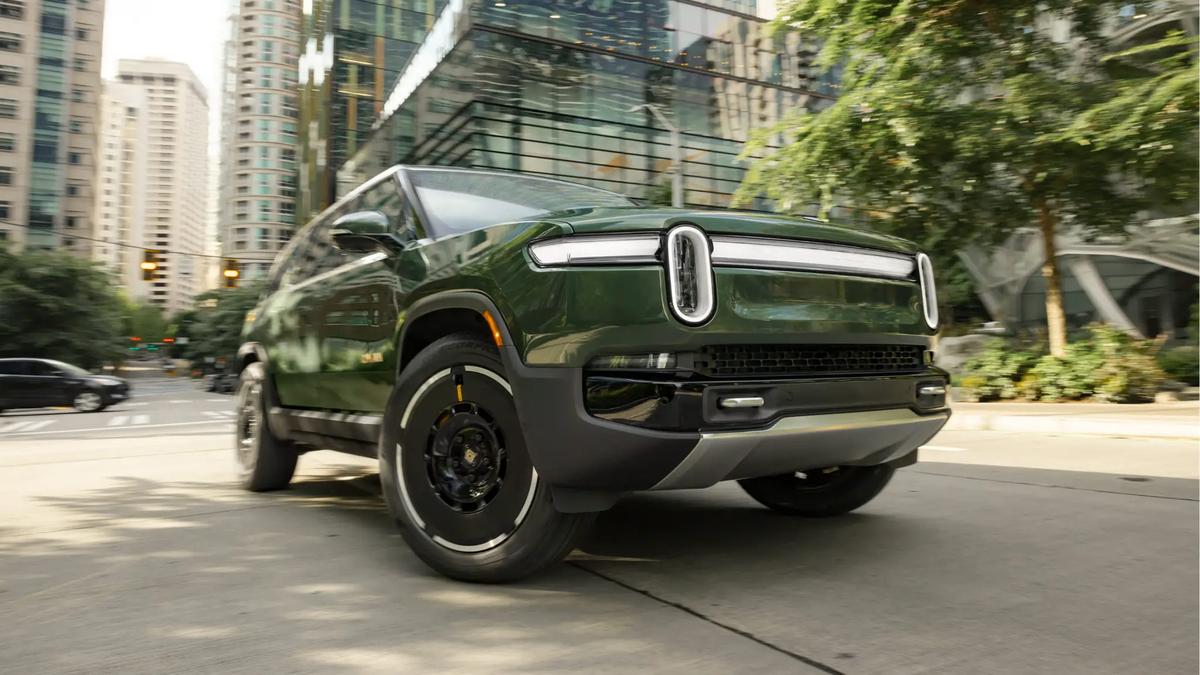
It also highlights how expectations are evolving faster than product planners might have anticipated. Owners are already asking for higher output, faster discharge, and more seamless integration with home systems. They are not doing so out of dissatisfaction, but because the use case has proven itself. Once a feature saves Christmas dinner, it stops being a gimmick and starts becoming part of the ownership equation.
The Rivian did not conquer the storm or replace the grid. It simply filled the gap with calm competence, which may be the highest compliment a machine can earn. Somewhere between extension cords, careful load management, and a perfectly cooked roast lies a glimpse of how personal transportation is changing. Not louder, flashier, or more dramatic, but more useful when conditions turn difficult. Sometimes progress looks like a quiet SUV in the driveway, humming steadily while dinner goes on as planned.
Image Sources: Rivian Media Center
Noah Washington is an automotive journalist based in Atlanta, Georgia. He enjoys covering the latest news in the automotive industry and conducting reviews on the latest cars. He has been in the automotive industry since 15 years old and has been featured in prominent automotive news sites. You can reach him on X and LinkedIn for tips and to follow his automotive coverage.
Set Torque News as Preferred Source on Google
Follow us today...


Comments
I have a 900-dollar…
Permalink
I have a 900-dollar generator that does the exact same thing.