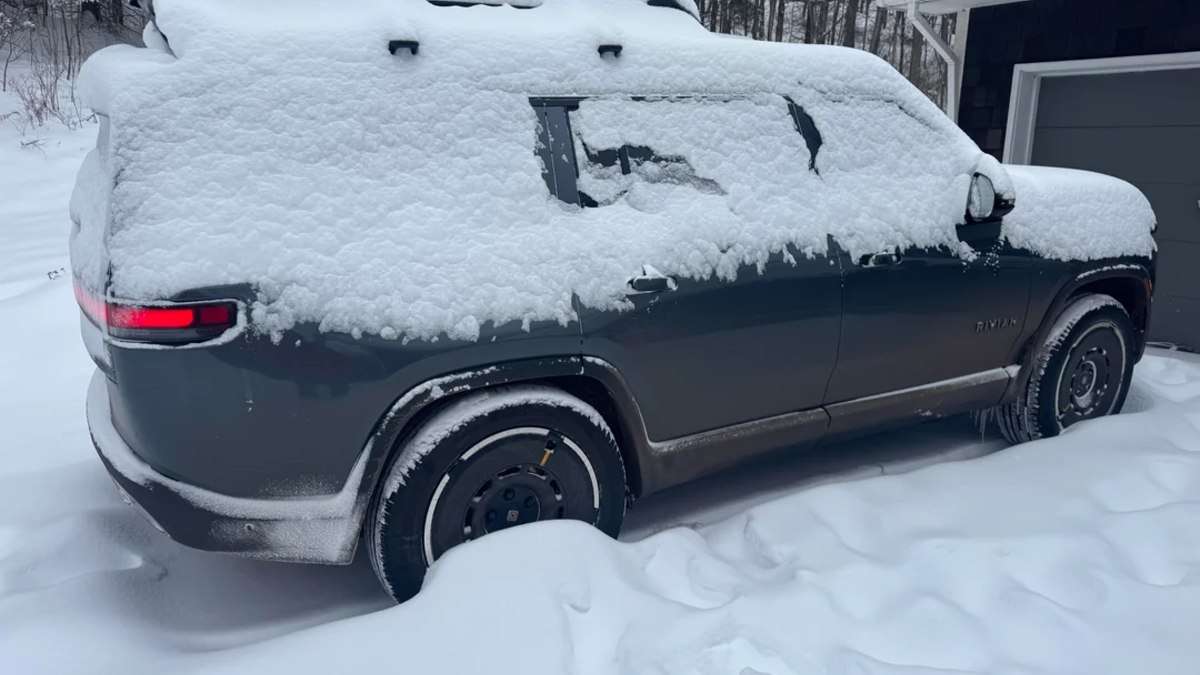

A Christmas blizzard is not the place to learn a vehicle’s limits, yet that is exactly where one Rivian R1S owner found himself, climbing through the mountains with family and ski gear as visibility collapsed into a white wall.
The remarkable part of his account, posted to r/Rivian, is not that things went sideways for a moment, but that after a genuine scare, he still rated the experience a confident 9.2 out of 10. That kind of score, earned under pressure, carries weight.
The owner describes the setup plainly. An R1S loaded with people and winter gear, running on the factory 22-inch range tires, heading home on Christmas Day in what he calls an “absolute white-out blizzard.” Conditions were severe enough that even identifying braking points became guesswork. At one point, on a mountain pass, the SUV slid. It was the kind of moment that makes your stomach drop, and your grip tighten, the sort of thing that lingers long after the road straightens.
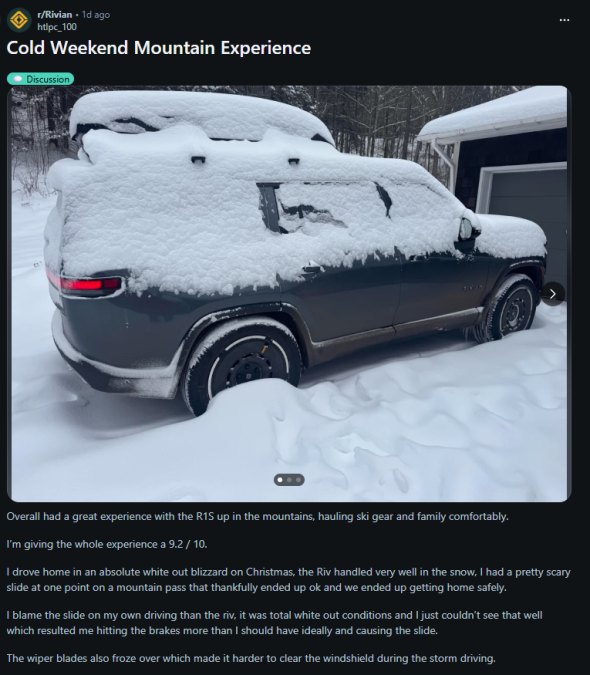
“Overall, I had a great experience with the R1S up in the mountains, hauling ski gear and family comfortably.
I’m giving the whole experience a 9.2 / 10.
I drove home in an absolute white-out blizzard on Christmas, the Riv handled very well in the snow, I had a pretty scary slide at one point on a mountain pass that thankfully ended up ok and we ended up getting home safely.
I blame the slide on my own driving rather than the road; it was total white-out conditions, and I just couldn’t see that well, which resulted in my hitting the brakes more than I should have, ideally, and causing the slide.
The wiper blades also froze over, which made it harder to clear the windshield during the stormy driving.
Advertising
I’m on the 22” range tires; maybe I should get some snows for up in the mountains.
Any rescue gear you guys carry for the winter? Was thinking about some rescue boards to carry on the roof.
Thanks and HNY y'all.”
What stands out immediately is the owner’s self-assessment. He does not blame the Rivian. He points to his own inputs, braking harder than ideal because he simply could not see. That distinction matters. In poor conditions, a heavy electric SUV will obey physics before marketing, and the R1S is not a lightweight machine. The slide ended without incident, and the family made it home safely, which framed the entire experience as a warning rather than a failure.
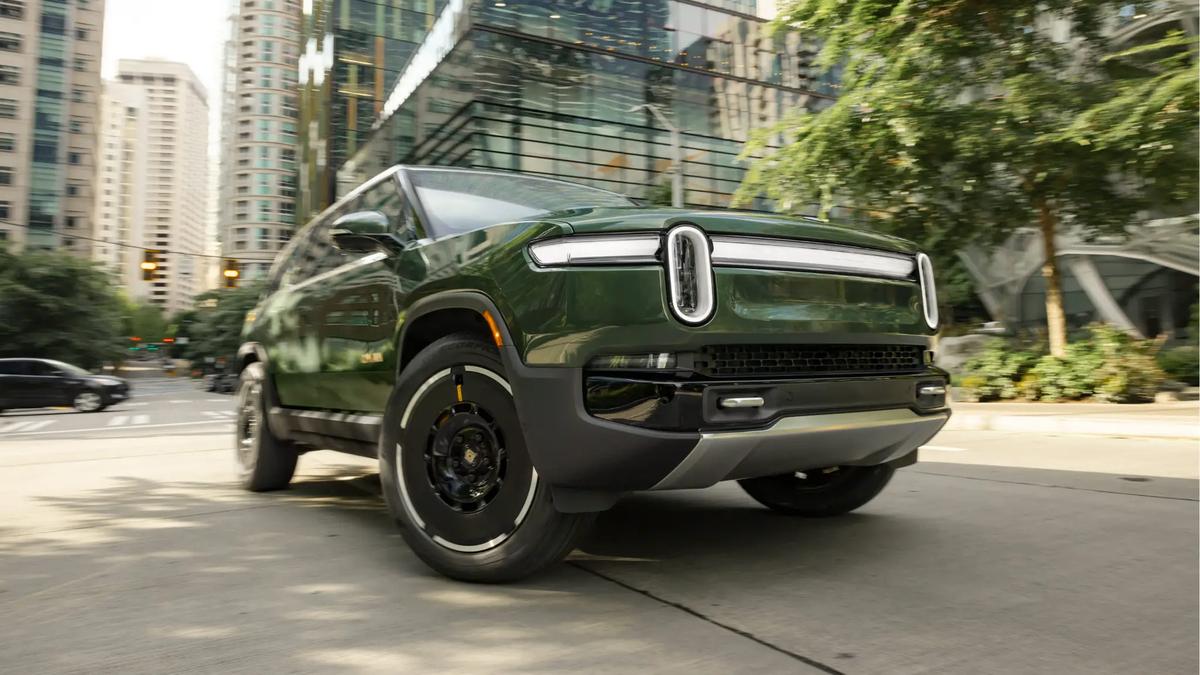
Rivian R1S: Electric Three Row SUV
- The R1S packages three rows within a relatively compact footprint, emphasizing interior flexibility over traditional full-size SUV proportions.
- Electric all-wheel drive delivers consistent traction without mechanical linkages, supporting both paved-road stability and off-road use.
- Interior materials balance durability with a restrained aesthetic, pairing soft-touch surfaces with simple control layouts.
- Suspension tuning manages the vehicle’s weight effectively, offering a composed ride while transmitting firmness over uneven pavement.
Beyond the slide, the details feel familiar to anyone who has driven in true winter weather. Wiper blades froze, reducing visibility at the worst possible time. Regenerative braking, while generally a strength, becomes something drivers must consciously manage when surfaces turn slick. These are not Rivian-specific flaws so much as reminders that modern EVs demand a slightly different mental checklist when conditions deteriorate.
The community response was swift and consistent. Snow tires, snow tires, snow tires. Multiple R1S owners, including those who live in Tahoe and regularly drive through mountain storms, emphasized that the factory 22-inch all-season or range-focused tires are simply not meant for sustained winter mountain duty. With proper winter rubber, they say, the R1S transforms from competent to dominant, still heavy, but predictable and planted.
Advice quickly expanded beyond tires into winter recovery gear. Experienced owners suggested skipping traction boards, which they argued are more aesthetic than practical, and instead carrying a collapsible shovel, a dynamic recovery rope, soft shackles, gloves, and a proper hitch-mounted recovery point. The tone was pragmatic. In the mountains, someone will usually help, but being prepared turns a bad stop into a brief delay instead of a long night.
There were also reminders about features hiding in plain sight. Heated wipers tied to the defrost system, snow mode to soften regen behavior, and the discipline to avoid braking unless absolutely necessary. These are not intuitive habits for every driver, especially those newer to EVs, but they make a meaningful difference when traction margins disappear.
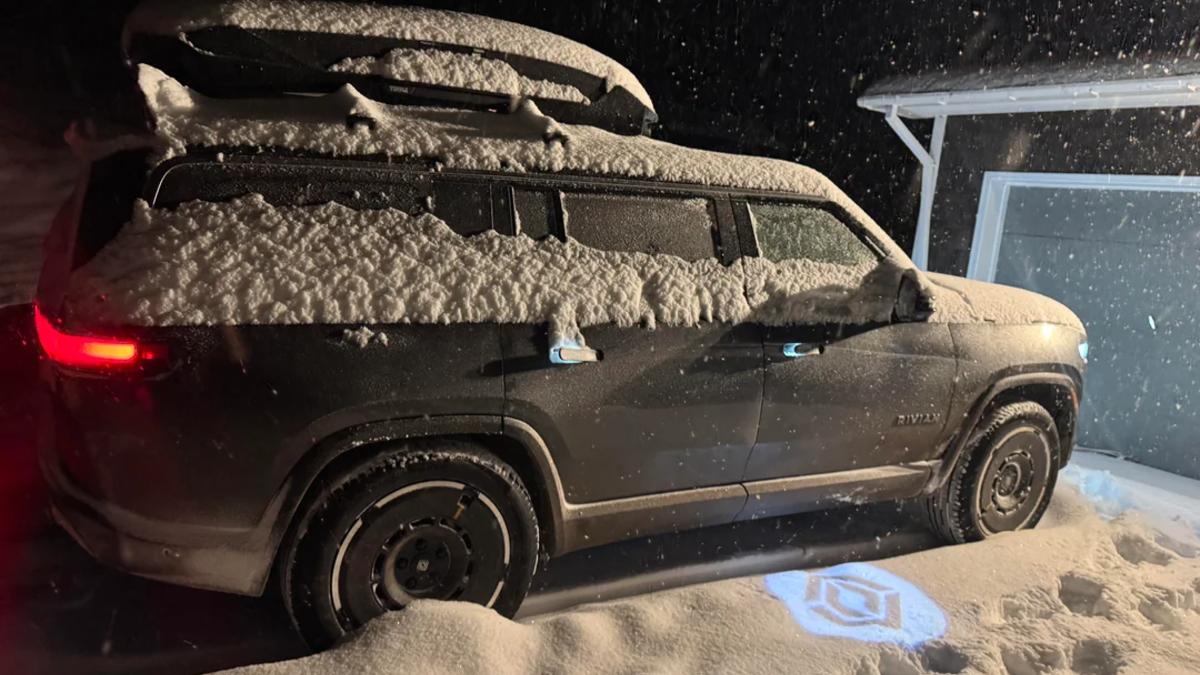
What makes this account compelling is its balance. The owner does not gloss over the scare, nor does he dramatize it into an indictment of the vehicle. He acknowledges the limits of his setup and his decisions, while still praising the R1S for stability, comfort, and overall competence under conditions that would challenge any vehicle. That is how real trust is built, not by perfection, but by transparency.
The story reads less like a warning and more like a field report. The Rivian R1S proved capable, forgiving, and confidence-inspiring even when things went wrong. With better tires and a bit more preparation, the owner suggests it could have been nearly flawless.
Image Sources: Rivian Media Center
Noah Washington is an automotive journalist based in Atlanta, Georgia. He enjoys covering the latest news in the automotive industry and conducting reviews on the latest cars. He has been in the automotive industry since 15 years old and has been featured in prominent automotive news sites. You can reach him on X and LinkedIn for tips and to follow his automotive coverage.
Set Torque News as Preferred Source on Google
Follow us today...