
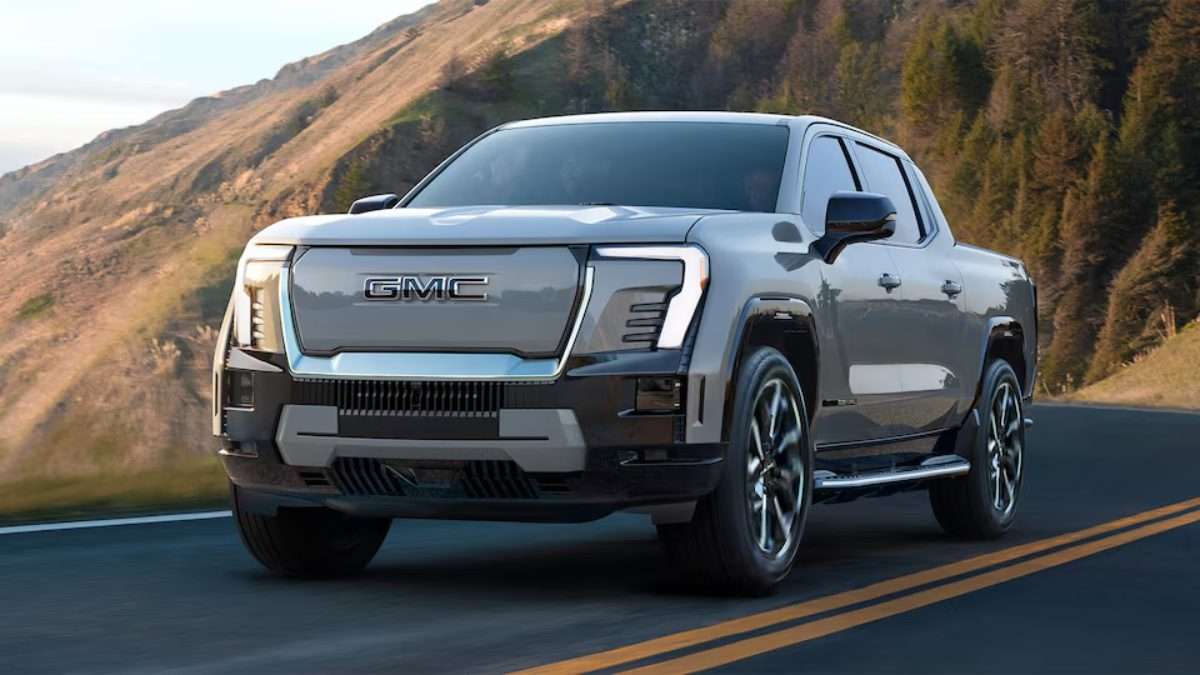

Electric vehicles represent automotive culture’s most profound shift since we traded horse-drawn carriages for internal combustion, and like any transformation, it arrives with lessons best learned firsthand. For countless EV newcomers, that first electric-powered road trip is a baptism by battery, a venture into unfamiliar waters marked by electron anxiety and charging-station roulette. The transition isn't merely technological; it's psychological, demanding a complete rewiring of the driver's relationship with the vehicle, range, and infrastructure.
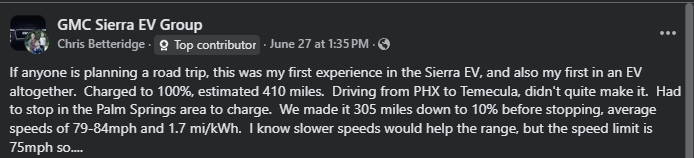
Take Chris Betteridge, a Sierra EV owner whose tale posted in the GMC Sierra EV Facebook group captured the reality of modern electric travel perfectly:
“If anyone is planning a road trip, this was my first experience in the Sierra EV, and also my first in an EV altogether. Charged to 100%, estimated 410 miles. Driving from PHX to Temecula didn't quite make it. Had to stop in the Palm Springs area to charge. We made it 305 miles down to 10% before stopping, with average speeds of 79-84mph and 1.7 mi/kWh. I know slower speeds would help the range, but the speed limit is 75mph so...
What I learned...unless I have to, I'll avoid Tesla charging stations. I have the adapter and it worked just fine, and no lines. They have many more chargers per location than other options, but their 250kW speeds got us around 85kW. We had to charge for about 40 minutes. to make it the rest of the way, and then still didn't make it because we ran into major headwinds that took about 20% of our charge in just a few miles. Also, a lesson learned: wind matters. Stopped at another Tesla charger and got about the same speeds.
Once in Temecula, I found an Electrify America (EA) charger with 350kW speeds. Was able to charge from 30% to 80% in about 36 minutes. Started at 242kW (there were 4 chargers and I was the only one there). Dropped to about 225kW for the most part until around 50% charge, then someone else plugged in and went down to around 117kW to finish.
If you can, find a 350kW charger, it's worth it. This EA had 4 different rates for different times of the day, and an 85% max. limit. We used several other 350kW EAs on the trip home and most were giving us around 125kW with all chargers full. We had to wait in line at every other one we stopped at, for about 20 minutes. before charging for 20-30min. Still think that was way faster than a 250kW Tesla (or other) station. Turn your climate off, if you aren't in the desert like us, it helps the speed.
Will I road trip in the EV again? Probably not, it stresses me out. If I see less than 50% charge, I feel like I need to find a station. If you have extra time and don't mind waiting in line, and you plan your trip ahead of time, it's not all that bad. If stations are open and you don't have to wait in line, I'd probably do it again, but they need more chargers at the EVs and other non-Tesla stations before cross-country travel in EVs becomes more feasible. If each station we stopped at had double the number of chargers, we would never have had to wait. We were 3rd in line at one, 1st in line at another, and didn't charge at one because there were only 3/4 operational chargers and 2 others in line, so we went to the next one.
I look forward to more 350kW stations and more chargers at each station. I'm surprised more gas stations haven't added at least a single charger. We only saw 1-2 gas stations with chargers on the whole trip. Hopefully, this helps someone else who is planning their first EV road trip!
Advertising
Oh yeah...and at $0.56/kWh...it costs almost as much as a tank of gas! Back to charging at home...”
Electric vehicle range can drop drastically under real-world conditions. Aerodynamic drag grows exponentially at high speed, turning estimated mileage figures into ambitious dreams at 80 miles per hour. The rude awakening that strong headwinds drained an additional 20% of range reveals how EV drivers are required to become not just navigators but amateur meteorologists, closely monitoring wind patterns alongside charge levels.
GMC Sierra EV 305-Mile Road Trip Review: Real-World Range & Charger Speed Comparison
- Exceptionally solid and refined: Owners and reviewers note that the Sierra EV feels “on par with other premium trucks,” with robust construction and a premium cabin fit and finish
- It tows up to 10,500 lb when paired with the Extended Range battery (10,000 lb with Max Range), rivaling many gas-powered full-size pickups
- Standard ProGrade Trailering and dual-motor e4WD provide stable, confident towing performance and excellent traction control
- Expect towing to reduce driving range significantly (typically around 30–50%), although some users report it drops comparably to diesel trucks, discussing it remains critical for heavy towing owners
Another crucial learning from Betteridge's account highlights disparities between charging station brands. The use of Tesla’s expansive and popular 250kW Supercharger network, via an adapter, yielded disappointing 85kW speeds, while Electrify America’s newer 350kW stations provided charging at a much brisker 225–242kW rate.
Such disparities, widely noted across EV forums and echoed by other owners' experiences, suggest that charging speed can hinge critically on the specific charger and network utilized, a point new EV owners often discover only after frustration and delays.
GMC Sierra EV Initial Jitters
Craig Matsuura, another Sierra EV driver who faced initial jitters while traversing Utah’s mountainous highways, shared a vital lesson, adaptability. Matsuura emphasized that EV anxiety fades as familiarity with the vehicle’s real-world performance and charging habits increase: "At first there were some nerves, but I stuck with it and learned it's not so bad." He further advised employing quick-charging sessions ("charger hopping") rather than lengthy stops, demonstrating the shift in thinking required of EV drivers accustomed to traditional fuel stops.
Meanwhile, Silverado EV LT owner JJ McMoon outlined a complementary strategy for improved efficiency, albeit at the expense of highway pace: "If you can stomach sitting in the right lane going 60mph, you will get anywhere between 5%-10% MORE range." This adjustment, translating to a significant leap toward approximately 2.8 mi/kWh, considerably narrows the economic gap between public charging and traditional fuel costs. McMoon’s advice encapsulates the ongoing EV dilemma: speed versus efficiency, two competing factors every EV road-tripper must learn to balance.
GMC Sierra EV Key Features: Premium Cabin, Towing Power & Trailering Tech
- 'Elevation' starts around $64,495; 'AT4' begins near $81,395; and 'Denali' ranges from $71,795 up to $100,695 depending on battery and options
- Dual electric motors produce ~760 hp and 785 lb-ft of torque; 0–60 mph in under 4.5 seconds, with air-ride suspension and four-wheel steering plus “CrabWalk” functionality for maneuverability
- Extended Range (~390 mi EPA) and Max Range (~460 mi EPA) options; 800‑volt DC fast‑charging can add ~100 mi in ~10 minutes, with full recharge on a Level‑2 taking ~11½ hours
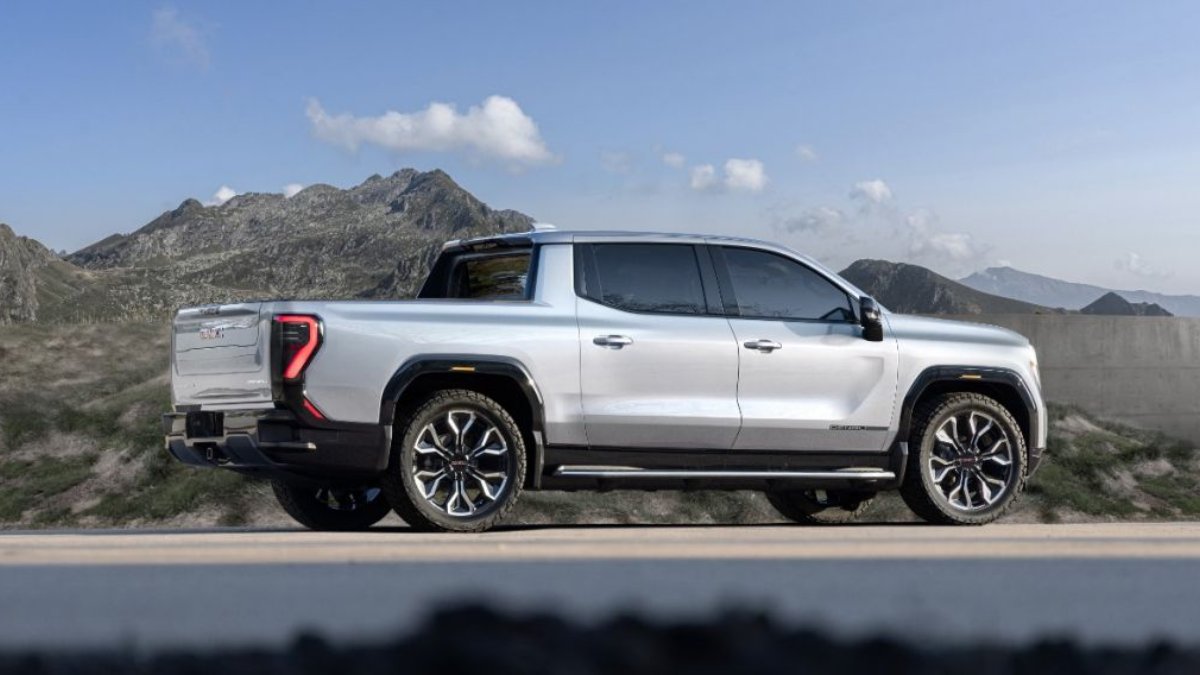
- Measures ~233.4″ long, 83.8″ wide (mirrorless), 78.7″ tall, with a 146″ wheelbase; bed length ~70.6″ expandable via the MultiPro midgate for over 11 ft of cargo capacity
The economics and infrastructure limitations outlined in Betteridge’s journey illustrate an underdeveloped charging landscape. With charging rates of $0.56/kWh approaching gasoline-equivalent cost, the financial advantages of EV ownership shrink rapidly during road trips. The evident shortage of chargers at many public stations, as observed firsthand by Betteridge waiting in multiple queues, spotlights the gap between growing EV adoption and charging infrastructure. Until more gas stations begin incorporating chargers and charging networks expand and evolve, electric road trips will remain exercises in patience, meticulous planning, and occasionally, frustration.
Still, as Gabriel Andreson pointed out in discussions surrounding Betteridge’s post, "Range anxiety goes away after you have an EV for a while. Your habits change, and you know where the spots are." This wisdom encapsulates the hopeful reality of EV ownership: the initial anxiety and logistical hurdles are temporary growing pains. The electric age of motoring is undoubtedly upon us, delivering cleaner power and smoother rides at the cost of initial inconvenience. Those like Betteridge who embrace the challenge, armed with adaptability and patience, are pioneering a path toward a matured electric driving experience, one fast charger, windy afternoon, and carefully planned pit stop at a time.
Image Sources: GMC Media Center
Noah Washington is an automotive journalist based in Atlanta, Georgia. He enjoys covering the latest news in the automotive industry and conducting reviews on the latest cars. He has been in the automotive industry since 15 years old and has been featured in prominent automotive news sites. You can reach him on X and LinkedIn for tips and to follow his automotive coverage.
Set Torque News as Preferred Source on Google
Follow us today...



Comments
The reason for the slow…
Permalink
The reason for the slow charging at tesla stations is due to them only charging at 400v and. Ot thr 600/800 the truck actually needs to reach its rated max dcfc speed. Try to find a 300kw station and give it a try or one with newer V4 equipment
That is a very long article…
Permalink
That is a very long article that fails to address the issue because apparently the driver and the writer are clueless. The issue is that the Tesla chargers was probably a 400 Volt charger since most Tesla cars have a 400 Volt architecture where as the EA charger is a 1000 Volt charger since the GM truck and EA charger use a newer 1000 volt architecture.
The GMC Sierra EV has an…
Permalink
The GMC Sierra EV has an 800V battery. It's clear the driver charged at an older Supercharger V3 that provides only 400V.
While the V3 can indeed deliver 250 kW at 400V, the Sierra has to use an internal charge pump to double the voltage to 800V when charging there. As you can see, that's not terribly efficient. (This is not unique to GM, of course: The Cybertruck has the same issue.)
The newer Supercharger V4, like the Electrify America charger used in the second stop, also supports 800V at 350 kW charging levels. That's the ticket for the GMC Sierra, laddie!
It's disappointing GM didn't provide this charging guidance at the point of sale - a bit like not informing a performance car recipient they should choose premium gasoline, leaving them with engine knock.
Great read. I just wrapped…
Permalink
Great read. I just wrapped up a 525 mile ev each way. In my silverado ev. SAME EXPERIENCE. I couldn't break 123kw at the tesla station in Smiths Grove Kentucky, but I consistency got over 303kw at EA. Another advantage is the retractable cables at EA as well as the paying for a 7 dollar monthly membership for the discounted rates. You make up for it with one charge easily.
Also had and don't recommend EVGo chargers at the flying Js by GM. They are slow to start, way over priced, and didn't once (at 3 different ones) ever work for the plug and charge. Would time out and I just used my card with tap and pay. But then no emailed receipt.
EA definitely have increased in my book as they used to be on my do not go to list with my teslas.
A little context, I was towing a 6x12 uhaul utility trailer to Roopville, GA from Indianapolis to pick up a Can Am for mother in law. Hence all the multiple stops.
For what's its worth, average towing that 1700 lb trailer (2400 with vehicle) was 1.2 mi/kwh over course of trip cruise set to 70. Range loss was right in line with a gas truck towing that same trailer (with reports of 40% loss at 70mph for trucks that normally get 21 mpg getting about 12 mpg.)
I drive a 2025 Sierra Denali…
Permalink
I drive a 2025 Sierra Denali EV. We drove from Knoxville Tn to Leesburg Fl about two weeks after buying it. On the way down I charged to 100% at home and charged to 90% on a Tesla charger at Buc-ee’s in Adairsville, Ga. I think it took about 40-45 minutes. Then we drove to the Buc-ee’s in Fort Valley Ga and charged to 80%. We took time to walk the dog, use the restroom and ate a little at each stop. Then we stopped in Gainesville Florida at a charge America location and I couldn’t get it to work. My wife got really anxious but we still had about 20% battery left.(around 100 miles) I found a Tesla charger and couldn’t get it to work. A Tesla driver said maybe they weren’t updated to accept my vehicle yet. It could have been operator error. I’m not sure. Then I got anxious. I called the Rice GMC in Knoxville where I purchased the truck and he helped me locate another charger. It was an electrify USA charger I think. Anyway it worked but it was very expensive. (about $82) We drove the rest of the way to Leesburg and charged there once we arrived at a Tesla charger. The drive back to Knoxville was a lot better. We charged to 100% in Leesburg & drove to Buc-ee’s in Fort Valley, Ga. We charged to 80% there while we walked the dog, used the restroom and looked around Buc-ee’s. Then we drove to the Buc-ee’s in Adairsville, Ga. We charged to 80% again while walking the dog, etc and drove to Knoxville with about 15% battery left. It was a learning curve but we figured it out. Since then we have done a Knoxville to Nashville to Chattanooga to Knoxville trip and everything went smooth. I love that the truck will actually locate the chargers and even recommend when and where to charge. I absolutely love my Sierra EV! I am so glad we purchased it. We charge at home once a week over and drive all week. It’s the best vehicle I have ever owned. I bought it in early March and have around 7000 miles on it. Going in for my first service soon.
I recently got my first EV…
Permalink
I recently got my first EV. I've been driving it for about 3 months and have only made 2 trips outside of my home range, but I've made a point to look for the most common local networks for testing and get setup with them for charging when I go on the road.
I'm shocked at how bad the public charging experience still is. I mean, EVs have been a real, viable option for a decade now. And the charging experience is utter crap. Charging speeds and costs are all across the board. There is almost zero consistency, even within the same network and often even going back to the same chargers. I have had some sort of issue about every other time, or tried to assist another hapless driver.
I have to have 4 different apps on my phone because there are different networks in different directions from home. And even then, there are some I don't have.
Public charging often costs more than gas, especially if you don't have a subscription to XYZ charging network.
That being said, I do love my EV and I wouldn't go back. Almost all my driving is charged from solar at home. It's just the public charging experience that sucks...maybe it'll get figured out some day. But it really needs more attention focused on it.