
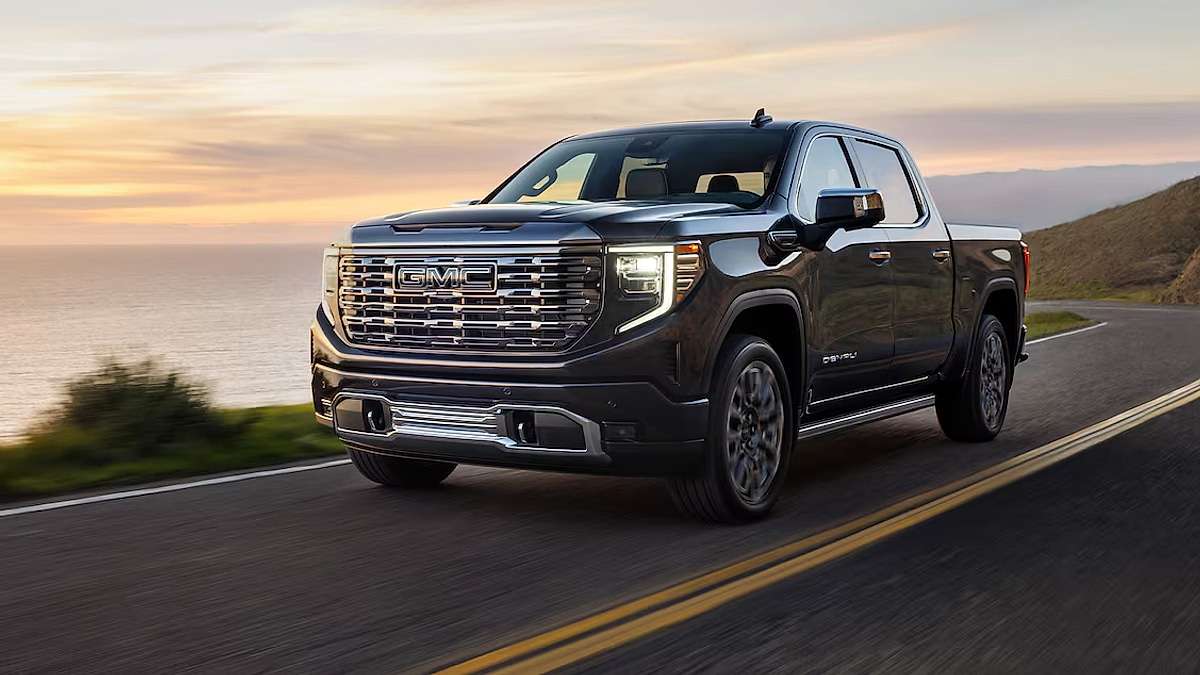

The owner at the center of this story did not stumble into a Denali Ultimate on impulse. He had a reason for leaving his 2021 Ram 1500 TRX, and it was not hard to follow. In his post on the GMC Sierra subreddit, he said the TRX had been his daily driver at roughly 23,000 miles a year, but the math and the anxiety were starting to win. He wrote that the truck’s 10.5 mpg was “wholly impractical” for how much he drove, that theft worries had become part of life with the TRX, and that the truck was too wide to fit comfortably in his garage.
That is what makes the next step so understandable. He found a 2026 Sierra 1500 Denali Ultimate with the 3.0-liter Duramax diesel, bought it for $10,000 under MSRP, got a trade value he liked, and saw it as the obvious adult move. He had also driven a Ram Tungsten and a Ford F-150 Platinum, but wrote that “The Denali ultimate was an easy winner for me.”
There is a deeper reason that choice matters. The Sierra Denali Ultimate is not sold as the stripped-down practical trim. GMC positions it as the top-end half-ton, a truck with Super Cruise, massage seats, Bose premium audio, and Denali-specific interior finishes. For 2026, Denali Ultimate starts at $84,400, comes standard with the 6.2-liter V8, and offers the 3.0-liter Duramax as an available alternative. This was not a buyer stepping down into compromise. He was stepping sideways into a truck that was supposed to feel calmer, smarter, and easier to live with every day.
Why the 3.0 Duramax has become such an attractive engine in a luxury half-ton
The 3.0-liter Duramax has a very specific appeal. It is not the loud identity choice that a TRX is, and it is not the big V8 statement that still defines a lot of half-ton truck culture. It is the engine for buyers who want a premium truck to feel expensive in the right ways, meaning strong low-end pull, long range, and fewer gas-station stops.
On paper, GMC gives that engine a strong case. The current 3.0-liter Duramax is rated at 305 horsepower and 495 lb-ft of torque, paired with a 10-speed automatic. GMC also says it delivers best-in-class fuel economy for a full-size pickup with the available diesel, at 23 mpg city and 28 mpg highway in 2WD form, with max towing up to 13,300 pounds in the Sierra 1500 lineup. That is exactly the sort of spec sheet that makes a buyer with a 23,000-mile-a-year commute think, maybe this is the version of a nice truck that finally makes sense.
There is another layer to the diesel’s appeal right now, and it has little to do with mileage alone. The Denali Ultimate comes standard with GM’s 6.2-liter V8, but that engine has been under a brighter spotlight after GM recalled 721,000 trucks and SUVs globally in April 2025 over possible manufacturing defects that could lead to engine damage or failure, including nearly 600,000 vehicles in the United States. In January 2026, Reuters reported that NHTSA had opened a recall query into about 597,571 GM vehicles with the 6.2-liter gas engine after receiving complaints alleging failures despite the prior remedy. Against that backdrop, the 3.0 diesel looks to some buyers like more than an efficiency play. It looks like the version of the premium Sierra that might let them sidestep a different kind of headache.
That is why this owner’s first-day problem lands harder than a routine warranty nuisance. If you buy a TRX, you accept some irrationality up front. It is part of the appeal. When you buy a Denali Ultimate diesel after living with a TRX, you are not just buying nicer seats and better mileage. You are buying relief.
Then came the smell, the smoke, and the oil
According to the owner’s post, the truck drove home beautifully. He wrote that it covered 86 miles from the dealer and returned 33.4 mpg running around 60 mph on two-lane roads. He liked the interior, liked the infotainment, expected the big drop in power versus the TRX, and still came away impressed. “I love the truck,” he wrote.
The next morning changed the story.
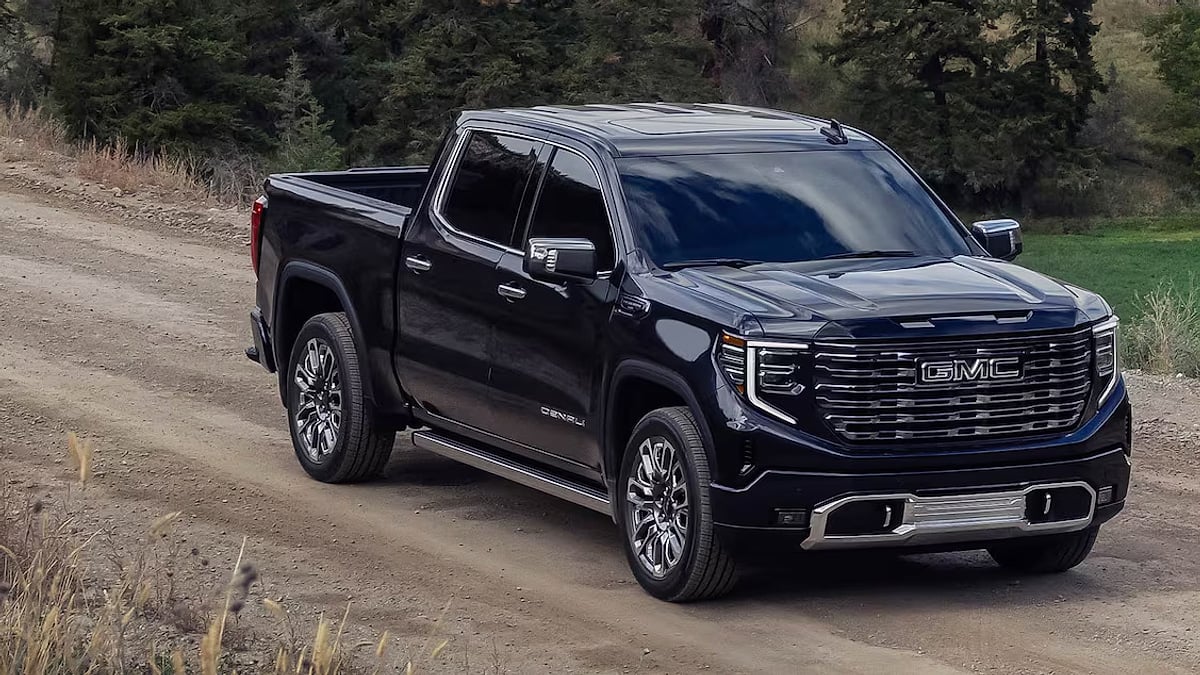
He said that after driving to work and parking, he smelled “a terrible and loud burning smell.” He popped the hood and saw smoke from just under the turbo. When he looked more closely, he said the area was covered in oil. The lines on top of the turbo were wet, and the metallic heat wraps were “covered in hot smoking oil.” By that point, the truck had only about 120 miles on it.
That detail is what makes the post work as more than just another new-vehicle complaint. There is a special kind of disappointment that comes when a used vehicle fails after years of service. There is a different kind when a brand-new truck, bought specifically to reduce future stress, starts smoking before the first tank of fuel is even a story.
The owner said the dealer took the truck and provided a loaner. He also made clear that he expects the repair to be handled under warranty. What bothered him was not merely the existence of a failure. It was how quickly the new truck had begun to resemble the kind of ownership problem he thought he had just left behind.
The comments were not one-sided, and that is what makes them useful
Subreddit comment sections are often more revealing when they are divided than when they all shout the same thing. That is the case here.
Some commenters treated the story as unfortunate but isolated. One owner wrote, “I know 15 people personally that bought 3.0s. Only 1 of them so far has had constant issues.” A GM tech replied that he had “never had a leak in that area” on the diesels that came through his shop. Those are not blanket endorsements, but they matter because they keep the story honest. Not every 3.0 owner is posting from the side of the road, and not every technician is seeing the same failure every week.
Other commenters went in a very different direction. One said three friends with 2024-and-newer 3.0 trucks had all suffered “severe oil leaks from oil pan and or rear main.” Another owner said his new 2025 Sierra LZ0 developed a pool of oil in the garage at 178 miles and was diagnosed with a leaking oil cooler. Another wrote that his 2025 Sierra 1500 AT4X with the 3.0 was repurchased after a rear timing cover or rear main oil leak could not be fixed after four attempts. Still another owner said his leak showed up within two days, and required the transmission to be pulled so a loose bolt at the back of the block could be tightened.
The most helpful comment may have come from another GM tech, because it combined skepticism with context. He wrote that when the 3.0 first came out, the shop saw “lots of oil leak problems,” including trucks arriving off the transport during pre-delivery inspection needing major work. But he also added that, in 2026, he does not really see leaks on brand-new ones, and that from the area described by the original poster, the likely suspects would be the turbo feed, the turbo itself, or the return line.
That is a useful frame because it resists two lazy conclusions at once. It does not support the idea that every new baby Duramax is a ticking time bomb. It also does not support the idea that an oil-soaked, smoking engine bay at 120 miles is just normal new-truck drama.
The real problem is not the oil leak by itself
If this were a base-model work truck with 40,000 miles on it, the story would be simpler. An oil leak is a problem. The dealer fixes it. Life goes on.
That is not what this truck was bought for.
The Denali Ultimate is sold as a polished version of truck ownership. GMC’s whole pitch is not just capability, but refinement. The Denali and Denali Ultimate pages talk about authentic wood, patterned aluminum trim, perforated leather seating, massage functions, Bose audio, and Super Cruise. The available diesel is part of that same pitch. It is the engine that says this truck can still tow, still pull hard, and still feel like a full-size pickup, but it will do it with more range and less drama.
That is why the first 120 miles matter so much in a story like this. They test whether the truck is delivering on its personality, not just its warranty. This owner did not buy the Denali Ultimate to discover whether GM would honor a repair claim. He bought it because he wanted a truck that would stop making him think about fuel burn, garage fitment, theft anxiety, and future mechanical bills every time he drove it.
Instead, his first full day ended with smoke under the hood.
A premium truck does not just need features; it needs emotional credibility
There is a reason stories like this resonate beyond the one vehicle involved. Premium trucks are expensive because they sell a feeling as much as a feature set. They promise the owner that the hard edges have been sanded down. Better seats matter. Better tech matters. Super Cruise matters. But the thing buyers are really paying for is confidence that the truck will settle into life without turning every decision into a negotiation.
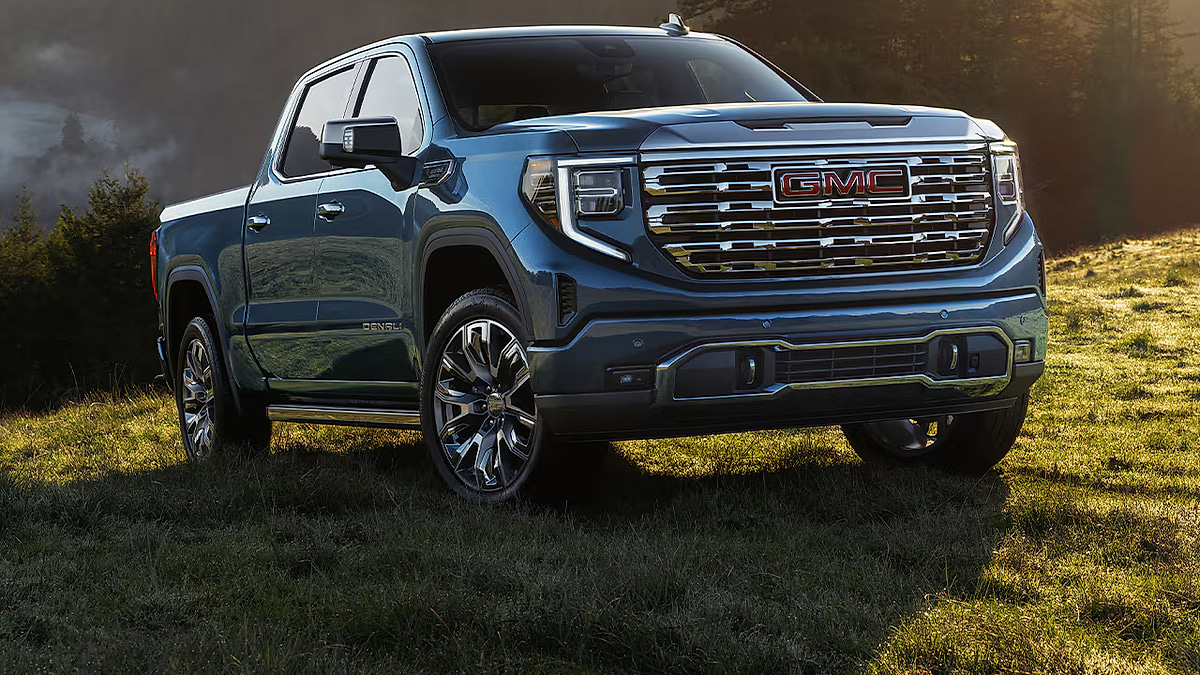
The owner in this case may still end up with exactly that truck once the repair is complete. Plenty of new vehicles have a rough start and then go on to live ordinary, dependable lives. That possibility should stay on the table.
But that is not what makes the story worth telling today. What makes it worth telling is that the failure struck at the exact reason he made the switch in the first place. He did not trade his TRX because he stopped loving trucks. He traded it because he wanted the kind of truck that felt easier to trust.
For one day, the Sierra Denali Ultimate looked like it might be that truck. Next, it smelled like burning oil.
Image Sources: GMC Media Center
About The Author
Noah Washington is an automotive journalist based in Atlanta, Georgia, covering sports cars, luxury vehicles, and performance culture. His reporting focuses on explaining the engineering, design philosophy, and real-world ownership experience behind modern vehicles.
Noah has been immersed in the automotive world since his early teens, attending industry events and following the enthusiast communities that shape how cars are built and driven today. His work blends industry insight with enthusiastic storytelling, helping readers understand not just what a car is, but why it matters.
Noah is also a member of the Southeast Automotive Media Association (SAMA), a professional organization for automotive journalists and industry media in the Southeast.
His coverage regularly explores sports cars, luxury vehicles, and performance-driven segments of the automotive industry, including the evolving culture surrounding Formula Drift and enthusiast builds.
Read more of Noah's work on his author profile page.
You can also follow Noah here:
Set Torque News as Preferred Source on Google
Follow us today...







Comments
Its an American made vehicle…
Permalink
Its an American made vehicle, so, of course its junk. Why do people keep buying vastly inferior, vastly over priced, low quality American made vehicles?
It seems obvious this truck…
Permalink
In reply to Its an American made vehicle… by Steve (not verified)
It seems obvious this truck left the assembly line without any workmanship quality checks before it was made available for sale. I bought a new 2024 K1500 4dr 4x4 3 liter LZ0 new for $54k and have had zero issues so far. Averaging 26mpg...
Plenty of 3.0 Duramax owners…
Permalink
In reply to It seems obvious this truck… by Mark Morkovsky (not verified)
Plenty of 3.0 Duramax owners have good experiences and strong fuel economy. That is why these cases are frustrating: the engine has a real appeal, but early failures make buyers wonder about quality control.
One bad delivery does not…
Permalink
In reply to Its an American made vehicle… by Steve (not verified)
One bad delivery does not prove every American vehicle is junk, but it does show why buyers are frustrated. When an expensive truck has a problem at 120 miles, the brand reputation takes the hit, fair or not.
I bought new 26 At4 with 3.o…
Permalink
I bought new 26 At4 with 3.o. at 1000 egr valve leaking coolant. At 6000 miles, engine locked up. Never put anything in bed or towed. Everything covered under warranty. Loved the truck to start, diamond has lost its shine. Looking to sell or trade.
Warranty coverage helps, but…
Permalink
In reply to I bought new 26 At4 with 3.o… by Brian (not verified)
Warranty coverage helps, but an EGR leak at 1,000 miles and an engine lockup at 6,000 miles would sour almost anyone on a new truck. The emotional part matters too.
I went to test drive a new…
Permalink
I went to test drive a new silverado with the 3.0 duramax. The check engine light came on before we even got out of the parking lot. We took it to a service bay and the guy printed out a sheet full of codes but couldn't explain what any of it meant. The the salesman copped an attitude when I said I didn't want to buy it.
A check-engine light before…
Permalink
In reply to I went to test drive a new… by Squeaky Wheel (not verified)
A check-engine light before leaving the lot is already bad, but a salesperson getting irritated because you walked away makes it worse. That is when the dealer becomes part of the problem.
This is totally fake news…
Permalink
Nobody is trading King Ram for a mid pack half ton GM with the junk Dmax 3 liter.
People trade out of TRXs for…
Permalink
In reply to This is totally fake news… by Fake news (not verified)
People trade out of TRXs for practical reasons all the time: fuel cost, theft risk, size, daily comfort, and insurance. You may not like the move, but the reasoning in the owner’s account was not hard to follow.
Got 50k on 23 baby diesel…
Permalink
Got 50k on 23 baby diesel. Hasn't missed a lick and get 27mpg every day. 🤞
When it works, the fuel…
Permalink
In reply to Got 50k on 23 baby diesel… by Colin (not verified)
When it works, the fuel economy and drivability are hard to argue with.
He should have bought a Ford…
Permalink
He should have bought a Ford. GM has forgotten how to build engines.
And Ford can't build a…
Permalink
In reply to He should have bought a Ford… by George (not verified)
And Ford can't build a transmission. So...
At some point buyers just…
Permalink
In reply to And Ford can't build a… by Tyler (not verified)
At some point buyers just want one expensive truck that does not come with a brand-specific gamble.
A lot of GM owners may be…
Permalink
In reply to He should have bought a Ford… by George (not verified)
A lot of GM owners may be thinking that.