
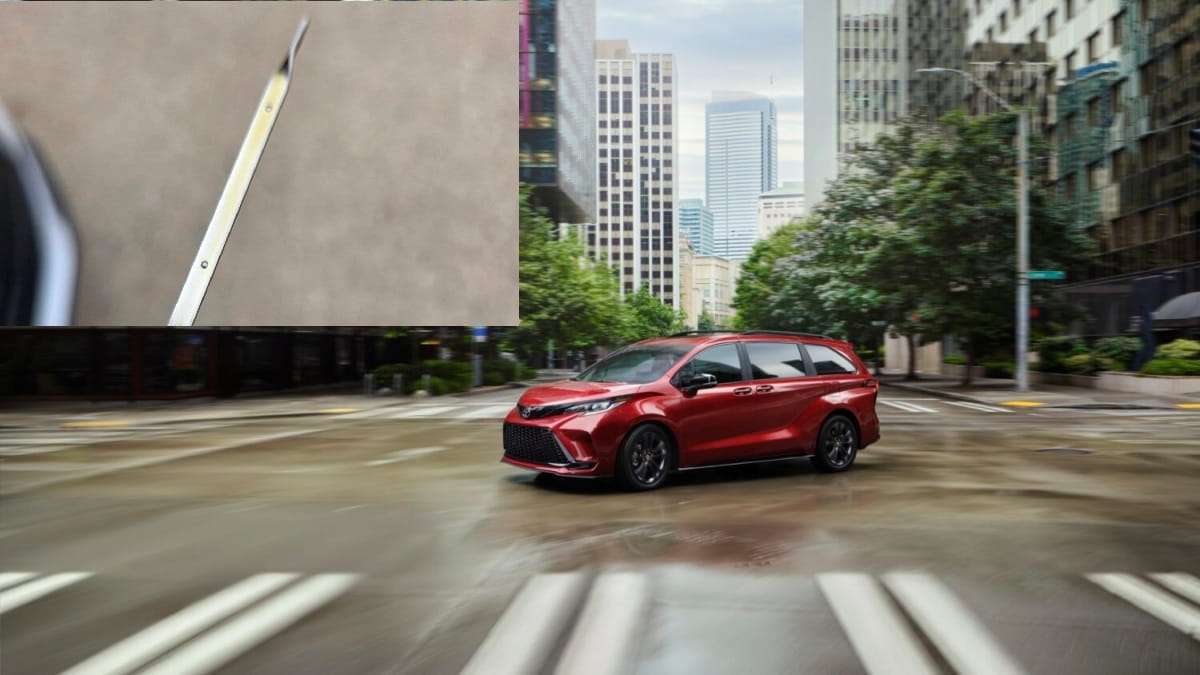

There is a popular joke that Toyota owners panic every time they see a warning light appear on the dashboard. While that shows that things rarely go wrong with the company’s vehicles, they still do eventually. But this time, we are not talking about flashing warning lights on the dashboard. Rather, the case I stumbled upon in the Toyota Sienna 2025+ group on Facebook is related to what happens in the engine of one particular owner (and possibly others).
The owner explains the issue in a short post, accompanied by an image (see below). Here’s what it says: “2026 XLE 900 Mile update! The dealer looked at the picture and said condensation. He said it's normal for a hybrid.”
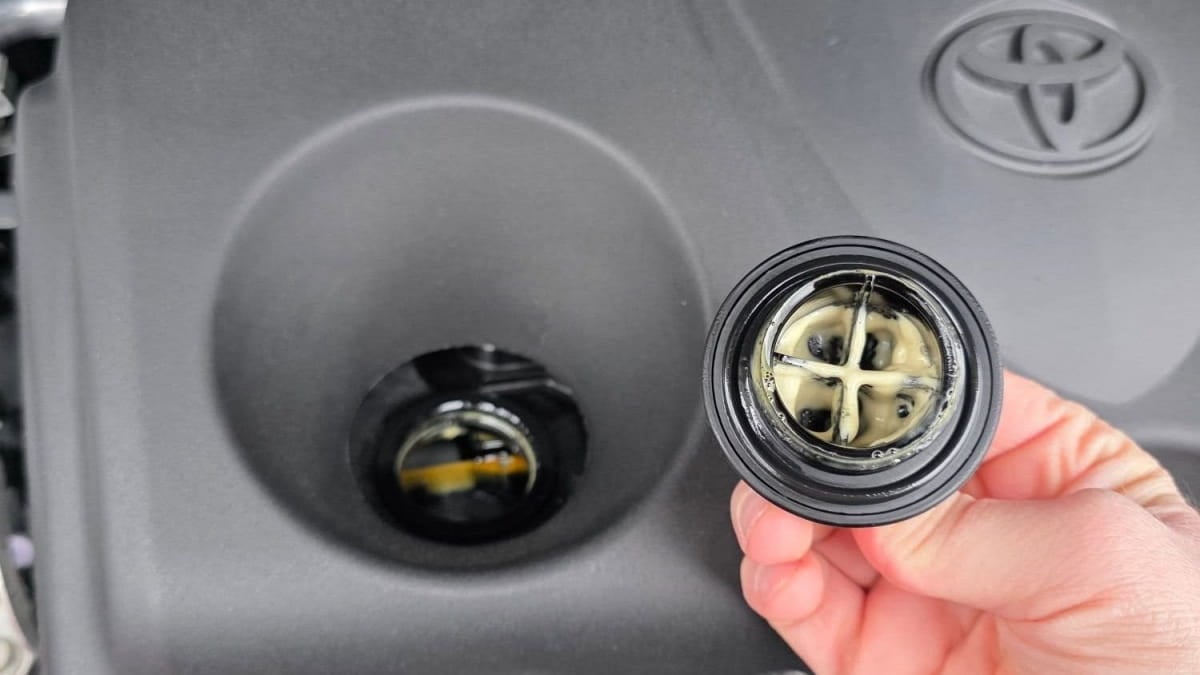
Now, it is worth pointing out that “normal” doesn’t always equal “good”. There are two scenarios when you have milky residue on the back of your oil cap. One is harmless, the other, bad.
The harmless scenario is that since this is a hybrid vehicle, the engine doesn’t always operate. This makes it difficult for the fluids to reach optimal temperatures, and makes it possible to trap water vapour. The bad scenario can be a bad head gasket, coolant contamination, or bad PCV.
So far, Toyota's Dynamic Force engines are proving very reliable
Hybrid powertrains are Toyota’s bread and butter, and aside from some early issues with the 3.4-liter twin-turbo V-6, which the company is currently addressing through an expanded recall, no other carmaker comes close when it comes to BEVs. Since 2020, the Sienna has been powered by the 2.5-liter A25A-FXS Atkinson-cycle unit, which, depending on whether it’s front-wheel-drive or all-wheel-drive, is backed by two or three electric motors.
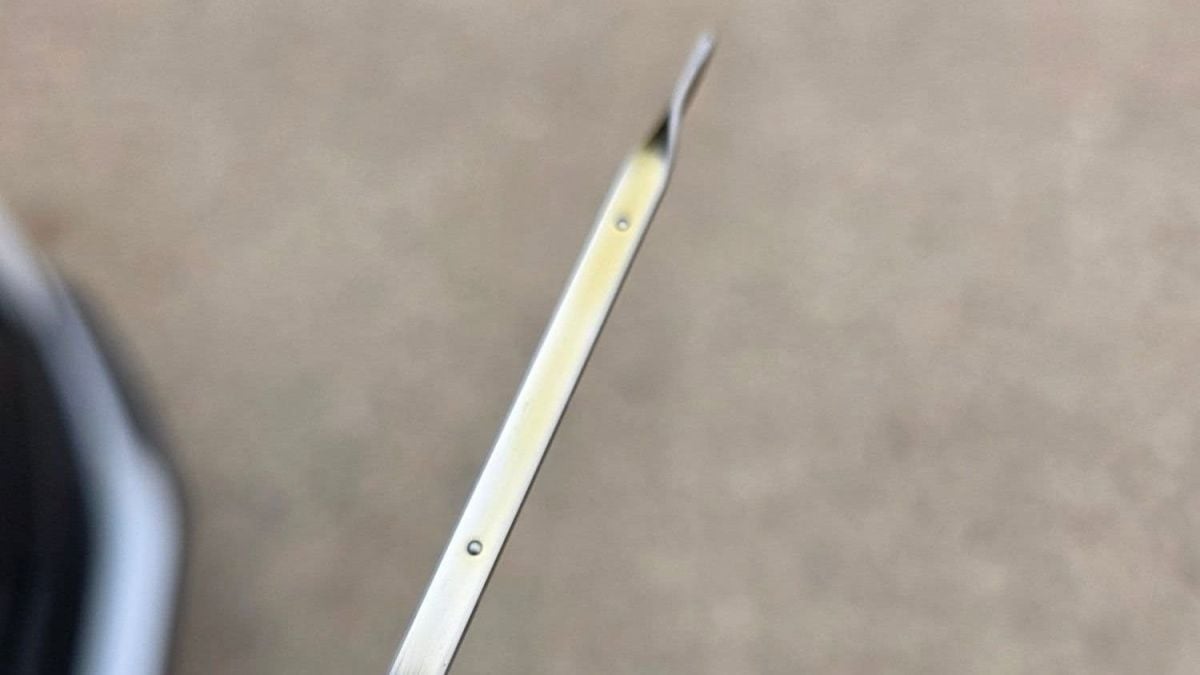
Combined output is 245 horsepower in both variants. The owner also provides photos of the oil dipstick, and things seem normal. No residue on the dipstick eliminates any of the aforementioned issues. He also admits that he frequently does short trips, which pretty much pinpoints the cause of the milky residue.
Other owners have experienced this, and chime in with useful insight
The issue, actually, reminds me of a similar issue with the Honda Accord’s 1.5-liter turbo, which the company reportedly addressed after 2020, although owners are still reporting problems. Nevertheless, the Toyota Sienna community is helpful at rooting out the likely cause for the “milkshake” residue on the oil cap.
One owner provides a detailed explanation: “Nothing failed yet.. but it also means that the engine is running so cool and that it is trapping the water vapor (seriously, manufacturers need to install and include AOS (air oil separator) tanks for their cars, and keep the intake side cleaner.. it also doesn't help the PCV side of things isn't ventilating as it should? Maybe the car just doesn't rev up enough to clear out the water vapor.. I have yet to get the ICE to rev past 3,000 RPMs.”
Others recommend an oil change or a drive on the highway
One group member says, “I did a break-in oil change on my 2026 at 750 miles even though it's not part of the schedule.”
Another owner recommends longer drives: “Go run it on the highway for a bit and see if it all goes away.” Honestly, I would start with this, as it is the simplest and cheapest possible solution.
While I have never personally experienced any kind of oil dilution or condensation on my own vehicle, it seems some of the new vehicles that are currently available on the market can have condensation on the oil cap, especially when driven on short distances. It almost seems like we have to start treating our gasoline and hybrid vehicles like diesel engines, so as not to clog up the various emissions equipment (like the GPS/OPF) or just so the fluids can warm up properly.
It seems most owners suggest one of two things: a longer drive on the highway and a break-in oil change. There are one or two members who suggest taking an oil sample and having it tested, just to rule out head gasket failure. While it makes sense, these engines are not known for that, and they have been around for a few years now. Judging by the information provided by the Sienna owner, and the experience of others, this seems to be a direct cause of frequent short trips, and possibly the need for fresh oil.
If you have had any similar experiences, feel free to share them in the comment section below. Perhaps, there are more causes and solutions for this.
Image source: Toyota Sienna 2025+ (Otto Eastwood) via Facebook, 2026 Toyota Sienna
Dimitar Angelov's automotive interests made him an expert in a wide variety of vehicles. Japanese brands like Toyota and Nissan are closest to his heart, although performance cars in general are his favorite segment, which is why he is constantly on the lookout for the best deals on the market. Dimitar Angelov's car passion and knack for the written word led him to complete a Master of Arts in Media and Communications, and classic car restoration. Dim is happy to get behind the wheel of any car and share his impressions. You can follow Dimitar on X, Linked-in, Instagram, and Facebook.
Set Torque News as Preferred Source on Google
Follow us today...






Comments
That's AWFUL. With gas at …
Permalink
That's AWFUL. With gas at $2.50 a gallon currently, that's the equivalent to 140 gallons of gas in spending. That's like a car getting 10 miles to the gallon. That is TERRIBLE mileage and much more expensive than a gas car.