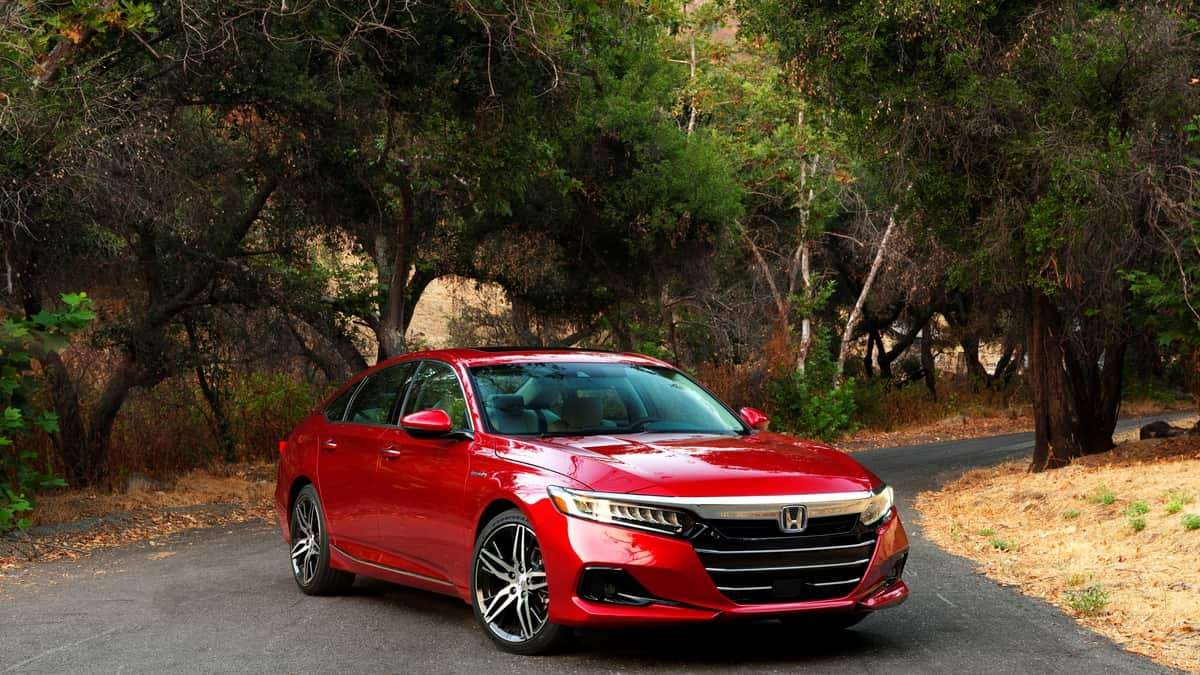

Honda is consistently in the top-most reliable car brands, alongside Toyota, Lexus, and Mazda, to name a few. That said, even the best have their bad days, and in this particular case, it has something to do with the smaller, 1.5-liter turbo engine offered on the tenth-generation Honda Accord.
This isn’t the first time Honda owners have complained about the small turbocharged inline-four mill, but in this particular case, the owner might be looking for the cause of the issue in the wrong place. Here’s what a member of the Honda Accord 10th gen both 1.5 and 2.0t says:
“If you are living in cold places/countries, don’t get 1.5 turbo engines”.
The group member doesn't share any additional information, but the L15B7 engine, which comes with the 2017-2022 Honda Accord, is prone to a few issues. The most widely discussed is oil dilution, which may lead to serious engine failures and expensive repair bills. The owner of this particular Honda with the 1.5-liter engine seems to be referring to this very issue, but a few owners seem to disagree.
Is it really cold weather that is the main culprit for oil dilution or is there more to it? I think it is important to understand how a vehicle works in order to have a pleasant ownership experience, which is why I looked into all potential causes and solutions to this very common engine issue.
What is oil dilution?
Oil dilution is a common occurrence on modern diesel engines since they feature diesel particulate filters (DPF), which use fuel for the regeneration process (when the filter gets clogged). Nowadays, particulate filters can also be found on newer vehicles with gasoline engines, so the issue of oil dilution may become a lot more common in the future.
Oil dilution is when unburnt fuel enters past the piston rings and into the engine crankcase, where it mixes with the oil. This dilutes the oil and effectively increases the amount the lubricating system circulates, potentially causing serious issues, including poor lubrication of the main bearings, because it reduces the oil viscosity.
Next time you are changing your oil, look at the amount of oil you are draining. According to Honda, the oil dilution causes the oil level to rise by 20 to 30 percent. If it is more than what the engine normally holds, this may be a sign of oil dilution.
Possible causes for oil dilution
The most widely considered cause is cold weather, but that’s only part of the story. On cold startups, the engine requires a rich fuel mixture. This is especially true in cold weather since there is a higher chance of unburnt fuel reaching the crankcase and diluting the engine oil. The problem is exacerbated by frequent short trips, since this does not allow the engine to reach operating temperature, which would allow it to burn the fuel properly.
The simple solution, then, would be to not use the car for short trips. Different owner’s manuals quote different numbers, but the most widely-agreed upon numbers are that any trip under 10-15 minutes or less than 10 miles is considered short. According to my owner’s manual (I have a Hyundai Genesis Coupe), in warmer weather, you can get away with shorter trips, but they still need to be at least five miles.
However, other Honda Accord owners seem to have a different take on the issue and they shared their insight.
Rolling Road EFI says: “Lol 1.5T's are FAR more reliable if people just use premium fuel.”
There is some truth in what this group member says. Modern turbocharged engines usually require premium unleaded gasoline in order to achieve their fullest potential. Some engines can work with lower-grade fuel, but more often than not, it is not recommended. Low-grade fuel with a smaller octane number is more susceptible to premature detonation.
This, among other things, can lead to reduced performance, increased fuel consumption, and in some cases, a check-engine light. Systematic use of low-grade fuel will lead to expensive repairs over time, due to knocking. While low-quality fuel in itself is not a primary cause for oil dilution, it contributes to incomplete combustion, which can play a role in it.
Any fuel, including low-grade, is susceptible to condensation due to temperature fluctuations, which can also contribute to oil dilution. Condensation can form when the fuel is cooling down, turning moisture in the air into liquid water. The more empty your gas tank is, the higher the likelihood of condensation.
Like another group member says, “just use what is recommended and don't put lower octane than minimum".
In the comments, there seems to be a heated debate about whether you should warm up your car or not. Regardless of what different owners’ manuals say, I always let my car warm up for half a minute in warm weather and a full minute in cold weather.
This isn’t so much for getting the engine up to operating temperatures (this happens during the first 5 minutes, which should be conservative driving). It is more about getting all the liquids (oil, coolant, etc.) circulating through the system.
What Honda did to contain the oil-dilution issue
Honda issued a service recall back in 2018, consisting of a software update, which would allow the engine to warm up faster. The majority of affected vehicles are 2016-2018 Civic and 2017-2018 CR-V, but many Accords 1.5 turbo produced between 2018-2022 also suffer from the same issue. This was accompanied by a one-year extended warranty on certain drivetrain components.
In some cases, the service recall included an AC replacement and oil flush. Some Honda HR-V and Acura models featuring the same engine are also affected, but to a far lesser extent. A total of over 2.8 million vehicles from all model years are affected. You can check your VIN here if you want to see if your car falls under the service recall.
Honda never issued a blanket recall for all model years, but owners are still experiencing the issue on later model years. Despite the software update, there is still a risk of oil dilution in cold climates for 2022 and newer models, although at much lower rates than before due to the ECU tweaks.
Honda may eventually phase out the 1.5-liter unit due to focusing on hybrid powertrains, but for now, you can still get a newer version of the mill with the internal code L15CA (replacing the problematic L15B7). The current Honda Civic e:HEV already beats the Corolla at its own game while the Honda Accord Hybrid offers a slightly sportier alternative to the Toyota Camry, which may save you money in the long run.
I still think Honda made a mistake by removing the 2.0 turbo from the new Accord, leaving you only with the 1.5-liter turbo and a hybrid variant, but luckily, there is another sporty Japanese sedan you can get with the iconic Honda K20 turbo engine.
As always, I invite you to share your own car experience. Maybe you found a permanent solution or have a newer model that is also experiencing the same issue? If you have had a similar experience with your Honda or Acura, I would love to hear about it in the comment section below.
Dimitar Angelov's automotive interests made him an expert in a wide variety of vehicles. Japanese brands like Toyota and Nissan are closest to his heart, although performance cars in general are his favorite segment, which is why he is constantly on the lookout for the best deals on the market. Dimitar Angelov's car passion and knack for the written word led him to complete a Master of Arts in Media and Communications, and classic car restoration. Dim is happy to get behind the wheel of any car and share his impressions. You can follow Dimitar on X, Linked-in, Instagram, and Facebook.
Image source 2022 Honda Accord press
Set Torque News as Preferred Source on Google
Follow us today...