

The Anticipation Game
For millions of American families, the release of a new generation Toyota RAV4 is akin to a major cinematic event. As the best-selling non-pickup vehicle in the country, the RAV4 sets the standard for what a compact SUV should be. So, when news broke that the 2026 model would launch the 6th generation with a bold redesign and an all-hybrid lineup, buyers like Tony Gladden were ready to sign on the dotted line before the trucks even arrived at the dealership.
Gladden, a prospective buyer who has been closely following the development of the 2026 model, describes himself as the perfect demographic for the RAV4. He wanted reliability, efficiency, and that "go-anywhere" aesthetic that Toyota has leaned into heavily over the last decade. He was determined to buy one.
But then, he actually drove one.
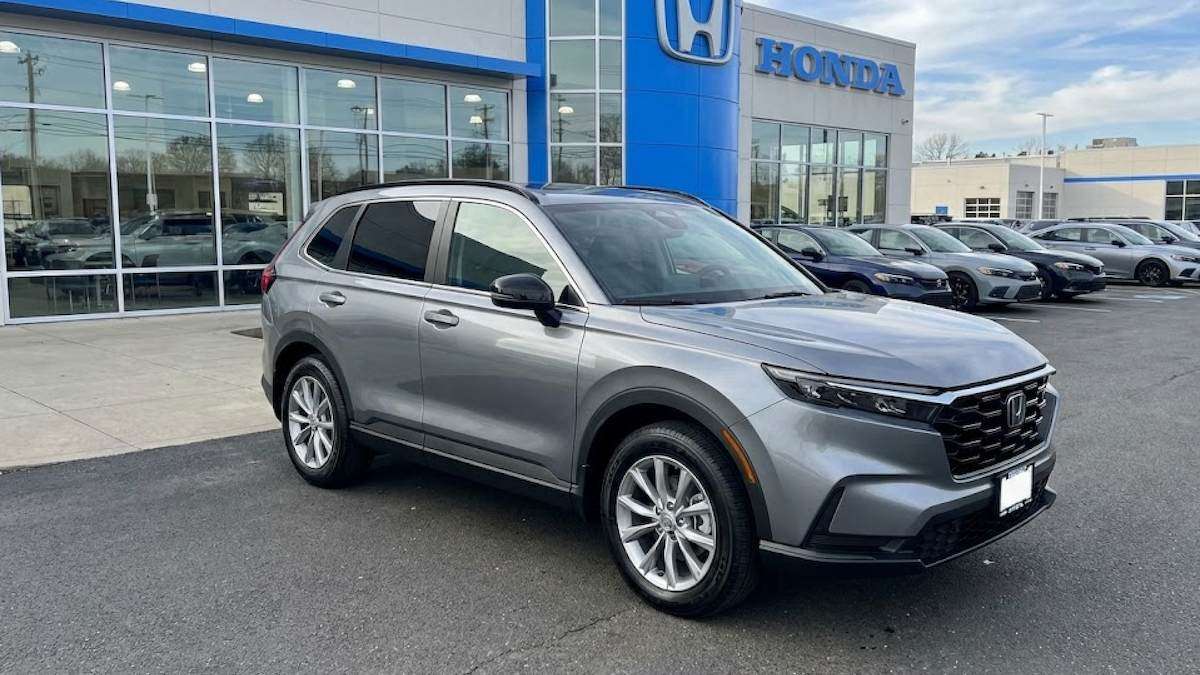
In a twist that highlights the philosophical divide between Japan's two biggest automakers, Gladden left the Toyota lot and purchased a 2026 Honda CR-V Hybrid instead. His reasoning? The RAV4, in its quest to be "rugged," had forgotten to be comfortable.
The "Jeans" vs. "Business Casual" Dilemma
Gladden's experience, shared recently within the Honda CR-V owner community and detailed in the report I Was Determined To Get a New Toyota RAV4, But After Driving the 2026 Honda CR-V..., paints a vivid picture of the current state of the compact SUV market.
"I was originally determined I wanted a 2026 Toyota RAV4," Gladden explained. "I love the idea of the RAV, it seems more like me (a bit more jeans/t-shirt) vs the 'business casual' of the CR-V, if that makes sense."
This analogy perfectly captures the design ethos of both vehicles. The 2026 RAV4 features a boxy, chiseled exterior, massive wheel arch moldings, and an interior filled with rubberized knobs and utilitarian surfaces. It screams "adventure." The Honda CR-V, conversely, is sleek, understated, and refined, with a honeycomb mesh dash and premium-feeling touchpoints.
However, Gladden quickly found that the "jeans and t-shirt" vibe came with a trade-off he wasn't willing to make: refinement.
Ride Quality and NVH
The primary catalyst for Gladden's defection was the driving dynamics. Toyota has tuned the 2026 RAV4 to feel truck-like, a decision that aligns with its marketing of the vehicle as an off-road-capable machine (especially in the Woodland and TRD trims). But for a daily commuter, "truck-like" often translates to "uncomfortable."
"The ride in the RAV4 was neither smooth nor as quiet as in the CR-V," Gladden noted after his test drive. "I found the RAV4 to be bumpy, bouncy, and not smooth. It felt to me like it rode like a Jeep, which I didn't want."
In contrast, the Honda CR-V has been universally praised by automotive journalists for its suspension tuning. Honda engineers prioritized on-road compliance, using a multi-link rear suspension setup that absorbs pavement imperfections with a level of sophistication usually reserved for luxury cars.
"I found the CR-V to drive like you're floating in contrast," Gladden said. "It's just soooo smooth, you barely feel bumps."
Where Inches Matter
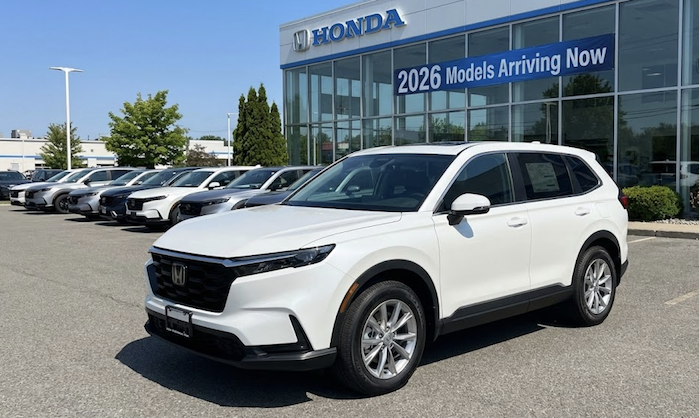
While ride quality was the emotional deal-breaker, the spec sheet provided the logical closer for Gladden's decision. Despite the 2026 RAV4's redesign, the Honda CR-V maintains a significant advantage in interior packaging, a hallmark of Honda engineering.
- Rear Legroom: The 2026 Honda CR-V offers 41.0 inches of rear legroom, a figure that rivals many mid-size SUVs. The RAV4 lags at 37.8 inches. For buyers with tall teenagers or rear-facing car seats, those three inches make the difference between a cramped knee and a comfortable ride.
- Cargo Capacity: With the rear seats folded flat, the CR-V offers up to 76.5 cubic feet of cargo space. The RAV4, while respectable, tops out around 70.4 cubic feet.
For a buyer spending upwards of $40,000 on a family hauler, the feeling of "airiness" inside the cabin is crucial. The CR-V's lower beltline and larger windows create a sense of openness that the RAV4's bunker-like, high-cowled cockpit cannot match.
Toyota's "Rugged" Gamble
Why would Toyota allow the RAV4 to fall behind in comfort and space? According to industry analysts, it is a calculated move to protect their lineup.
Toyota has crowded its own showroom floor. With the introduction of the Corolla Cross (for budget buyers), the Venza (for luxury/comfort buyers), and the Grand Highlander (for families needing space), the RAV4 had to carve out a specific niche to avoid cannibalizing sales. Toyota chose "Rugged/Adventure."
By pushing the RAV4 toward the "Jeep" end of the spectrum, focusing on the Woodland Edition, TRD Off-Road capabilities, and distinct styling, they differentiate it from the smooth-riding Venza and the family-hauling Highlander.
Honda, however, has a simpler lineup. The CR-V is the main event. It has to be everything to everyone: the commuter, the family hauler, and the road tripper. Consequently, Honda doubled down on general refinement, aiming to be the "Camry of SUVs" while Toyota turned the RAV4 into the "Tacoma of SUVs."
Where the RAV4 Still Wins
To be fair to the 2026 RAV4, Gladden's rejection doesn't mean the truck is a failure. It simply means it targets a different priority list. The RAV4 still holds the crown in three specific areas where the CR-V cannot compete:
- Fuel Economy: The 2026 RAV4 is now exclusively a hybrid (PHEV). In our previous testing, detailed in Honda CR-V Hybrid vs. Toyota RAV4 Hybrid: The Fuel Economy Test That Surprised Us, the Toyota consistently edged out the Honda in real-world highway efficiency.
- Raw Power: The RAV4 Hybrid produces 236 horsepower (and over 300 hp in the Prime/PHEV variant). The CR-V Hybrid maxes out at 204 horsepower, making the Toyota significantly quicker in a straight line.
- Towing: If you need to tow a small trailer, the RAV4's Adventure and TRD trims can tow up to 3,500 lbs. The CR-V is limited to 1,000-1,500 lbs, rendering it useless for anything beyond a small bike rack.
However, buyers should be aware that "rugged" doesn't always mean "perfect." As noted in a recent report, one owner claimed I Think My 2024 Toyota RAV4 Is a Lemon, With Only 12K Miles It Has Too Many Problems, citing electrical glitches and fuel system repairs that challenge the brand's legendary reputation.
Conclusion:
Tony Gladden's story is a valuable lesson for anyone looking for a compact SUV in 2026. The spec sheets may look similar, and the prices are neck-and-neck, but the driving personalities of the Toyota RAV4 and Honda CR-V have never been further apart.
If you want a vehicle that feels like a tank, gets incredible gas mileage, and can handle a muddy campsite access road, the 2026 Toyota RAV4 is the undisputed king.
But if you are like Tony, looking for a "business casual" vehicle that isolates you from the stress of a pothole-ridden commute and offers limousine-like legroom for your passengers, the 2026 Honda CR-V is the superior machine. And if you do choose the Honda, consider the hybrid model; as many mechanics advise, Why I Recommend The Hybrid CR-V Over The Turbo Gas Model Every Time is a must-read to avoid the potential pitfalls of the 1.5L turbo engine.
Gladden summarized his decision perfectly: "I really recommend driving both cars on the same day, back-to-back. This is what helped answer it for me."
What Do You Think?
Do you prefer the "rugged" feel of a truck-based SUV, or the "floating" refinement of a car-based crossover? Would you trade 3 inches of legroom for four extra MPG? Let us know in the comments below.
Up Next: The Hybrid Reliability Reality Check
Now that we know the Honda CR-V wins on comfort, we have to ask the mechanical question: Which hybrid system is actually built better?
Toyota invented the game with the Prius, but Honda's new Two-Motor Hybrid system is winning awards for its simplicity. In my following report, I strip away the leather seats and touchscreens to look at the engineering. I analyze Toyota's "High Voltage Cable" corrosion issues and Honda's history of oil dilution to determine which SUV is the safer bet for a 10-year ownership plan.
Check out the report here: Toyota Hybrid System vs. Honda Two-Motor Hybrid: Only One Will Go 300,000 Miles
With over 30 years of industry experience, Denis Flierl brings an insider’s perspective to Torque News, where he has been a Senior Reporter since 2012. Before picking up the pen, Denis consulted for the automotive industry's biggest brands and honed his skills as a test driver. He cuts through the noise to deliver the latest auto news, compelling owner stories, and the expert analysis necessary to navigate today's automotive landscape.
Have a tip or question? Follow me on X @DenisFlierl and @WorldsCoolestRides, or connect with me on Facebook, Instagram, and LinkedIn.
Photo credit: Denis Flierl
Set Torque News as Preferred Source on Google
Follow us today...






Comments
That's funny because they…
Permalink
That's funny because they haven't built one yet. No Toyota dealership in the country has one.
The first production RAV4…
Permalink
The first production RAV4 doesn’t roll off the line until Dec 19th. There is almost zero chance a dealer was gifted a proto version and allowed potential buyers to test drive something that was built “off tool” with proto level parts. This article is entirely clickbait.
I thought Toyota stopped …
Permalink
I thought Toyota stopped making the Venza.
I've always been a Camry…
Permalink
I've always been a Camry girl. I couldn't even test drive one. They were on order. I went to Honda and they had many Accords in stock. The Honda Accord Touring has cooled seats and remote start (which is nice during the summers) that the Camry's highest model doesn't have. Now I'm loving my Accord!
Crappie article. I am…
Permalink
Crappie article. I am blocking this site permanently.
I have a 2020 Toyota RAV4…
Permalink
I have a 2020 Toyota RAV4 with over 110,000 miles and zero problems. I do keep it maintained by the Dealership, and did have to buy tires the first time at about 46,000 miles, but the more expensive Prially All Terrain tires are still in great shape. You get what you pay for. With over 110,000 mile it's about time to get new brakes and rotors for the front, the first major replacement. Comfortable ride, we travel 3 and a half down to Duke University at least once a month and back anymore. Great gas mileage and plenty of storage unlike our Toyota bZ4X, ha. If they have changed the RAV4 from this kind of great vehicle, then they have went and destroyed one of the best all wheel drives we have ever owned.
the 2026 RAV4 isn't even out…
Permalink
the 2026 RAV4 isn't even out yet how did this person manage to drive one.
I know the buyer felt he…
Permalink
I know the buyer felt he needed to choose between the Toyota and the Honda, but I think he should have considered the Subaru Outback Wilderness or one of the XT models. The Outback is comfortable to ride in, able to handle both city traffic and mountain trails, it has decent interior room and can tow up to 3,500 lbs.
Didn’t know the 2026 RAV4…
Permalink
Didn’t know the 2026 RAV4 was available to purchase yet. Are you sure isn’t a Honda ad?
Joke - there is a very good…
Permalink
Joke - there is a very good reason all compare themselves to the rav4 - good luck settling with the runner up
Hmmm. I sell Toyotas in NY…
Permalink
Hmmm. I sell Toyotas in NY region and here, we only have 2025 models. 2026 is not out yet and so far, every dealer only received 1 to be built for January.
Are we sure he drove a 26?
This review is total bs. The…
Permalink
This review is total BS. The RAV4 has not even become available to the public. Although not made clear, apparently the reviewer only drove the off-road versions. The vast majority of purchasers waiting for the arrival will go for:
1. The most reasonably priced base model
2. Slightly luxurious XLE
3. High end Limited
U keep calling it a truck…
Permalink
U keep calling it a truck.....anything unibody is not a truck. qed
Hopefully the success of the…
Permalink
Hopefully the success of the Ineos SUV will jumpstart the majors to produce affordable, basic, serious SUV 4x4s( not AWD). I run a 2002 modified Suzuki XL7...body on ladder frame, lift, winch racks and lights. I tipped it on it's side once but still drive it with a crumpled rear quarter panel as I cannot replace the truckster for anything as capable. I'm saving up for a used Granadier once more hit the market. The new RAV4 described as "more trucklike" is laughable.
Hopefully the success of the…
Permalink
Hopefully the success of the Ineos SUV will jumpstart the majors to produce affordable, basic, serious SUV 4x4s( not AWD). I run a 2002 modified Suzuki XL7...body on ladder frame, lift, winch racks and lights. I tipped it on it's side once but still drive it with a crumpled rear quarter panel as I cannot replace the truckster for anything as capable. I'm saving up for a used Granadier once more hit the market. The new RAV4 described as "more trucklike" is laughable.
"Reliability" and "hybrid"…
Permalink
"Reliability" and "hybrid" are two terms that never belong together. A whole new host of buyers are about to get burned in the exact same way that people got burned in the 10's. It is all fine and good until 5-7 years in and the battery fails, with a replacement costing more than an ICE replacement. There is a VERY good reason why ICE only variants are largely the only survivors of models from the 10's. All of the hybrid variants were long ago mechanically totalled and scrapped. Hybrid=unreliable disposable vehicle.
That's why you buy the MAZDA…
Permalink
That's why you buy the MAZDA CX 50 Hybrid instead. Better ride, better handling, better looks, better MPG (less storage and less rear leg room though...)
Great points, but please don…
Permalink
Great points, but please don't forget that Honda sacrificed a spare wheel on hybrids and replaced it with a patch kit. TrailSport without spare... IMHO it's truly laughable. I get it that most of the drivers can't swap their wheel with punctured tire, but I personally don't wanna be dependent on a tow truck driver who may show up two hours later. Or going camping without spare, or sacrifice trunk space to accommodate 3rd party spare .
Pure lies.Honda is not…
Permalink
Pure lies.Honda is not better than Toyota,no way
I bought a 2025 rav4 limited…
Permalink
I bought a 2025 rav4 limited edition. Not up to its standards. Recall on display. Leaking antifreeze, passenger door not aligned with body. Rubbing against fender and chipped paint. It’s just another cheaply made car.
Stay away.
I owned the the 2024 CR-V…
Permalink
I owned the the 2024 CR-V Sport L hybrid, I thought it was a great vehicle except for the windshield wipers and washers. The newer design where the washer nozzles spray at the leading edge of the blades is a very poor design, the wiper blades would not clean the windshield properly. I took the vehicle to the Honda dealer five times for this issue and they always could not duplicate the issue. I traded the vehicle in with less than 15k miles and less than a year ownership. I had been a loyal Honda owner since the 1990’s, no more.
Nice ; considering the real…
Permalink
Nice ; considering the real economic upheaval in the last few years my wife and I can't even afford a bicycle; at 60 and 58 years old respectfully it sure is cool to see good vehicles 😞
Where did he find a 2026…
Permalink
Where did he find a 2026 Rav4 to test drive? It hasn't been released anywhere in the US.
This story is total BS, the…
Permalink
This story is total BS, the 2026 RAV4 has not gone into production yet, that starts in January 2026. Totally fabrication.
Poor example of journalisim…
Permalink
Poor example of journalisim here..especially at the end when you finally admit that these 3 Suv's have nothing in common beside being suv's...The start is hilarious also...he studied it for months he waited for the chance to drive it....gads...has this guy no life? Is this what we are all supposed to do now? You guys are like a joke. Its so pathetic....please tell me you used AI to write this drivel.
I just sat in a 2026 RAV4…
Permalink
I just sat in a 2026 RAV4 XLE. Having sat in a 2026 CRV, I can tell you the RAV4 feels much smaller and cramped. Being tall, my knees rest up against the door panel and dash. While much more comfortable and roomy, unlike the RAV4, the CRV doesn't have a spare tire and the rear seats do not fold anywhere close to flat. So I guess which flaw is more annoying?
Having both the CRV and RA4,…
Permalink
Having both the CRV and RA4, I can tell you the new RAV4 is definitely less roomie and more uncomfortable than the CRV. In the RAV4, my knees brush up against the door panel and centre console. A big downside of the CRV however is the fact that the rear seats do not fold flat nor does it come with any type spare tire which could prove really annoying should you need one on a long road trip.
Congrats, you're famous…
Permalink
In reply to Having both the CRV and RA4,… by Kelly Richtofen (not verified)
Congrats, you're famous. Motormouth has a video about your #fakenews article, well not article but ad for Honda I guess.
Never heard of Torque News and now I know why.
Garbage.