

One Honda CR-V owner hit 170,000 miles trouble-free, while others face a $3,000 repair bill. Find out exactly what makes the difference and how to save your engine.
Key Takeaways:
- The "Garbage" Verdict: Why a viral mechanic's warning about 1.5L head gaskets is terrifying owners, and the critical driving habit that might save your engine block.
- The "Pushrod" Myth Debunked: We correct the viral technical error regarding Honda's engine design and reveal the specific aftermarket stud upgrade that experts say solves the problem for good.
My recent report on the Honda 1.5L turbo engine’s tendency to "eat head gaskets" struck a nerve. The warning from a Honda technician that the factory head gaskets simply can’t handle the boost pressure generated by the 2017-2022 CR-V, Civic, and Accord powerplants ignited a firestorm of debate in our comments section.
As a Senior Reporter for Torque News with over 30 years of experience, I know that when a story generates this much heat, it’s because owners are either scared, frustrated, or fiercely loyal. Today, we are diving back under the hood to address your specific questions, correct a controversial technical point, and offer the actionable advice you need to keep your Honda on the road.
First, let’s address the elephant in the room.
Many of you, including readers James, Rick, and Eric, immediately flagged a technical discrepancy in the mechanic’s quote regarding "pushrods." Reader David Hartshorne, a mechanic with over 40 years of experience, put it best: "Interesting article... but I have yet to see a Honda engine (including the 1.5t) with push rods, it is an overhead cam engine... so what are you referring to?"
David, you are absolutely correct. The L15B7 is an Overhead Cam (DOHC) engine, not a pushrod design. The "toothpick" visual the technician used was likely a colloquial reference to the slender factory head bolts, or valve stems that fail under high-boost stress, rather than literal pushrods. 2023-2025 Honda CR-V "Sticky Steering" Nightmare: Why Owners Are Terrified and Filing Lawsuits. However, the core message remains valid: the internal hardware is struggling to contain the pressure generated by this small engine.
The "Garbage" Verdict: Is It Universal?
Not every owner is experiencing catastrophic failure, and driving habits play a massive role in preventing Honda CR-V 1.5L engine failure. Reader R Lanier shared a reassuring perspective: "2017 CR-V 1.5 turbo. 169,874 miles, zero trouble. To be fair, I do not try to drive it like it's a sports car, smooth acceleration, no racing off the stop light, etc."
This is a crucial insight. The 1.5L turbo is a small-displacement engine tasked with "heavy lifting" to move a compact SUV. “I Waited Months for the Redesigned 2026 Toyota RAV4, But One Test Drive Sent Me Straight to a Honda Dealer”. When you treat it like a race car, you subject those stock head gaskets to peak boost pressures repeatedly, which accelerates their wear. If you drive conservatively, as Lanier does, you may see well over 150,000 miles without issue.
Are Newer Models Safe?
A common question popping up in our comments comes from J Quint, who asks, "So are later year CR-V models in the clear?" This is the million-dollar question. While Honda has made incremental updates to the L-series engine, the fundamental architecture of the 1.5L turbo remains largely similar in the newer generations, though the 2023+ models have updated tuning.
If you are worried about the cost of replacing the Honda CR-V 1.5L turbo head gasket, which can easily exceed $3,000 at a dealership, you have to weigh the risk. For those looking for absolute longevity, many buyers are looking across the aisle. Toyota RAV4 Hybrid vs. Honda CR-V Hybrid: There's Only One That Will Last 300,000 Miles. However, if you love your Honda, the solution isn't necessarily to sell it; it's to maintain it with better-than-factory standards.
The Solution: "Bulletproofing" Your Engine
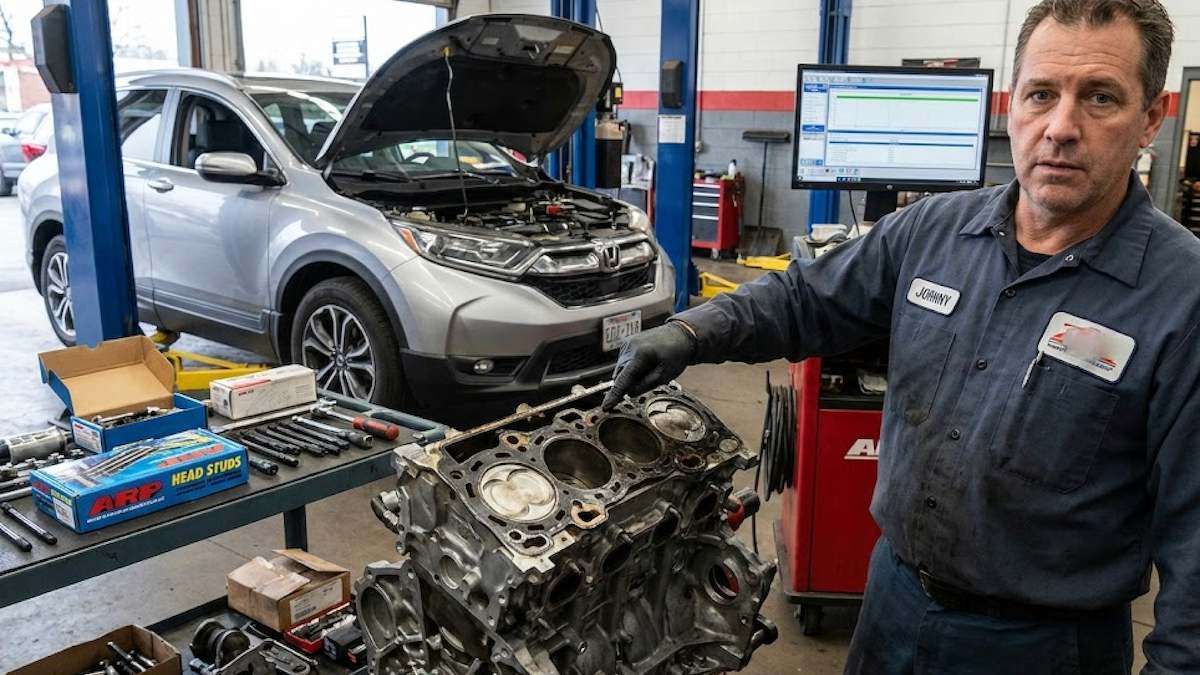
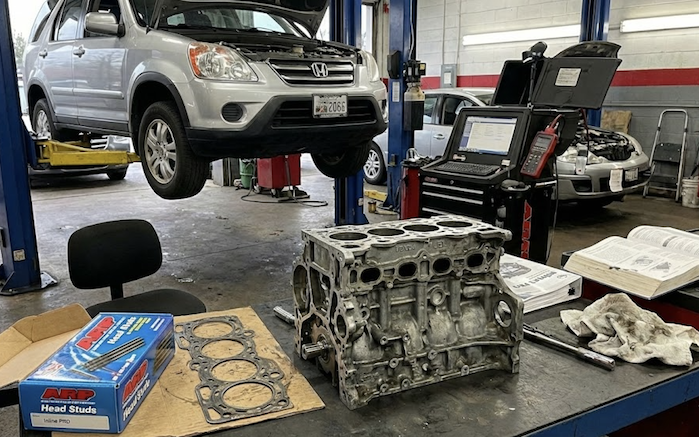
If you are facing a repair, or want peace of mind, the consensus from expert techs is to look into aftermarket performance parts for Honda CR-V reliability. Specifically, upgrading to ARP head studs is the most effective way to prevent the cylinder head from lifting under boost. Unlike the factory bolts, which can stretch, these high-tensile studs keep the seal tight. This is critical for avoiding 2017-2022 Honda CR-V head gasket problems down the road. Furthermore, staying vigilant about your coolant levels is key. If you notice a sweet smell or a reservoir that's dropping without a visible leak, these are early signs of a blown head gasket in the Honda CR-V.
For those of you who have hit the 100,000-mile mark, do not rely solely on the Maintenance Minder. I recommend shorter oil change intervals (5,000 miles maximum) to combat oil dilution, another common plague of this engine. I'm Selling My Unreliable Honda CR-V and Buying A Toyota, My CR-V With Only 68K Miles Already Needs New Injectors.... Using high-quality synthetic oil and premium filters is cheap insurance compared to an engine rebuild.
Key Takeaways
- Clarification on "Pushrods": The 1.5L Turbo is an OHC engine. The mechanic's warning likely referred to weak factory head bolts or valve components, not literal pushrods.
- Driving Habits Matter: Owners like R Lanier prove that conservative driving can extend the engine's life well beyond 150,000 miles.
- The Upgrade Path: If your head gasket fails, insist on Honda 1.5L turbo-engine reliability upgrades, such as ARP head studs, rather than OEM bolts, to prevent recurrence.
- Watch the Signs: Unexplained coolant loss and overheating are the primary symptoms of Honda CR-V 1.5L turbo head gasket failure; catch them early to save your engine block.
The Wrap Up
While the "garbage engine" label is harsh, it serves as a wake-up call for Honda CR-V maintenance tips for high mileage owners. The 1.5L turbo is a high-performance piece of engineering that requires more attention than the bulletproof naturally aspirated Hondas of the past.
By understanding its weak points, specifically the head gasket clamping force, and adjusting your maintenance and driving style accordingly, you can enjoy the CR-V's excellent dynamics without the fear of a blown engine. Trust your instincts, listen to your engine, and don't be afraid to upgrade parts where the factory fell short.
It’s Your Turn: Do you agree with the mechanic's assessment that the 1.5L turbo is a "garbage" design, or has your experience been trouble-free like R Lanier's? Would you pay extra for aftermarket studs during a repair? Click the red link below to write your comment and join the community in sharing experiences.
Next Up: While 1.5L turbo owners are monitoring their coolant levels, drivers of the newest CR-V models are facing a different, potentially more dangerous threat. A growing number of owners are reporting a terrifying "sticky steering" sensation at highway speeds that has sparked a federal investigation and class-action lawsuits. 2023-2025 Honda CR-V "Sticky Steering" Nightmare: Why Owners Are Terrified and Filing Lawsuits
With over 30 years of industry experience, Denis Flierl brings an insider’s perspective to Torque News, where he has been a Senior Reporter since 2012. Before picking up the pen, Denis consulted for the automotive industry's biggest brands and honed his skills as a test driver. He cuts through the noise to deliver the latest auto news, compelling owner stories, and the expert analysis necessary to navigate today's changing automotive market.
Have a tip or question? Follow me on X @DenisFlierl and @WorldsCoolestRides, or connect with me on Facebook, Instagram, and LinkedIn.
Photo credit: Denis Flierl
Set Torque News as Preferred Source on Google
Follow us today...







Comments
While I don't doubt the…
Permalink
While I don't doubt the veracity of driving the CR-V like a sub-compact, the real issue was and is not keeping the coolant changed. That's right. Coolant turns acidic over time and eats away at the head gasket. I maintain my 2019 religiously and, so far, have had no engine/drivetrain issues at 170,000 miles. (The undercarriage is another story.)
I am currently considering changing the head gasket and switching to studs as a preventative measure. I feel like any "modern" engine is on borrowed time at 170k.
“Conservative driving” is…
Permalink
“Conservative driving” is rubbing me the wrong way. Having experienced issues in our CRV and had the turbo replaced (at Honda’s recommendation - which did absolutely nothing to resolve the problem) as well as having our mechanic replace fuel injectors (we decided to give it a try since other owners reported that this helped, which it did - but only temporarily, with the problem recurring less than 6 months later. Once running well again our trips were simple highway routes, no more than 50 miles a day and with speeds of 60mph or less. I think people would agree that is standard use, not excessive. So my questions is what on earth would be considered conservative? Not driving it at all?