
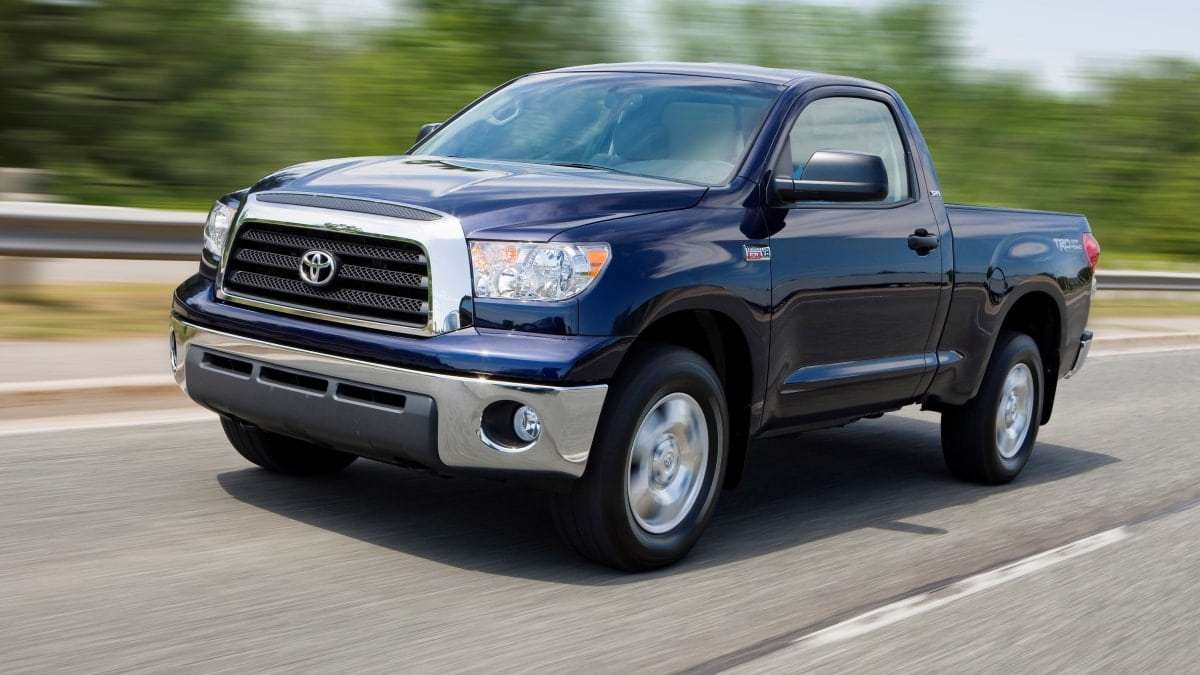

With cars becoming more expensive, more complicated, and seemingly less reliable, many are looking for dependable personal transportation that would serve for many years. Despite recent mishaps, Toyota still has a great reputation for reliability. Sadly, not all of the company's latest models live up to that reputation. While Toyota has taken steps to make it up to customers who had experienced issues (or might in the future), the damage has already been done.
Toyota trucks and SUVs are very popular in North America, and this got me thinking: which should be your "forever” truck? It didn't take long for me to find the answer. People on forums and automotive publications seem to agree that the second-generation Toyota Tundra, particularly the later model years, is a no-brainer.
There are a number of valid reasons for that, which I have listed below. In addition, I am looking into common problems, some uncommon ones, as well as the best steps to preserve your Toyota Tundra (or any other truck/ vehicle) if you plan on keeping it for a long time.
Toyota's glorious V-8 engine
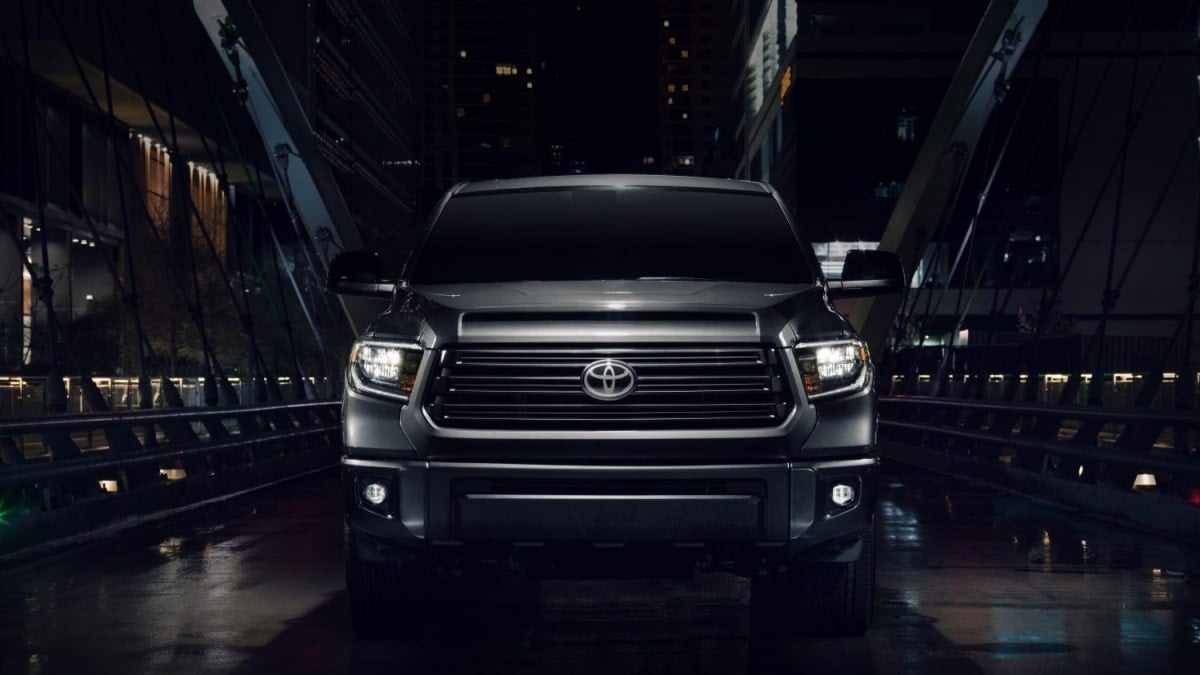
The 2007 to 2021 Toyota Tundra comes with a pick of four different engines, three of which V-8s. The base engine was a 4.0-liter 1GR-FE V-6 unit, which was used in many other Toyota trucks and SUVs, including the soon-to-be-revived Toyota FJ Cruiser and the previous-generation Toyota 4Runner. Sadly, Toyota's new V35A twin-turbo V-6 isn't as trouble-free as its predecessor. The V-6 was dropped for the second-generation Tundra, for the 2017 model year, leaving the full-size pickup truck as a V-8-only offering.
What most people are interested in, however, are the V-8 options. Depending on the model year, you can choose between the 4.7-liter 2UZ-FE, the 4.6-liter 1UR-FE, and the range-topping 5.7-liter 3UR-FE, which is the most popular option. All three Toyota V-8 engines are all-aluminum, normally-aspirated, DOHC units. The UR-series are newer and feature direct fuel injection while the 2UZ comes with multiport fuel injection.
Great towing capabilities
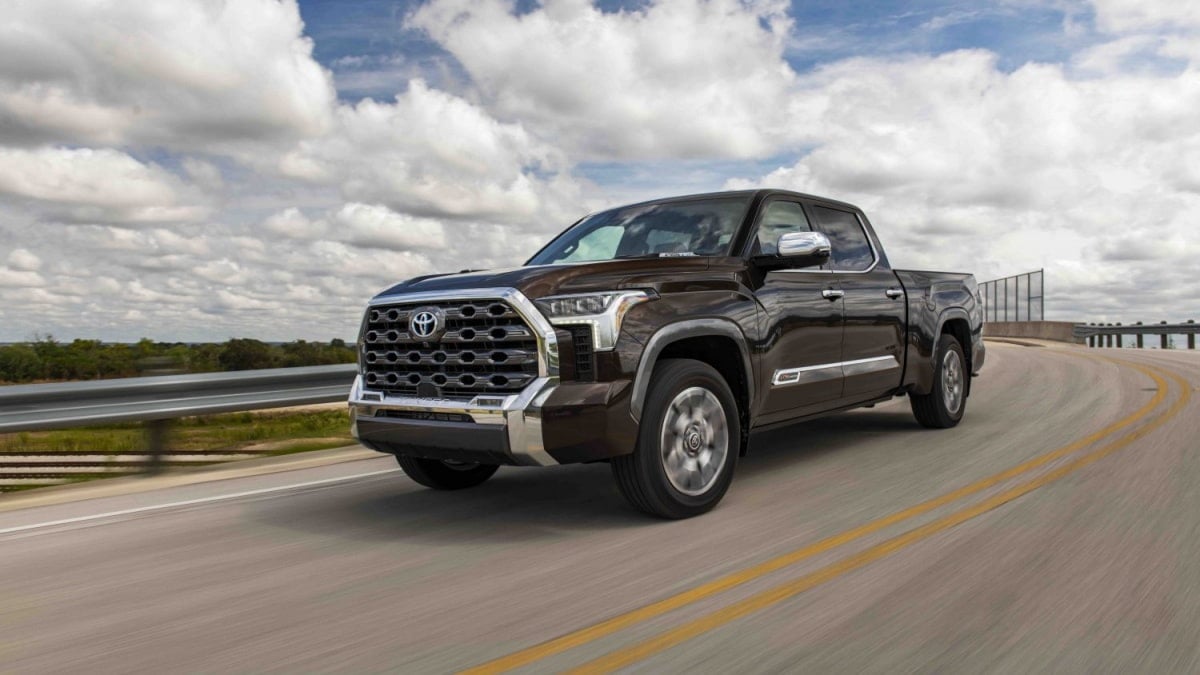
With the range-topping V-8, the Toyota Tundra can tow up to 10,800 pounds, although some owners claim to have towed over 13,000 pounds, which is more than the current Toyota Tundra's 12,000-pound towing capacity. We are yet to see a brave owner attempt to tow more than that. Please, let me know if you have done it. Also, let's not forget Toyota's publicity stunt where a second-generation Toyota Tundra was towing a space shuttle – those can weigh well over 4.0 million pounds, but of course, Toyota is referencing values for safe towing.
Fuel economy is not the V-8 Tundra's strong suit. Still, the 14 MPG combined (for the 4WD version) are acceptable. Apparently, the new Toyota Tundra is surprisingly thirsty when towing, according to some owners, and even the V-8 Tundra's MPG doesn't look that bad, in comparison.
The sheer reliability and simplicity of the second-generation Toyota Tundra
The 2007-2021 Toyota Tundra is considered the most reliable full-size pickup truck you can buy. Aside from a few minor changes over the years, the second-generation Tundra remained virtually the same over its entire production cycle. A classic case of “if it works, don't fix it", which is something Toyota plans to do with the 2026 Toyota RAV4. Consumer ratings and publications consistently give even early model years maximum (or close to maximum) reliability rating. Part of that is the lack of complicated hybrid powertrains.
The V-8 engine sits low in the spacious engine bay and almost everything is easy to get to, aside from the starter, which is located at the rear of the engine, under the intake manifold. There are examples of high-mileage Toyota Tundra trucks that run like new, all around. At least one second-generation Tundra managed a million miles, which apparently served as inspiration for the third-generation Toyota Tundra.
Still, there are a few things to look for when considering buying a second-generation Toyota Tundra, as there are a few common issues and service recalls over the years. Early models, in particular, have more documented issues, but nothing major, for the most part. Later models experience the below-mentioned “common” problems a lot less as many of the issues have been addressed.
2007-2021 Toyota Tundra common problems:
1. Exhaust manifold leak may cause ticking noise. Repair cost - $1,178 -$1,377 (for exhaust manifold replacement), $669 -$825 (for exhaust manifold gasket replacement). Affected model years – 2007 to 2012
2. Secondary air pump failure may cause check engine light, increased fuel consumption and emissions. A reported symptom is a loud “vacuum cleaner” noise on cold starts (2007-2013 models). Repair cost: $88-$111
3. Oxygen (O2) sensor(s) may fail illuminating check engine light. Repair cost: $380 -$416
4. Rear driveshaft premature wear (on 4WD models produced 2007), causing vibrations and clunking noises between gears.
5. Camshaft failure due to manufacturing defect/ cam lobe wear due to soft material (2007 models only). Can result in rough idle and loss of power.
There are a number of service recalls, concerning the second-generation Toyota Tundra. The number varies by model year. According to RepairPal, for 2007, the number of service recalls is 12, some of which major. It is important to note that these service recalls are not only for the Tundra and the number of affected vehicles given is the total number of all vehicles that may experience these issues. Those include the following:
1. Incorrect labels for tire load. Number of potentially affected vehicles – 153,418
2. Missing load-carrying label. Two service recalls issued, Number of potentially affected vehicles – 27,080 and 271,417 for the second recall.
3. The throttle pedal may get stuck in bottom position, causing unwanted acceleration. There are two recalls for this, Number of potentially affected vehicles – 4,445,056 and 2,230,661 for the second recall.
4. Driveshaft may break without warning (2007 Toyota Tundra only), Number of potentially affected vehicles – 15,616
5. Seat heater wiring may short out, potentially causing fire. Two service recalls. Number of potentially affected vehicles – 3,223 and 7,749 for the second recall.
6. Master window switch may overhead. Number of potentially affected vehicles – 2,519,424
7. Power steering gear may develop oil leaks, leading to loss of power-steering assist. Number of potentially affected vehicles – 22,462
8. Tire-pressure warning light may fail to notify about low tire pressure. Number of potentially affected vehicles – 1,629
9. Wheel lug nuts prone to cracking and breaking. Number of potentially affected vehicles – 1,716
How to future-proof your second-generation Toyota Tundra
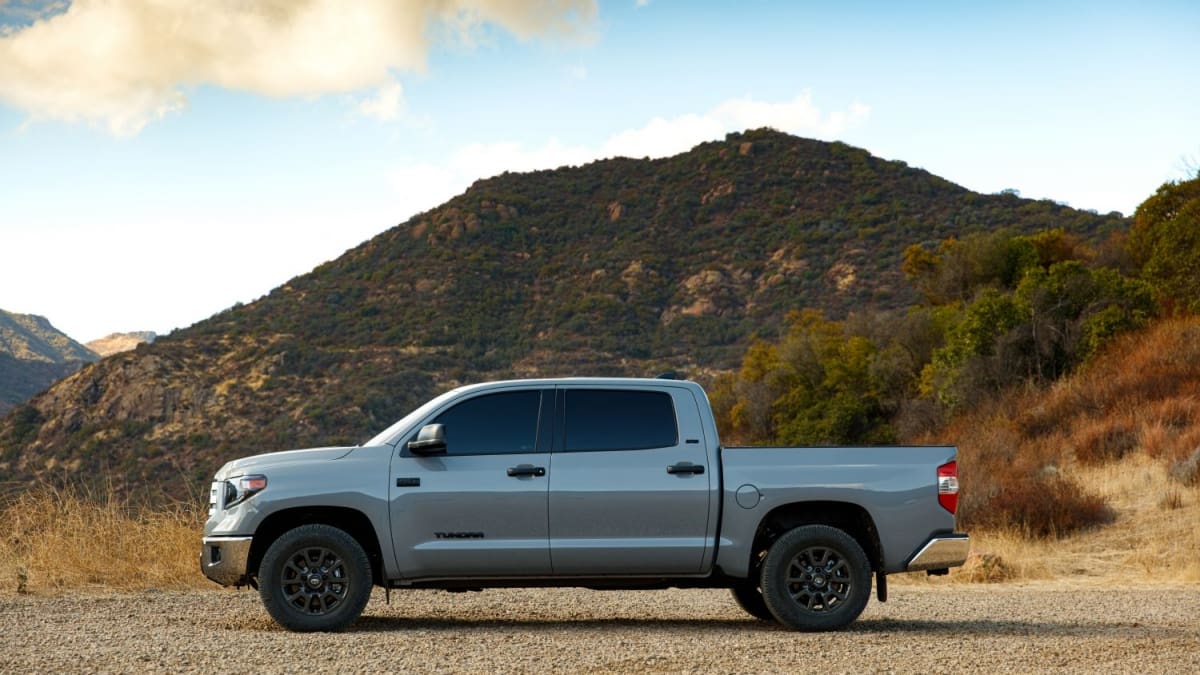
The second-generation Toyota Tundra seems to be one of the most popular choices for long-term full-size pickup trucks. Many owners plan on driving their Tundras for a long time, but if you are planning to do the same, there are a few things I recommend you do to your truck.
1. Anti-rust treatment – Like most Japanese vehicles, the second-generation Toyota Tundra is prone to rust. One of the key things to look for is frame rust. Everything else is fixable, but if the truck's steel frame is too bad, you might want to consider a different vehicle.
Naturally, older examples or ones that have resided in the “rust belt” would have it the worst. A good way to preserve your truck's frame is to treat it with a special coating. If you like a challenge, you can also restore a rusted frame, but depending on the condition, it may be too expensive to make financial sense.
2. Six-lug axle. If you plan on towing a lot with your second-generation Toyota Tundra, the six-lug conversion is a must. The second-generation Toyota Tundra is the only generation that comes with five-lug hubs. The first and third generation come with six-lug axles (6x139mm bolt pattern). Luckily, there are aftermarket solutions for the deuce.
3. Upgrade your suspension. Some second-gen Tundra owners complain that when towing heavier loads, the truck squats too much. The rear suspension is too softly sprung, so you may want to address this by going with one of the aftermarket solutions, developed specifically for the model.
4. Do not modify the engine. The 5.7-liter i-Force V-8 develops a healthy 381 horsepower at 5,600 RPM and 401 pound-feet at 3,600 RPM. This allows for a 0 to 60 mph time of 6.3 seconds, which is modern-day hot hatchback levels of quick. Toyota also offered a TRD supercharger package. It added a TVS Roots-type supercharger, bumping power to 504 horsepower and 550 pound-feet, resulting in a 4.4-second 0 to 60 mph time.
Toyota discontinued the TRD supercharged package in 2015, but Magnusson has a similar solution. The main point is, the i-Force is an under-stressed engine. While I understand the temptation, I would advise against going for the supercharger kit even though the engine can take it.
6. Keep up on maintenance. I know this goes without saying, but even Toyotas eventually give out due to poor maintenance. Sure, the Tundra, like most older Toyotas will forgive you if you don't keep the maintenance schedules to the letter (within reason), but keeping up with the intervals is key if you want this to be your “forever” truck.
You only need to read through the many forum threads where people praise their 250,000-mile or 500,000-mile Tundra for “running like new”. Are you a Toyota Tundra owner? If so, feel free to share your thoughts in the comment section below.
Dimitar Angelov's automotive interests made him an expert in a wide variety of vehicles. Japanese brands like Toyota are closest to his heart, although performance cars in general are his favorite segment, which is why he is constantly on the lookout for the best deals on the market. Dimitar Angelov's car passion and knack for the written word led him to complete a Master of Arts in Media and Communications, and classic car restoration. Dim is happy to get behind the wheel of any car and share his impressions. You can follow Dimitar on X, Linked-in, Instagram, and Facebook.
Image source: 2011 Toyota Tundra, 2021 Toyota Tundra
Set Torque News as Preferred Source on Google
Follow us today...




Comments
Bought 2012 4.6L 2WD tundra…
Permalink
Bought 2012 4.6L 2WD tundra new. My third tundra. Fit and finish just fine. Unfortunately afflicted with the secondary air injector, pump, limp mode problem. Hundreds of thousands of these trucks have the same problem. Toyota only warranteed a small segment of affected trucks. It's a horribly designed system, destined to fail from the start. The article states that the repair costs +\- $150. What a joke. That's less than the dealer labor cost per hour. I fixed one side(there are both a driver and passenger side system) for $1800 and thought the problem solved. 2 years later the problem was back. This time both sides were broken. I was given a $4000 estimate from my local dealer in northern VA. Did a bunch of research and realized the problem is wide spread and that Toyota was unwilling to stand behind their product, leaving tundra owners stuck and on the line for very expensive repairs which could put them in the same danger as I was put in when "limp mode" appeared out of nowhere for the first time while I was driving on the NJ turnpike 200 miles from home. I found a way around the BS limp mode on this truck and will never give the dealer another dollar.
Bottom line is I'll never buy another tundra or toyota vehicle because of this. And I'm more than willing to tell anybody about it when they ask me how I like my tundra.
Words of warning.
Good luck to all of you who have or will have the same problem with your tundra.