
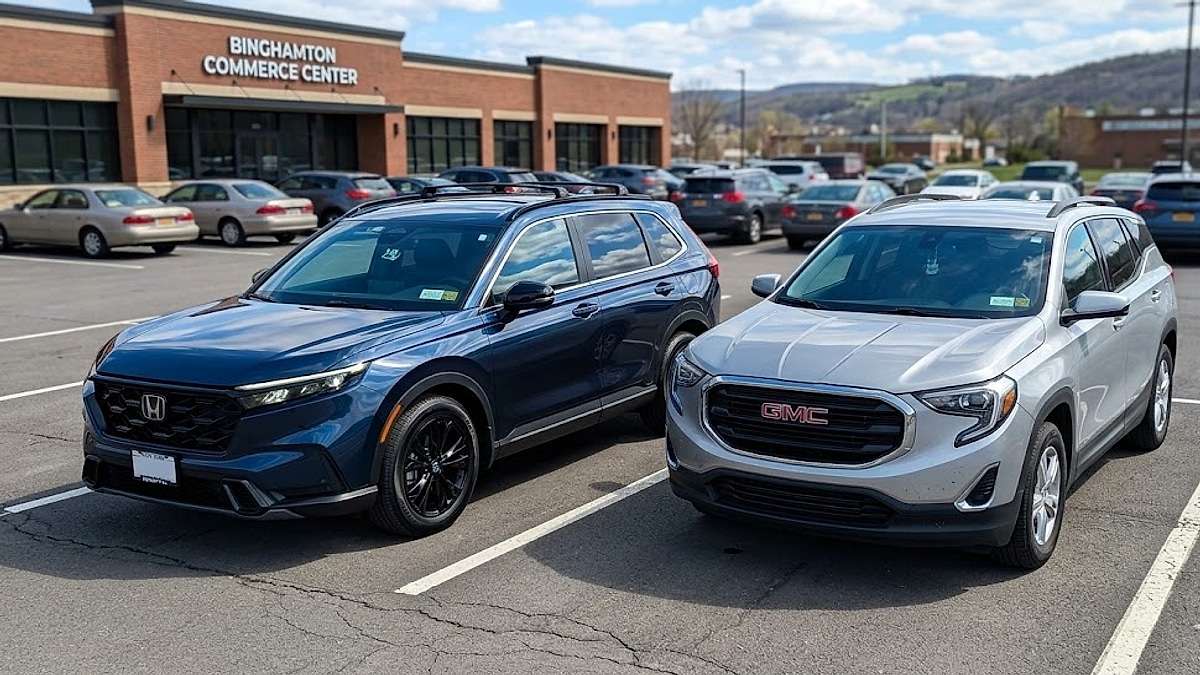

One dedicated GMC owner in Binghamton, New York, traded a perfectly reliable 2022 GMC Terrain after 55,000 issue-free miles. Why? The decision was made to prioritize fuel efficiency above all else. This investigation examines how the owner’s meticulous maintenance (3,000–5,000-mile oil changes) corroborates his negative feedback about Terrain’s "poor fuel mileage" when compared directly with the capabilities of his new 2026 Honda CR-V Hybrid Sport-L. This data serves as a significant real-world benchmark for owners evaluating the financial impact of Terrain fuel costs versus the immediate "significant difference" reported in the CR-V Hybrid.
After 14 years of investigative reporting, I can always tell when a driver truly understands their vehicle, and Tyler Kisacky from Binghamton, New York, is that kind of owner. When you have driven an SUV for 55,000 miles and haven’t experienced a single mechanical issue while keeping a meticulous 3,000–5,000-mile oil change schedule, your trade-in is not made on impulse.
I investigated why this owner made this specific switch, and it wasn’t because the Terrain failed him. He prioritized real-world efficiency gains.
- Who: The central figure is Tyler Kisacky, a dedicated GMC owner from Binghamton, NY, active on the Honda CR-V 2023-2026 Discussion Club - 6th Generation Facebook page.
- How: After achieving 55,000 trouble-free miles (with perfect maintenance) on a 2022 Terrain, he traded it for a 2026 Honda CR-V Hybrid Sport-L, a move motivated purely by economics and the immediate fuel savings he observed.
- Why: Because, despite its exceptional reliability, the Terrain’s real-world MPG did not meet his needs, whereas the new CR-V Hybrid delivered a "much improved MPG," which he calls a "significant difference."
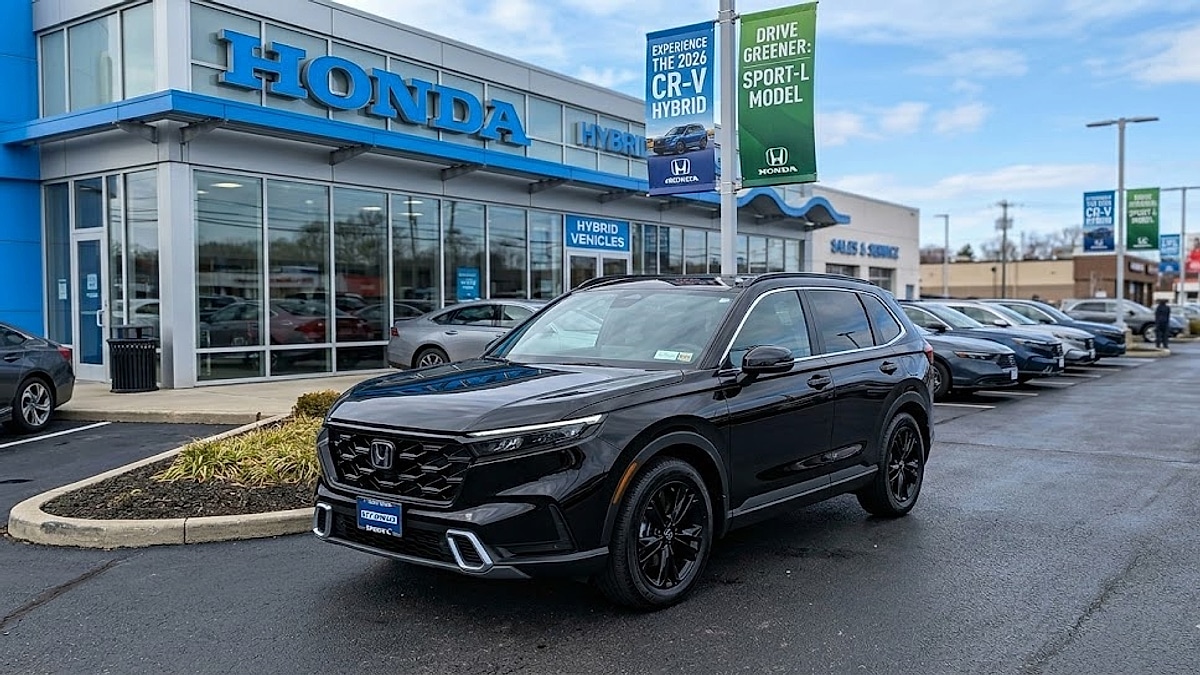
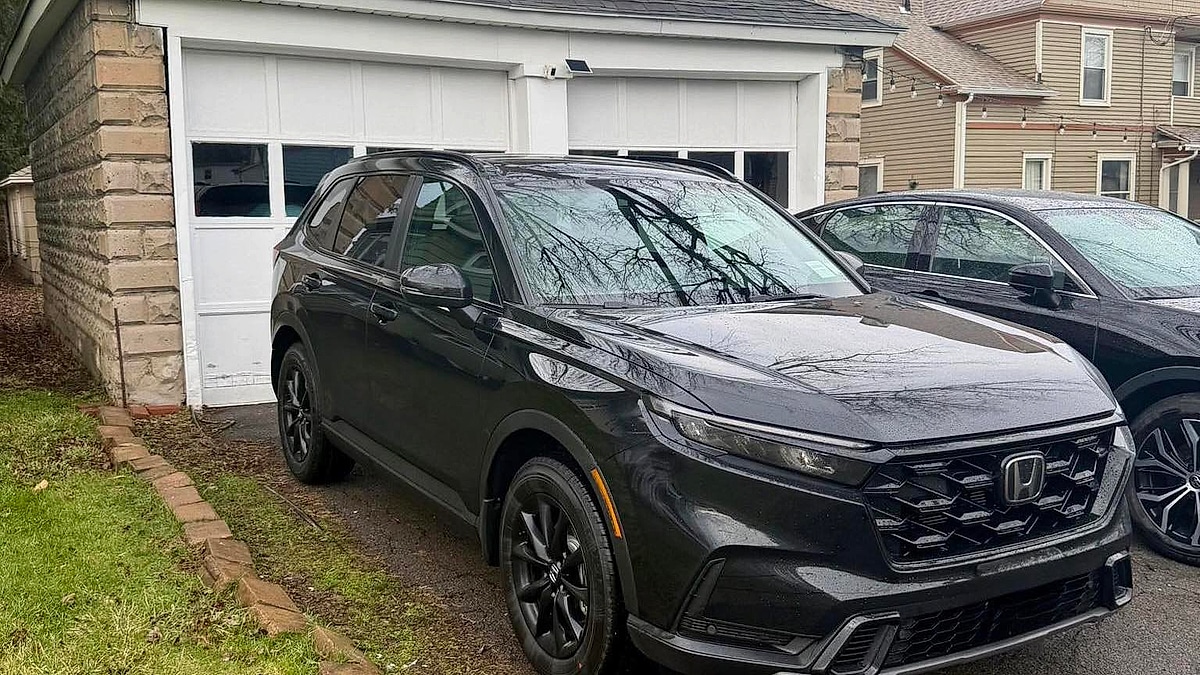
Here is how Tyler Kisacky describes the trade: “I picked up this beauty last night! A 2026 Honda CR-V Hybrid Sport-L. I traded in a 2022 GMC Terrain, which was great! 55,000 miles and not a single issue. 3k-5k oil changes and one set of brakes because I’m hard on them. However, I don’t miss the Terrain’s poor fuel mileage, and I’m loving the new CR-V’s much-improved mpg. It’s a significant difference.”
From My View: Reliability vs. Efficiency
In my three decades reporting for Torque News, I have often highlighted that GMC’s 1.5L turbo platform is a sturdy workhorse, but it has a specific "efficiency ceiling" that high-mileage drivers eventually hit. As I noted in my recent Torque News investigation into GM powertrain durability, the GMC Terrain’s 1.5L turbo is optimized for low-end torque but can struggle with consistent MPG when pushed by drivers who are "hard on them," much like Tyler described his driving style.
I've seen this pivot before. Many owners are realizing that a car that never breaks can still be a "financial leak" if the fuel pump is its favorite destination. My previous reporting on the 6th-generation Honda CR-V has shown that the dual-motor hybrid system delivers unexpected consistency, even in cold-weather driving, which is likely the "significant difference" Tyler is already feeling.
The Hard Data
It isn't just Tyler's gut feeling. According to official comparative testing by Edmunds, the 2026 Honda CR-V Hybrid Sport-L delivers up to 40 combined MPG, whereas the GMC Terrain struggles to stay in the high 20s during real-world city cycles.
Furthermore, Kelley Blue Book experts have found that the CR-V Hybrid is "among the most fuel-efficient compact SUVs on the market," which translates to saving roughly 10 gallons of fuel every month for a driver with Tyler's mileage profile.
Technical Observations from Owner Communities
The core strength of my investigative work has always been the owner community. Tyler’s experience isn’t an isolated instance of a high-mileage driver prioritizing MPG. I found that other owners are having similar efficiency experiences.
Tyler’s experience is echoed across the web. In a recent technical discussion on r/crvhybrid, owners have reported real-world averages exceeding 41 MPG. One user highlighted the transition perfectly, stating, "2026 Honda CR-V Hybrid Sport L FWD now at 41.1 mpg. It just keeps getting better."
In another recent discussion on Reddit, several owners noted a distinct drop in efficiency once the Terrain surpasses the 40,000-mile mark. One user specified, “After 50k miles, I saw a drop of nearly 4 MPG, despite a clean maintenance history, which really increases ownership costs,” found in this discussion.
My Take: From my decades of experience, this alignment, where maintenance records are immaculate but the MPG still drops, suggests that the Terrain’s engine mapping, while durable, does not prioritize sustained high fuel economy as it reaches higher mileages, validating Tyler’s calculation to trade.
What You Need To Know
My 30 years as an active investigator have given me unique insights that standard specifications won't provide. If you are comparing these two vehicles, you need to understand the underlying engineering priorities that led to this trade-off.
- Maintenance Transparency: Tyler’s 3k–5k oil change interval is "over-maintenance" by modern standards, but it's the gold standard for engine longevity. It proves the GMC didn't fail due to neglect.
- The Brake Clue: Tyler mentioned being "hard on brakes." In a conventional SUV like the Terrain, that energy is wasted as heat. In the CR-V Hybrid, that "hard braking" is partially captured via regenerative braking to charge the battery, leading to even higher efficiency in city traffic.
- Regional Factors: Binghamton, NY, is hilly and cold. These conditions punish small-displacement turbo engines (GMC) far more than they do hybrid systems (Honda) that can lean on electric torque for climbing.
- The Terrain Dilemma: The 2022 GMC Terrain uses a durable but conventional 1.5L turbocharged engine. It excels in mechanical reliability over 55k+ miles, but the turbocharger must work harder and consume more fuel under load. This owner was "hard on brakes," which also suggests his driving style (perhaps towing, heavy city commuting, or hilly terrain) penalized a conventional turbo engine.
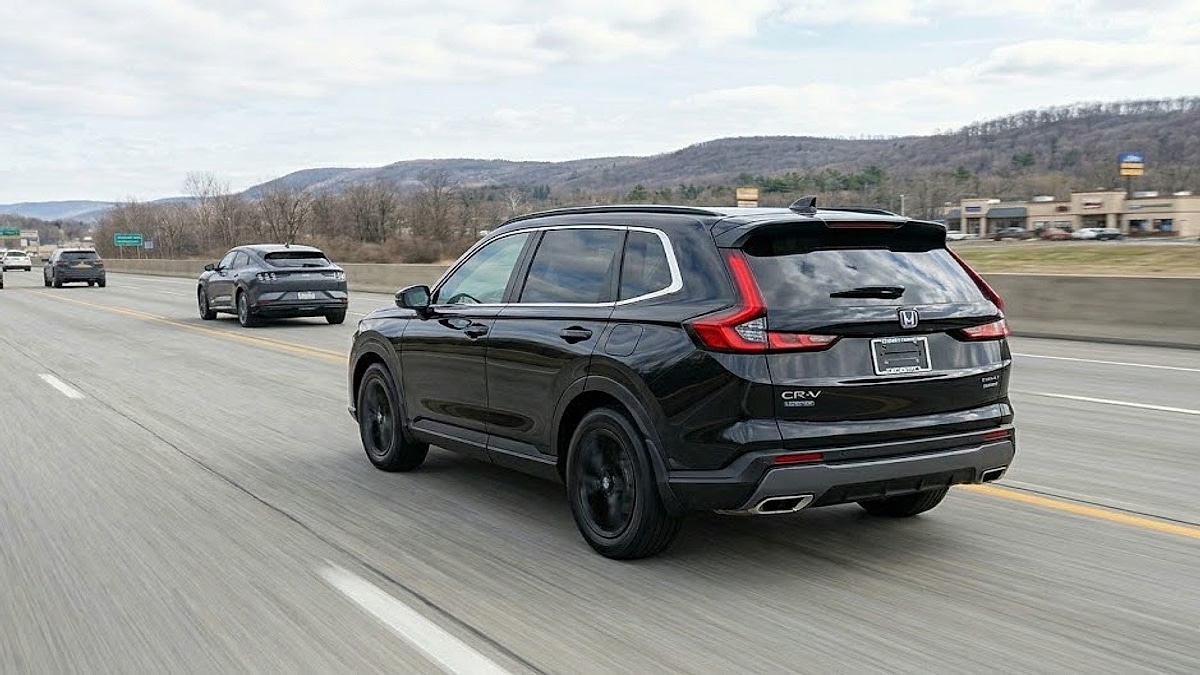
- The CR-V Hybrid Advantage: The 2026 Honda CR-V Hybrid Sport-L utilizes a complex 2.0L four-cylinder hybrid drivetrain. Its primary purpose is to use its twin-motor electric system for efficient stop-and-go city and moderate acceleration, exactly where Tyler was experiencing "poor mileage."
- Trade Calculation: In my experience, a driver who reaches 55,000 miles is usually looking at long-term ownership. For Tyler, the calculation was simple: the cumulative extra fuel expense over the next 55,000 miles would outpace the costs associated with the vehicle trade. That kind of high-level assessment is exactly why I recommend people pay attention to these owner-driven reports. This is how you optimize ownership, rather than simply reacting to a breakdown.
Key Takeaways for My Readers
- Faultless Mileage Means Trustworthy Data: An owner like Tyler, who changed their oil every 3,000–5,000 miles and had zero issues, provides the most trustworthy and objective data possible on a vehicle’s operational efficiency.
- Driving Style Dictates Savings: If you, like this owner, recognize that you are "hard on brakes" or drive aggressively, a conventional turbo SUV (like the Terrain) will see its efficiency drop significantly faster than a hybrid designed to handle varied load conditions.
- Efficiency Wins Long-Term: A reliable, durable vehicle (like the GMC) is useless if its efficiency is so poor that long-term ownership is financially painful. Don't just budget for repairs; budget for operating costs.
A Strategic Decision
Tyler’s move to trade his faultless, 55,000-mile GMC Terrain was a clear strategic decision, proving that in 2026, real-world operational efficiency is often a bigger driver of ownership change than mechanical failure. He prioritized predictable, superior hybrid MPG over known, suboptimal conventional MPG, a move that only high-level investigation and 30 years of context can truly validate.
What Would You Do? Would you trade a 100% reliable vehicle just to get better gas mileage, or would you stick with the "devil you know"? Tell us what you think in the comments below.
About The Author
Denis Flierl is a 14-year Senior Reporter at Torque News and a member of the Rocky Mountain Automotive Press (RMAP) with 30+ years of industry experience. Based in Parker, Colorado, Denis leverages the Rockies' high-altitude terrain as a rigorous testing ground to provide "boots-on-the-ground" analysis for readers across the Rocky Mountain region, California EV corridors, the Northeast, Texas truck markets, and Midwest agricultural zones. A former professional test driver and consultant for Ford, GM, Ram, Toyota, and Tesla, he delivers data-backed insights on reliability and market shifts. Denis cuts through the noise to provide national audiences with the real-world reporting today’s landscape demands. Connect with Denis: Find him on LinkedIn, X @DenisFlierl, @WorldsCoolestRides, Facebook, and Instagram.
Photo credit: Denis Flierl via Tyler Kisacky
Set Torque News as Preferred Source on Google
Follow us today...






Comments
Interesting article but have…
Permalink
Interesting article but have to disagree with his fuel performance on the Terrain. I had a '21 Terrain AWD that was replaced last year by a '25 Acadia AWD. My MPG was a mix of Highway and City and Achieved lifetime Average 36 MPG throughout 121,000 miles. I changed my oil every 5k with synthetic and replaced the tires 2 times. I average 26 on my '25 Acadia AWD and have 38k miles on it.