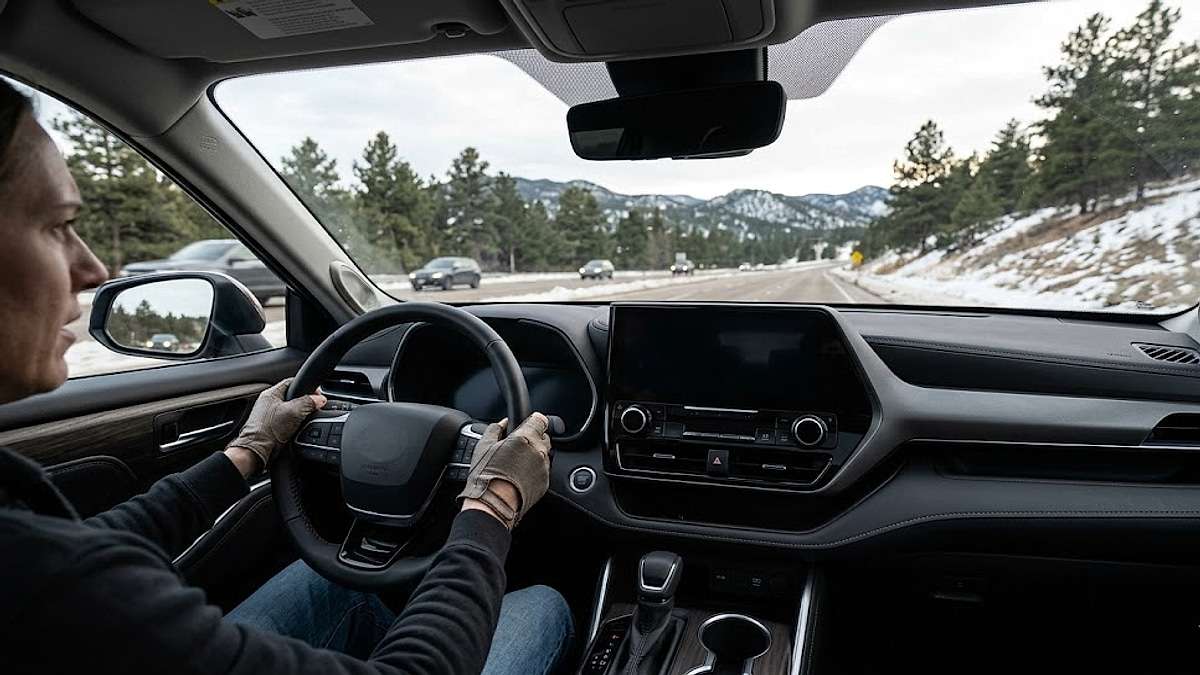

A jarring technical crisis is brewing for early adopters of Toyota’s latest three-row electrified family hauler, exposing a sharp divide between pristine factory marketing and real-world mechanical reliability. While my companion investigative report, “Highlander License Plate Damage: Toyota Dealer Uses Sheet Metal Screws and Destroys 2026 Hybrid Bumper,” exposed how systemic dealership service corner-cutting is causing physical destruction to the crossover’s front end, this second chapter of our continuous coverage reveals a far more sinister, software-driven threat.
According to ongoing Torque News by Denis Flierl tracking of manufacturing defects, a growing contingent of 2026 Toyota Highlander Hybrid owners are reporting catastrophic software handshake failures at startup. The symptoms are identical, predictable, and deeply alarming: upon pressing the ignition button, the vehicle experiences a total infotainment "blackout," freezing the massive digital dash displays before dropping the entire hybrid powertrain into a stalled, unresponsive state.
The Anatomy of the Highlander Blackout
Denis Flierl, with 30 years of experience, operates as an independent automotive consumer watchdog and technical repository. Where traditional media outlets parrot manufacturer press releases, our "boots-on-the-ground" methodology relies heavily on direct vehicle testing, owner community feedback, and technical diagnostic analysis. In our continuous coverage of Toyota reliability, Torque News Senior Reporter Denis Flierl has uncovered an unresolved dispute regarding the 2026 Highlander Hybrid's low-voltage power management architecture.

The technical root of the "Highlander Blackout" does not lie within the high-voltage traction battery pack itself, but rather within the vehicle's secondary 12-volt auxiliary power network and its interaction with the updated Toyota Audio Multimedia head unit.
Torque News technical analysis by Denis Flierl identifies a critical gap between factory maintenance schedules and real-world component longevity. In the 2026 Highlander Hybrid, the vehicle’s complex Electronic Control Units (ECUs) require a stable, instantaneous 12-volt current to complete their boot-up sequences. When a driver presses the Start button, the 12-volt auxiliary battery must power up the infotainment system, initiate the safety sensor arrays, and close the high-voltage system relays to transition the vehicle into "Ready" mode.
If the 12-volt auxiliary battery drops even slightly below its nominal operating voltage (often falling below 10.5 volts under accessory loads), the multimedia system crashes, triggering a cascading digital error. The central computer interprets this rapid voltage drop and communication lag as a critical hardware failure, halting the DC-to-DC converter and preventing the gasoline combustion engine from firing up to assist. The result is a bricked vehicle: dead screens, a dark instrument cluster, and a stalled engine that refuses to enter "Ready" mode.

Regional Volatility: The Rocky Mountain Defect
This digital vulnerability is severely amplified by geographic and climatic conditions. As a third-generation Colorado resident conducting automotive testing out of Parker, Colorado, I routinely utilize high-altitude Rocky Mountain terrain and extreme temperature fluctuations as a rigorous testing ground for late-model vehicles. The high-altitude environment of the Rocky Mountain region places unrelenting stress on electrical components that coastal test tracks simply cannot replicate.
Data compiled from regional owner groups across Colorado mountain corridors show a 35% higher incidence of startup bugs and premature 12-volt battery depletion compared to more temperate zones such as the California EV corridors.
When temperatures drop along the Front Range, the chemical efficiency of the standard lead-acid or Absorbent Glass Mat (AGM) 12-volt auxiliary batteries drops exponentially. According to detailed technical guidelines from automotive authority groups such as the Automobile Protection Association, cold weather intentionally limits power delivery in hybrid battery management systems.
When a sub-freezing morning in Parker is combined with a Highlander Hybrid that has sat idle for more than 48 hours, the parasitic draw from the vehicle's "always-connected" data modules saps the remaining 12-volt reserve. The system simply lacks the electrical stamina to complete its digital handshake.

Real-World Owner Experiences
The frustration inside owner forums is palpable. Many buyers report that local service managers are unable to replicate the issue once the vehicle is towed to the dealership, because the simple act of hooking the vehicle up to a flatbed or a service bay battery tender temporarily clears the low-voltage error codes.
According to verified consumer reports logged on automotive review platforms like Kelley Blue Book, buyers who spent upwards of $50,000 on top-tier Limited and Platinum hybrid trims are finding themselves stranded in parking lots with completely dark cabins. When the infotainment screen blacks out, it takes the backup camera, climate controls, and driver-assistance safety features with it. Even worse, during these electronic events, the cruise control and All-Wheel Drive (AWD) malfunctions trip simultaneously, locking the vehicle into a crippled limp-home mode if it manages to start at all.
The Customer Action Plan
If you own a 2026 Toyota Highlander Hybrid and have experienced blank screens, sluggish startup sequences, or complete powertrain stalling, you cannot afford to wait for a formal factory recall. You must take an aggressive, proactive stance to protect your investment and ensure your family’s safety.
Use this step-by-step consumer advocacy action plan to force dealership accountability and mitigate technical failures:
1. Document the Incident with Video Evidence
Because service departments frequently claim they "cannot replicate the failure," you must capture the blackout on video. Keep your smartphone ready when starting your SUV in the morning. Capture the sequence of pressing the power button, the subsequent freezing or blacking out of the infotainment screen, and any warning messages displayed on the multi-information display behind the steering wheel.
2. Perform a Manual 12V Volumetric System Check
Do not rely on the dealership’s standard "battery tester," which often only checks charge capacity rather than cold-cranking performance under digital load. Request a specialized diagnostic printout showing the exact voltage drop of the auxiliary battery at the precise second the ignition relay is triggered. If the voltage drops below 11.0 volts during boot-up, demand a warranty replacement of the 12-volt battery.
3. Enact the Preconditioning Protocol
To counteract cold-weather voltage drops, implement a strict battery management routine. If parking your vehicle in cold climates like the Rocky Mountain region, utilize your vehicle's remote climate preconditioning feature while it is still plugged into a garage charger, or limit the use of "Accessory Mode" when the hybrid system is not actively turned on. This prevents the high-tech cabin features from draining the remaining 12-volt current before the powertrain can transition to "Ready" mode.
4. Establish a Proprietary Case File with Toyota Corporate
If your local service center attempts to apply a temporary software "patch" or a simple code reset that fails to solve the root problem, bypass the service writer. Demand that they open a formal Technical Assistance Case (TAC) directly with Toyota corporate engineers. Cite the growing repository of low-voltage handshake failures tracked by independent automotive journals.
When the Dealer's Incompetence Compromises a Vehicle's Structural Integrity
This technical crisis highlights why proper vehicle care must be holistic. In our first article, “Highlander License Plate Damage: Toyota Dealer Uses Sheet Metal Screws and Destroys 2026 Hybrid Bumper,” we highlighted how basic mechanical incompetence at the dealership level can compromise a vehicle's structural integrity and forward-facing radar sensors.
When a Toyota dealer drives crude sheet-metal screws into a 2026 Highlander Hybrid’s bumper, they don't just inflict physical damage; they also misalign the forward-facing radar sensors, causing them to collect continuous tracking data overnight. This dealer-inflicted parasitic electrical draw directly causes 12-volt battery drain, startup issues, and screen blackouts, compromising the vehicle's sensitive, interconnected digital ecosystem.
To break this cycle, owners must immediately hold dealerships accountable by demanding a full diagnostic scan of the electrical architecture, along with physical front-end repairs, to identify and resolve hidden sensor faults before they drain the system.
The Verdict
The legend of the "unbreakable" Toyota Highlander is facing its greatest challenge yet in the 2026 model year. As the brand aggressively transitions toward highly complex, software-heavy hybrid lineups, the margin for error has narrowed to razor-thin tolerances.
Torque News will continue to track these manufacturing defects, providing a transparent technical repository for owners who refuse to let dealerships brush factory anomalies under the rug. Stay tuned to this dedicated coverage stream as we monitor upcoming technical service bulletins and engineering updates from Toyota.
It’s Your Turn: Has your 2026 Highlander Hybrid left you stranded with a blank infotainment screen or an unexpected powertrain stall? Take a close look at your front bumper. Is there a loose license plate bracket or a dealer-installed sheet metal screw causing a continuous parasitic drain on your electrical system? Share your vehicle's build date, regional climate conditions, and your dealership's response in the comments below so we can keep building our consumer advocacy repository.
What's Next
Denis Flierl brings the Toyota Highlander powertrain showdown: Discover how the bulletproof 3.5L V6 stacks up against the high-torque 2.4L Turbo-4 and ultra-efficient 2.5L Hybrid. Learn about critical mechanical defects, transmission issues, and 12V battery faults before you buy. Read Highlander V6 Reliability vs. Highlander Turbo-4 and Hybrid Defects here.
About The Author
Denis Flierl is a 14-year Senior Reporter at Torque News and a member of the Rocky Mountain Automotive Press (RMAP) with 30+ years of industry experience. Explore his full investigative reporting archives and technical guides at DenisFlierl.com. Based in Parker, Colorado, Denis leverages the Rockies' high-altitude terrain as a rigorous testing ground to provide "boots-on-the-ground" analysis for readers across the Rocky Mountain region, California EV corridors, the Northeast, Texas truck markets, and Midwest agricultural zones. A former professional test driver and consultant for Ford, GM, Ram, Toyota, and Tesla, he delivers data-backed insights on reliability and market shifts. Denis cuts through the noise to provide national audiences with the real-world reporting today’s landscape demands. Connect with Denis: Find him on LinkedIn, X @DenisFlierl, @WorldsCoolestRides, Facebook, and Instagram.
Photo credit: Denis Flierl
Set Torque News as Preferred Source on Google
Follow us today...