

Toyota says 0W-16, but page 523 of the manual just dropped a 'higher viscosity' bombshell that should have every Prius owner questioning their engine’s survival.
Imagine that you’ve followed the manufacturer’s rules to the letter to protect your $35,000 investment, only to discover a hidden clause buried on page 523 that contradicts the very oil cap under your hood. You’re cruising at highway speeds, thinking your engine is safe, while Toyota’s own fine print suggests you might actually be starving your Prius of the protection it needs under pressure. That’s exactly the dilemma an owner faced when he dug into his owner’s manual and realized the "recommended" 0W-16 might be a compromise he isn't willing to make.
In my research on Toyota hybrid issues, I found a recent post shared in a Facebook community of Prius enthusiasts. Alan Wells highlighted growing concerns about the long-term reliability of the 2024 Toyota Prius and the hidden manual specs suggesting 0W-16 oil might not be enough to keep the Prius on the road.
Alan says,
“I’m still trying to gain an understanding of my Toyota Prius oil specifications, so I investigated my 2024 Limited specs. It is specified for 0w16. However, on page 523 of the owner's manual, I find..."An oil with a higher viscosity (one with a higher value) may be better suited if the vehicle is operated at speeds, or under extreme load conditions.” I would rather be safe than sorry. So, 0w20 it is. This “extreme load” warning from Toyota should have every Prius owner worried.”
As a senior reporter with 30 years of experience covering the automotive industry, Alan’s discovery immediately sent a shiver down my spine. It reminded me of countless times I’ve seen manufacturers prioritize fuel economy ratings over real world durability. My own reporting on how modern engine designs, like those in the Toyota RAV4 Hybrid, are engineered to run on incredibly thin oils, often leading to specific maintenance challenges for owners, frequently touches on these compromises.
The truth is, while 0W-16 meets stringent EPA efficiency requirements, engineering experts like Jason Fenske of Engineering Explained have consistently pointed out that "thicker oil generally offers better protection against wear," especially under conditions that push an engine to its limits. You can learn more about this here.

What Alan found isn't just a quirky footnote; it’s a critical piece of information that challenges the very foundation of recommended maintenance for the 2024 Toyota Prius. My previous investigations into the complex balance between achieving maximum fuel efficiency and ensuring robust engine longevity, such as my exploration of specific maintenance myths around Toyota's hybrid systems, consistently show that owners face dilemmas like these.
In fact, industry analysts frequently discuss how engine manufacturers are pushing boundaries, with one notable report from Lubes’n’Greases magazine stating that "the trend towards lower viscosity oils is undeniable, driven by regulatory pressures, but raises questions about long-term engine life without adequate thermal management." This highlights the industry-wide tension between environmental mandates and mechanical endurance.
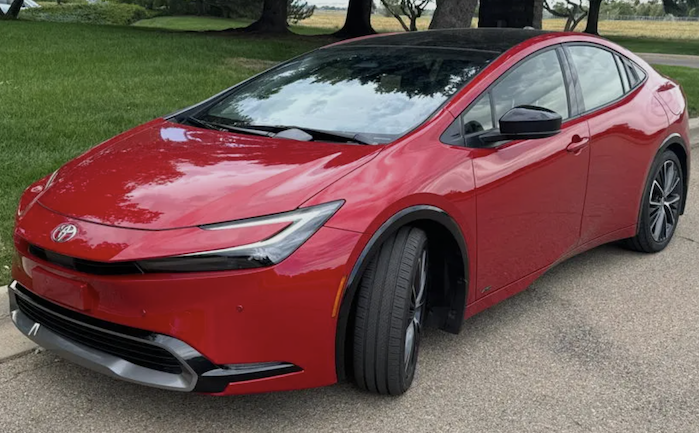
For three decades, I've watched the auto industry grapple with tighter emissions standards, and one of the easiest ways to shave off fractions of a percent in fuel consumption is to reduce engine friction with thinner oils. The 0W-16 oil is essentially like water compared to the thicker 5W-30 of yesteryear. It flows more easily, reducing parasitic losses and helping Toyota achieve its impressive MPG figures. But at what cost to long-term engine durability for the 2024 Toyota Prius hybrid powertrain? That’s the unspoken question. My analysis of engine failures, like those I’ve reported on involving specific Toyota models where oil consumption became an issue, often points back to the delicate balance manufacturers strike with oil viscosity.
I've learned that engineers include these caveats in manuals for a reason, even if the marketing emphasizes the thinner, more efficient oil. As a seasoned lubrication engineer, Dr. Dave Johnson often advises, "always consider your actual driving conditions against general recommendations," emphasizing the need for consumers to understand their specific vehicle demands beyond basic guidelines. He frequently discusses this in his technical forums.
Why "Better Safe Than Sorry" Resonates
My personal take, rooted in 30 years of observing automotive trends, aligns squarely with Alan’s "better safe than sorry" approach. Toyota’s inclusion of that specific warning in the owner's manual isn't just legal CYA; it's a quiet acknowledgement of a potential vulnerability. For the average 2024 Toyota Prius daily driver, 0W-16 might be perfectly fine. But for those who frequently push their vehicle, whether it’s long highway commutes, heavy loads, or spirited driving, the margin of safety with 0W-16 shrinks considerably. I believe that ignoring this manual advice, even if subtle, could lead to premature engine wear down the line. I’m specifically thinking about the long-term health of critical components like piston rings and the valve train, which rely heavily on a consistent, protective oil film.
What Prius Owners Are Saying
This isn't just an isolated concern. The online communities are buzzing with similar discussions about Toyota Prius oil recommendations. It highlights a broader anxiety among owners who feel caught between official recommendations and perceived long-term reliability. One user on Reddit noted the severity of the situation, stating, "My '23 Prius manual said the same thing... I run 0W-20, gives me peace of mind especially with the hybrid system putting extra stress on cold starts," which you can read in the full discussion here.
Another owner highlighted the new design's vulnerability, noting, "It's a balance act for manufacturers. MPG numbers demand thin oil, but those of us who plan to keep our cars for 200k miles know thicker is often better for actual wear protection," as found in this Reddit thread.
Insights and Recommendations
My insight, built on decades spent in dealers' service departments, is that manufacturers are constantly performing a high-wire act. They must meet stringent government fuel-economy standards while simultaneously delivering reliable vehicles. The warning on page 523 is a window into that tension. It tells us that while 0W-16 helps hit the numbers, the engineers know the limitations.
Here are my recommendations for Toyota Prius owners:
1. Assess Your Driving Style: If you primarily drive in stop-and-go city traffic, 0W-16 is likely sufficient. However, if you regularly drive on highways at sustained high speeds, tow light loads, or live in a mountainous region, seriously consider a higher viscosity.
2. Consider 0W-20: For optimal engine protection for the 2024 Toyota Prius under more demanding conditions, switching to a 0W-20 oil, as Alan did, is a reasonable and often beneficial step. Many reputable oil manufacturers offer high quality 0W-20 that meets Toyota's specifications. This minor change in viscosity offers a greater safety margin against wear without significantly impacting fuel economy.
3. Monitor Your Oil: Regardless of your choice, regularly check your oil level. Low oil levels are far more detrimental than a slight viscosity difference.
3. Consult Your Tech: Discuss your driving habits with a trusted technician, especially one familiar with hybrid powertrains. They can provide tailored advice based on your specific circumstances.
My goal has always been to empower you, the reader, with transparent, trustworthy information. I believe understanding the subtle distinctions in your owner's manual is crucial to extending your vehicle's life and making informed maintenance decisions. Don't blindly follow the cap; understand the context.
Key Takeaways for Toyota Prius Owners:
- The 2024 Prius manual itself suggests higher viscosity oil for "high speeds or extreme load."
- 0W-16 is for fuel economy, but 0W-20 may offer better long-term engine protection under stress.
- Your driving conditions should dictate your oil choice, not just the oil cap.
- Prioritize long-term engine health over marginal MPG gains if you drive your Prius hard.
Fuel Economy Vs Long-Term Reliability
Alan Wells’ discovery in his 2024 Toyota Prius owner's manual isn't just a minor detail; it’s a vital clue to ensuring the longevity of your investment. While 0W-16 meets fuel-economy mandates, Toyota’s own caveat about higher viscosity for "extreme load" conditions gives informed owners permission to prioritize engine protection for optimal long-term reliability.
How About You? Have you found similar contradictions in your owner’s manual? What oil are you using in your 2024 Toyota Prius, and what are your thoughts on this hidden warning? Share your experiences in the comments below!
Next Up: Are you wondering if your Toyota Prius is really as efficient as advertised? In my next report, I dive into the factors that can secretly diminish your hybrid's real-world MPG and reveal common pitfalls. Read more here.
Denis Flierl is a Senior Reporter at Torque News with over 30 years of hands-on experience in the automotive industry. Having served as a professional test driver and industry consultant for major automakers such as Chevrolet, Ford, Toyota, Honda, and Tesla, Denis provides a "boots-on-the-ground" perspective that goes beyond standard reporting. Since joining Torque News in 2012, he has specialized in cutting through market noise to deliver data-backed analysis and real-world owner stories. His work focuses on navigating the transition to EVs and the shifting automotive market.
Have a tip or question for Denis? > Engage with him directly on LinkedIn for industry analysis, or follow his latest updates on X @DenisFlierl and @WorldsCoolestRides. You can also find his latest car features on Facebook and Instagram.
Photo credit: Denis Flierl via Toyota
Set Torque News as Preferred Source on Google
Follow us today...