
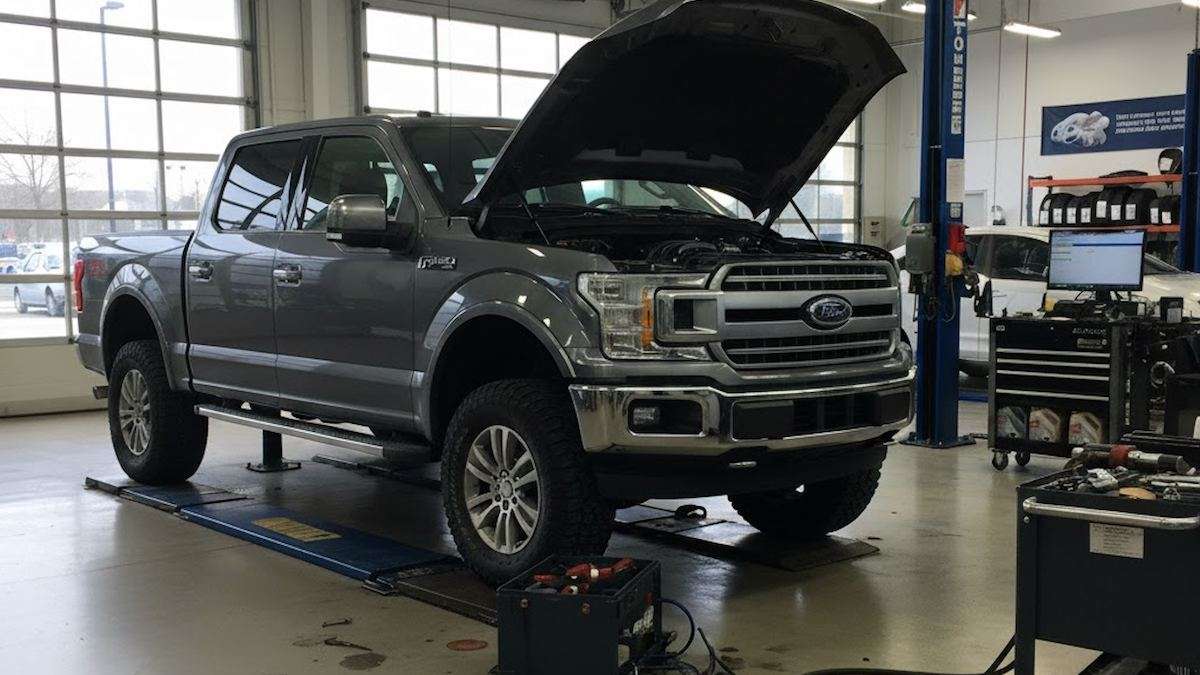

When a Ford dealer broke a critical part during F-150 warranty work, they handed the owner a $1,500 bill, but the comments section reveals this is a pervasive scam F-150 owners are winning against by fighting back against corporate negligence.
I'm following up on a piece from my previous report on the F-150 with broken turbo bolts. It generated a response that demands more information for F-150 owners.
The relationship between a vehicle owner and their dealership service center is built on a foundation of trust. This trust is severely tested when a standard warranty repair not only fails to resolve the original issue but actively creates a new, expensive problem that the dealership then attempts to bill back to the customer.
This exact scenario played out dramatically for Chris Bowman, an owner of a 2017 Ford F-150 EcoBoost, and his subsequent story, which he shared on the F-150 Facebook Owner's page, was documented in my previous piece, illuminating a systemic issue plaguing the Ford service network, specifically involving seized turbo manifold bolts on the popular EcoBoost engine.
Here is what Chris Bowman said,
"My F-150 was just at the Ford dealer for some warranty work. They snapped the turbo bolts off inside the manifold while trying to remove the turbos, and now they want me to pay $1,500 for a new manifold. Is this common practice? They said it wasn't intentional, but they expect me to foot the bill. Has anyone had anything like this happen? Any feedback appreciated."
The core of the incident involved Bowman taking his F-150 to a Ford dealer for warranty-covered work. During the necessary procedure to access or service the turbos, technicians attempted to remove the exhaust manifold bolts, which are notoriously susceptible to seizing due to constant extreme heat cycles.
Inevitably, the bolts snapped off inside the manifold. Instead of owning the damage as a covered repair failure, the dealership shifted the blame and responsibility, presenting Bowman with a $1,500 bill for a new manifold. Their justification was that the breakage was "unintentional" and the result of a pre-existing condition, the seized bolts, a common yet highly controversial tactic used to push costs onto customers.
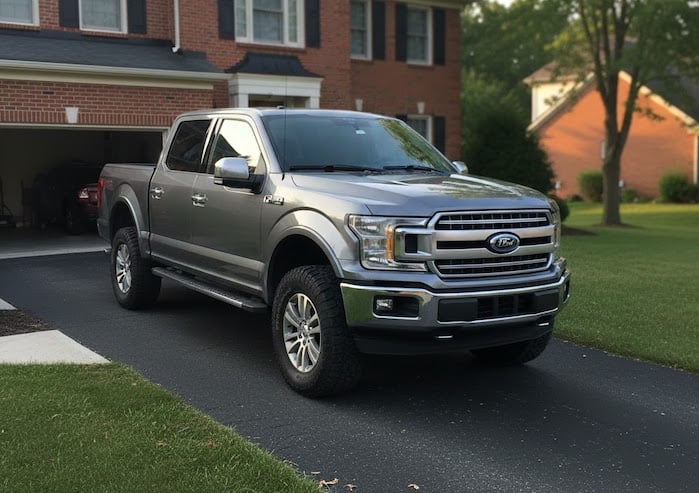
What F-150 Owners Need To Know
My report strongly advocated that Bowman should refuse to pay. I highlighted that the seizure of the EcoBoost turbo bolts is a well-established mechanical hurdle. A competent technician is expected to know this risk and employ specific mitigation techniques, such as heating, soaking, and careful extraction. When damage occurs during a covered warranty repair, the damage that is a direct result of performing that essential repair is ethically and often contractually the liability of the dealership or the manufacturer.
The $1,500 demand was framed not as an unavoidable accident but as an attempt by the dealership to exploit a mechanical vulnerability to unjustly profit from the owner.
The publication of this story resonated deeply with the automotive community, creating an immediate and telling echo chamber in the comments section. Other F-150 owners, mechanics, and industry veterans chimed in, confirming that Bowman's nightmare was far from an isolated incident. The collected feedback revealed not only the prevalence of the snapped bolt issue but also a serious division over where the financial responsibility truly lies.
So, Who's To Blame Here?
The comments section became a crucial dataset, offering a broader view of the problem across different vehicles and dealerships. The responses largely fell into three categories: those who confirmed the issue's prevalence and corporate responsibility, those who blamed Ford's design, and those who critiqued the technician's competence.
The overwhelming consensus from automotive professionals was that the customer should never pay for damage created while the vehicle is in the dealer's care for a warranty repair.
Mitchell Hardy, who identifies as a Ford technician in Canada, explicitly stated that the dealership has a mechanism claiming the broken bolts as "consequential damage" to have the cost covered under the original warranty claim. He criticized the involved service manager and warranty admin for demonstrating a profound lack of knowledge regarding established procedures.
Alex, a long-time dealership technician, was unequivocal: "Anything I break while doing warranty work is automatically part of the warranty repair." He noted that most manufacturers have processes in place for this exact scenario, and the cost does not fall back on the dealer if the paperwork is done correctly.
A former Ford area representative, Kevin, provided crucial insider advice. He confirmed that Ford warranty provisions include "M-time" (mechanical time) for related repairs and known complications. He stated: "It should never cost the customer if this occurred during a warranty repair, especially a known complication." His suggestion was to call the Ford Customer Assistance Hotline immediately to open a case and involve the area representative.
The Ford Design Flaw
While many blamed the dealer's practices, others pointed the finger squarely at the manufacturer, arguing the design itself was flawed.
Neil Richardet and Bryce Ocain attributed the issue to poor engineering choices, asserting that Ford designed the engine with weak or uncoated bolts that are susceptible to seizing from heat cycles, rendering breakage inevitable.
While this shifts blame away from the individual technician, it further solidifies the argument that the manufacturer or their authorized service network should absorb the cost of repairing a known design defect during a covered repair. As Bryan Fullerton added, Ford "absolutely knows that later down the line those will break on removal."
Wait, There's More
The comments also highlighted a significant competence gap in dealership service departments, suggesting the $1,500 bill was a simple shortcut around a difficult repair.
Lloyd Watson, who spent four decades in the industrial turbocharger business, questioned why the dealer did not attempt to save the manifold by drilling out the broken stud, a standard and expected procedure, and instead jumped straight to selling a new part.
Veteran mechanic Kevin reinforced this, noting that he has "always been able to get them out easily by welding a nut to the broken stud" and rarely charged more than an hour of extra labor. He concluded that the dealership was likely charging too much due to a "lack of know-how or welding equipment."
Most poignantly, Kevin Norton shared his negative outcome: after waiting nearly a month for the repair and being told by the service manager that bolt breakage "happens every time," he paid for the manifolds out of pure frustration. His parting thought: he would "never buy another Ford", illustrating the real-world consequence of this broken trust.
So, What's Next?
Chris Bowman's story, amplified by the dozens of owners sharing similar experiences in the comments, exposes a pervasive culture of cost-shifting within segments of the dealership network. The seized turbo bolt is merely the symptom; the attempt to charge the customer is the disease. The collective voice of the F-150 community provided a clear, actionable solution: escalation.
The experts consistently advised F-150 owners facing this predicament to take firm action: document everything, stop all repair work until the payment issue is resolved, and most critically, bypass the dealership and engage Ford Corporate (CRC). This approach frames the problem not as a mechanical failure, but as a crisis of service integrity and corporate accountability.
What Should F-150 Owners Do Now?
For owners, the fight is not just about the $1,500 bill, but about setting a precedent that dealerships cannot leverage common mechanical hurdles and subsequent repair damage to unjustly inflate a warranty claim. The evidence is clear: the cost to fix a defect accidentally introduced during a covered repair is covered under the warranty, and Ford or its service partner must be held responsible.
It's Your Turn
Have you been in a similar dealer repair situation, and what did you do to resolve the problem? Click the red Add New Comment link below and let us know.
I'm Denis Flierl, a Senior Torque News Reporter since 2012, bringing over 30 years of automotive expertise to every story. My career began with a consulting role for every major car brand, followed by years as a freelance journalist test-driving new vehicles, equipping me with a wealth of insider knowledge. I specialize in delivering the latest auto news, sharing compelling owner stories, and providing expert, up-to-date analysis to keep you fully informed.
Follow me on X @DenisFlierl, @WorldsCoolestRides, Facebook, Instagram and LinkedIn
Photo credit: Denis Flierl
Set Torque News as Preferred Source on Google
Follow us today...




Comments
Short Answer: When the…
Permalink
Short Answer:
When the dealership is doing warranty work and the tech encounters broken manifold bolts, the book doesn't allow for the time to extract those bolts, therefore Ford doesn't reimburse the dealership so either they or the tech absorb the cost. Additionally, the (aftermarket) exhaust manifold upgrade allows for extra bolts into the block where they already drilled and tapped for them. Having a heavy turbo hang off a heavy steel manifold creates huge stresses, especially when offroad. That's why they drilled those extra holes in the first place.