
Most people still believe Ford is one of the leaders in America’s EV transition. After all, they were first to launch an electric pickup, and the Mustang Mach-E was supposed to give Tesla a real scare. But what if we told you that Ford is quietly backing away from EVs at the very moment GM is stepping on the accelerator?
That’s not the narrative the commercials want you to believe. And yet, the data tells a different story - one where Ford’s “lean and focused” approach may actually be an unexpected retreat, while GM’s broader and bolder strategy might be what’s needed to survive in a tightening global EV race.
If you think legacy automakers are following the same EV playbook, this article may surprise you.
The electric vehicle market is shifting fast, and two of America’s biggest automakers - Ford and General Motors - are on very different paths. A recent LinkedIn post by Angelo Elyassi, Chief Commercial Officer at viveEV and an EV industry veteran, breaks down the divergent strategies of these two giants. His observations don’t just provide data; they challenge what many might have assumed about Ford’s and GM’s futures in electrification.
Here’s Angelo’s post in full, as it’s essential to understand the nuances before diving deeper:
Ford Motor Company vs. General Motors: Two Detroit Giants. Two Very Different EV Plays.
1. The Present
Ford Motor Company
Ford’s EV strategy is compact but focused, with just three core models:
• Mustang Mach‑E
• F-150 Lightning
• E-Transit
But the numbers are heading in the wrong direction:
• ~34,000 EVs sold YTD 2025 (down 11.8%)
• Q2 EV sales: 16,438 (down 31% year-over-year)
• Mustang Mach‑E: 21,785 units
• F-150 Lightning: 13,029 units
• E-Transit: 4,174 units
Farley moved fast on Tesla plug access (NACS) and continues to call out the competition, including China. But Ford’s now prioritizing hybrids, delaying new EV programs, and bracing for a reset.
General Motors
GM took the opposite route, scale and saturation.
Across Chevrolet, Cadillac, and GMC, they now offer 13 EV models, including:
• Equinox EV
• Blazer EV
• Silverado EV
• Cadillac Lyriq, Escalade IQ, and Vistiq
• GMC Hummer EV
And the numbers are surging:
• ~78,000 EVs sold YTD 2025 (up 111%)
• Q2 EV sales: 46,280
• Equinox EV alone: ~27,000 in H1
After years of delays, Ultium is finally producing and it’s showing. GM is winning on volume and momentum.
2. The Future
Ford is slowing down to get leaner. Focusing on what it does best:
• Commercial vehicles
• High-margin segments
• Repositioning hybrids as a strategic buffer
Next-gen EV platform is slated for 2025 with promises of lower cost, longer range, and better margins. The strategy now? Discipline, not dominance.
GM is going wide.
• More models
• More platforms
• More bets, including software-defined vehicles and autonomy with Cruise
It’s a high-risk, high-reward play. But for now, it’s working.
GM is flooding the zone. Ford is playing the long game. One is scaling fast with variety.
The other is tightening focus and regrouping.
The real showdown isn’t Ford vs. GM. It’s Detroit vs. the world.
And right now? The world is moving faster.
Why This Matters More Than Ever
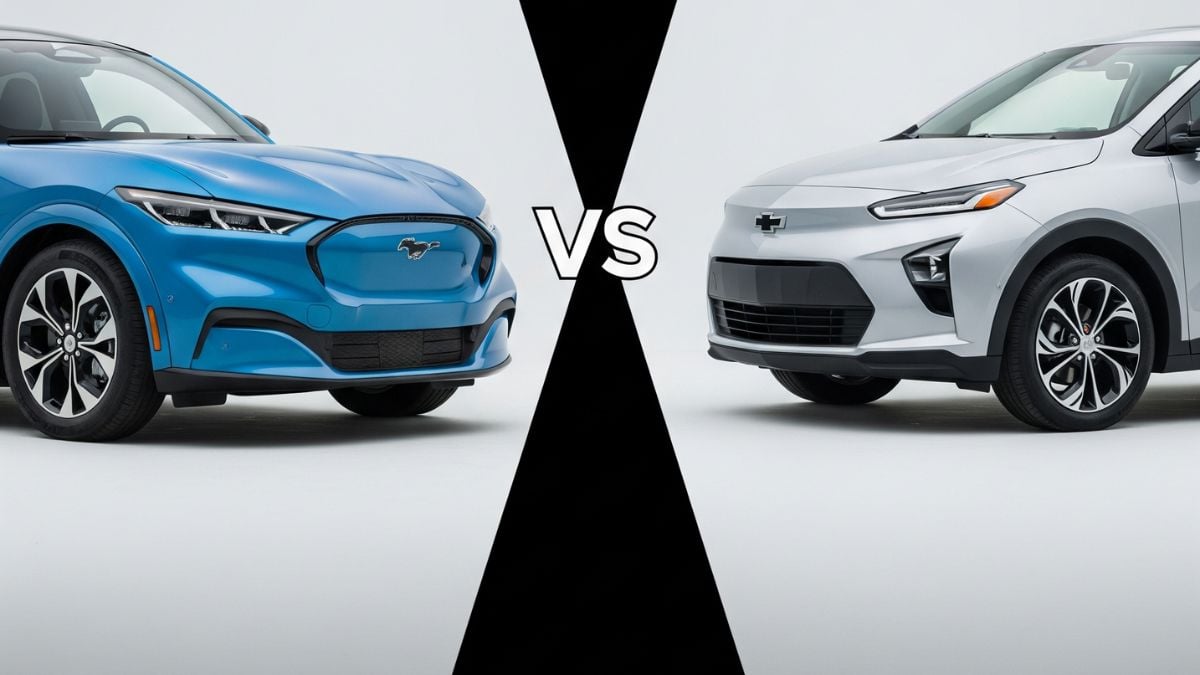
Angelo’s analysis cuts through the usual marketing fluff and exposes the tension between two philosophies:
- Ford's Lean Strategy: Focus on fewer EV models, lean into hybrids, and take a conservative stance for now. This may feel safe, but it risks losing mindshare and market share in a rapidly growing and competitive segment.
- GM's Broad & Aggressive Push: More models, faster production, and heavy investment in future tech such as autonomy. This is risky, but the payoff could cement GM as a dominant EV player.
As an automotive editor with over a decade of experience covering the evolution of electric vehicles, I find Angelo’s insights reflect the crucial crossroads facing legacy automakers. Ford’s move to slow its EV rollout contradicts the common narrative that it is among the top EV pioneers, especially with the F-150 Lightning generating so much early hype. Meanwhile, GM’s bold expansion strategy, while ambitious, seems better aligned with current market dynamics and car buyer demand.
The Reality Behind Ford’s EV Sales Decline
Despite the fanfare surrounding the F-150 Lightning, Ford’s overall EV sales slipped nearly 12% in 2025 compared to last year. This dip signals trouble, not just from supply chain or production issues, but from a strategic pivot to hybrids and a slowing pace of new EV launches. It’s an unexpected move given the industry-wide push for zero emissions and may suggest Ford is hedging its bets, or facing internal challenges.
This aligns with recent reports showing how automakers like Ford are balancing cost pressures and carbuyer preferences, yet risk losing ground to more aggressive EV portfolios. The automotive world is already witnessing how diversified EV lineups from competitors often yield better sales penetration across demographics and regions.
It’s not just a domestic duel between Detroit’s giants. Globally, the EV landscape is shifting in unexpected ways. In Q2 2025, GM’s momentum didn’t just eclipse Ford’s - it placed the automaker on a steep upward trajectory alongside China’s BYD, creating an unusual East-West leadership dynamic in EV growth. GM’s sudden rise in global rankings challenges conventional assumptions that Tesla alone drives the American EV narrative. For a detailed breakdown of this global shift and why GM and BYD are now setting the pace, read our full analysis in this report on Q2 2025 EV sales and how tides are turning.
GM’s Ultium Platform: The Game Changer
GM’s Ultium battery platform stands out as a key factor in its EV success. By enabling a scalable, modular approach, GM can quickly roll out 13 distinct models across brands and price points, appealing to a wide spectrum of buyers. This flexibility not only boosts production efficiency but allows GM to innovate rapidly with software updates and autonomous capabilities, areas where Ford has been slower to establish leadership.
Another layer to this discussion that often gets overlooked is EV longevity. It might be easy to assume that all EVs will last longer due to fewer moving parts, but real-world experiences sometimes tell a more nuanced story. One Tesla Model Y owner recently hit 100,000 miles and found himself unexpectedly reflecting on how long his EV might actually last. As more drivers cross these milestone moments, it raises important questions about battery degradation, resale value, and long-term ownership costs. If you're curious how Tesla is holding up over time and what lessons apply to GM’s Ultium-powered models, check out this firsthand account of life with a 100,000-mile Tesla Model Y.
The Software & Autonomy Race: GM’s Bold Bet
Beyond vehicles, GM’s investment in Cruise, its autonomous driving unit, signals a vision that extends far past selling cars. Software-defined vehicles are quickly becoming the industry’s new frontier. GM’s willingness to commit big bucks to this space could pay dividends in long-term value, subscription services, and fleet solutions.
Ford, by contrast, appears to be slower to ramp up in autonomy, possibly ceding ground in what will be a major competitive differentiator in the coming decade.
What’s also becoming unusually important in this competitive climate is how automakers and EV advocates frame the core value proposition of going electric. With EV prices still a major point of contention, supporters often cite key advantages like lower maintenance, instant torque, and home charging convenience. But for many mainstream buyers, those benefits are still not breaking through clearly enough to outweigh upfront costs or range anxiety. If you want a clearer picture of how advocates justify the EV transition - and why some of those justifications may suddenly matter more than ever - explore this roundup of the top five EV advantages advocates point to when defending the end of price parity arguments.
What Ford Could Learn from GM
Ford isn’t out of the game - not by a long shot. The F-150 Lightning remains a powerful asset, and Ford’s commercial vehicle expertise offers a foundation for electrification. However, leaning too hard on hybrids and delaying EV launches risks turning Ford into a follower, not a leader, in EV adoption.
Balancing risk with innovation is tricky. Yet, companies that hesitate too long risk losing the “EV mindshare” that builds brand loyalty and market momentum.
What’s unfolding across the automotive landscape isn’t isolated to Ford and GM. Tesla, once viewed as untouchable in EV leadership, is facing internal and market turmoil, while Ford has begun offering deep and sometimes unusual discounts on EVs like the F-150 Lightning to reignite demand. These moves feel less like confident leadership and more like reactive plays in a suddenly volatile environment. The competition is intensifying, and it’s no longer unlikely for legacy players to steal headlines from Tesla. For a broader look at this day of high drama in the auto industry, including how Ford and Tesla are navigating the pressure, take a look at this full breakdown of Tesla’s turmoil and Ford’s unexpected pricing strategy.
The Bigger Picture: Industry and Carbuyer Impact
Car buyers benefit from more EV options at varying price points and capabilities. GM’s expansive lineup addresses this well, offering everything from affordable SUVs to luxury electric pickups. Ford’s narrower approach might leave potential buyers looking elsewhere.
Additionally, fleet operators seeking to electrify are gravitating toward brands offering versatile, scalable vehicles - another reason GM’s approach may pay off.
Angelo Elyassi’s LinkedIn post is more than a snapshot of current sales figures - it’s a wake-up call. Ford’s “leaner” EV strategy might feel like a cautious play, but the risk is real: falling behind in a market that rewards bold innovation and expansive offerings.
GM’s “high-risk, high-reward” approach may not be without pitfalls, but it positions them as a frontrunner in the rapidly evolving EV landscape.
What’s perhaps most unexpected in all this movement is how little it has shifted the overall U.S. EV market share. Despite surging deliveries from Tesla and aggressive model rollouts from GM, EVs still make up just under 7 percent of the total U.S. auto market. It’s an unusually slow uptake given the amount of investment, press, and policy backing behind electrification. While growth is steady, the gap between public EV excitement and actual adoption remains wide. For a closer look at these surprising numbers and what they could mean moving forward, see our coverage on how Tesla’s increasing deliveries still haven’t moved the EV market share needle much.
What do you think of Ford and GM's EV strategies?
- Is Ford’s strategy of slowing EV rollout and focusing on hybrids a smart move to control costs, or will it cause them to lose critical market share in the long run?
- Can GM sustain its rapid EV expansion and tech investments without running into production or quality issues that have plagued other automakers?
Share your thoughts and experiences below - your insights might just help others navigate this fast-changing automotive world.
This article was written with insights from Angelo Elyassi’s LinkedIn post and original analysis by TorqueNews editorial staff.
Armen Hareyan is the founder and Editor-in-Chief of Torque News. He founded TorqueNews.com in 2010, which since then has been publishing expert news and analysis about the automotive industry. He can be reached at Torque News Twitter, Facebook, Linkedin, and Youtube. He has more than a decade of expertise in the automotive industry with a special interest in Tesla and electric vehicles.
Images sources: Grok and Gemini.
Set Torque News as Preferred Source on Google
Follow us today...