
It is definitely much cheaper to own an EV compared to a gas-powered car, but you have to be careful where you charge it to ensure good rates. There are many reputable reports proving the EV cost of ownership advantage. A 2023 study by Consumer Reports found that the typical EV driver can save between $6,000 and $12,000 over the life of the vehicle compared to a similar gas model. Unfortunately, when it comes to charging your EV away from your home, it can still be a bit like the wild West
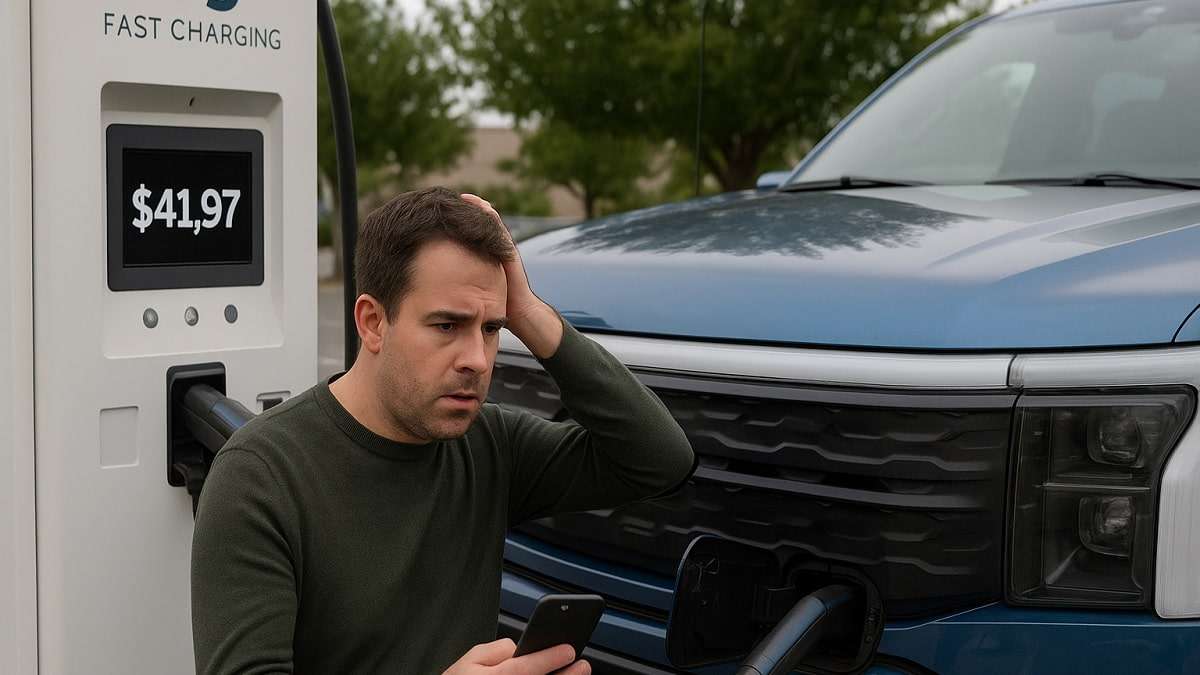
Comments about crazy and unexpectedly expensive fast charging experiences can be seen across social media car communities. Here’s a recent comment on the Facebook Ford F-150 Lightning group where John Gallagher posted:
“I’m venting here. EVGO is the worst. Not only are they the most expensive, but they didn’t honor an ACTIVE promo code that was showing in my app. They were at $.69 kWh + $.99 activation which is equivalent to gas at $5.85 per gallon. I would not have charged there without a promo code and didn't 'need' to charge.”
Jonathon D Ficca responded with this advice:
“Yeah these DC fast charging stations need to learn a lesson. Don't go if it's that expensive, as it's a free market. If enough people boycott these ridiculous prices at DC fast charging stations, then hopefully they go out of business and learn. We're not trying to spend $7 a gallon equivalent to charge our EVs.
The most I'll ever pay is $0.29 at a Tesla station. If a few cars show up and the price goes up, I don't go. I also have the subscription to Electrify America which makes the one right next to me $0.36. The problem with it is that there are always a million people waiting and there are only four Chargers.”
Charging Public Chargers and Charging at Home
Free level 2 charging can work well for drivers who have the time to leave their car parked for several hours. If it’s an option for you, home charging is usually the simplest and most affordable option, especially in places like Colorado where electricity rates are reasonable. A full home charge from empty to full is about ten dollars for roughly 200 miles of range, and even cheaper for highly efficient cars like a Tesla Model 3. These costs vary widely based on the size of the battery, the type of vehicle, and local energy prices.
Fast Charging and How Location Changes the Cost Equation
Where you charge and how quickly you want to charge dramatically changes the total cost of EV ownership. Charging at public DC fast charging stations introduces a completely different cost profile. The same vehicle that costs ten dollars to charge at home can cost around forty dollars to charge from empty at a nearby Electrify America station. The benefit is speed, since fast charging can deliver most of a full charge in about half an hour.
Comparing EV Fuel Costs to Gas Cars Across All Fifty States
Research from Energy Innovation and a Washington Post analysis provides state by state comparisons of EV charging costs versus the cost of filling a gas tank. Gasoline pricing is charged per gallon while electricity pricing varies between residential electricity rates and public charging rates. The researchers compared similar vehicle types, then calculated the cost to travel equal distances using regional gas and electricity data. Washington is used as a good example of where EVs provide significant savings because gas is expensive and residential electricity is relatively cheap.
How the Study Calculates Fair Comparisons Between Cars
The analysis uses an assumption that most EV drivers charge eighty percent at home and twenty percent on public chargers. It applies local residential electricity rates, average public charging prices, and EPA range ratings to estimate the cost to travel the same distance in each vehicle. Sedans like the Tesla Model 3 and Hyundai Ioniq 6 stand out because of their great efficiency. SUVs like the Tesla Model Y and Hyundai Ioniq 5 also show meaningful savings compared to gas models. Trucks show the largest gap because electric powertrains are far more efficient than large gas engines.
Why Savings Differ by Region
Savings increase in states where electricity is inexpensive and gas is costly, such as Washington and Oregon. Savings shrink in states where electricity is expensive or gas is cheap. California remains a mixed case because residents face high costs for both gas and electricity. Some states, like Hawaii, show modest savings due to extremely high electricity prices. Incentives and rebates can improve the overall cost picture, although these were not included in the study.
Day to Day Convenience of Charging
Convenience is one of the biggest advantages of owning an EV. Charging at home eliminates the need for stops at gas stations or public charging sites. Many EV drivers are able to find free or low-cost level 2 chargers at gyms, workplaces, grocery stores, or public parking areas. Charging at work can add meaningful daily range at little or no cost. These conveniences make EV ownership much easier, although access varies widely by city and community.
Why Fast Charging Can Eliminate Savings
Exclusive reliance on DC fast charging is not recommended since it raises charging costs to levels that can exceed the price of gasoline in some regions. Drivers who cannot charge at home are encouraged to use level 2 chargers when possible because they are slower, less expensive, and often free. Public fast chargers like Electrify America, Tesla Superchargers, and EVgo offer speed, however they also represent the most expensive way to power an EV.
How Time of Use Rates Create Even More Savings
Time of use billing is another opportunity to lower charging costs. Many utilities offer cheaper electricity rates during overnight hours when demand is low. EV drivers can save significant money by scheduling charging during these hours. This approach also helps utilities stabilize the grid. Savings can be especially large in states like California where peak daytime rates are very high.
Bottom Line
EV fueling costs vary widely because they depend on where you live, how you charge, and how often you rely on fast chargers versus home or workplace charging. Home charging delivers the biggest savings and the best convenience. Public fast charging offers speed at a higher price. Tools that compare state by state costs are useful, although drivers should tailor the assumptions to match their own charging habits. The decision to buy an EV becomes much clearer once you understand your local energy prices and charging options.
The Ford F-150 Lightning
The Ford F-150 Lightning is the electric version of America’s best-selling truck and it brings a mix of familiarity and innovation that resonates with a lot of drivers. It launched in 2022 and quickly gained attention for its strong towing capability, smooth electric acceleration, and roomy interior that feels just like a traditional F-150. What truly sets it apart is the ability to power a home during an outage, which comes from its large battery and built in bi directional charging capability. The Lightning offers the comfort of a classic pickup with the quiet, efficient experience of an EV, which makes it one of the most approachable electric trucks on the market today.
What Do You Think?
Have you ever been surprised by the cost of a fast charging session with your EV, especially when you expected a promo or discount to apply?
What is the highest price per kilowatt hour you have ever seen, and did you continue charging or unplug immediately?
Chris Johnston is the author of SAE’s comprehensive book on electric vehicles, "The Arrival of The Electric Car." His coverage on Torque News focuses on electric vehicles. Chris has decades of product management experience in telematics, mobile computing, and wireless communications. Chris has a B.S. in electrical engineering from Purdue University and an MBA. He lives in Seattle. When not working, Chris enjoys restoring classic wooden boats, open water swimming, cycling and flying (as a private pilot). You can connect with Chris on LinkedIn and follow his work on X at ChrisJohnstonEV.
Photo credit: Provided by author
Set Torque News as Preferred Source on Google
Follow us today...