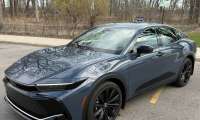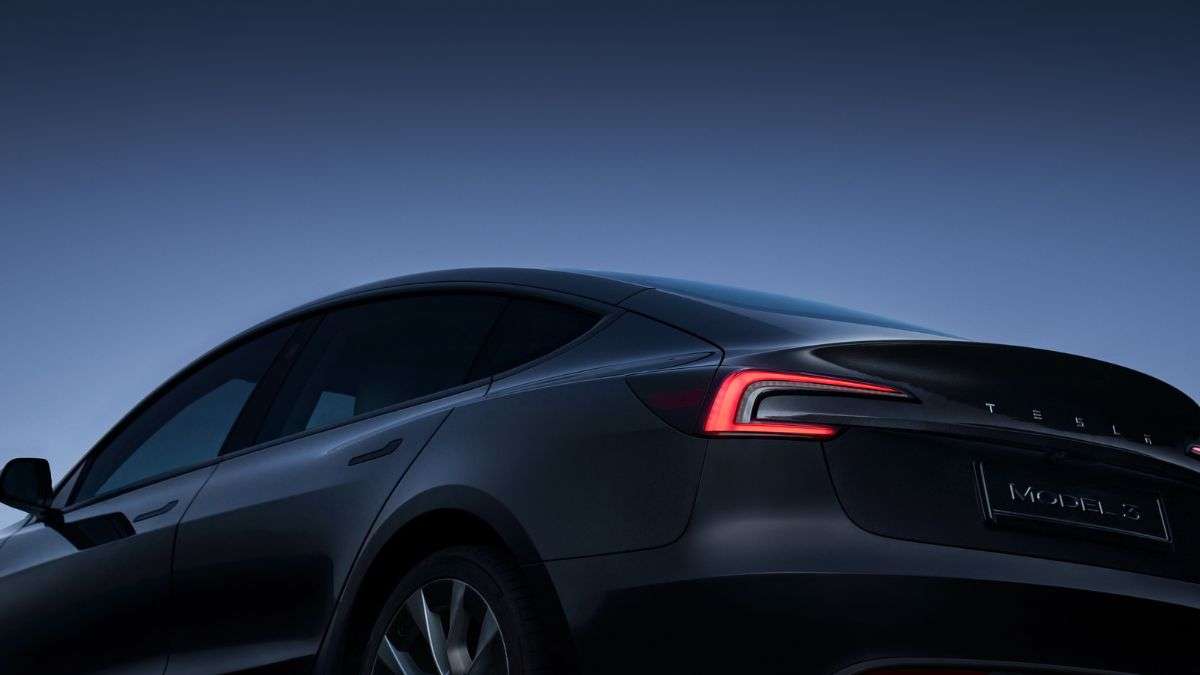

It’s easy to forget just how many small sensors and electrical signals keep a modern car running smoothly until one of them misfires. From automatic windows to ambient lighting, today’s vehicles rely on dozens of interconnected systems that constantly communicate with each other, creating both precision and vulnerability. That delicate balance was present across a story in the “Tesla Model 3 and Model Y Owners Club” on Facebook. A post by Richard Naldjieff captured how one small electrical fault can spiral into something far bigger. While closing the door on his 2023 Tesla Model 3, Richard’s window suddenly rolled up at the same time, jamming against the frame and shattering the glass. Tesla’s telemetry later showed that a shorted puddle light had made the car think the door was already closed, triggering the automatic window seal prematurely.
Here's how Richard explained it: “My window on my 2023 Model 3 went up while I was closing the door, jamming it then shattering it. Is this covered under warranty? The car's telemetry showed that the puddle light shorted out, causing the car to think that the door was closed so the window went up prematurely. The puddle light, glass, and trim were replaced under warranty.”
It’s the kind of situation that makes you realize how thin the line can be between software precision and mechanical chaos. Frameless windows used in cars like the Model Y and 3 are designed to automatically lower slightly when you open the door and rise back into position when you close it. This ends up creating a proper seal against the trim. But when the system mistakenly believes the door is closed, it can cause the glass to move at the wrong time, often with damaging results.
How Tesla’s Telemetry Plays a Role in Warranty Decisions
One of the most fascinating parts of Richard’s story is how Tesla’s diagnostic system immediately identified the cause. The car’s telemetry showed that the puddle light had shorted, sending an incorrect “door closed” signal. That level of precision is something most automakers can’t easily offer, and it’s one of the biggest strengths of Tesla’s connected ecosystem. When the company’s service team can confirm a hardware fault through data logs, it speeds up the repair process and reduces disputes over warranty coverage.
It’s the same kind of data-driven experience that’s helped sway many drivers toward Tesla. After all, people who once preferred high-performance gas cars have realized that electric ownership can be cheaper, cleaner, and surprisingly stress-free. One owner even decided to trade their BMW M3 for a Tesla Model 3 after realizing how affordable charging and maintenance could be.

Community Reactions and Owner Discussions
When Richard shared his post, the comment section quickly filled with insight from other Tesla owners who had encountered similar experiences.
Ali Ahmed shared a cautionary perspective, writing, “It’s not covered by warranty. I had the same issue. You will pay for a new one and replacement.”
Ali’s response highlights one of the biggest points of confusion among owners. Warranty coverage can vary drastically depending on the root cause, and Tesla's service policies are deeply tied to telemetry data. That means the company can determine whether a failure resulted from a defective component or an external issue such as moisture damage or aftermarket wiring.
That last point came up again when Robert Chiste added his input, writing, “I know that if you put aftermarket puddle lights, this can happen quite often and probably won't be covered under warranty. However, if it’s factory lights then it will be covered. Granted that’s if your car is still under warranty.”
Robert’s observation brings up an often-overlooked aspect of Tesla ownership concerning modifications. Many Tesla drivers enjoy customizing their cars, whether that means adding LED lighting, screen protectors, or performance upgrades. But as Robert correctly noted, aftermarket accessories can sometimes interfere with the car’s sensitive electronics. In this case, a small puddle light replacement could introduce voltage fluctuations that confuse the vehicle’s sensors. Once that happens, even unrelated systems like windows or locks can behave unpredictably.
Then came Scott Hunt, who took the discussion in a more design-oriented direction. “Such a poor design. Cars with frameless windows should never use double pane glass. It breaks way too easily!”
His comment raises an important point about automotive glass engineering that’s worth unpacking.
Frameless Windows and Double-Pane Glass: Why They Clash
Scott’s frustration reflects a legitimate engineering challenge. Frameless doors rely on precise calibration as the window must lower slightly before the door closes to prevent hitting the seal and raise immediately after to lock in place. Double-pane (laminated) glass, while excellent for sound insulation and climate control, is also heavier and less flexible than single-pane tempered glass. That means it’s more likely to crack or shatter when put under pressure or torsion, especially in situations like Richard’s.
Other automakers such as BMW, Mercedes, and Audi have also encountered similar issues in vehicles with frameless windows. These designs look sleek and reduce wind noise, but the tradeoff is durability. Even slight misalignment can cause stress on the glass. Tesla’s use of double-pane glass prioritizes quietness and energy efficiency, but as Scott noted, it may not always pair well with frameless doors.
What Tesla Owners Can Learn From This Incident
It’s easy to view Richard’s story as an isolated mishap, but it reflects a broader truth about how EVs are evolving. As cars become more software-driven, mechanical systems are increasingly dependent on digital communication. The benefit is precision, but the drawback is fragility when signals go wrong. What might have been a simple mechanical failure is now often the result of a chain of electronic messages that didn’t align at the right moment.
It also shows how the community plays a big role in problem-solving. Tesla forums and Facebook groups are filled with owners helping each other navigate unusual situations. Whether it’s window calibration or unexpected roadside issues, the Tesla community’s collective knowledge base has grown into one of the company’s strongest assets. It’s the same community that’s offered practical help to drivers who, for instance, found themselves stranded after damaging a Model 3 tire on a rural road far from service and managed to get back on the road thanks to advice from other owners.
Even beyond individual fixes, these shared experiences have encouraged more drivers to understand the deeper mechanics behind EV systems. For instance, some former skeptics who once dismissed electric vehicles as unreliable have come to appreciate their dependability after test-driving a Tesla Model 3 Long Range RWD for the first time and realizing how cohesive the overall driving experience feels.
Modern EV Design and Diagnostic Complexity
I think what stands out most about this story is how well it captures the delicate balance between innovation and complication in modern vehicles. Tesla’s technology gives owners unprecedented insight into what’s happening behind the scenes of their cars, but it also means the systems are interconnected in ways that can magnify small issues. One shorted light triggering a shattered window might sound extreme, but it’s a real reflection of how these vehicles communicate internally.
I also find it fascinating how Tesla’s warranty process relies heavily on the same software that runs the car. The telemetry data not only helps diagnose the issue but also determines how responsibility is assigned. That kind of transparency benefits honest owners, but it also leaves less room for ambiguity. As the industry evolves, I think we’ll see more automakers adopt this model, where software decides both the cause and the consequence.
Key Takeaways for Tesla Owners
- Small electrical issues can snowball – a minor component failure can trigger costly damage if left unchecked.
- Avoid unnecessary aftermarket wiring – factory components are designed to work in harmony with Tesla’s intricate systems.
- Understand frameless window mechanics – even small calibration errors can lead to cracked or stuck glass.
- Telemetry is your friend – Tesla’s data-driven diagnostics can protect owners when genuine defects occur.
- Community matters – owner groups often share real-world insights long before they appear in service bulletins.
Join the Discussion
Have you ever experienced a similar malfunction with your Tesla or another vehicle that relies heavily on software automation? How did the service experience go in your case?
And do you think automakers should rethink frameless window designs for EVs entirely?
We'd love to hear from you in our comments below.
Aram Krajekian is a young automotive journalist bringing a fresh perspective to his coverage of the evolving automotive landscape. Follow Aram on X and LinkedIn for daily news coverage about cars.
Image Sources: The “Tesla Model 3 and Model Y Owners Club” public Facebook group and Tesla’s gallery, respectively.
Set Torque News as Preferred Source on Google
Follow us today...