
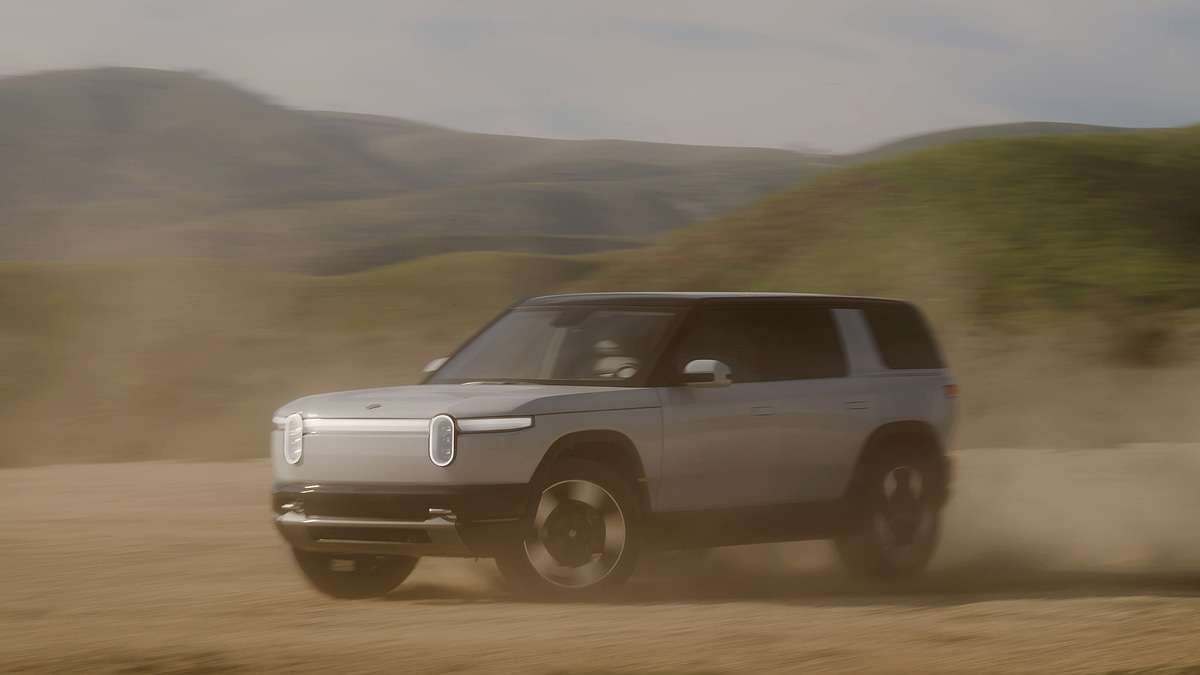

Rivian’s coming R2 is supposed to be the company’s volume play, the smaller and cheaper SUV that brings the brand down to about $45,000 and into the heart of the market. It is also arriving with a notable off-road limitation that has received far less attention than it should. According to Car and Driver’s February prototype drive, the dual motor R2 has “no differential lock,” forcing drivers to “two-pedal it and drag the brake over uneven terrain to prevent spin,” while Rivian’s brake-based torque distribution “allow[s] too much initial wheelspin before they intervene.” It goes to the center of Rivian’s pitch that the R2 will deliver real adventure vehicle credibility at a mass market price.
The issue is simple enough. The R2 prototype Car and Driver drove uses one permanent magnet motor on each axle, with Off-road mode engaging both motors full time, but it does not have the R1’s quad motor layout and does not have a differential lock. That matters because a quad motor Rivian can do true side-to-side torque control in software at each wheel. A dual motor setup cannot do that on its own. Once you remove a physical locker as well, you are left leaning on the brakes to stop a spinning wheel and shove torque across the axle. That is old traction control logic, not some next-generation software trickery.
Rivian R2: Off-Road Hardware Limitations
The upcoming Rivian R2 utilizes a simplified hardware set compared to the R1 series to achieve its $45,000 target price. These changes have specifically impacted the vehicle's traditional off-road mechanicals.
- The dual-motor R2 does not include a mechanical locking differential. Instead of the quad-motor R1’s active torque vectoring, the R2 relies on brake-based traction control to manage wheelspin across the axles.
- Initial prototype testing by Car and Driver indicates that the system allows significant wheelspin before the brakes intervene to redirect torque. This requires drivers to use "two-pedal" driving techniques to maintain momentum on uneven terrain.
- To reduce costs and weight, the R2 replaces the R1’s air suspension and hydraulic roll control with a more conventional setup. It features front struts, a rear multilink design, and standard coil springs with traditional anti-roll bars.
- Despite the hardware simplifications, the vehicle maintains competitive geometry for its class. It offers 9.6 inches of ground clearance and 32-inch tires, which provide sufficient capability for moderate trails and fire roads.
Car and Driver is the outlet that said it plainly. In the reviews and first drives that followed Rivian’s media event, that particular point was either softened, skipped, or blurred into broader praise about the R2’s off-road posture. Top Gear, for example, described the R2 by saying its “torque vectoring lends itself to off-road agility and security” and added that “the R2 will do it” when discussing rock crawling.
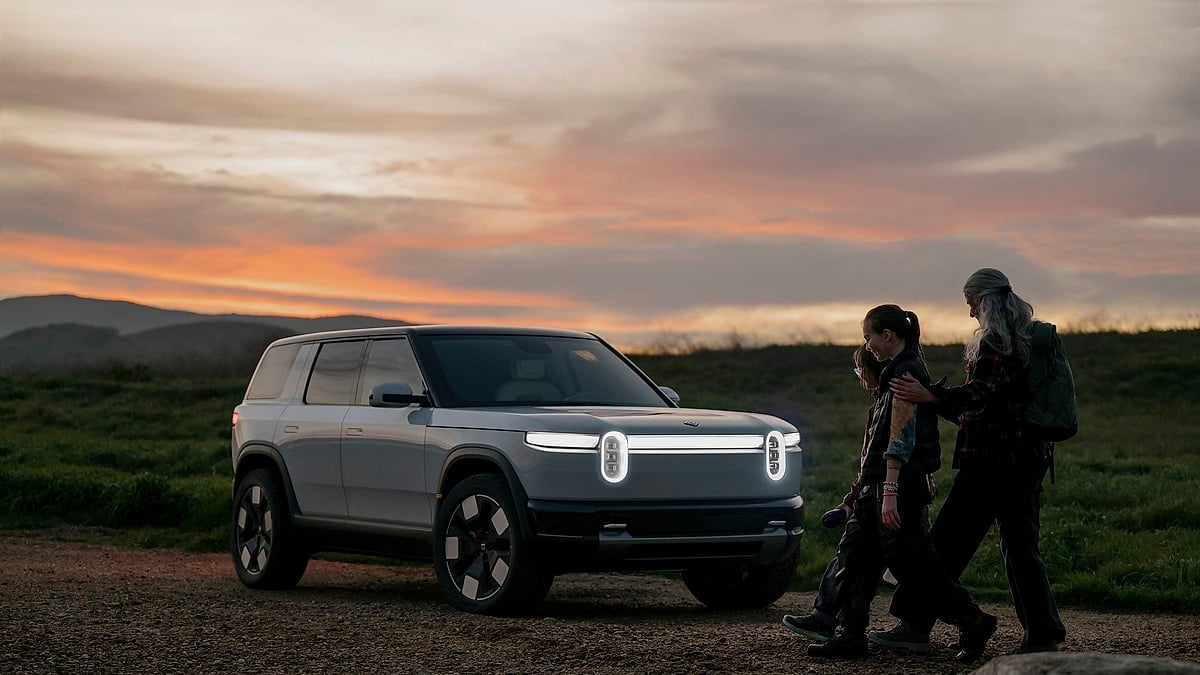
But if the prototype lacks a locking differential and relies on brake-based intervention, then “torque vectoring” needs to be used carefully here. With one motor per axle, the R2 is not doing the same kind of wheel-by-wheel torque apportioning that defines Rivian’s quad motor hardware. That is exactly where the story gets slippery.
What makes this worth examining now is timing. Rivian says the first R2 variant, the dual motor All Wheel Drive model, launches this spring, while the lower-priced entry version follows later. This is not some far-off concept debate. Customer deliveries are approaching. If the core off-road hardware has already been locked in, buyers deserve a clear explanation of what the R2 can and cannot do, especially when the brand is built around images of trails, dirt, campsites, and remote roads.
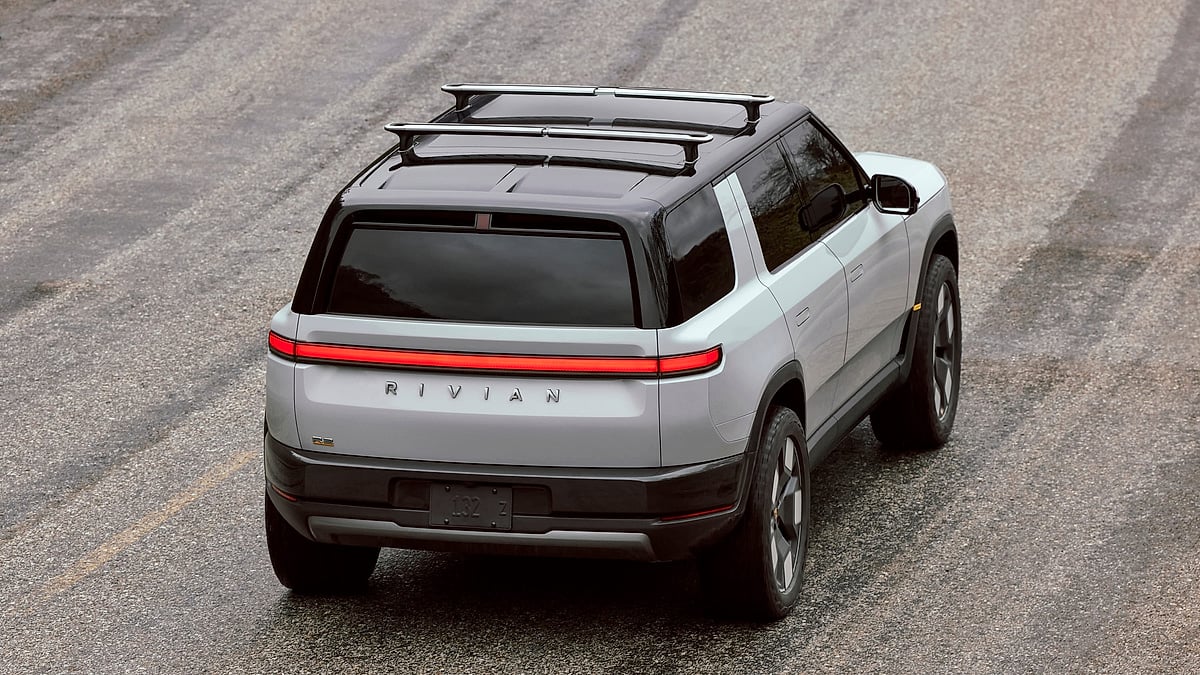
The rest of the hardware picture supports the idea that Rivian cut complexity to hit the price. Car and Driver notes that the R2 is more than 2,000 pounds lighter than a dual motor R1S and swaps the R1’s air springs, cross-linked hydraulic roll control, and aluminum-intensive suspension pieces for coil springs, traditional anti-roll bars, front struts, and a rear multilink setup. None of that is scandalous by itself. The R2 has to be cheaper, simpler, and easier to build than an R1S. But once you add the absence of a differential lock to that list, the question changes. This stops being about one deleted feature and starts looking like a broader cost discipline story.
That matters even more because Rivian is entering a competitive set where real hardware still counts. Ford’s F-150 Lightning, depending on configuration, offers an electronic locking rear differential. Ford’s own materials for the 2025 model year state that the Max Trailer Tow Package includes an “electronic-locking rear differential,” and Ford’s owner information explains that when activated, both rear axle shafts are locked together to provide added traction. The Lightning is a pickup, not a compact SUV, so this is not a direct apples-to-apples matchup. But it is proof that even in an EV, and even under price pressure, traditional traction hardware has not disappeared just because the vehicle has a battery pack.
The danger for Rivian is not that the R2 will be bad off-road. It may be perfectly capable on sand, snow, fire roads, mild ruts, and the sort of terrain most owners will ever see. Car and Driver still praised its long travel suspension for a unibody SUV, its 9.6 inches of ground clearance, 25 degree approach angle, 26 degree departure angle, 20.6 degree breakover angle, and 32 inch BFGoodrich Trail-Terrain tires. Those are serious numbers for this class. The problem is what happens when marketing language outruns the hardware. If Rivian presents brake-based wheelspin management as some software-defined equivalent to a locker, that would be hard to defend against what one of the only detailed prototype drives already reported.
What matters most is what the R2 represents in Rivian’s evolution. It isn’t a flagship meant to showcase everything the company can build. It’s the first Rivian designed to hold up at scale, at a price point where tradeoffs are unavoidable. That shift puts it in a different competitive category. It will be judged less against the R1S and more against upcoming Scout models, mainstream EV SUVs, and even traditional off-road vehicles that still rely on mechanical systems. In that context, choices like removing a locking differential carry more weight. They signal how Rivian defines capability for a broader audience, and whether that definition matches what buyers expect from a vehicle positioned as adventure-ready.
If the omission is a deliberate compromise to preserve the R2’s price target, Rivian should say so. If it believes brake-based control is enough for the “moderate off-roading” implied by the vehicle’s design, it should say that too, plainly and on the record.
The engineering answer is likely less romantic than the software crowd would like. Brake-based traction control can be tuned. Response speed, intervention thresholds, and calibration can improve over time. But that does not turn a dual motor EV with open differentials into a quad motor torque vectoring system, and it does not conjure a mechanical locker out of code. Car and Driver’s complaint was not vague. The system “allow[s] too much initial wheelspin before they intervene.” Software may reduce that delay. It cannot change the underlying hardware layout.
So the real story around the R2 is not whether Rivian “forgot” how to build an off-road vehicle. It is whether the company is being candid about the concessions required to build one at this price. The R2 may still be the right product at the right time, a lighter, cheaper, more efficient Rivian with enough capability for the majority of buyers. But that is a different claim from saying software has replaced old-school hardware. In this case, the evidence available so far suggests the opposite. Rivian simplified the hardware, cut to a dual motor setup, dropped the locker, and is now asking the braking system to cover the gap.
Before the first customer handovers begin, Rivian should answer three questions directly. Why was a locking differential left out of the R2 when off-road credibility is central to the brand? Does Rivian believe brake-based torque distribution is enough for the terrain it expects owners to tackle? And is this a fixed hardware limit of the R2 platform, or merely the first draft of a calibration that can be sharpened later?
Image Sources: Rivian Media Center
About The Author
Noah Washington is an automotive journalist based in Atlanta, Georgia, covering sports cars, luxury vehicles, and performance culture. His reporting focuses on explaining the engineering, design philosophy, and real-world ownership experience behind modern vehicles.
Noah has been immersed in the automotive world since his early teens, attending industry events and following the enthusiast communities that shape how cars are built and driven today. His work blends industry insight with enthusiastic storytelling, helping readers understand not just what a car is, but why it matters.
Noah is also a member of the Southeast Automotive Media Association (SAMA), a professional organization for automotive journalists and industry media in the Southeast.
His coverage regularly explores sports cars, luxury vehicles, and performance-driven segments of the automotive industry, including the evolving culture surrounding Formula Drift and enthusiast builds.
Read more of Noah's work on his author profile page.
You can also follow Noah here:
Set Torque News as Preferred Source on Google
Follow us today...



Comments
For me and the use case for…
Permalink
In my opinion, the typical user of this car, this omission isn't really worth mentioning. The complaint from Car & Driver is legitimate, however this issue can be easily fixed through software and may very well be fixed by the time it launches to the general public.Click bait article that I obviously fell for.