
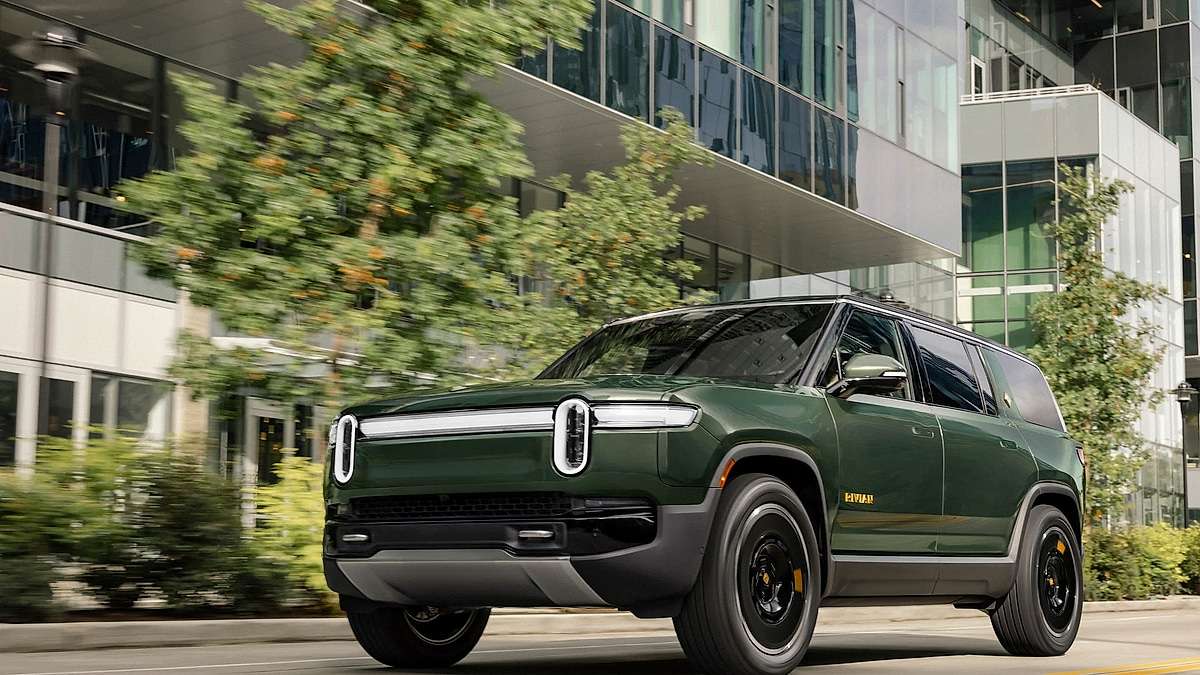

Rivian's decision to split its advanced driver-assistance systems (ADAS) into free and paid tiers, effective April 4th, has left owners questioning the value proposition of the $2,500 Autonomy+ subscription. While the paid tier promises future "point-to-point autonomy," its current features are limited, leading to skepticism. However, one R1S owner, given early access to the free tier, reports that the basic Highway Assist has received a significant, unexpected upgrade.
"I tested Rivian's Free Autonomy... It’s surprisingly good. Autonomy First off, I wanna just give a big shout out to the folks at Rivian for helping make this happen. They helped me make arrangements for my Autonomy + Subscription to expire a week early so I could take a look at it and share it with you all before the day of reckoning hits on April 4th. You can check out my road test here:
But here's the TL;DR rundown: The Paid Tier (Autonomy +). Right now, Autonomy + only includes 2 features. Universal Hands Free and Lane Change on Demand. They have a couple of advertised "coming this year" features. Those are Automatic Parking and On-Ramp to Off-Ramp Autonomy. They have also talked a lot about point-to-point autonomy. It's not on their website, but they have said several times over the last few months that they're targeting release by the end of this year. (And I personally have a fairly high degree of confidence, since I've seen a working prototype of this on Gen 2 hardware with my own two eyes). When this comes, it'll be included in Autonomy +. The Free Tier (Rivian Autonomy Platform). The headline feature for this is Highway Assist. This is the ADAS we know from before, though it's definitely better than the version we used to know. But more on that later. This tier also includes all of the safety features that are just running in the background. (Blind Spot Monitory, Cross Traffic Warning, Forward Collision Avoidance, etc.) The Test Drive Results: This is not your grandma's highway assist. Even though this is locked to pre-mapped highways, it performs WAY better than what we had before UHF came out. It appears to be running the same AI model that UHF uses, just with geo-locking and "hands-on" restrictions. This is also really nice to know, because that means presumably, as the UHF model improves, this will ALSO benefit those on the free tier using Highway Assist. That said, it's not ALL good news. Unlike the original highway assist, the system is going to be monitoring your eyes, even though this is a hands-on system. Turning the camera off disables highway assist as well. That said, it is pretty unobtrusive. It took me a while to even realize that eye tracking was on. Buy, Subscribe, or Pass? I can't answer this question for you, but I can tell you that Highway Assist pleasantly surprised me. While I absolutely did miss the niceties of UHF and Lane Change on Demand, it wasn't the jarring experience I was expecting. The better model made all the difference in the world. If most of your driving is on pre-mapped highways, honestly, the free tier is great, and you should just go for that. If you are regularly on unmapped roads, or if you want to invest in where Rivian Autonomy is going, then you'll wanna go for the paid tier. My gut reaction: do month to month, rather than the purchase. It's a little bit more than a 4-year payoff. And given how long most people keep vehicles, it may not be worth it. BUT... there is a bit of a twist in this conversation. I suspect that the pricing will not stay where it is. As Autonomy + gains capabilities, I wouldn't be one bit surprised to see the pricing go up as well. And that's where the $2500 purchase might actually make more sense. There are absolutely no guarantees. But if you purchase now and end up getting point-to-point autonomy with your $2500 purchase... That's a pretty great deal."
Reddit user mpshizzle, an R1S owner, reports that Rivian's free Highway Assist, part of the newly defined Rivian Autonomy Platform, is "surprisingly good." This is a critical distinction, as many owners anticipated a significant downgrade for those opting out of the $2,500 Autonomy+ subscription or its $100 monthly equivalent.
Rivian R1S: Autonomy Platform Overview
- The Rivian Autonomy Platform now separates features into a free "Rivian Autonomy Platform" and a paid "Autonomy+" subscription. The free tier includes an upgraded Highway Assist and standard safety features like blind spot monitoring and forward collision avoidance.
- The paid Autonomy+ tier, priced at $2,500 for a one-time purchase or $100 per month, currently offers Universal Hands Free driving and Lane Change on Demand. Rivian has promised additional features like automatic parking and on-ramp to off-ramp autonomy later in 2024.
- The free Highway Assist now utilizes the same advanced AI model as the Universal Hands Free system, providing significantly improved performance over previous iterations. This system is geo-locked to pre-mapped highways and requires drivers to keep their hands on the wheel.
- A new eye-tracking system has been integrated into the free Highway Assist, even though it is a hands-on system, and disabling the camera will also disable the feature. This monitoring ensures driver attention, a common practice in advanced ADAS.
The core takeaway is that the free tier now appears to be running the same underlying AI model as the Universal Hands Free system, albeit with geo-locking and mandatory hands-on requirements. This means the basic offering is far more capable than previous iterations of Highway Assist.
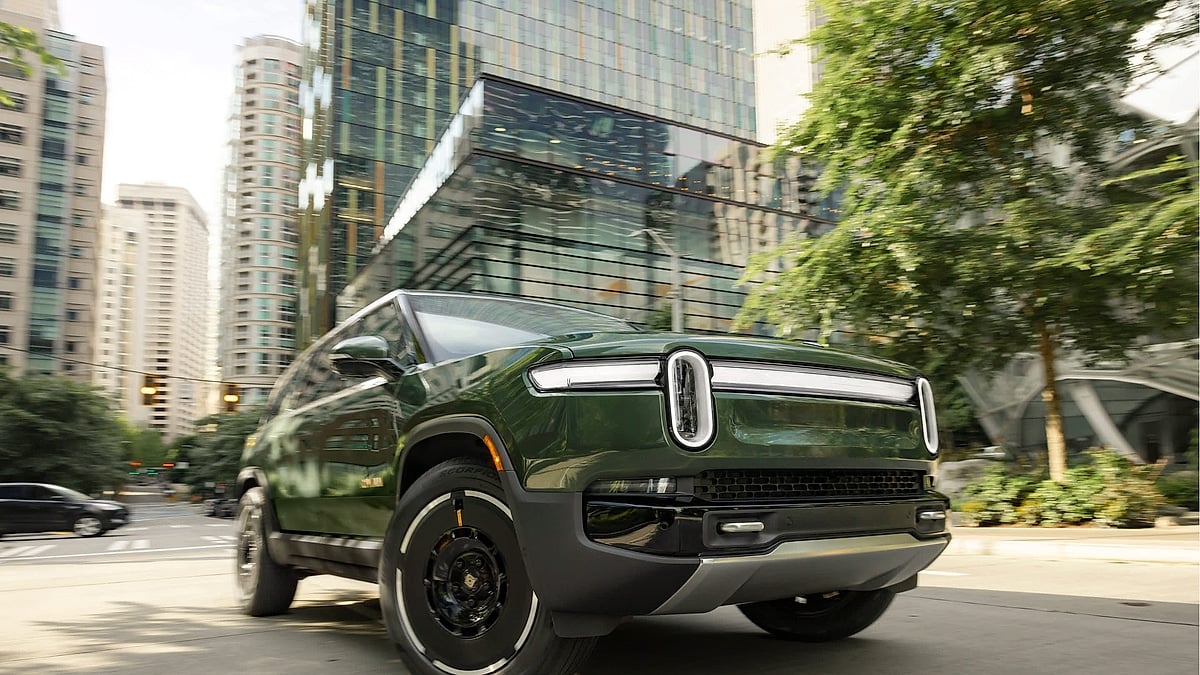
The upgrade to the free tier is a shrewd move by Rivian, offering a genuinely improved safety and convenience feature to all owners rather than crippling the base system to push subscriptions. However, it introduces eye-tracking for hands-on driving, a feature previously reserved for hands-free systems. While mpshizzle found it "pretty unobtrusive," this shift in driver monitoring for a hands-on system is a notable change in user experience that some may find intrusive.
The immediate concern for owners revolved around core functionality. Reddit user Aacemyan asked directly:
The only thing I care about is lane centering on highways. Does the free tier keep this function?
This question cuts to the heart of what drivers consider essential for modern ADAS: reliable lane-keeping. The answer, based on mpshizzle's detailed review, is a resounding yes. The free Highway Assist not only retains lane centering but improves upon it significantly, leveraging the advanced AI model. This makes the free tier a compelling option for those who primarily drive on pre-mapped highways and are comfortable with a hands-on system.
The paid Autonomy+ tier, for now, offers Universal Hands Free driving and Lane Change on Demand. While future features like automatic parking and "on-ramp to off-ramp autonomy" are promised, and "point-to-point autonomy" is targeted for late 2024, the current offering for $2,500 or $100/month is thin. The 4-year break-even point for the one-time purchase vs. the monthly subscription is a long commitment, especially for a system whose capabilities are still evolving.
Reddit user mickeymammoth, a Tri Motor R1T owner, shows the dilemma:
Paying for this monthly until I can assess whether we would jump ship to the R2. Otherwise, I'll probably pay the $2500, assuming I'll have the car for more than 4 years.
This sentiment reflects the uncertainty surrounding Rivian's long-term software strategy and product roadmap. Committing to a $2,500 upfront payment for features that may or may not materialize as expected, or whose value might be eroded by future pricing changes, is a gamble. The monthly option provides flexibility, but at a higher long-term cost if the system proves indispensable.
Despite the positive assessment of the improved AI model, not all experiences with Rivian's autonomy features are flawless. Reddit user CertainPassion2 reported a specific issue with Autonomy+:
My experience has been autonomy + is working fine, but when cars are merging into my lane. In this case, the truck waits too long before slowing down and then suddenly stalls, which could be dangerous. Are you experiencing the same?
This specific complaint, echoed by jlam1122, describes a critical flaw in how the system handles merging traffic. A system that "waits too long before slowing down and then suddenly stalls" is not merely "clunky" but potentially dangerous. This indicates a calibration issue where the system's perception and prediction capabilities are not adequately translating into smooth, safe control actions. It's a common problem in ADAS development, but one that needs immediate attention, especially in a paid, premium offering.

Rivian's decision to significantly upgrade its free Highway Assist is a welcome development, offering a robust ADAS experience to all owners. This move addresses a major concern about feature degradation post-April 4th. However, the value proposition of Autonomy+ remains questionable. While the promise of future "point-to-point autonomy" is enticing, the current paid features are limited, and critical safety issues like the "stalling" behavior during merges need to be resolved. Rivian has delivered a surprisingly capable free tier, but the paid subscription is still a bet on future software development rather than a fully realized product.
Image Sources: Rivian Media Center
About The Author
Noah Washington is an automotive journalist based in Atlanta, Georgia, covering sports cars, luxury vehicles, and performance culture. His reporting focuses on explaining the engineering, design philosophy, and real-world ownership experience behind modern vehicles.
Noah has been immersed in the automotive world since his early teens, attending industry events and following the enthusiast communities that shape how cars are built and driven today. His work blends industry insight with enthusiastic storytelling, helping readers understand not just what a car is, but why it matters.
Noah is also a member of the Southeast Automotive Media Association (SAMA), a professional organization for automotive journalists and industry media in the Southeast.
His coverage regularly explores sports cars, luxury vehicles, and performance-driven segments of the automotive industry, including the evolving culture surrounding Formula Drift and enthusiast builds.
Read more of Noah's work on his author profile page or on his personal website.
You can also follow Noah here:
Set Torque News as Preferred Source on Google
Follow us today...






