
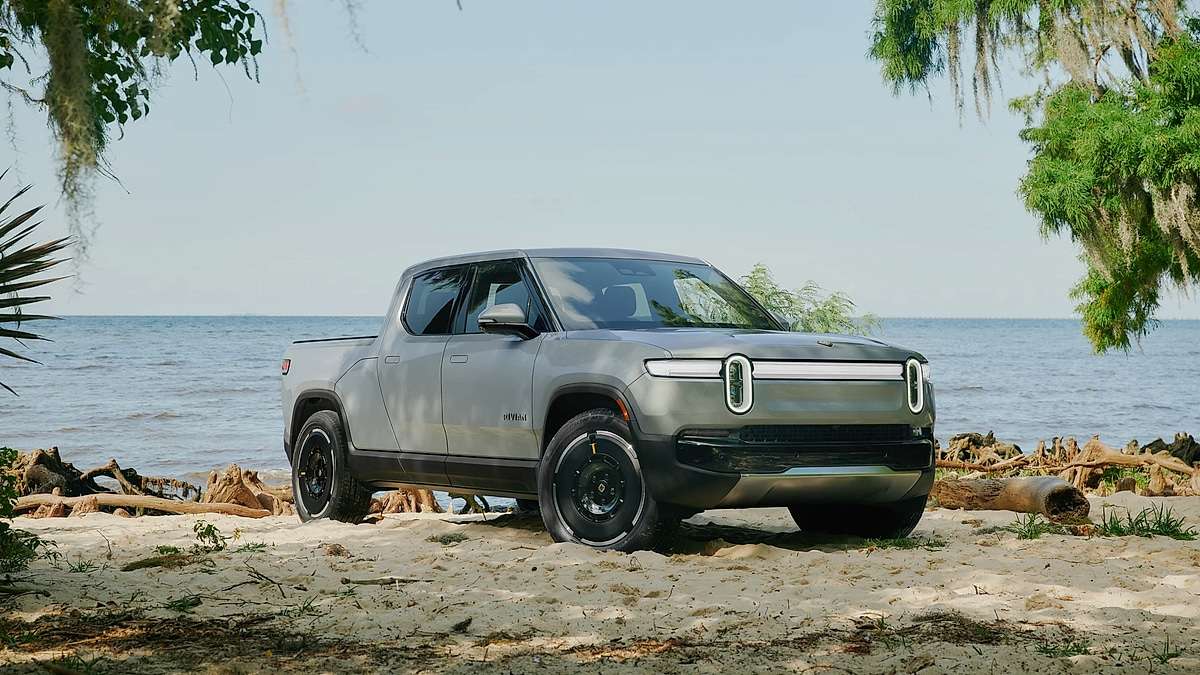

The factory-supplied spare tire jack for the Rivian R1T failed catastrophically for one owner this past weekend, shearing its threaded mechanism and dropping the 7,000-pound truck onto a garage floor. The owner, who had followed all safety protocols, including wheel chocks and activating the truck's tire change mode, reported only a bent dust shield as a result, but the incident reveals a significant flaw in a critical safety component. This isn't a case of user error; it's a design and material failure.
This specific incident shows a broader industry trend where manufacturers, especially in the burgeoning EV truck segment, seem to underestimate the real-world demands placed on ancillary equipment for increasingly heavy vehicles. A jack designed for a passenger car simply cannot handle the weight of a battery-laden pickup, and the consequences of such a failure on a roadside could be far more severe than a bent dust shield. Owners are being handed tools that are demonstrably unfit for purpose.
"Heads up, everyone! I used the supplied spare tire jack this past weekend, and the jack failed, dropping my truck. I did everything right, truck in highest, tire change activated, in my garage on dry level concrete with a wheel chock deployed on both sides of the front wheel while lifting the rear. At just under full extension, the threaded piece that rides on the screw sheared, and the jack collapsed. Fortunately, the damage seems to have been isolated to just a bent dust shield.
When I went into the Portland, OR, service center to inquire about a replacement, I asked about the comprehensive warranty and if it was included. The Advisor either couldn’t or wouldn’t give me a clear answer and said they would need to confirm with the service managers. Two days later, I was told the jack only has a 2-year warranty and wished a wonderful day.
Beware: using the Rivian jack in ideal conditions results in a catastrophic failure. Take serious caution if you’re stuck on the side of the road and feel you’re up to the task of throwing on a spare."
The owner's detailed description of the setup, "truck in highest, tire change activated, in my garage on dry level concrete with a wheel chock deployed on both sides", directly contradicts any potential manufacturer defense of improper use.
Rivian R1T: Heavy Duty Electric Truck Specifications
- The Rivian R1T has a curb weight ranging from approximately 6,700 to 7,100 pounds, depending on configuration and battery pack size. This substantial mass requires robust lifting equipment with a high safety factor.
- Its standard battery pack offers an EPA-estimated range of 270 miles, while the large pack extends this to 328 miles, and the Max Pack pushes it to 410 miles. These large battery capacities contribute significantly to the vehicle's weight.
- The R1T features an advanced quad-motor all-wheel-drive system, delivering 835 horsepower and 908 lb-ft of torque. This powertrain demands a chassis and ancillary components designed for heavy-duty performance. Just this week, Rivian announced a new cost-cutting initiative aimed at streamlining production and reducing material expenses, a move that often prompts questions about component quality and supplier choices.9 inches of ground clearance in its highest setting and a wading depth of over 3 feet, indicating its off-road capability. Such rugged use increases the likelihood of needing a spare tire in challenging conditions.
This was a controlled environment, not a muddy shoulder, yet the jack still failed. The specific point of failure, the "threaded piece that rides on the screw sheared," indicates a material or manufacturing defect, or simply an inadequate design for the forces involved.
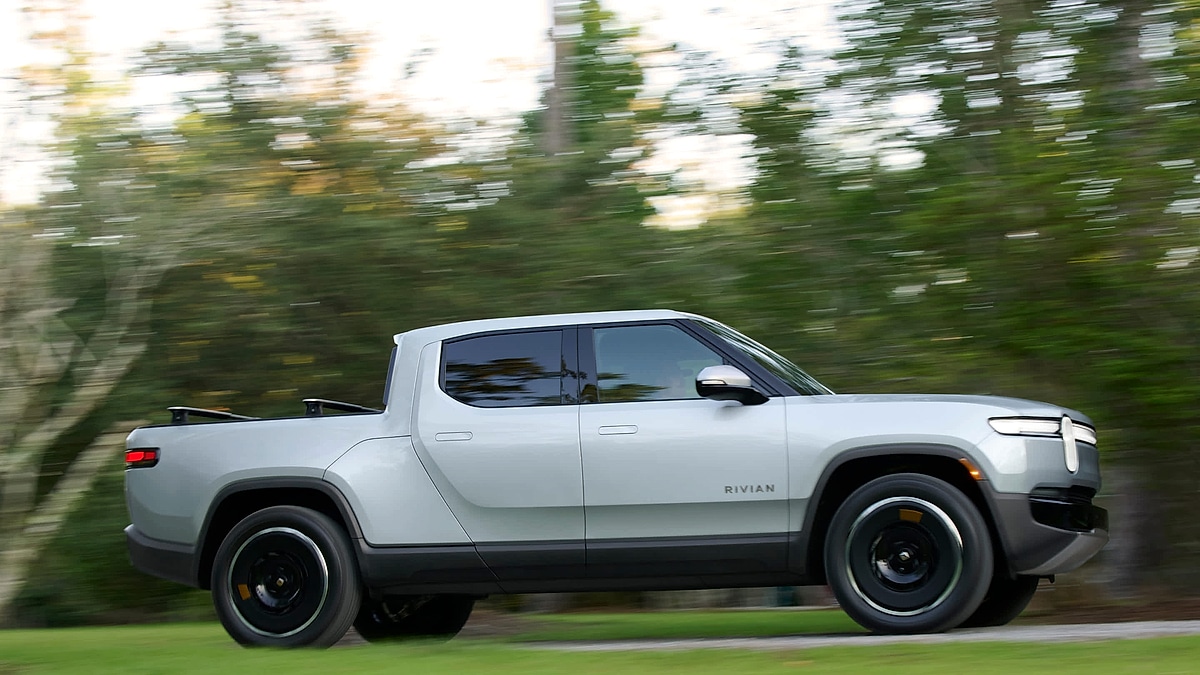
The response from the Portland, Oregon service center, initially evasive and then dismissive with a "2-year warranty" declaration, is precisely the kind of corporate stonewalling that erodes customer trust. A safety-critical component that fails under normal, albeit infrequent, use should not be subject to an arbitrary two-year limit, especially when the vehicle itself carries a more comprehensive warranty. This isn't about replacing a worn floor mat; it's about a piece of equipment designed to prevent a 7,000-pound vehicle from crushing someone.
This incident isn't isolated to Rivian. The increasing mass of modern vehicles, particularly electric trucks and SUVs, places unprecedented strain on components that haven't always evolved with the vehicles themselves. A 7,000-pound R1T requires a jack with significantly higher load capacity and structural integrity than a typical pickup, let alone a passenger car. The fact that the jack failed at "just under full extension" suggests it was operating near its maximum stress point, indicating an insufficient safety margin.
Reddit user u/TheKobayashiMoron, an R1T owner and "Top 1% Commenter," echoed this sentiment, stating, "Those emergency scissor jacks, regardless of vehicle, are garbage. I had one drop a rental car when I was changing a flat. Rivian should be providing something more substantial for such a heavy vehicle." This observation is critical because it points to a systemic issue: manufacturers are often specifying minimal, cost-effective jacks across their product lines, failing to account for the substantial weight differences between models.
The discussion then shifts to practical solutions, with u/TheKobayashiMoron suggesting a proper floor jack for home use and Radium, who also owns an R1T, detailing a custom 21-inch spare kit with a "sprinter van bottle jack" costing $835. These are not minor upgrades; they are necessary expenditures owners are making to compensate for what they perceive as inadequate factory equipment. This is where the gap between engineering and real-world application becomes a financial burden for the customer.
The issue is a fundamental design issue. Reddit user u/dleewla, another R1T owner, highlighted an even more precarious situation with "version 1" of Rivian's jack: "Mine has the scissor part and a plastic base you need to put under the jack. It’s not secure; the jack literally just sits on top of the plastic. The plastic puck isn’t any better; in total, it’s 3 separate pieces, all of which do not connect or latch in any way. Very disappointing that Rivian gave so little thought to the jack for a 7000lb vehicle. I honestly think it’s a safety hazard."
This description of a multi-piece, unsecured jack system is not merely disappointing; it's negligent. A jack that requires careful balancing of separate components under a heavy vehicle is a recipe for disaster, particularly on an uneven roadside or in adverse weather conditions. The fact that Rivian has seemingly progressed to a "version 2" that is still prone to catastrophic failure suggests a fundamental misjudgment of the forces involved and the safety implications.
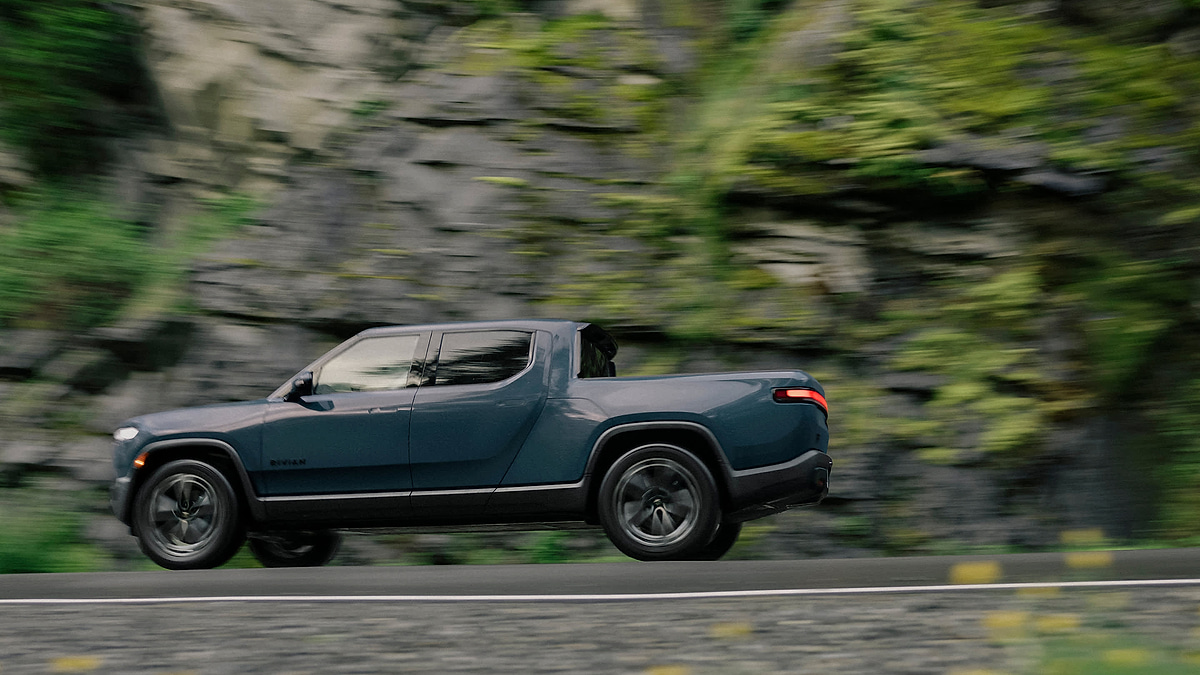
Rivian's spare tire jack, whether version 1 or 2, is inadequate for the R1T's considerable weight, and the company's warranty stance on its failure is unacceptable. This is not a matter of wear and tear or owner misuse; it is a design and manufacturing deficiency that poses a clear safety risk. Rivian needs to recall and replace these jacks with equipment that meets the safety and load-bearing requirements of its vehicles, rather than hiding behind a two-year warranty on a component that could cause serious injury or worse.
Would you be disappointed in our truck if this happened to you? Let us know in the comments below!
Image Sources: Rivian Media Center
About The Author
Noah Washington is an automotive journalist based in Atlanta, Georgia, covering sports cars, luxury vehicles, and performance culture. His reporting focuses on explaining the engineering, design philosophy, and real-world ownership experience behind modern vehicles.
Noah has been immersed in the automotive world since his early teens, attending industry events and following the enthusiast communities that shape how cars are built and driven today. His work blends industry insight with enthusiastic storytelling, helping readers understand not just what a car is, but why it matters.
Noah is also a member of the Southeast Automotive Media Association (SAMA), a professional organization for automotive journalists and industry media in the Southeast.
His coverage regularly explores sports cars, luxury vehicles, and performance-driven segments of the automotive industry, including the evolving culture surrounding Formula Drift and enthusiast builds.
Read more of Noah's work on his author profile page or on his personal website.
You can also follow Noah here:
Set Torque News as Preferred Source on Google
Follow us today...




Comments
They also engineered the…
Permalink
They also engineered the charging port in the wrong location so it takes up two spaces when charging at Tesla chargers.