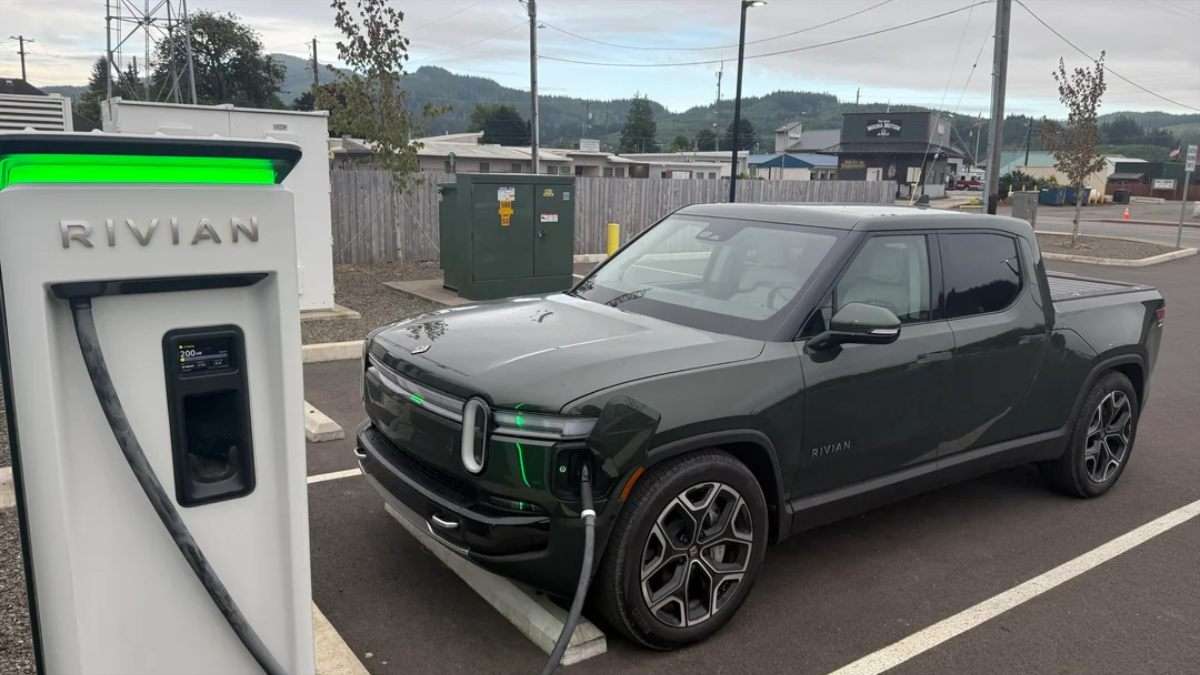

Washington’s Olympic Peninsula, where nature is king and Subarus are its loyal subjects, one man steered his electric chariot, an R1T named Ranger, on a 460-mile, two-day loop from Seattle to the rainforests of Forks and back again. It wasn’t an expedition meant to make headlines or social media waves. Instead, it was something older and nobler: a family road trip, made possible by curiosity, range confidence, and a promotional perk that might be the most underappreciated benefit of early EV adoption, free charging on the Rivian Adventure Network through March 2026.
He took to Reddit to talk about the journey.
“Recently took a 2-day road trip on July 8-9 around the Olympic Peninsula in my Forest Green ‘25 R1T Dual Large, aka Ranger. Seattle > Port Angeles > Second Beach > Forks > Hoh Rain Forest (Olympic National Park) > Aberdeen > Seattle, ~460 miles.
The truck did GREAT! I have free RAN charging until March ‘26, so I specifically planned the trip only using two RAN, one in Forks at the end of the first day and one in Aberdeen on the way back to Seattle the second day.
The biggest issues/problems I ran into were:
The nav kept sending me to Tesla Superchargers in both Forks and Aberdeen instead of the RAN ones I specifically added in my planned trip in the Rivian app, very bizarre. While it was annoying/frustrating, it wasn’t a huge deal because in both places, the Tesla Supercharger and RAN were very close to each other. But I’d have to end the trip and search in the nav specifically for the RAN to get it to navigate to them successfully.
At both RAN, I got multiple charging errors, and in the end, I had to move the truck to a different charger. In Forks, I gave up at 88%, wanted to get to 90%.
I know I should have done shorter, more frequent charge stops, but I was after that sweet, sweet free charging
Some additional notes: -Got down to 7% before reaching the Forks RAN! I previously had a Tesla Model 3 Performance for 5 years, in which I did multiple trips from Seattle to Arizona and back, so I don’t have any range anxiety, but 7% is definitely the lowest I’ve ever gone, especially on a road trip. The truck did start turning things off like automatic wipers and Automatic High Beams on the short trip from Second Beach to the Forks RAN. -Only spotted two other Rivians the whole trip, both R1S, which seemed super odd since there are so many Rivians in the Seattle area. Western WA is still dominated by Suburbs lol, they are literally everywhere.
Advertising
Was the only one charging in both Forks and Aberdeen. -Rivian Autonomy Platform/Highway Assist was only available in patches and spurts, but I enjoy driving too much to do more than just show it off to my parents. -Speaking of, the main purpose of the trip was to take my parents to see my favorite WA beach, Second Beach (which was totally fogged in ), and the rain forest.
They live in southern AZ, and it’s like going to Mars for them with how different it is, lol. Had a great time explaining and demonstrating all the cool things about the truck, and showing them how capable an EV can be, albeit on a relatively short road trip. My dad has always been a truck guy, Ford F-150 mostly, and he was thoroughly impressed.
The line of cars to get into the Hoh Rain Forest visitor center parking lot was about 90 minutes; they had signs saying it could be up to 2 hours. And then the parking situation was frankly a nightmare, we drove in circles for about another 20-25 minutes before finding a spot. The couple of other times I’ve been there was zero line. -Had a BougeRV 23 Quart Portable Refrigerator plugged into the 12V in the Gear Tunnel, once lined up and slightly tilted up in the front, it could be easily reached from the back seat pass through (thanks r/Rivian and Rivian Forum posters for the perfect model and set up suggestion!).
Can’t wait for my next trip!”

Hitting 7% state of charge in the remote Washington backwoods would make most drivers squirm, but this R1T owner, a former Tesla Model 3 road warrior with trips to Arizona under his belt, knew exactly what he was doing. Instead of panic, he got performance, adaptive power draw, subtle deactivation of non-essentials, and a truck that quietly did what it was engineered to do. And while 7% is eyebrow-raising, it’s far from catastrophic in a vehicle designed to think ahead of its driver.
2025 Rivian R1T Dimensions and Specifications
- The 2025 Rivian R1T is 217.1″ long with a 135.8″ wheelbase, an 81.8″ width (mirrors folded), 75.7″ height, and variable air suspension offering up to 14.9″ ground clearance
- Powertrain options include dual- or quad-motor AWD with up to 908 lb-ft torque; quad-motor versions hit 0–60 mph in about 3.0 seconds
- Battery packs range from 105 to 149 kWh, with EPA-estimated ranges from ~230 miles up to around 400 miles on the largest battery
- Pricing starts near $73,000 for base dual-motor versions and can exceed $100,000 for fully loaded quad-motor Max variants with top-tier batteries
Charging, predictably, became the most intricate part of the journey. Both Rivian Adventure Network (RAN) stations, Forks and Aberdeen, presented minor hiccups: chargers that threw errors, pedestals that needed switching, and software that couldn’t quite keep up with the hardware. But in a moment that feels quintessentially modern, the biggest navigational challenge wasn’t range or terrain, it was the R1T’s nav system persistently trying to route the driver to Tesla Superchargers instead of the RAN stations programmed into his itinerary.
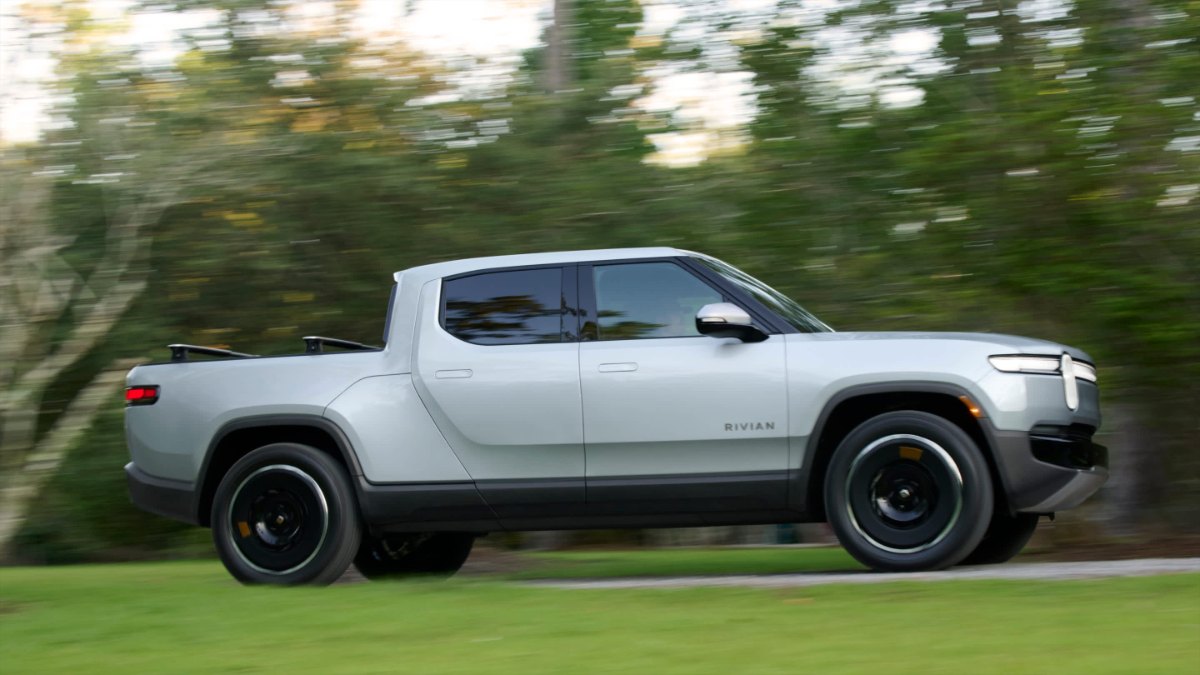
There were no tow trucks, no frantic calls to Rivian support, and no stories of sleeping in a truck while stranded at a shuttered station. It was, instead, a real road trip with real annoyances: traffic backing up 90 minutes into the Hoh Rain Forest, fog rolling in at the beach, and two parents from southern Arizona discovering that the Pacific Northwest might as well be another planet. "It’s like going to Mars for them," the driver joked. But Mars has never smelled like salt air and Douglas fir.
How The R1T Handled The Trip
The Rivian’s autonomy suite was mostly ignored. Highway Assist only worked in patches, likely due to the area’s limited GPS and lane markings, but the driver didn’t mind. “I enjoy driving too much,” he wrote, using the feature only to demonstrate it to his folks. The real stars were the chassis, the torque, and the instant confidence of 4-motor control on wet, winding roads. The R1T might be digital, but its soul is still mechanical.
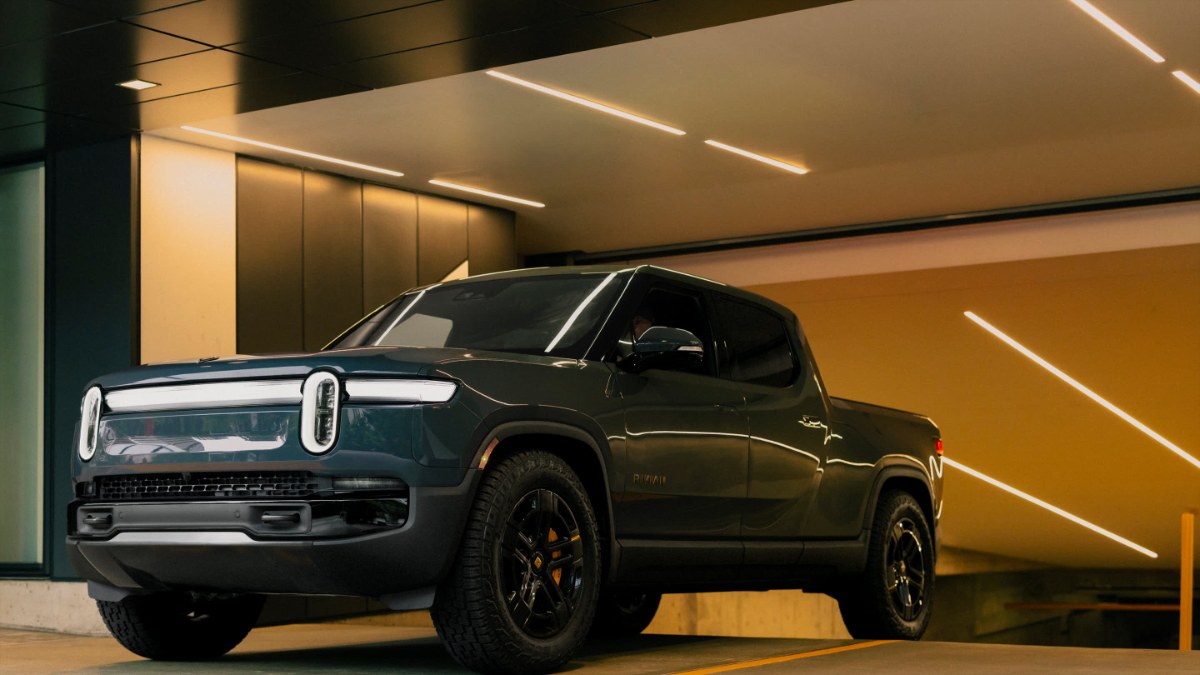
As for what was packed? A portable refrigerator tucked into the 12V gear tunnel, conveniently tilted up for back seat access. A clever road-trip hack that underscores Rivian’s strongest selling point: utility. You don’t buy an R1T just to save gas, you buy it because it changes the way you think about packing, charging, even eating on the road. It’s a cooler in the tunnel, not a campfire in the bed.
2025 Rivian R1T Towing Capicity
- When equipped with the appropriate tow package (Max battery or tri-motor), the R1T is rated to tow up to 11,000 pounds
- Models with dual-motor configurations and Standard or Large battery packs are limited to a towing capacity of 7,700 pounds
- Using a non-distribution hitch limits safe towing to a 5,000-pound maximum; for the full tow rating, a weight-distributing hitch (WDH) is required
- Electric motors provide excellent pull even on inclines, but towing heavy loads can nearly halve driving range, making trip planning and charging stops essential
Interestingly, the driver only saw two other Rivians, a pair of R1S SUVs, during the entire 460-mile journey. For a brand gaining momentum in urban hubs like Seattle, the lack of visibility in more rural settings speaks volumes. This isn’t yet a full-on revolution. It’s a slow, steady expansion, carried out one road trip, one national park, one parental demo ride at a time. The fact that the R1T driver was alone at both charging stations reinforces just how early we still are in this transition.
It was a simple, meaningful, modern American road trip. A son is taking his parents to see a favorite fog-covered beach. A father, long loyal to the F-150, was walking away impressed. A journey made smooth not by gas or grit, but by electrons flowing through a network Rivian built to support exactly this kind of travel. And maybe, just maybe, that’s what progress looks like: a quiet truck in the rain, gliding through a forest, with just enough battery left to get everyone home.
Image Sources: Rivian Media Center
Noah Washington is an automotive journalist based in Atlanta, Georgia. He enjoys covering the latest news in the automotive industry and conducting reviews on the latest cars. He has been in the automotive industry since 15 years old and has been featured in prominent automotive news sites. You can reach him on X and LinkedIn for tips and to follow his automotive coverage.
Set Torque News as Preferred Source on Google
Follow us today...