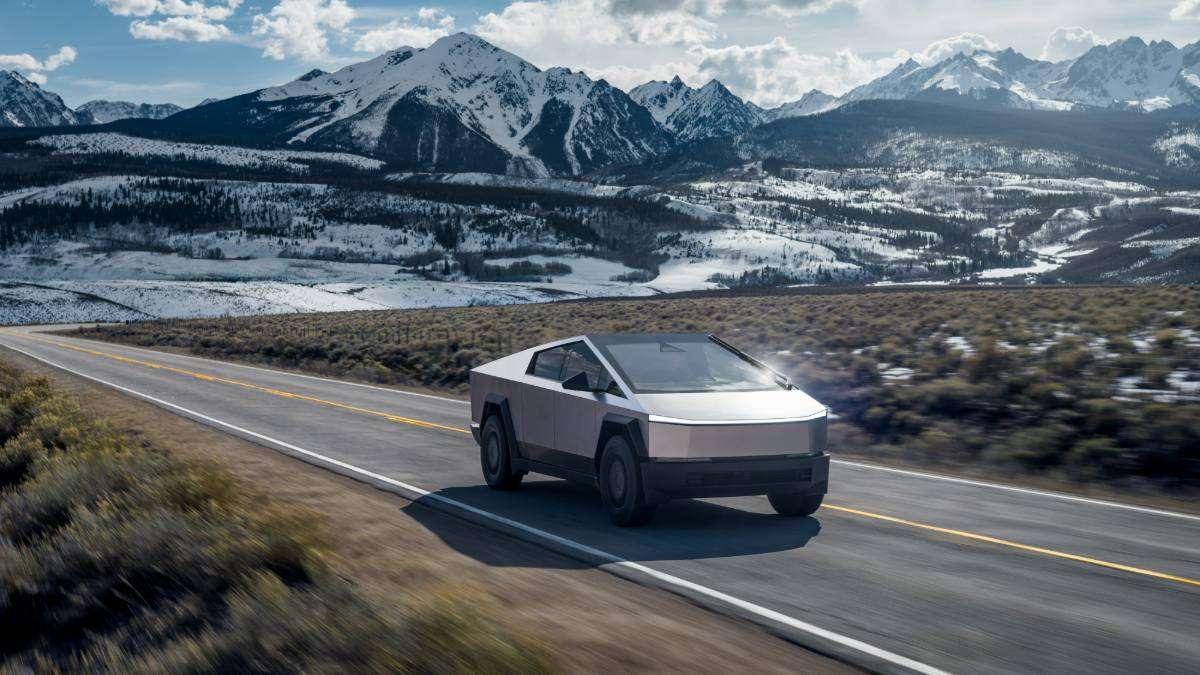

The Tesla Cybertruck stormed into the electric truck industry with extreme dominance, transforming our perception of truck aesthetics and now winning over even more enthusiasts.
After fourteen months of ownership with his Tesla Cybertruck and 13,000 miles of real-world experience, David J Delgado S's Cybertruck testimonial reads like a field report from the future:
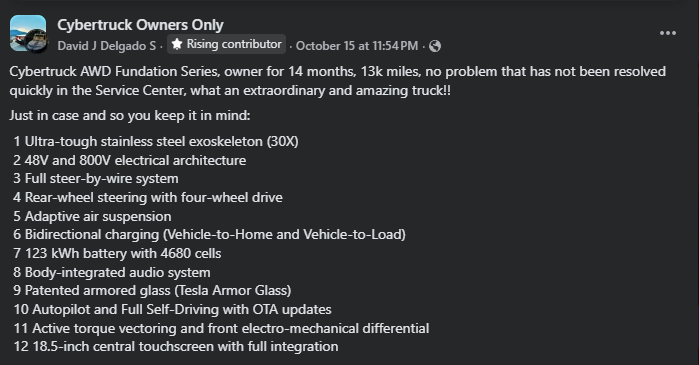
“Cybertruck AWD Fundation Series, owner for 14 months, 13k miles, no problem that has not been resolved quickly in the Service Center, what an extraordinary and amazing truck!!
Just in case, and so you keep it in mind:
1 Ultra-tough stainless steel exoskeleton (30X)
2 48V and 800V electrical architecture
3 Full steer-by-wire system
4 Rear-wheel steering with four-wheel drive
5 Adaptive air suspension
6 Bidirectional charging (Vehicle-to-Home and Vehicle-to-Load)
7 123 kWh battery with 4680 cells
8 Body-integrated audio system
9 Patented armored glass (Tesla Armor Glass)
10 Autopilot and Full Self-Driving with OTA updates
11 Active torque vectoring and front electro-mechanical differential
12 18.5-inch central touchscreen with full integration”
The emphasis on problem resolution rather than problem absence reveals the mature perspective that early adopters develop when living with cutting-edge technology.
This isn't a denial of challenges; it's recognition that revolutionary vehicles require different expectations about the ownership experience.
The immediate acknowledgment of the vehicle's visual impact reveals how the Cybertruck functions as much as performance art as practical transportation. The truck's polarizing design means that parking it becomes a statement about personal values and technological philosophy that may not reflect the owner's actual beliefs or intentions. Every trip to the grocery store transforms into a public exhibition where strangers feel compelled to comment, photograph, and debate the merits of automotive futurism.
The psychological burden of constant attention represents an unexpected cost of automotive innovation, where choosing radical design means accepting perpetual scrutiny from strangers who view your vehicle as either salvation or abomination. The Cybertruck owner becomes an unwilling ambassador for electric vehicle adoption, fielding questions and defending choices that were made for personal rather than missionary reasons.
Delgado's comprehensive catalog of the Cybertruck's technological achievements reads like a manifesto for automotive futurism, where each feature represents a departure from conventional thinking. Just in case, and so you keep it in mind: 1 Ultra-tough stainless steel exoskeleton (30X), 2 48V and 800V electrical architecture, 3 Full steer-by-wire system, 4 Rear-wheel steering with four-wheel drive, 5 Adaptive air suspension. This systematic enumeration suggests the pride of ownership that comes with possessing technology that genuinely advances the state of automotive art.
The stainless steel exoskeleton represents more than an aesthetic choice; it's a fundamental reimagining of automotive construction that prioritizes durability over conventional beauty standards. The 30X strength claim positions the Cybertruck as industrial equipment masquerading as consumer transportation, where traditional concerns about paint scratches and minor dents become irrelevant considerations for owners who have embraced utilitarian aesthetics.
The dual-voltage electrical architecture demonstrates Tesla's commitment to pushing beyond incremental improvements toward comprehensive system redesign. The 48V and 800V combination enables capabilities that would be impossible with conventional automotive electrical systems, creating a platform for features that haven't yet been imagined while supporting the massive power requirements of electric truck operation.
The Engineering Philosophy of Automotive Revolution
- Elimination of mechanical steering connections enables precise control algorithms and opens interior space for innovative cabin design approaches.
- Rear-wheel steering transforms large vehicle maneuverability while maintaining stability at highway speeds through electronic coordination.
- Air suspension systems that automatically adjust to load conditions and driving situations without requiring driver intervention or awareness.
- Vehicle-to-home and vehicle-to-load capabilities transform trucks into mobile power stations that can support entire households during outages.
The battery technology represents perhaps the most significant advancement in the Cybertruck's arsenal of innovations. 123 kWh battery with 4680 cells positions the vehicle at the forefront of energy storage development, where larger cells enable higher energy density while simplifying manufacturing processes. This isn't merely about range; it's about creating a platform that can support the massive power requirements of serious truck work while maintaining the efficiency necessary for daily transportation.
The body-integrated audio system demonstrates how radical design enables innovations that would be impossible in conventional vehicles. By incorporating speakers into the truck's structure rather than adding separate components, Tesla achieves acoustic performance that transforms the cabin into a concert hall while maintaining the minimalist aesthetic that defines the Cybertruck experience.
The patented armored glass technology, despite its infamous demonstration mishap, represents a genuine advancement in automotive safety and security. Tesla Armor Glass provides protection levels that exceed conventional automotive glazing while maintaining optical clarity and weight efficiency. This technology transforms windows from vulnerable points into integral components of the vehicle's defensive capabilities.
The Autopilot and Full Self-Driving capabilities, enhanced by over-the-air updates, position the Cybertruck as a continuously evolving platform rather than a static product. Autopilot and Full Self-Driving with OTA updates mean that the vehicle's capabilities expand over time, creating an ownership experience where new features appear without requiring physical modifications or dealership visits.
The Psychology of Technological Evangelism
- The satisfaction that comes from owning technology that genuinely advances the state of automotive art beyond incremental improvements.
- Participation in a select group of early adopters who share the experience of living with revolutionary rather than evolutionary technology.
- The sense of contributing to automotive progress by providing real-world testing and feedback for technologies that will eventually reach mainstream adoption.
- Learning to appreciate utilitarian beauty that prioritizes function over conventional automotive styling conventions.
Terry Simons' question about the service center abbreviation reveals the learning curve associated with Tesla ownership, where new terminology and procedures become part of the automotive vocabulary. What is SC? The innocent inquiry demonstrates how Tesla has created its own ecosystem of knowledge and practices that distinguish it from traditional automotive ownership experiences.
Delgado's patient explanation Service Center!!! illustrates the educational role that experienced owners assume within the Tesla community, where knowledge sharing becomes essential for successful ownership. This collaborative approach to problem-solving creates informal support networks that supplement official documentation and help newcomers navigate the unique aspects of Tesla ownership.
Paul Anderson's inquiry about price reflects the natural curiosity that the Cybertruck generates, where observers assume that such radical technology must be available for purchase. Price? The single-word question captures the directness with which people approach Cybertruck owners, treating them as walking advertisements for automotive futurism rather than individuals who simply chose different transportation.
Delgado's response clarifies his motivation for sharing his experience: It's not for sale. There are so many posts with complaints, so I wanted to post one highlighting the truck's positive aspects and its advanced technology!
This statement reveals the defensive posture that Cybertruck owners often adopt when confronted with criticism of their vehicle choice. The desire to counterbalance complaints with positive testimonials demonstrates the emotional investment that comes with owning controversial technology.
Donald Daniels' enthusiastic endorsement Best truck in the world represents the kind of superlative praise that the Cybertruck inspires among supporters. This absolute assessment reflects the polarized nature of Cybertruck discourse, where moderate opinions become rare in the face of revolutionary design that demands strong reactions.
David Thornton's test drive experience provides validation from someone without ownership investment: I test drove one of these in August and was just completely blown away by how awesome that truck is. This external confirmation carries particular weight because it comes from someone who experienced the Cybertruck's capabilities without the psychological commitment of ownership, suggesting that the vehicle's appeal extends beyond owner rationalization.
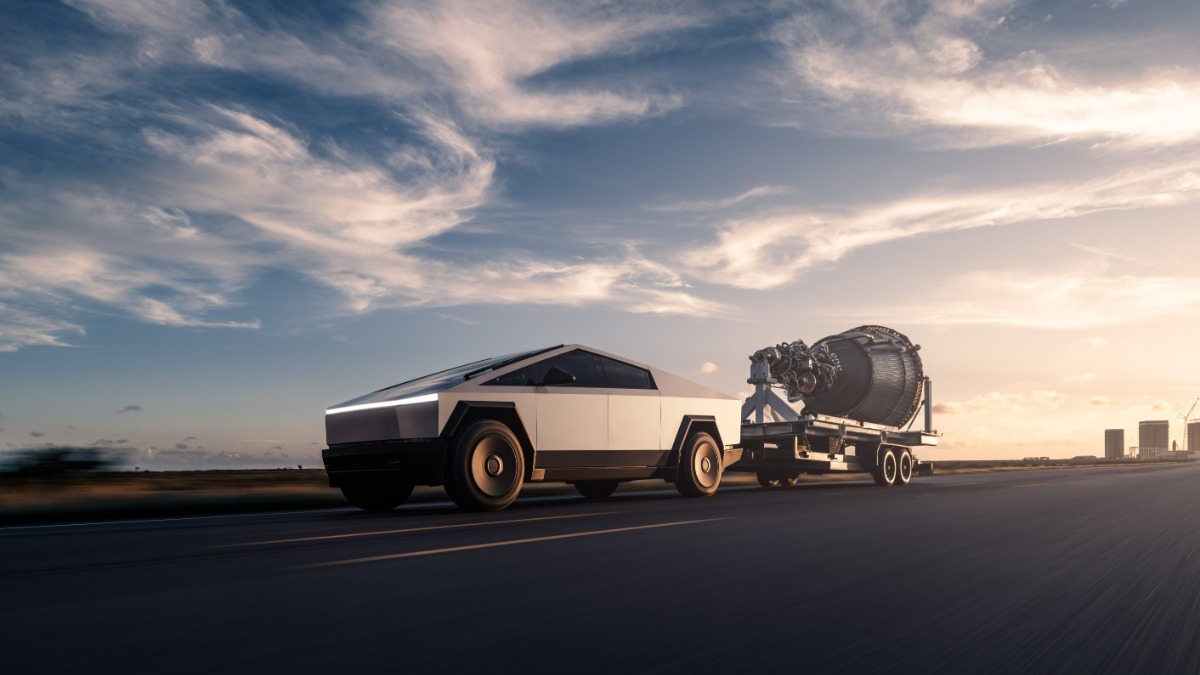
The broader implications of Delgado's ownership experience extend beyond individual satisfaction to questions about the viability of radical automotive design in mainstream markets. The Cybertruck represents a comprehensive experiment in alternative automotive philosophy that challenges every assumption about truck design, from aesthetics to functionality to manufacturing processes.
The success of electric truck technology will be measured not only by individual vehicle capabilities but by the industry's willingness to embrace radical departures from established conventions. The Cybertruck's reception provides crucial data about consumer acceptance of revolutionary rather than evolutionary automotive development.
The manufacturing challenges associated with stainless steel construction and integrated technology systems create learning opportunities that benefit the entire automotive industry. Tesla's approach to vehicle production demonstrates how radical design decisions require equally radical manufacturing processes that challenge conventional assembly line thinking.
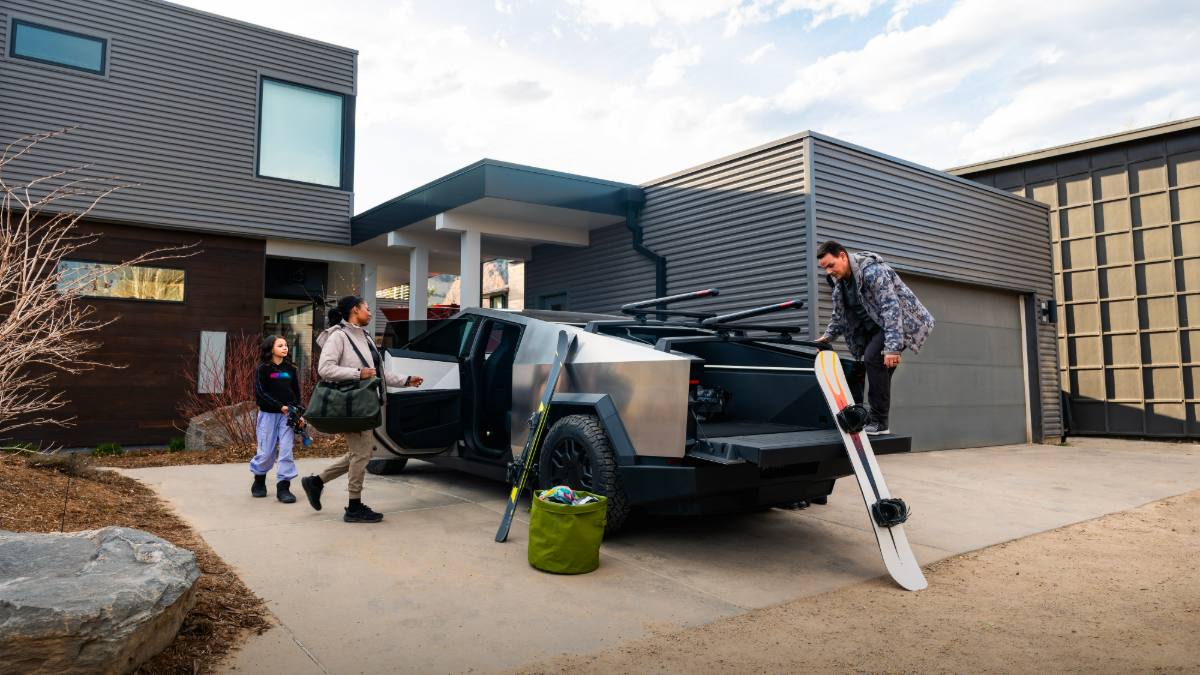
The cultural impact of the Cybertruck extends beyond automotive circles to influence broader discussions about technology adoption, design philosophy, and the pace of change in consumer products. The vehicle serves as a test case for society's willingness to embrace dramatic departures from established norms in pursuit of functional advantages.
The long-term reliability data from owners like Delgado will provide crucial insights into the viability of alternative construction methods and integrated technology systems in automotive applications. The Cybertruck represents a comprehensive experiment in automotive design that will inform future development across the industry regardless of its individual commercial success.
The evolution of automotive innovation depends on the willingness of manufacturers to pursue revolutionary rather than evolutionary development approaches. The Cybertruck's market performance will influence industry confidence in radical design departures and comprehensive technology integration.
The ongoing development of electric vehicle infrastructure continues to improve the practical aspects of Cybertruck ownership, but the fundamental challenge of integrating revolutionary vehicles into existing transportation patterns requires ongoing adaptation from both infrastructure providers and vehicle owners.
The Cybertruck's success depends not only on its individual capabilities but on the broader ecosystem's ability to support its operational requirements.
The Cybertruck is undeniably a polarizing vehicle, and its ownership experience is unlike any other.
Do you believe that the Cybertruck represents genuine progress in truck design or expensive experimentation, and how important is community support in navigating the challenges of owning revolutionary technology?
Share your thoughts on the future of automotive design and the balance between innovation and practicality in the comments below.
Noah Washington is an automotive journalist based in Atlanta, Georgia. He enjoys covering the latest news in the automotive industry and conducting reviews on the latest cars. He has been in the automotive industry since 15 years old and has been featured in prominent automotive news sites. You can reach him on X and LinkedIn for tips and to follow his automotive coverage.
Set Torque News as Preferred Source on Google
Follow us today...