
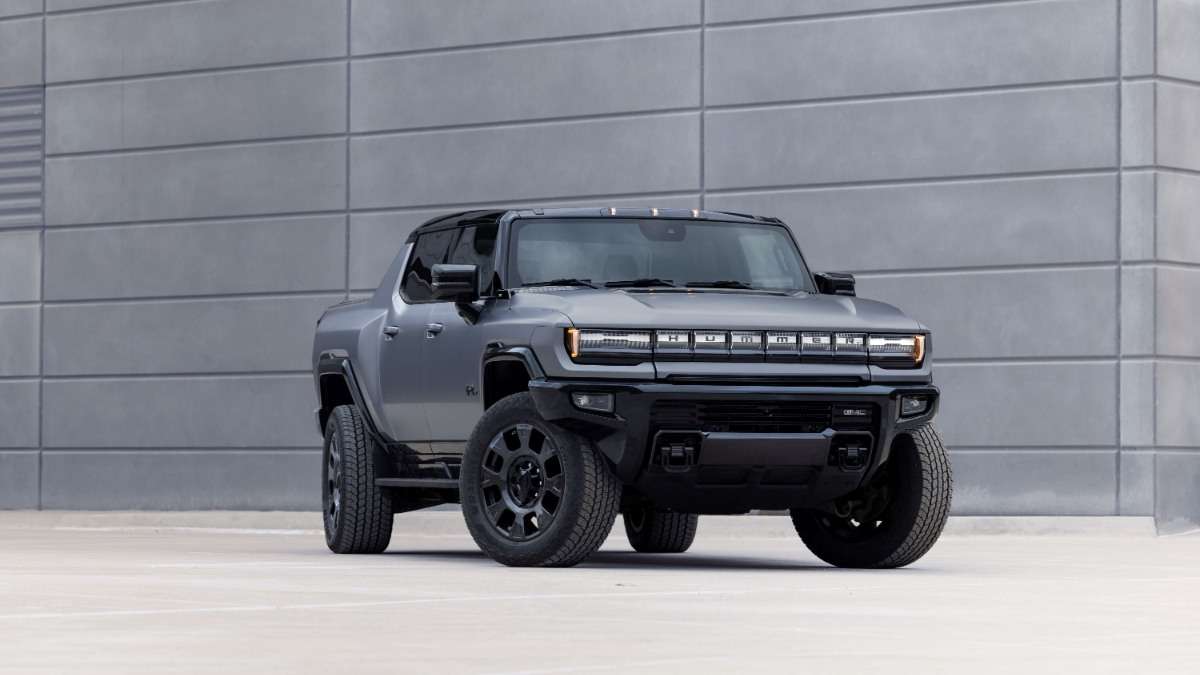

The history of cars has always been a history of compromises. Want speed? You pay at the pump. Want luxury? Prepare for weight and complexity. Want a tank-sized electric vehicle with 1,000 horsepower and a mode literally called “WTF”? Then you are about to discover that the most important race in the EV age is not just between Ford, GM, and Tesla.
It is between you and the charging station, and the prize is figuring out what is happening to your wallet every time you plug in.
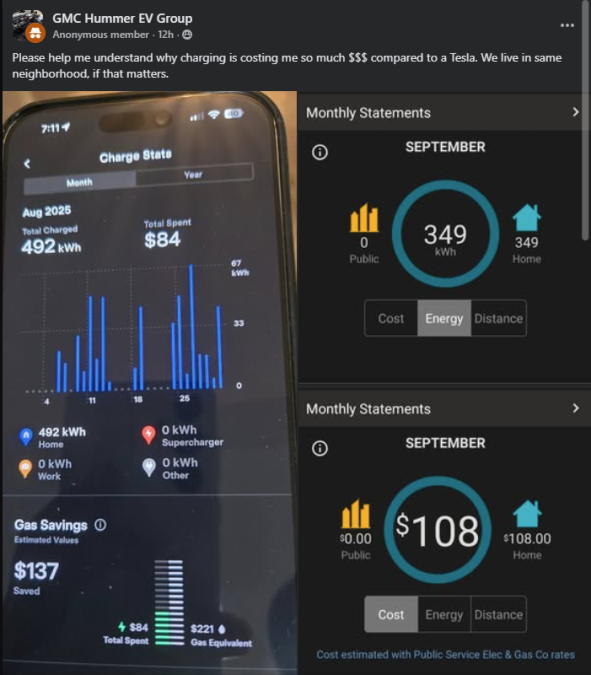
Nowhere is that struggle clearer than in a recent post from a GMC Hummer EV owner who turned to Facebook for help.
The post read in full:
“Please help me understand why charging is costing me so much $$$ compared to a Tesla.
We live in the same neighborhood, if that matters.”
The bewilderment is understandable. Electricity is often framed as the great bargain of the EV revolution, but efficiency is the silent arbiter of cost. Craig B. Eastwood answered with matter-of-fact clarity: “The Hummer is MUCH less efficient than the Tesla. And has a larger battery.” James Fairclough II was even sharper: “Giant battery and about 1/3 as efficient.” That is not a small difference; it is the sort of gulf we once measured in miles per gallon when someone compared a Camry to a Suburban.
GMC Hummer EV Features & Watts To Freedom
- The tri-motor setup produces an astounding 1000 horsepower, enabling a 0-60 mph time of 3.3 seconds with "Watts to Freedom" mode.
- Provides an EPA-estimated range of up to 381 miles for the tri-motor pickup, though real-world towing significantly reduces this.
- Tows up to 12,000 pounds with the dual-motor configuration, out-hauling many competitors.
- A massive and imposing vehicle, it resurrects the Hummer name with a bold, futuristic, and distinctly aggressive look.
Topete Esteban distilled the entire issue into a metaphor that resonated across the thread: “Hummers usually give you 1.5 miles per kWh, Teslas or comparable smaller cars give you about 3 miles per kWh. So, unfortunately, same as a V8 truck is gonna give you 15 miles a gallon, and the Camry is gonna give you closer to 30.” Kayne Stocker chimed in to call it “a great analogy.” In the old days, you learned your MPG at the gas pump. Today, you learn your MPkWh on the charging app. The principle is the same, only the units have changed.
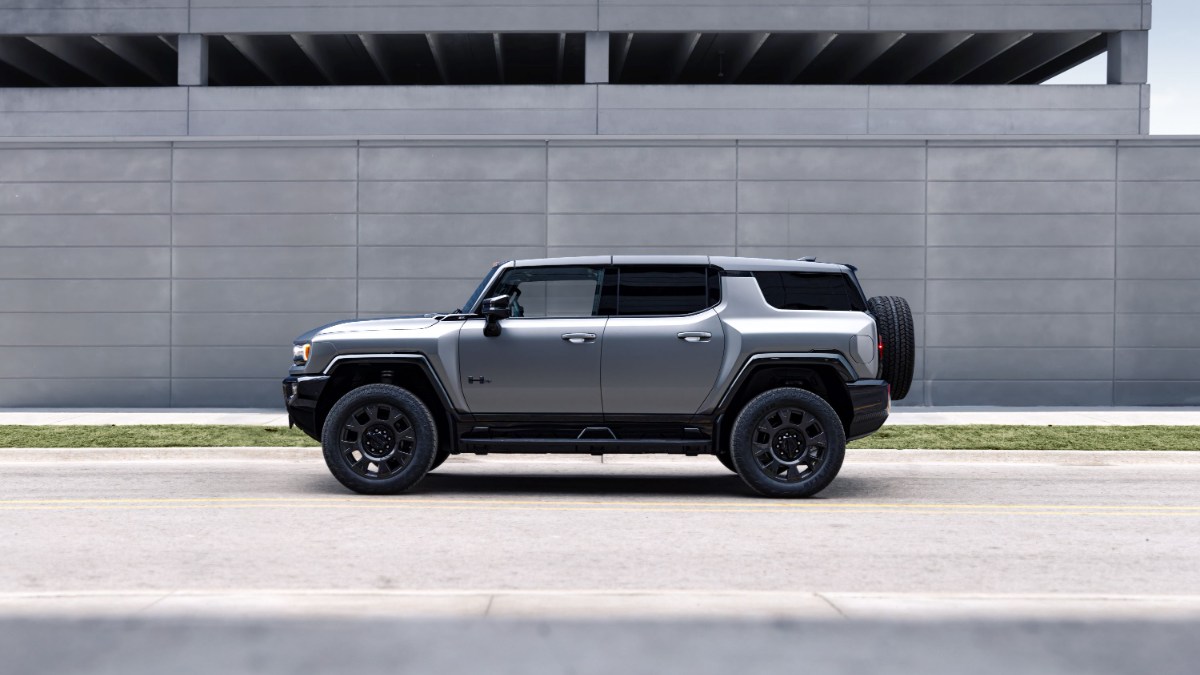
The numbers back it up. The GMC Hummer EV’s massive 212-kWh battery delivers about 311 miles of range, translating to roughly 1.5 miles per kWh. A Tesla Model 3, by contrast, approaches 4 miles per kWh.
What People Think About The Charging Costs
That spread explains why one driver reports spending $108 for a full charge while the neighbor pays significantly less for similar usage. Pete Kassab summed it up plainly: “Huge battery.” Alex Rola provided the gasoline-era illustration to tie it together: “Think of it like the Tesla got you 300 miles with a 10-gallon gas tank and the Hummer needs 20 gallons.”
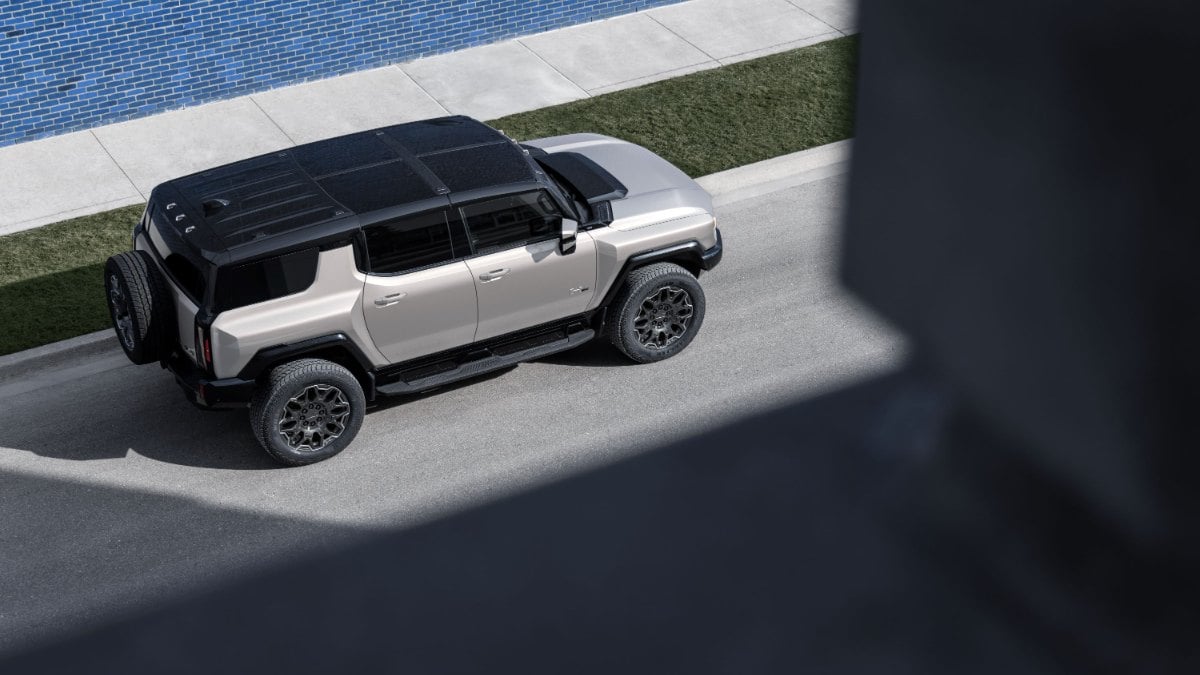
Then came the historical perspective. Badr Elhamraoui wrote, “It’s the least efficient EV on the market. People weren’t buying the H1 & H2 Hummers for their efficiency, same with the EV.” Here lies the essence of the brand. The Hummer has always been a statement of scale. Its reinvention as an electric super truck does not erase that legacy. It affirms it. Inefficiency, in this case, is not a defect. It is part of the DNA.
Yet physics cannot be branded away. The Hummer weighs over 9,000 pounds, nearly two tons more than a Tesla Model 3. Its footprint and aerodynamics are closer to a garden shed than a sports sedan. These attributes create character on the road but exact a price at the plug.
GMC Hummer EV CrabWalk and More Features
- Features like CrabWalk and an Extreme Off-Road Package with 35-inch tires make it exceptionally capable off the beaten path.
- The interior is packed with screens and features, including removable roof panels for an open-air experience.
- Despite its enormous size, the rear-wheel steering system provides surprising maneuverability at low speeds.
- The 800-volt architecture allows for rapid charging, adding significant range in a short amount of time.
The Tesla ecosystem, meanwhile, thrives on efficiency and seamless infrastructure. The result is two neighbors living side by side but experiencing entirely different economic realities every time they charge.
And so we arrive at the true lesson of this anonymous post. The EV race is not just a contest of battery size, acceleration times, or range estimates. It is about ordinary drivers learning the grammar of efficiency, discovering how weight, aerodynamics, and infrastructure combine to shape the cost of ownership. Every frustrated Facebook question, every charging receipt, every comparison between neighbors adds to the collective education.
As with every machine before, the real battle is not under the hood or the floorpan. It is in the arithmetic we use to justify our passions. And if you chose a Hummer EV, you chose passion writ large. The charging race is yours to run, with dollar signs on the scoreboard.
Image Sources: GMC Media Center
Noah Washington is an automotive journalist based in Atlanta, Georgia. He enjoys covering the latest news in the automotive industry and conducting reviews on the latest cars. He has been in the automotive industry since 15 years old and has been featured in prominent automotive news sites. You can reach him on X and LinkedIn for tips and to follow his automotive coverage.
Set Torque News as Preferred Source on Google
Follow us today...






Comments
If you have solar panels and…
Permalink
If you have solar panels and a wind turbine and is not hookup to the grid that where you save to charge it.
The Hummer has the biggest…
Permalink
The Hummer has the biggest battery of any electric vehicle. That’s why. If you want to decrease your costs get solar. Charge from midnight to 6 AM that’s the cheapest time.
First off, he owns an EV…
Permalink
First off, he owns an EV that gets about 50 MPGe; Teslas average around 120-130 MPGe. Second, if he’s not taking advantage of any Time of Use or other programs by his utility, he could be paying more per kWh.
Let’s face it, as others have already mentioned, you don’t buy a Hummer - even an EV one - expecting efficiency.
The battery in the Hummer EV…
Permalink
The battery in the Hummer EV weighs as much as an entire 1973 Honda Civic, a car launched in the U.S. and became a runaway global success. Can't say the same for the Hummer EV or the Cybertruck. Strangely, no Western or European brand seems to have thought about building the next Honda Civic, an affordable, efficient EV for the masses.
Oh wait, BYD figured it out!
The guy is the owner of…
Permalink
The guy is the owner of possibly the most inefficient EV ever made and he's complaining about his charging costs. I mean... seriously???
By far the biggest factor in…
Permalink
By far the biggest factor in vehicle efficiency is aero, next is rolling resistance (more significant, the heavier the vehicle gets). Neither are in favor of the Hummer being more efficient. Drop the Tesla propulsion system in a Hummer and the vehicle efficiency will probably be within 10% of the GM system. It's amazing what can pass as a "news" story.