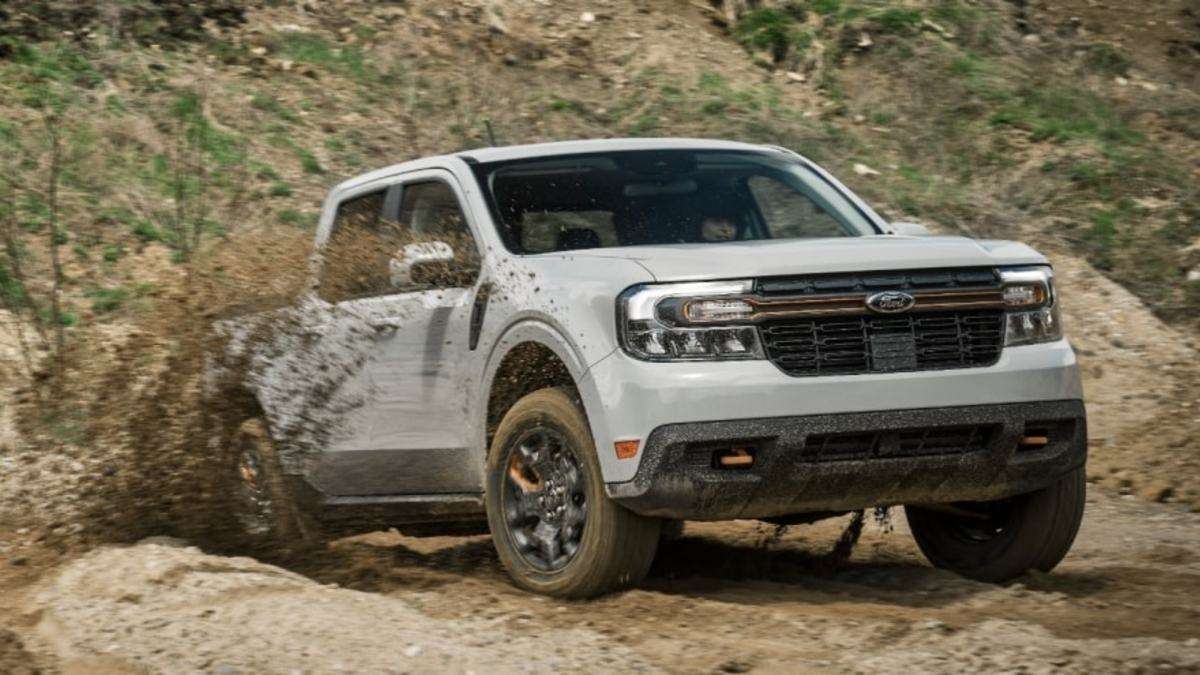

The Ford Maverick Hybrid has established itself as a standout in the compact truck segment, delivering impressive fuel economy through sophisticated hybrid technology that seamlessly blends electric and gasoline power. While Ford's official EPA ratings of 42 MPG city and 33 MPG highway are already impressive, dedicated owners have discovered advanced techniques that can push efficiency even further through careful system management and precise driving techniques. These discoveries demonstrate how modern hybrid systems offer far more control and optimization potential than most drivers realize.
Mark Riley's detailed exploration of Maverick hybrid optimization represents the kind of technical mastery that emerges when experienced drivers invest time in understanding complex vehicle systems.
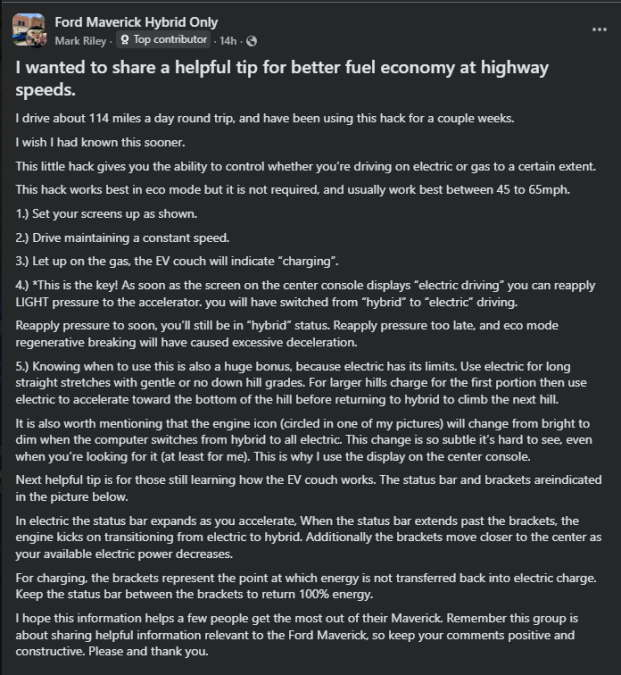
“I wanted to share a helpful tip for better fuel economy at highway speeds.
I drive about 114 miles a day, round-trip, and have been using this hack for a couple of weeks.
I wish I had known this sooner.
This little hack gives you the ability to control whether you’re driving on electric or gas to a certain extent.
This hack works best in eco mode, but it is not required, and usually works best between 45 to 65mph.
1.) Set your screens up as shown.
2.) Drive, maintaining a constant speed.
3.) Let up on the gas, the EV couch will indicate “charging”.
4.) *This is the key! As soon as the screen on the center console displays “electric driving,” you can reapply LIGHT pressure to the accelerator. You will have switched from “hybrid” to “electric” driving.
Reapply pressure too soon, and you’ll still be in “hybrid” status. Reapply pressure too late, and the eco mode regenerative braking will have caused excessive deceleration.
5.) Knowing when to use this is also a huge bonus, because electricity has its limits. Use electric for long straight stretches with gentle or no downhill grades. For larger hills, charge for the first portion, then use electric to accelerate toward the bottom of the hill before returning to hybrid to climb the next hill.
It is also worth mentioning that the engine icon (circled in one of my pictures) will change from bright to dim when the computer switches from hybrid to all-electric. This change is so subtle it’s hard to see, even when you’re looking for it (at least for me). This is why I use the display on the center console.
The next helpful tip is for those still learning how the EV couch works. The status bar and brackets are indicated in the picture below.
In electric, the status bar expands as you accelerate. When the status bar extends past the brackets, the engine kicks on, transitioning from electric to hybrid. Additionally, the brackets move closer to the center as your available electric power decreases.
For charging, the brackets represent the point at which energy is not transferred back into electric charge. Keep the status bar between the brackets to return 100% energy.
I hope this information helps a few people get the most out of their Maverick. Remember, this group is about sharing helpful information relevant to the Ford Maverick, so keep your comments positive and constructive. Please and thank you.”
Riley's motivation stems from practical necessity, with his 114-mile daily commute providing ample opportunity to test and refine efficiency techniques. His regret about not discovering these methods sooner suggests significant fuel savings potential that could benefit other high-mileage drivers facing similar commuting challenges. The specific speed range of 45-65 mph aligns with typical highway driving conditions, making these techniques applicable to a broad range of driving scenarios.
The Technical Mastery of Hybrid Control
The detailed step-by-step process Riley describes reveals the sophisticated coordination required between driver input and hybrid system response to achieve optimal efficiency. His discovery of manual control techniques demonstrates how experienced drivers can exceed manufacturer efficiency estimates through careful attention to system behavior and precise timing.
Set your screens up as shown. Drive, maintaining a constant speed. Let up on the gas, the EV couch will indicate "charging". This is the key! As soon as the screen on the center console displays "electric driving," you can reapply LIGHT pressure to the accelerator. You will have switched from "hybrid" to "electric" driving. Reapply pressure too soon, and you'll still be in "hybrid" status. Reapply pressure too late, and the eco mode regenerative braking will have caused excessive deceleration.
Community Knowledge Sharing Dynamics:
- Dedicated drivers invest significant time in understanding complex vehicle systems to achieve optimization beyond manufacturer specifications.
- Advanced techniques appeal to some users while overwhelming others who prefer simpler operation without additional complexity.
- Online automotive groups serve multiple purposes, from technical education to social bonding and humor sharing.
- Time and attention requirements for advanced techniques may limit adoption among drivers with demanding schedules or preferences for simplicity.
This level of technical detail demonstrates remarkable dedication to understanding vehicle systems and optimizing performance through precise throttle control. Riley's emphasis on timing and pressure sensitivity reveals the sophisticated coordination required between driver input and system response to achieve optimal results. The distinction between "too soon" and "too late" throttle application shows how narrow the window is for successful manual control of hybrid system transitions.
His additional guidance about terrain-specific strategies shows an advanced understanding of how topography affects hybrid system efficiency and the strategic thinking required to maximize electric driving in appropriate conditions.
Knowing when to use this is also a huge bonus, because electricity has its limits. Use electric for long straight stretches with gentle or no downhill grades. For larger hills, charge for the first portion, then use electric to accelerate toward the bottom of the hill before returning to hybrid to climb the next hill.
This terrain-specific approach demonstrates sophisticated energy management that goes far beyond simple driving techniques to encompass strategic planning based on road conditions and topography. The concept of charging during the first portion of hills and using electric power for acceleration shows an advanced understanding of hybrid system capabilities and limitations.
Community Response and Adoption Challenges
The reaction from other Maverick owners to Riley's detailed efficiency techniques reveals the spectrum of approaches to vehicle technology adoption within automotive communities. While some drivers embrace technical complexity and optimization challenges, others prefer simpler operations that don't require constant attention to system management.
I am already stressed enough from work lol.
Josue Rangel's humorous response to the complexity of Riley's techniques reflects a common tension in automotive technology adoption. While advanced capabilities may appeal to technically-minded drivers, they can overwhelm others who prefer straightforward operation without additional cognitive load. This reaction highlights the challenge manufacturers face in designing systems that can satisfy both technical enthusiasts and casual users.
The follow-up humor about using efficiency techniques as an excuse for tardiness demonstrates how community members find common ground despite different approaches to technology adoption.
Advertising
My excuse when I'm late to work. "I was trying this hack on fb to help my baby truck get better gas mileage."
Neal Ambrosi's playful response shows how technical discussions can evolve into social bonding within automotive communities. The affectionate reference to "baby truck" reflects the emotional connection many Maverick owners feel toward their vehicles, while the joke about efficiency-related tardiness acknowledges the time and attention required to master advanced techniques.
These interactions illustrate how online automotive communities serve multiple functions, from technical knowledge sharing to social connection and humor. The diversity of responses to technical content reflects the broad range of interests and expertise levels within automotive enthusiast communities.
Advanced Hybrid Control Techniques:
- Experienced drivers can learn to manually control switches between electric and gasoline power through precise throttle management and system monitoring.
- Efficiency techniques work most effectively in specific speed ranges (45-65 mph), requiring strategic application based on driving conditions.
- Understanding when to use electric versus hybrid power based on topography can significantly improve overall efficiency on varied terrain.
- Learning to read subtle visual cues from dashboard displays enables more precise control over hybrid system operation.
The Science Behind Hybrid Optimization
Riley's detailed explanation of the hybrid system's visual feedback mechanisms reveals the sophisticated monitoring capabilities built into modern vehicles that most drivers never fully utilize. His guidance about interpreting dashboard displays and understanding system status indicators demonstrates how much information is available to drivers willing to learn the interface.
It is also worth noting that the engine icon (circled in one of my pictures) will change from bright to dim when the computer switches from hybrid to all-electric. This change is so subtle it's hard to see, even when you're looking for it (at least for me). This is why I use the display on the center console.
The subtlety of visual cues Riley describes highlights both the sophistication of hybrid system design and the challenge of providing clear feedback to drivers without creating distraction or information overload. His preference for center console displays over subtle icon changes shows how different interface elements serve different purposes in system monitoring and control.
His explanation of the status bar and bracket system reveals additional layers of information available to drivers who invest time in understanding hybrid system operation.
In electric, the status bar expands as you accelerate. When the status bar extends past the brackets, the engine kicks on, transitioning from electric to hybrid. Additionally, the brackets move closer to the center as your available electric power decreases. For charging, the brackets represent the point at which energy is not transferred back into electric charge. Keep the status bar between the brackets to return 100% energy.
This level of detail about regenerative braking optimization shows how hybrid systems provide real-time feedback about energy recovery efficiency. The concept of maintaining status bar position within brackets to achieve 100% energy return demonstrates the precision possible in hybrid system management for drivers willing to develop the necessary skills and attention.
The evolution of hybrid technology has created vehicles with capabilities that extend far beyond basic operation, offering optimization opportunities for drivers willing to invest time in learning advanced techniques. Riley's systematic approach to discovering and documenting these methods provides valuable insights for other Maverick owners while demonstrating the potential for efficiency improvements through dedicated system mastery.
The contrast between technical optimization enthusiasts and casual users reflects broader trends in automotive technology adoption, where advanced capabilities coexist with user preferences for simplicity and ease of operation. Manufacturers must balance these competing demands while providing systems that can satisfy both technical enthusiasts and mainstream users.
For the Ford Maverick specifically, Riley's discoveries highlight the sophisticated engineering behind the hybrid system and the potential for efficiency improvements beyond EPA ratings through skilled operation. His willingness to share detailed techniques with the community demonstrates the collaborative nature of automotive enthusiast culture and the value of peer-to-peer knowledge sharing in maximizing vehicle potential.
As hybrid technology continues to evolve and become more sophisticated, the expertise developed by drivers like Riley will become increasingly valuable for helping others understand and optimize their vehicles. The detailed feedback and optimization techniques developed by experienced drivers provide important insights for future product development and customer education programs. The ongoing development of hybrid efficiency techniques and fuel economy optimization will likely continue as more drivers discover the advanced capabilities hidden within modern hybrid systems.
Have you discovered your own techniques for maximizing hybrid efficiency in your vehicle? What's your approach to balancing fuel economy optimization with driving convenience, and do you think manufacturers should provide more detailed guidance about advanced hybrid system capabilities?
Share your efficiency tips and hybrid driving experiences in the comments below.
Image Sources: Ford Sources Media
Noah Washington is an automotive journalist based in Atlanta, Georgia. He enjoys covering the latest news in the automotive industry and conducting reviews on the latest cars. He has been in the automotive industry since 15 years old and has been featured in prominent automotive news sites. You can reach him on X and LinkedIn for tips and to follow his automotive coverage.
Set Torque News as Preferred Source on Google
Follow us today...