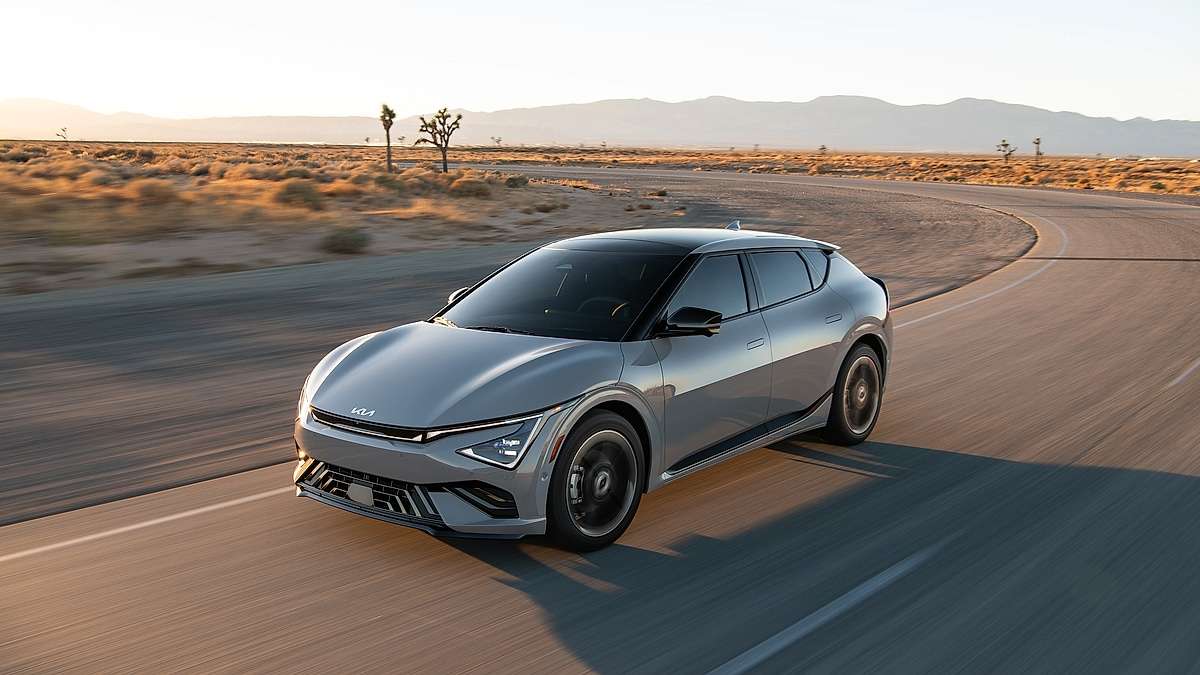

The owner, who bought the EV6 AWD Wind new and had driven it approximately 29,000 miles, shared the full timeline in the KIA EV6 Owners USA Facebook group. What started as an Integrated Charging Control Unit issue in late February became a two-month ordeal that ended with State Farm declaring the vehicle a total loss.
The Timeline
The owner took his EV6 to the dealership in late February after the car developed an ICCU problem. The dealer kept the vehicle for roughly two weeks, performed the repair, and returned it. He picked up the car and drove home. That same day, he noticed a pink fluid leaking from underneath the vehicle.
"Then right after that I noticed a pink leak underneath my vehicle," he wrote in his first post. "Apparently, it sounds like they caused that issue in the service department."
He took the car back immediately. The dealer gave him a rental and told him they were waiting for space at the service hub to inspect the battery.
For more than a month, the EV6 sat at the dealership while he paid his monthly car note and insurance on a vehicle he could not drive.
The Crack and the Denial
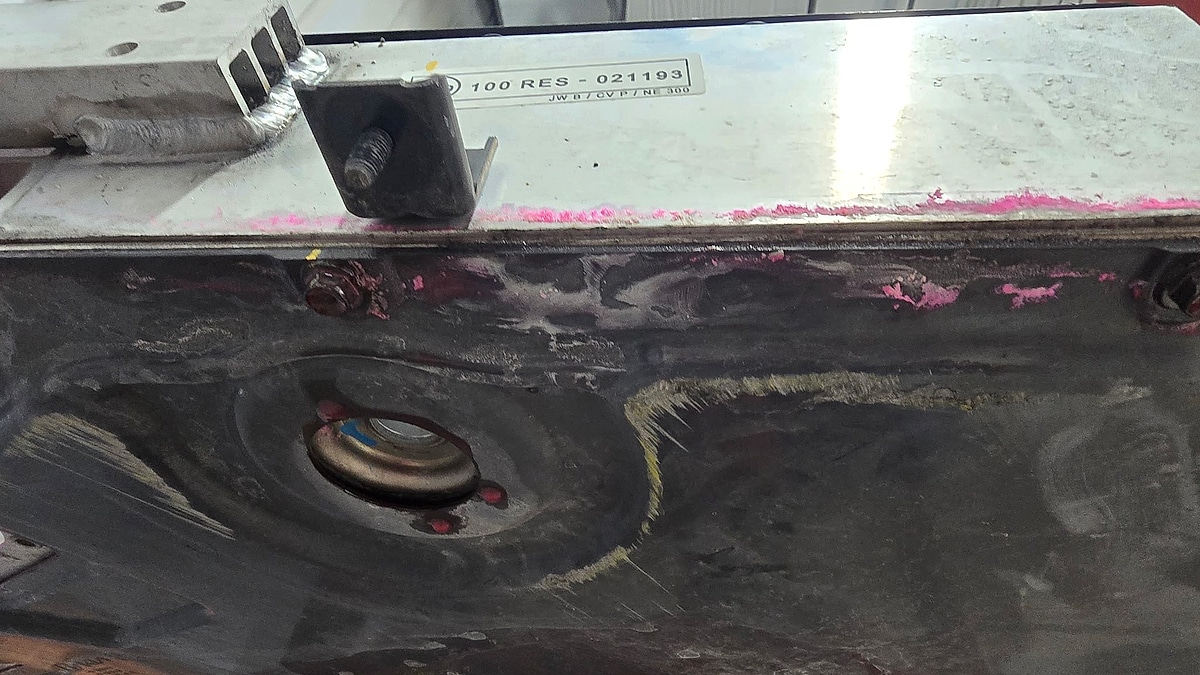
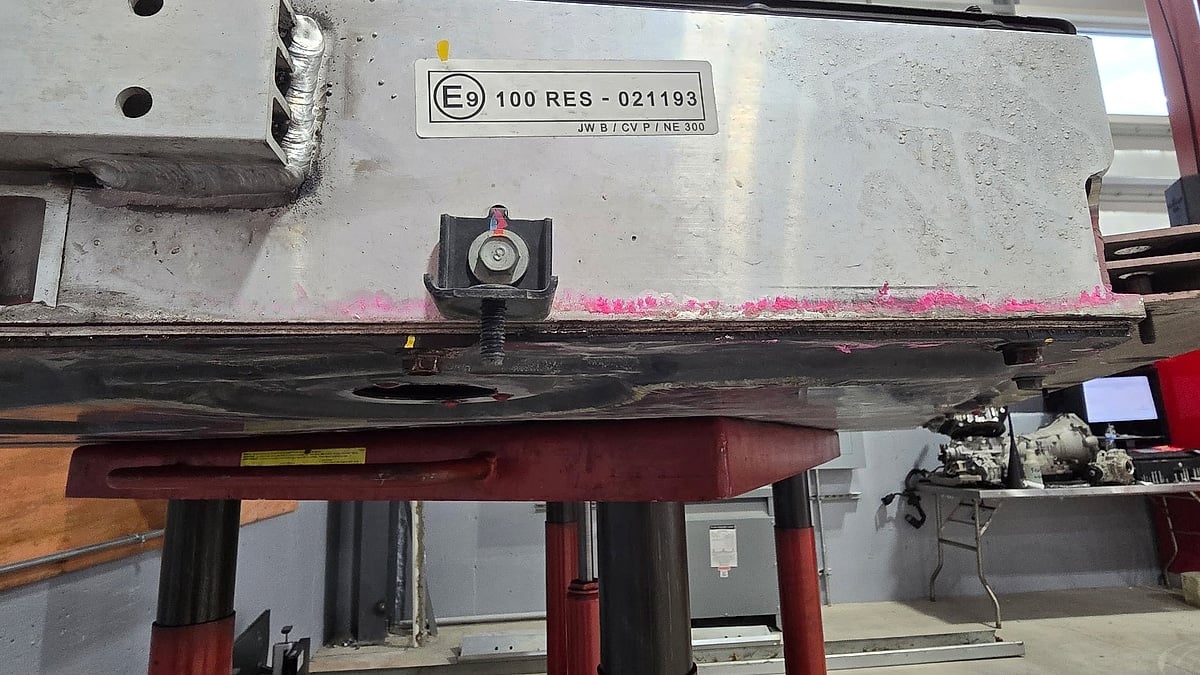
Last week, the dealer called with an update. Technicians had found cracks in the battery pack. The coolant leak, they said, was coming from those cracks. And the cracks, Kia concluded, were caused by physical impact from the road, speed bumps, debris, or normal driving conditions.
The manufacturer's warranty would not cover it.
"They said it could be a speed bump caused it or whatever might be," the owner wrote. "Not sure how a few scratches will cause a crack on a battery that's supposedly has a 100000-mile warranty!"
He asked the service advisor whether Kia had sent a technician to inspect the vehicle directly. The advisor said no. Kia's warranty decision was based entirely on photographs and diagnostic data sent by the dealership.
"So the manufacturer's warranty they keep bragging about can be only used based on the dealership service department's images and diagnostic data," he wrote.
The Forklift Theory
Other EV6 owners in the Facebook group examined photos of the battery underside that the dealer shared with the owner and spotted something Kia's assessment did not address.
Steve Thomas, a commenter on the third post, noted that the scratches visible on the battery enclosure did not run front-to-back, which would be consistent with running over road debris. Instead, they appeared to come in diagonally from the side.
"The problem is those scratches are not running front to back as you might expect from running over something," Thomas wrote. "They appear to come in diagonally from the side, as a forklift might do."
Another commenter, Andrew Einolf, was blunter: "Red herring, the real issue for the manufacturer is cost. Bottom line, if they can get insurance to pay for it, they save money. That's all this is about."
The owner asked the dealer whether they could perform a simple pressure test on the cooling system to verify the source of the leak. According to his account, the dealer refused.
The Total Loss
The owner filed a claim with State Farm. On his most recent update, the insurance adjuster informed him that the vehicle would be classified as a total loss.
"Yesterday, the insurance told me it will be a total loss claim," he wrote. "What a sad end to the journey with KIA."
He has been without his car since early February, more than two months, while continuing to pay the loan and insurance.
The ICCU Context
The Integrated Charging Control Unit is a known vulnerability in Hyundai-Kia's E-GMP platform, which underpins the EV6, Hyundai Ioniq 5, and Genesis GV60. The component manages power conversion between the high-voltage battery, the 12-volt auxiliary system, and the charging port. When it fails, the car can lose the ability to charge, maintain the 12-volt battery, or, in some cases, move at all.
Kia has recalled more than 48,000 EV6 vehicles in the United States over ICCU concerns, and Transport Canada opened a formal investigation in December 2025 after receiving complaints of repeated ICCU failures even after recall repairs were completed. In Canada, Kia has already discontinued the EV6 after the 2025 model year.
On April 21, 2026, Hyundai USA provided an exclusive statement to Torque News confirming it is extending ICCU warranty coverage for certain Hyundai electric vehicles in the United States to 15 years or 180,000 miles, up from the previous 10-year, 100,000-mile limit.
Ira Gabriel, Senior Group Manager of Corporate and Marketing PR at Hyundai Motor America, wrote:
"Hyundai Motor America is committed to the safety, quality, and long-term reliability of our vehicles. Based on ongoing monitoring of ICCU performance in certain Hyundai electric vehicles, Hyundai has approved a Warranty Extension for the Integrated Charging Control Unit (ICCU) in affected U.S. vehicles. This action extends ICCU coverage to 15 years or 180,000 miles, whichever occurs first, and is offered at no cost to customers."
The extension covers affected Ioniq 5 and Ioniq 6 models. Kia and Genesis, which share the same E-GMP architecture and the same ICCU component, have not announced a matching U.S. extension.
In South Korea, Hyundai Motor Group extended ICCU coverage to 15 years or 400,000 kilometers for Kia EV6 and Genesis GV60 owners in late 2025.
The Coolant Pattern
The owner's coolant leak is not the first reported on an E-GMP platform vehicle. In March 2026, Torque News reported on a facelifted Kia EV6 owner whose coolant reservoir leaked and allowed fluid to reach a high-voltage electrical plug, causing corrosion, a short, and melted wiring. That incident was distinct from the ICCU failure but pointed to the same underlying concern: the proximity of coolant lines to critical electrical components.
Kia EV forum members have also documented cases where ICCU coolant leaked directly onto circuit boards, causing failures that were initially misdiagnosed as electrical faults.
The Warranty Gap
The owner's case highlights a gap between what EV buyers expect from a 100,000-mile battery warranty and what manufacturers are willing to cover. Kia's battery warranty explicitly covers defects in materials and workmanship. Physical damage, whether from road debris, speed bumps, or, according to some owners in the Facebook thread, possible dealer handling, falls outside that coverage.

The problem for owners is proving the difference. In this case, Kia never sent a representative to inspect the vehicle. The denial was issued remotely, based on photographs taken by the same dealership that had just performed the ICCU repair and had the car in its possession for more than a month.
"My story could happen to anyone," the owner wrote. "Be careful out there because a few scratches underneath your vehicle might cause you to pay a heavy price."
What It Means
For the owner, the math is simple and brutal: a 29,000-mile EV6 that he bought new, maintained properly, and drove under normal conditions is now a total loss because of scratches on the underside of a battery pack that he never saw in person and that Kia never inspected directly.
For prospective EV6 buyers, the case raises questions about whether the 100,000-mile battery warranty offers the protection it appears to promise on paper, and whether the documented pattern of ICCU repairs, coolant leaks, and battery-related failures on the E-GMP platform represents an isolated defect chain or a broader design vulnerability that Hyundai Motor Group has not fully addressed.
Image Sources: Kia Media Center
About The Author
Noah Washington is an automotive journalist based in Atlanta, Georgia, covering sports cars, luxury vehicles, and performance culture. His reporting focuses on explaining the engineering, design philosophy, and real-world ownership experience behind modern vehicles.
Noah has been immersed in the automotive world since his early teens, attending industry events and following the enthusiast communities that shape how cars are built and driven today. His work blends industry insight with enthusiastic storytelling, helping readers understand not just what a car is, but why it matters.
Noah is also a member of the Southeast Automotive Media Association (SAMA), a professional organization for automotive journalists and industry media in the Southeast.
His coverage regularly explores sports cars, luxury vehicles, and performance-driven segments of the automotive industry, including the evolving culture surrounding Formula Drift and enthusiast builds.
Read more of Noah's work on his author profile page.
You can also follow Noah here:
Set Torque News as Preferred Source on Google
Follow us today...