
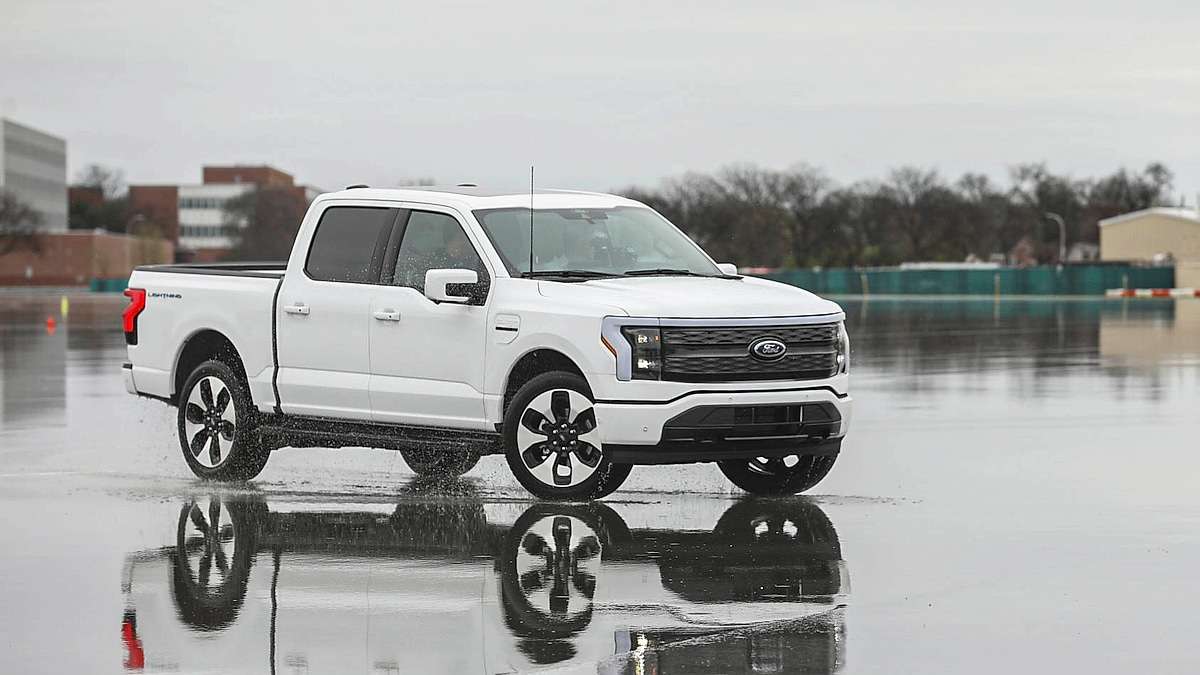

A 2023 Ford F-150 Lightning Lariat ER owner in Calgary, Canada, reports that his truck cost about $3,030 USD to operate over 26,100 miles in 2025. This figure, encompassing home charging, DC fast charging for road trips, and basic maintenance, represents a stark contrast to the roughly $6,600 USD he calculated it would have cost to run an equivalent 3.5L EcoBoost F-150 under the same conditions. The owner estimates total savings of about $6,650 USD over two years of ownership, fundamentally altering the long-term value proposition of the electric pickup.
“Just finished sending all my 2025 records to the accountant for my tax filing, which might be a personal best to have it in a full 30 days before the deadline, but that's not the point of my post.
The total cost to charge at home in 2025 is about $2,200 USD
Total DC fast charging for the 3-4 road trips (one 1,865+ miles, including about 500 miles of large RV trailer towing), about $615 USD
Two tire rotations and a couple of cabin air filters, and my grand total cost to operate my 2023 Lariat ER came in at just over $3,030 USD
Total miles driven: just over 26,100 miles
I had Claude look at my expenses from 2019–2022, all years that I drove a 2017 and then a 2020 F150, both with the 3.5L Ecoboost II. Then, using 2025 average pump prices here in Calgary, crunch the counterfactual numbers.
To keep one of those ICE F150s going all year in 2025 would have cost me about $6,600 USD
Savings: about $3,550 USD
Less than half what an ICE F150 would cost me to run. After 2 years of ownership, I’ve saved no less than about $6,650 USD.
By the time I hit the 5-year, ~124,000-mile mark, this truck has basically bought me another very low-mileage used Lightning.
I don’t get how anyone is walking out of Ford dealerships with keys to anything other than one of these. Boggles the mind.”
The owner's detailed breakdown of 2025 operating costs provides a rare, transparent look at the real-world economics of F-150 Lightning EV truck ownership.
Ford F-150 Lightning: Operating Costs and Savings
- The 2023 F-150 Lightning Lariat ER owner drove just over 26,100 miles in 2025, incurring a total operating cost of about $3,030 USD. This cost included about $2,200 USD for home charging, about $615 USD for DC fast charging on road trips, and basic maintenance like tire rotations and cabin air filters.
- To cover the same 26,100 miles in a 3.5L EcoBoost F-150, the owner calculated an estimated cost of about $6,600 USD based on 2025 average Calgary pump prices. This represents about $3,550 USD in annual savings for the Lightning owner.
- Over two years of ownership, the F-150 Lightning has saved the owner at least about $6,650 USD in operating expenses compared to a gasoline F-150. This significant saving suggests that for high-mileage users, the EV truck can offset a substantial portion of its purchase price over time. This is about the cumulative effect of small efficiencies, not just avoiding the pump.
His $3,550 annual savings, derived from a roughly 55% reduction in fuel costs compared to his previous EcoBoost F-150, directly challenge the common perception that electric vehicles are inherently more expensive to run.
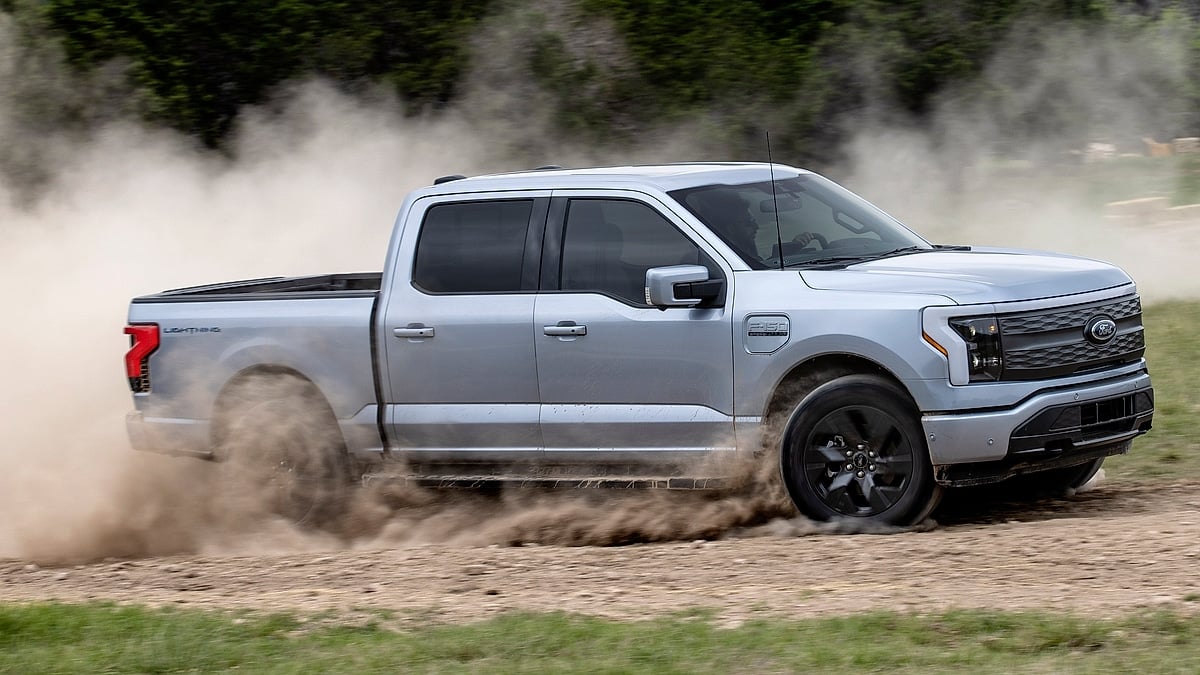
The inclusion of a 1,865-mile road trip, with about 500 miles dedicated to towing a large RV trailer, is particularly significant. This tracked financial ledger, showing substantial savings, resonates with broader industry trends, particularly as Ford continues to refine its EV offerings. The total operating cost of about $3,030 for 26,100 miles translates to roughly $0.12 per mile, a figure that would be nearly impossible to achieve in a full-size gasoline pickup under similar driving conditions.
The financial savings are compelling, but the conversation quickly shifts to other, less tangible benefits. Reddit user “Platinum - 2023,” a fellow 2023 F-150 Lightning owner, highlighted a critical, often overlooked aspect of EV ownership:
And I simply add the one item tough to track... the value of your time.
Mechanical issues are zero, saving your time. Just going to the gas station is not needed; it saves you time.
Towing is the most energy-intensive activity for any pickup, gas or electric, and even with substantial towing and long-distance travel, the total DC fast charging cost remained relatively low for the year, indicating cost control is possible even under demanding use cases. The absence of routine oil changes, spark plug replacements, and complex exhaust system checks simplifies maintenance schedules significantly. While the initial purchase price of an EV truck remains a barrier for some, the long-term calculus of ownership, encompassing both direct costs and the value of time, presents a compelling argument for the Lightning.
However, the “value of time” argument isn’t universally accepted without caveats. Reddit user “grim1757” offered a counterpoint:
To be accurate, then you need to calculate the time spent waiting during charges on the road traveling.
This is a valid consideration, especially for those who rely heavily on public charging infrastructure. While home charging offers unparalleled convenience, DC fast charging on road trips does introduce waiting periods that are typically longer than a gasoline fill-up. The owner's post indicates only $600+ in DCFC costs for 3-4 road trips, suggesting that the majority of charging was done at home. - A 1,500+ mile road trip, including 600 miles of large RV trailer towing, was factored into the annual operating costs; the Lightning handles demanding use cases while still maintaining significant cost advantages.
The owner’s experience resonates with others, signaling a shift in buyer confidence. Reddit user “NotRustyShackleford_,” who recently took delivery of a 2025 Ford Lightning Flash, commented:
I picked up my 2025 this afternoon. Posts like this support the wife and I making a good decision.
This sentiment highlights the importance of real-world owner testimonials in influencing purchasing decisions. As more F-150 Lightning owners accumulate significant mileage and share detailed operating data, the narrative around EV trucks continues to evolve, moving beyond range anxiety to focus on tangible financial benefits.
The data presented by u/Responsible_Bath_651 is not an isolated anecdote; it demonstrates that the Ford F-150 Lightning, when driven extensively, offers substantial long-term financial advantages over its gasoline counterparts. The ~$3,550 annual savings and ~$6,650 over two years, even with towing and road trips, establish a compelling economic case. For high-mileage drivers, this truck can effectively “pay for itself” over time through reduced operating costs.
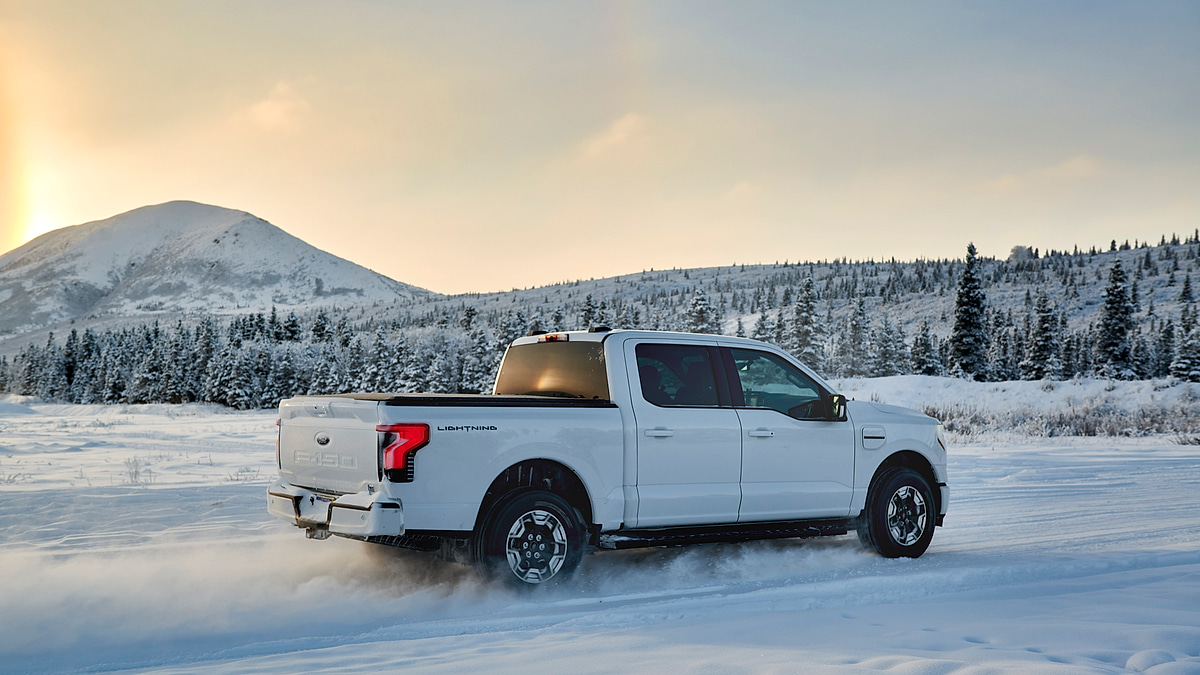
The data presented by u/Responsible_Bath_651 is a clear demonstration that the Ford F-150 Lightning, when driven extensively, offers substantial long-term financial advantages over its gasoline counterparts. The $3,550 annual savings and the projected $6,650 over two years, even with significant towing and road tripping, establish a compelling economic case that Ford needs to articulate more effectively. This truck is a demonstrably cheaper-to-operate option for many, and that fact alone should be a primary driver for buyers considering a new F-150.
Image Sources: Ford Media Center
About The Author
Noah Washington is an automotive journalist based in Atlanta, Georgia, covering sports cars, luxury vehicles, and performance culture. His reporting focuses on explaining the engineering, design philosophy, and real-world ownership experience behind modern vehicles.
Noah has been immersed in the automotive world since his early teens, attending industry events and following the enthusiast communities that shape how cars are built and driven today. His work blends industry insight with enthusiastic storytelling, helping readers understand not just what a car is, but why it matters.
Noah is also a member of the Southeast Automotive Media Association (SAMA), a professional organization for automotive journalists and industry media in the Southeast.
His coverage regularly explores sports cars, luxury vehicles, and performance-driven segments of the automotive industry, including the evolving culture surrounding Formula Drift and enthusiast builds.
Read more of Noah's work on his author profile page or on his personal website.
You can also follow Noah here:
Set Torque News as Preferred Source on Google
Follow us today...







Comments
It’s absurd to ignore the…
Permalink
It’s absurd to ignore the higher purchase price and lower resale value of the battery powered truck vs the gas F-150. Also, range while towing is never mentioned.
Purchase price, depreciation…
Permalink
In reply to It’s absurd to ignore the… by KJ (not verified)
Purchase price, depreciation, insurance, and towing range all matter. This article was focused on one owner’s operating costs, not total cost of ownership.
If every vehicle in the…
Permalink
If every vehicle in the world was electric - what would we be paying for our electricity?
Ian, that is the big grid…
Permalink
In reply to If every vehicle in the… by Ian Ogilvi (not verified)
Ian, that is the big grid question.
Hold on a second... He didn…
Permalink
Hold on a second... He didn’t drive both vehicles exactly the same 26,000 miles and keep track of actual costs including depreciation, insurance, fuel, maintenance. Looks to me like typical load of EV propaganda
he article was based on his…
Permalink
In reply to Hold on a second... He didn… by John Carver (not verified)
he article was based on his actual Lightning costs and his counterfactual estimate using prior gas F-150 expenses and 2025 fuel prices. Useful data point, but not a perfect laboratory test.
I get about 4 miles/kWh on…
Permalink
I get about 4 miles/kWh on my BMW i5 sedan. No towing, lots of highway miles. I was paying $0.17/kWh until last month. National Grid upped their cost to $0.25/kWh. So, for, say, a 25 miles/gallon sedan, gas would have to be $1.25/gallon to match the fuel cost. Yes, the car is more expensive to buy compared to an equivalent gas car, but EVs have absolutely amazing vibration-free acceleration, no constant shifting of gears, they do not stink, and soooo quiet... and I no longer have to pay tribute to big oil...I just drive right by the gas stations... unless I need a potty break or a snack.
The fuel savings are only…
Permalink
In reply to I get about 4 miles/kWh on… by James Rautio (not verified)
The fuel savings are only one part of it. The quietness, instant torque, lack of shifting, and not stopping for gas are real advantages if the charging situation works for your routine.