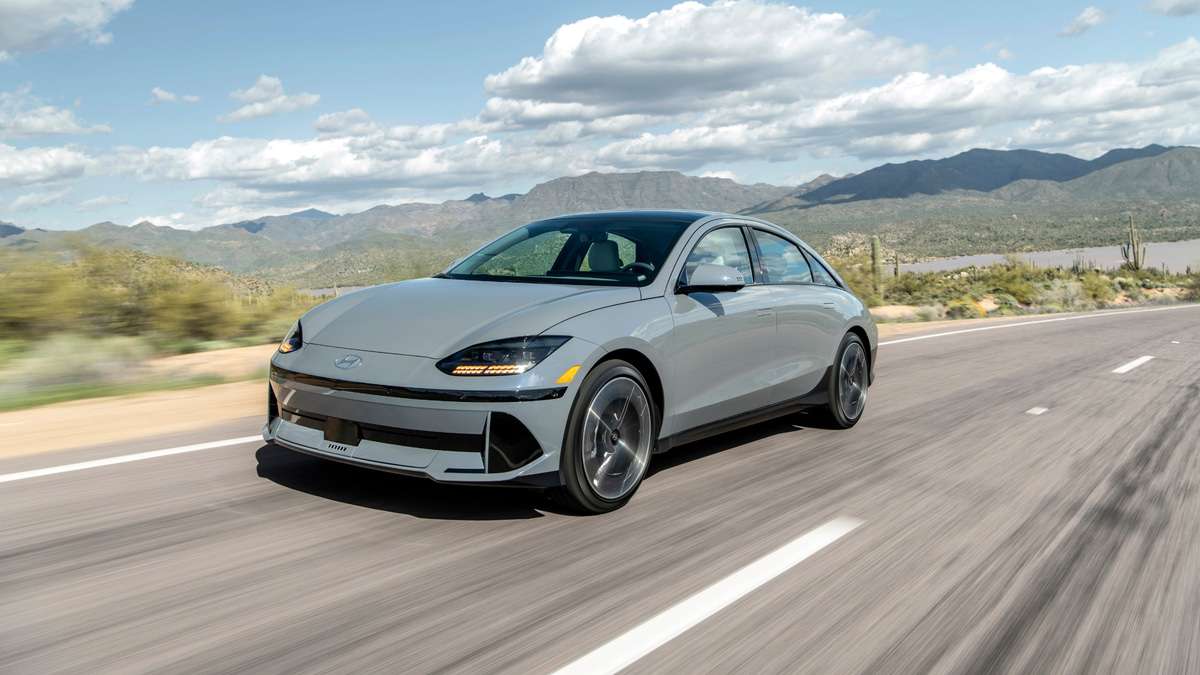

The first road trip in his new EV worked well enough that R.J. Campbell chose the Hyundai over his wife’s gasoline vehicle. His charging stops also exposed the difference between gaining access to a network and getting the speed an 800-volt car was built to use.
Thirty years in automotive service will teach a person where confidence ends, and machinery begins. It will also make him a hard audience for any new powertrain wrapped in evangelical promises.
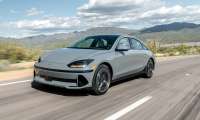
Campbell bought his first EV in April, a lease-return Hyundai Ioniq 6, then pointed it at a vacation of more than 3,000 miles. His wife’s internal-combustion vehicle was available. He chose the electric sedan anyway.
That choice did not end with a tow truck, an abandoned itinerary, or a confession that the experiment had been a mistake. Campbell returned to The Ioniq Guy Facebook group with a much less dramatic verdict.
“Covered a little over 3000 miles and it was a blast!”
He used A Better Routeplanner, commonly called ABRP, and the Ioniq 5 Companion app for live vehicle data. Most of his fast-charging stops were at Tesla Superchargers, with IONNA, Mercedes-Benz, and Electrify America mixed into the route. His used Ioniq 6 came with Hyundai’s NACS adapter, and he reported no trouble with it.
Then he added the line that makes this trip worth examining rather than merely applauding.
“Had to use mainly Tesla superchargers, which slowed things up a bit at times.”
Campbell still said he would happily road-trip the Ioniq 6 instead of the gasoline vehicle. For a first-time EV owner with three decades in the service business, that is a meaningful endorsement. The slower Tesla stops are equally useful because they reveal how strange the American charging transition has become.
A Plug Can Fit While the Car Still Waits
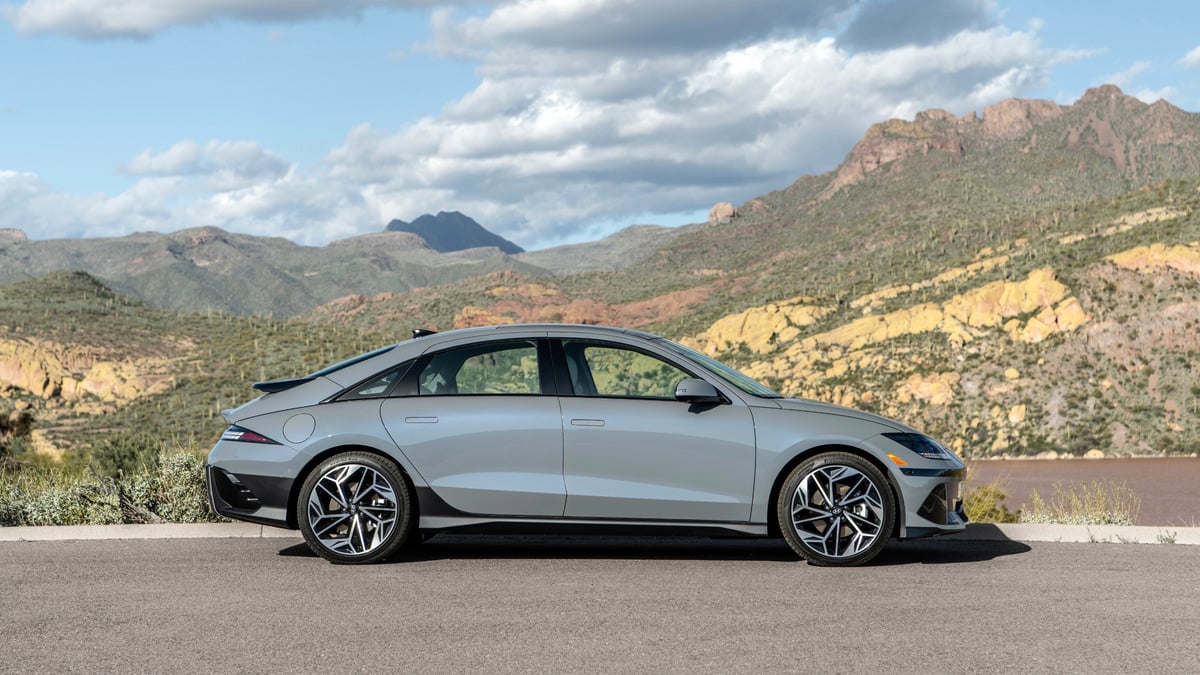
The Ioniq 6 is built on Hyundai’s E-GMP architecture. Hyundai says the platform can take the battery from 10 to 80 percent in approximately 18 minutes when the car, charger, battery temperature, and starting state of charge all cooperate. That claim belongs to an ideal charging window, not every plug carrying a fast-charging logo.
Tesla says its V3 Superchargers can supply up to 250 kW. The company also warns that charging speed changes with battery temperature, state of charge, vehicle configuration, weather, and station conditions. Campbell did not post his charging logs, so his slower stops cannot be reduced to one guilty component.
The NACS adapter deserves neither blame nor magic powers. It gives a CCS-equipped Ioniq 6 physical and electronic access to compatible Superchargers. It cannot force every cabinet to reproduce the charging curve Hyundai advertises on a suitable ultra-fast charger.
That distinction has already confused owners. In a previous Torque News report, a 2026 Ioniq 5 driver forgot the adapter required for Electrify America and then saw a Tesla app error at 20 percent battery. The newer Ioniq 5 has a native NACS inlet, so the adapter logic runs in the opposite direction from Campbell’s CCS-equipped Ioniq 6. The industry managed to make experienced drivers into beginners without changing the badge on the car.
Campbell’s trip shows the happier side of that transition. He had the correct hardware, understood the apps, and used the enormous geographic reach of the Supercharger network. A slower, dependable stop can be more valuable than a faster charger sitting 40 miles off the route or behind a dead payment screen.
I would resist turning his post into a Tesla-versus-CCS prizefight. Campbell used four networks and finished the vacation smiling. His winning strategy was redundancy.
The Charging Network Has Become a Menu
The owner comments under Campbell’s post read like dispatches from a country whose EV map is filling in quickly.
One driver had completed both 3,000-mile and 4,000-mile journeys. Another reported 7,000 miles in May and said Iowa and Utah demanded the most careful planning. A 2026 Ioniq 5 owner covered 2,600 miles from western Massachusetts to Cape Breton, Nova Scotia. A former Chevrolet Bolt EUV owner bought a used 2024 Ioniq 6 and drove roughly 3,000 miles from southwest Florida to Long Island and back four days later.
Those are anecdotes, not a national reliability study. Together, they describe a practical change. Long-distance EV travel now depends less on loyalty to one charging brand and more on using a portfolio of networks intelligently.
An earlier Ioniq 9 cross-country owner reached the same conclusion. Tesla delivered easy access, while higher-power Rivian and EVgo stops impressed him more with speed.
In another long-trip analysis, an Ioniq 9 owner’s 85-mph Texas run showed how road speed can erase roughly 100 miles from a range estimate. Route planning cannot rescue a driver who ignores the aerodynamic bill.
IONNA’s expansion matters in that context. The automaker-backed network said in March 2026 that it had crossed 100 live locations, with nearly 1,000 charging bays operating nationwide. Campbell sees the IONNA and Walmart expansion making future trips easier. The useful change will come from the combination of location, working hardware, useful amenities, and chargers that can meet high-voltage vehicles on their own terms.
More pins on a map help. Better-matched pins shorten the stop.
The Missing Charging Log Would Make This Story Much Stronger
Campbell did not publish his route, model year, trim, average miles per kWh, total charging bill, number of stops, or median stop duration. He also did not identify the Tesla sites that felt slow or say whether the battery had been preconditioned before arrival.
Those omissions do not invalidate his experience. They limit the conclusions available from it.
A fair network comparison needs at least six numbers from every stop: arrival state of charge, departure state of charge, energy added, minutes connected, peak power, and cost. Add ambient temperature and whether the car is preconditioned, and the conversation becomes genuinely useful.
Peak power alone can be a peacock number. A charger may flash a large figure for two minutes and then taper. Drivers live by elapsed time and miles restored, not a screenshot of the highest kilowatt reading.
That lesson appeared in the Ioniq 6 owner who logged 70,000 miles in 22 months. His 3.4 miles per kWh, charging split, and dollar ledger made the car’s economics visible. Campbell’s trip proves that the route worked and the car earned his preference. A session log would show which networks earned his time.
The Service Veteran Did Not Come Home Asking for His Old World Back
Campbell’s professional background is the part I keep returning to.
He has spent more than 30 years in the automotive service industry. He did not grow up assuming an EV would be the natural answer. He wrote that he never expected to own one, much less prefer it to an internal-combustion vehicle.
That does not settle the EV argument for every driver. A person towing through rural Wyoming, living without home charging, or working beyond the reach of reliable fast chargers, faces a different machine and a different map.
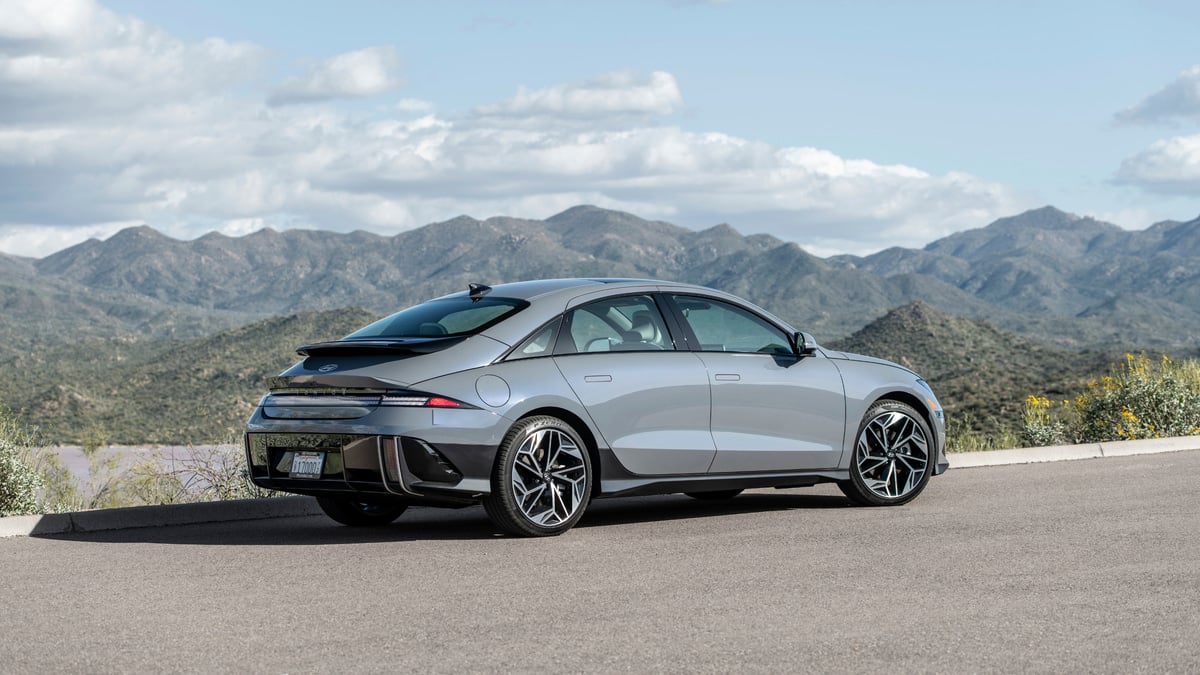
Campbell’s result settles something smaller and more honest. An Ioniq 6, an approved adapter, two planning tools, and a mixed network of chargers carried a first-time EV owner more than 3,000 miles on vacation. The trip was enjoyable enough that he wants the electric car next time. Some stops consumed more time than the platform’s best charging claim suggests, yet the delays never became the trip’s identity.
The next useful report from Campbell would include a charging export. Which network produced the shortest 10-to-80-percent stop? How much faster were the best IONNA, Mercedes-Benz, or Electrify America sessions than the slower Tesla sessions? Did any Supercharger stop winning on total convenience even when it lost on charging power?
Ioniq 6 owners, if you have completed a trip longer than 1,000 miles, post your model year, average efficiency, median charging time, fastest network, slowest network, and total charging cost. Those numbers can turn a successful vacation into a road-trip guide other owners can trust.
About The Author
Noah Washington is an automotive journalist based in Atlanta, Georgia, covering sports cars, luxury vehicles, and performance culture. His reporting focuses on explaining the engineering, design philosophy, and real-world ownership experience behind modern vehicles.
Noah has been immersed in the automotive world since his early teens, attending industry events and following the enthusiast communities that shape how cars are built and driven today. His work blends industry insight with enthusiastic storytelling, helping readers understand not just what a car is, but why it matters.
Noah is also a member of the Southeast Automotive Media Association (SAMA), a professional organization for automotive journalists and industry media in the Southeast.
His coverage regularly explores sports cars, luxury vehicles, and performance-driven segments of the automotive industry, including the evolving culture surrounding Formula Drift and enthusiast builds.
Read more of Noah's work on his author profile page.
You can also follow Noah here:
Set Torque News as Preferred Source on Google
Follow us today...