
The numbers don't lie. The trucks are sitting. The service bays are completely overwhelmed.
With 30 years of automotive experience under my belt, I saw this coming the moment the V35A twin-turbo V6 safety campaign expanded. Now, the real-world operational logistics are completely breaking down at the dealer level.
Tundra owners across the country are discovering that getting their safety recall resolved isn’t a quick drop-off-and-pick-up affair. Instead, their premium rigs are being grounded indefinitely.
The Grounding Dilemma In Neptune Beach
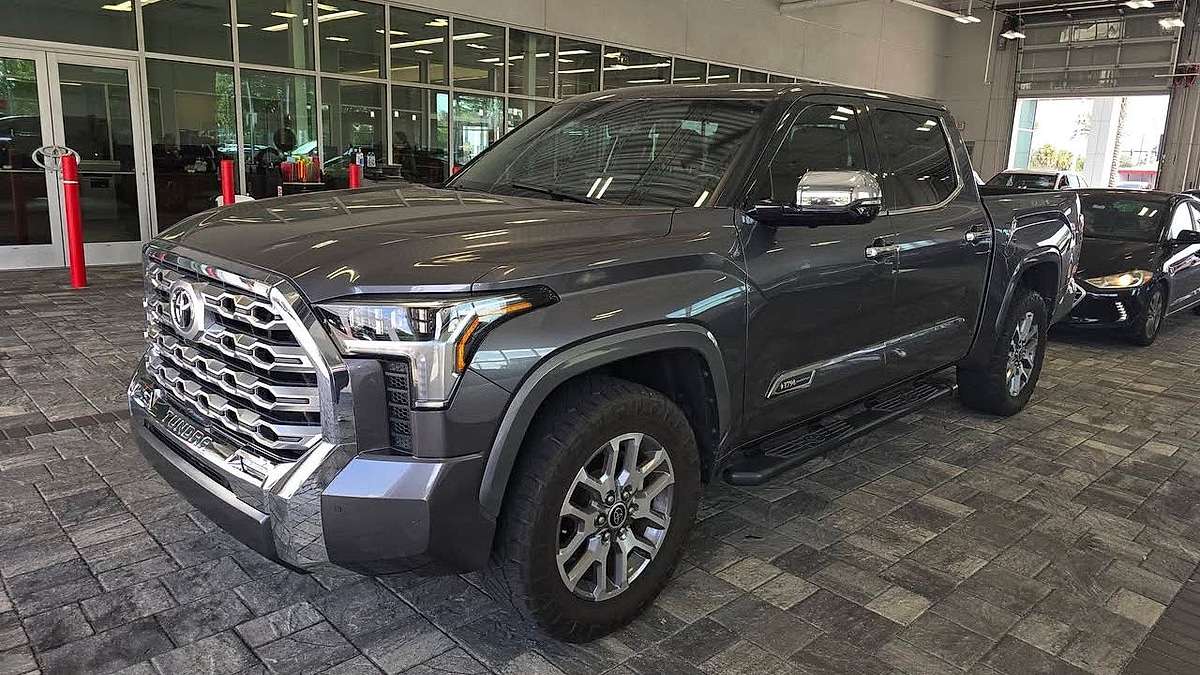
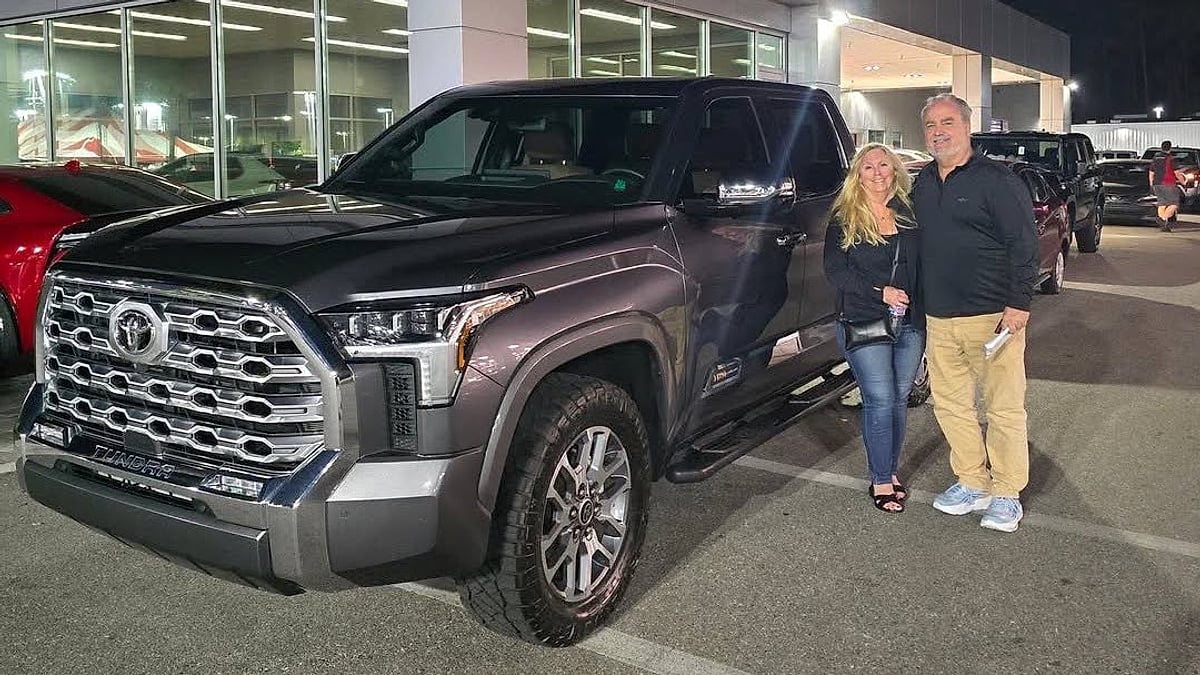
Consider the real-world breakdown currently playing out on the front lines. Julio Esteban from Neptune Beach, Florida, recently shared his experience on the 2023-2027 Toyota Tundra Owners Facebook page.
"Dropped our 2023 Toyota Tundra 1794 off for the dreaded engine swap," Esteban posted. "The dealer said it could take up to 2 months before we get it back. Makes no sense that they can't order the motor then call us in for the swap."
Instead of his premium 1794 Edition, Esteban was handed the keys to a basic 2025 entry-level loaner truck.
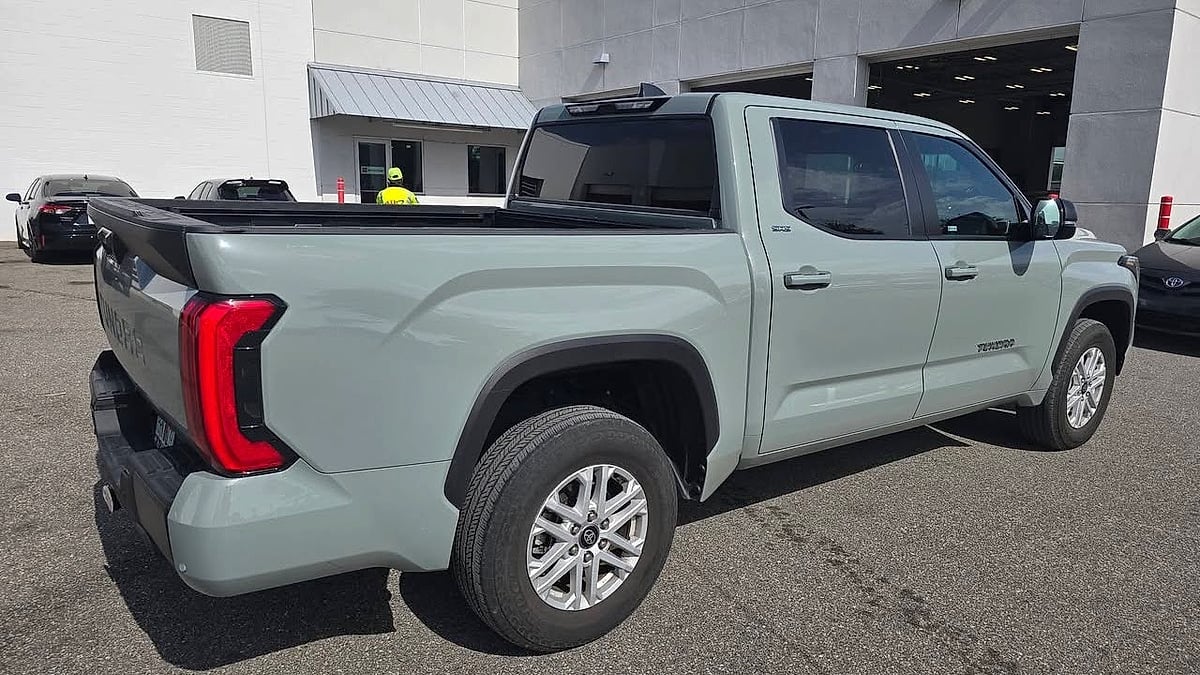
His frustration highlights a massive operational bottleneck: dealers are anchoring these trucks immediately for safety compliance before the replacement short block even leaves the warehouse.
According to an official safety report in the National Highway Traffic Safety Administration (NHTSA) database, the pressure on the main bearings from the twin-turbo V6 engine configuration is so severe that, if machining debris adheres to the bearings over time, catastrophic loss of motive power can occur.
Because a sudden highway stall increases the risk of a high-speed crash, dealers face immense liability if they let a flagged vehicle leave the lot.
This deep operational struggle is further validated by independent automotive analysis.
As documented in my ongoing coverage of Toyota reliability, I have uncovered an unresolved dispute over why engines built after Toyota implemented secondary manufacturing cleanliness protocols are still experiencing complete crankshaft bearing seizures.
Compounding this problem is the sheer physical volume of trucks arriving at dealerships simultaneously.
In my separate long-term Toyota Tundra powertrain field evaluations, I noted that each engine replacement takes 13 to 21 hours, representing an incredibly taxing and time-consuming labor burden for Toyota and Lexus dealerships nationwide.
The High-Altitude Strain On The V35A
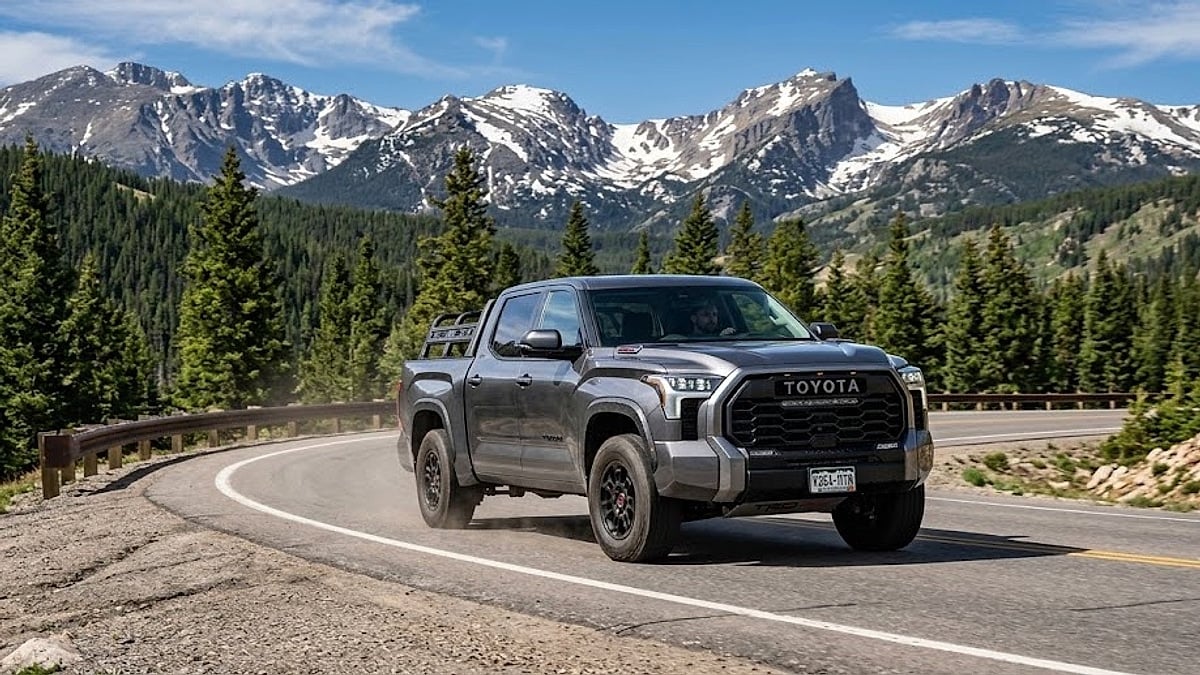
Down at sea level in Florida, the twin-turbo setup faces one set of parameters, but up here in Colorado, the real stress testing happens. Evaluating vehicles on the steep incline of Vail Pass or pulling heavy loads through the Eisenhower Tunnel reveals exactly how localized conditions accelerate internal mechanical fatigue.
When you push a twin-turbocharged V6 to its absolute limits at 11,000 feet, the thermal management demands skyrocket.
The engine must work significantly harder to produce the same effective power output as it would at sea level, directly increasing the structural load on the internal rotating assembly.
If there is even a micro-speck of manufacturing swarf lingering near the front of the crankshaft, the high-altitude strain of Colorado driving functions as a catalyst for premature bearing failure. This reality has driven a high volume of local diagnostic visits, stacking Rocky Mountain regional service centers with backlogged luxury trims.
The Resonant Frequency Inspection Pivot
The hidden story that mainstream automotive media outlets are completely missing isn’t just about the parts shortage. It is about the complex mechanical filtering process that Toyota has quietly deployed to manage this massive logistical mountain of 270,000 vehicles.
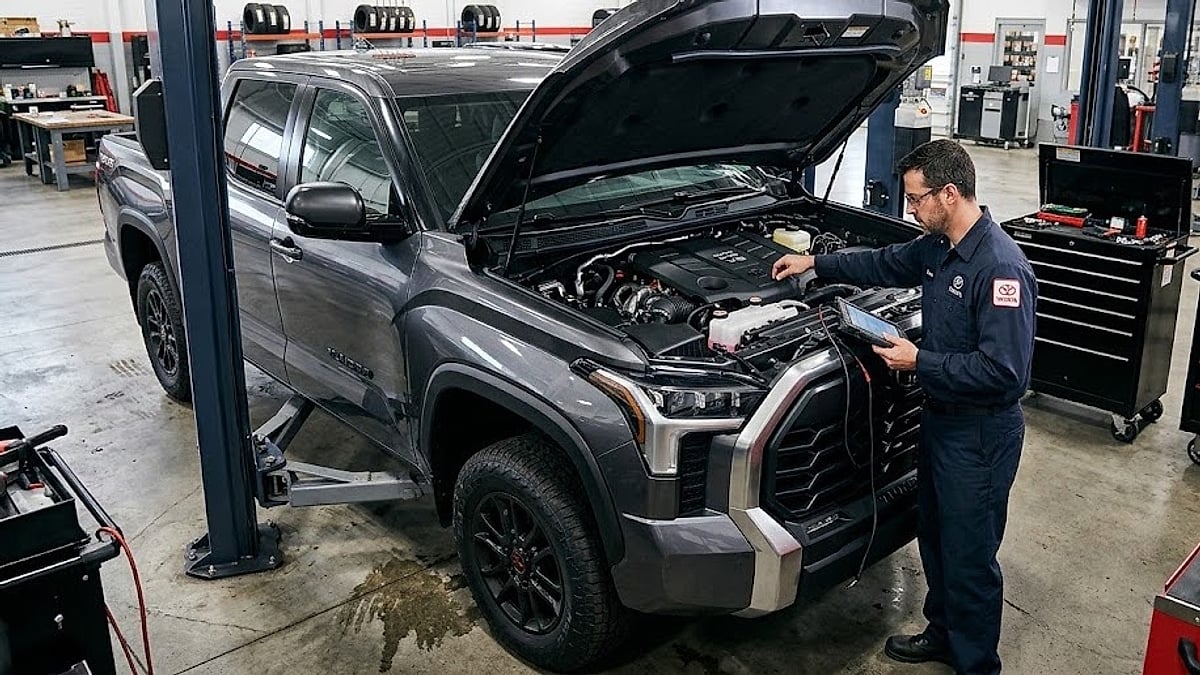
Instead of automatically dropping a brand-new short block into every single truck that rolls through the service drive, the factory has pivoted to an architectural triage system.
As reported in a technical breakdown by CarBuzz, service technicians are now instructed to measure the precise resonant frequency at the front of the crankshaft to assess the structural condition of the number-one main bearing.
The diagnostic software literally "listens" to the acoustic signature of the internal rotating assembly while checking the truck's historical onboard engine load data. If the software detects an abnormal harmonic signature or if the vehicle hasn't accumulated enough historical engine load data to prove the bearing is safe, only then is a complete replacement short block authorized.
The Real Cost Of A Service Drive Downgrade
This multi-layered inspection protocol turns a standard service visit into a protracted waiting game.
Technicians must connect the diagnostic equipment, extract the internal telemetry datasets, send the readings to regional engineering hubs, and wait for factory authorization before they can even place a replacement motor on a shipping pallet.
For an owner who invested top dollar in a luxury 1794 Edition or a top-tier Capstone model, this process presents a tough pill to swallow.
Being forced to make a premium monthly truck payment while driving a bare-bones, vinyl-floored work truck loaner for 60-plus days is causing a significant rift in traditional brand loyalty.
Dealership lots are physically running out of space to store these grounded, half-disassembled trucks while service managers scramble to source enough high-trim loaner vehicles to keep their premium clientele satisfied.
It is a perfect storm where real-world factory supply capacity has collided head-on with corporate liability management.
What Happens If The Replacement Motor Fails The Test?
The next logical question that every impacted truck owner is asking themselves right now is straightforward: What happens if my replacement V35A short block faces the exact same component bottleneck six months down the road?
Toyota has explicitly stated that a critical design change was implemented in the number one main bearing assembly beginning in July 2024, meaning that every single countermeasure engine shipped to dealers features an updated, highly robust bearing surface.
If your truck successfully triggers a replacement under the resonant frequency protocol, it receives a completely revised mechanical platform designed to permanently eliminate vulnerability to machining debris.
Evaluating the Extended Service Drive Reality
Ultimately, the multi-month delay isn't a sign of dealer incompetence, but rather a reflection of a manufacturing giant trying to surgically repair an entire generation of its flagship powertrain.
For the consumer stuck in a basic loaner while their premium rig sits on a holding lot, patience is wearing thin.
What Would You Do? Would you comfortably drive a base-model loaner for two full months while your premium truck sits open in a service bay, or would you push for a complete vehicle buyback? Let us know your thoughts on how this engine recall is being handled by leaving a comment in the red "Add new comment" link directly below.
There’s More Coming Tomorrow… Also check out my Torque News Home Page for more of my informative Toyota Tundra news articles.
About The Author
Denis Flierl is a 14-year Senior Reporter at Torque News and a member of the Rocky Mountain Automotive Press (RMAP) with 30+ years of industry experience. Explore his full investigative reporting archives and technical guides at DenisFlierl.com.
Based in Parker, Colorado, Denis leverages the Rockies' high-altitude terrain as a rigorous testing ground to provide "boots-on-the-ground" analysis for readers across the Rocky Mountain region, California EV corridors, the Northeast, Texas truck markets, and Midwest agricultural zones.
A former professional test driver and consultant for Ford, GM, Ram, Toyota, and Tesla, he delivers data-backed insights on reliability and market shifts. Denis cuts through the noise to provide national audiences with the real-world reporting today’s landscape demands.
Connect with Denis: Find him on LinkedIn, X @DenisFlierl, @WorldsCoolestRides, Facebook, and Instagram.
Photo credit: Denis Flierl via Julio Esteban
Set Torque News as Preferred Source on Google
Follow us today...