
Somewhere between a boardroom PowerPoint deck and an EPA compliance spreadsheet, automotive engineering lost the plot. In the relentless pursuit of lower emissions and higher fleet averages, the modern automobile has become a patchwork of well-intentioned compromises.
Chief among these is the start-stop system, the supposed triumph of efficiency that shuts your engine off at every stoplight and restarts it when your foot lifts off the brake. It’s a technology engineers adore and drivers tolerate, a constant reminder that progress can sometimes feel like regression. A few manufacturers mercifully allow drivers to disable it; others insist you live with it. And for all that annoyance, it might save a tablespoon or two of fuel every hundred miles.
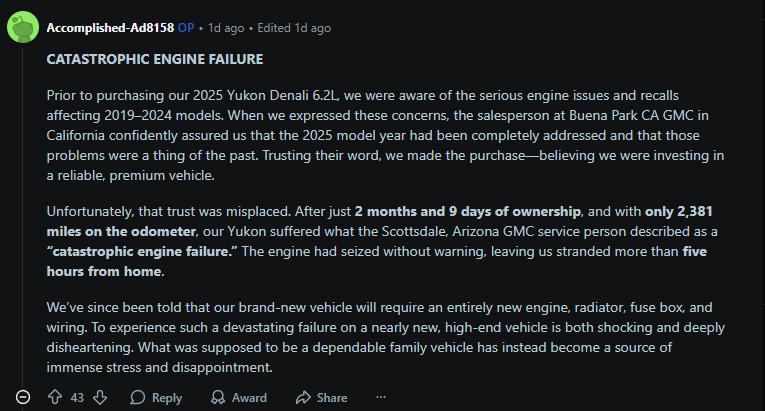
The story of one 2025 GMC Yukon Denali 6.2L owner brings this tension into sharp relief. Posting on Reddit’s r/GMC forum, user Accomplished-Ad8158 described an ordeal that began with optimism and ended in disbelief:
“Prior to purchasing our 2025 Yukon Denali 6.2L, we were aware of the serious engine issues and recalls affecting 2019–2024 models. When we expressed these concerns, the salesperson at Buena Park CA GMC in California confidently assured us that the 2025 model year had been completely addressed and that those problems were a thing of the past. Trusting their word, we made the purchase, believing we were investing in a reliable, premium vehicle.
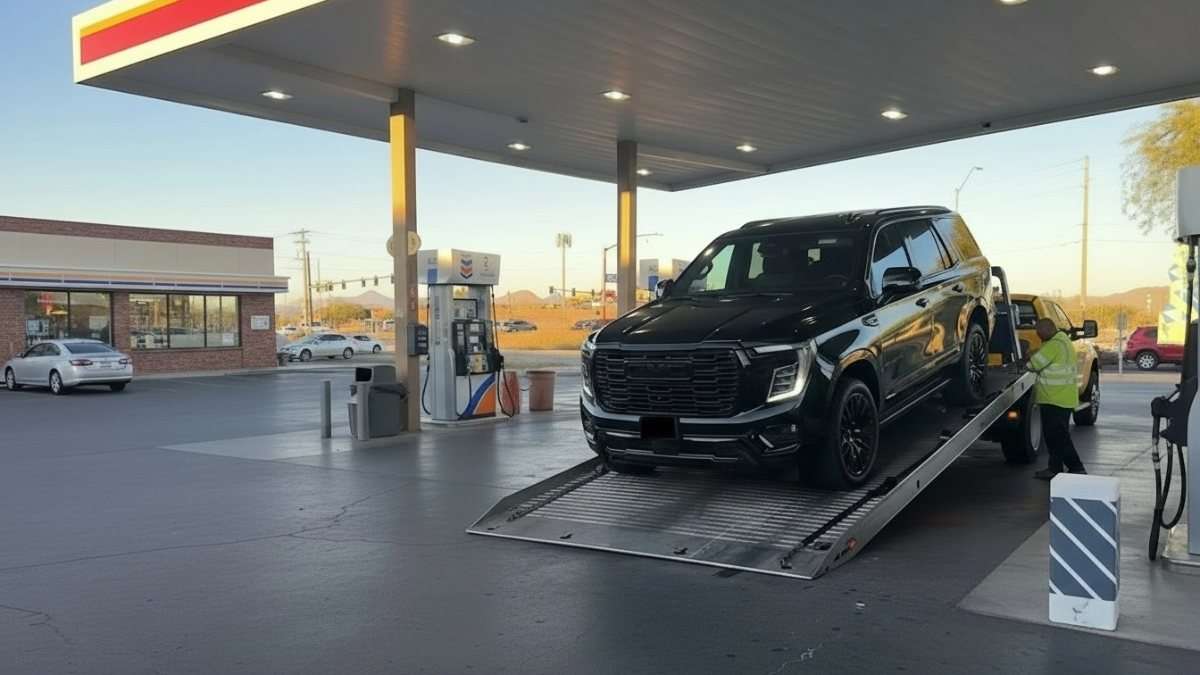
Unfortunately, that trust was misplaced. After just 2 months and 9 days of ownership, and with only 2,381 miles on the odometer, our Yukon suffered what the Scottsdale, Arizona GMC service person described as a “catastrophic engine failure.” The engine had seized without warning, leaving us stranded more than five hours from home.
We’ve since been told that our brand-new vehicle will require an entirely new engine, radiator, fuse box, and wiring. To experience such a devastating failure on a nearly new, high-end vehicle is both shocking and deeply disheartening. What was supposed to be a dependable family vehicle has instead become a source of immense stress and disappointment.”
This wasn’t a temper tantrum typed out in haste. It was a measured report from an owner who paid nearly $90,000 for what was promised to be a premium, dependable SUV. Instead, within 2,400 miles, the powertrain had failed in spectacular fashion. The dealership has yet to provide a diagnostic report, leaving the owner and the GMC community to speculate on the cause. Some point to the Active Fuel Management system, a technology that shuts down half the engine’s cylinders under light load to save fuel. On paper, AFM sounds brilliant. In practice, it’s been a magnet for trouble, collapsed lifters, worn bearings, and oil starvation issues that have plagued GM’s V8s for years.
GMC Yukon: Sales Momentum
- The Yukon offers multiple powertrain options, including a 355-hp 5.3-L V8, a 420-hp 6.2-L V8, and a 3.0-L turbo-diesel inline-six producing 305 hp and 495 lb-ft of torque, all mated to a 10-speed automatic transmission.
- In towing capability, it’s very capable: when properly equipped, the Yukon can pull up to around 8,400 pounds (for the 5.3-L V8 version).
- The interior and technology are upgraded for 2025: premium materials, large infotainment displays, available second-row executive seating, and advanced driver assistance systems give it a more upscale feel than earlier Yukon models.
- Sales momentum is strong: the Yukon recorded a year-to-date increase of nearly 16% in 2025, reflecting that the market is responding to its blend of utility and refinement.
Reddit user quantum-entangled308 summed up the frustration bluntly: “This problem won’t go away until GM eliminates the AFM system from their vehicles. It’s high time for a lawsuit.” Another commenter, GrumpyTooch, took aim at the start-stop element of the equation: “The fact that an engine shuts off and starts MULTIPLE times throughout your drive every time you stop is just absurd. It’s just not healthy for a motor to keep doing that.” In that one sentence lies the frustration of countless modern drivers who feel their vehicles are being engineered more for government compliance than real-world durability.
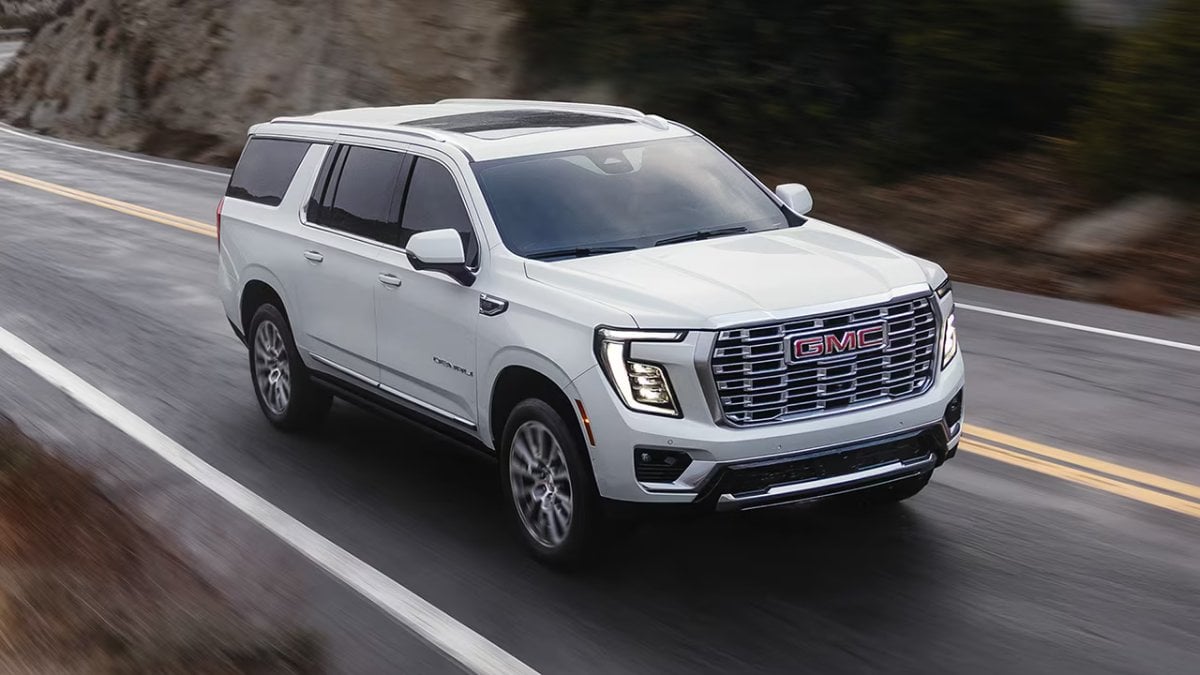
What makes the Yukon's failure particularly unsettling is its scale. When a service department orders not just a replacement engine but a new radiator, fuse box, and wiring harness, it points to a deeper mechanical event than a single bad bearing or misfire. This isn’t the kind of parts list one expects from a truck with fewer miles than many rental cars. Whether the culprit turns out to be lubrication failure, faulty materials, or an AFM malfunction, it raises serious questions about how far modern engines have been pushed in the name of efficiency.
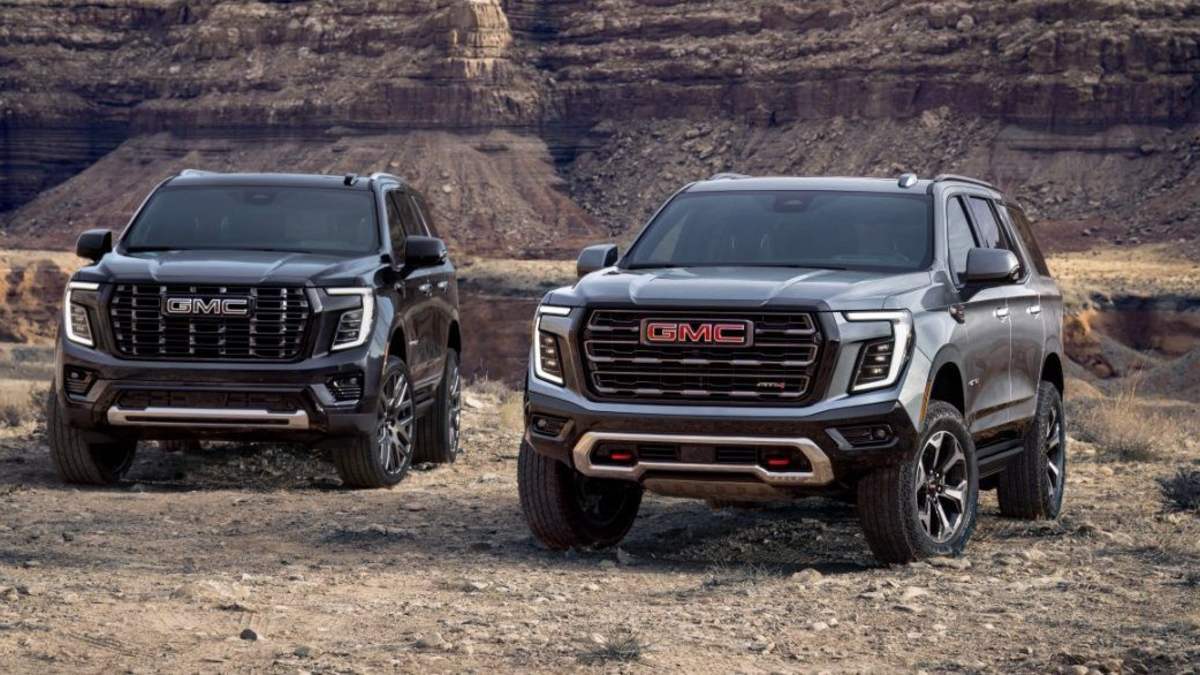
Other forum members held out hope for future improvements. ConfidentLine9074 wrote, “The 2026 is supposed to be no cylinder deactivated and better oil routes, but the materials used I don’t trust for rotating hardware.” That comment hints at a quiet admission: even within GM’s enthusiast base, confidence in these systems has eroded. Eliminating AFM altogether would be a dramatic reversal and a tacit acknowledgment that complexity has outpaced reliability.
To be fair, engineers aren’t villains in this story. They are problem solvers operating under immense pressure to meet emissions goals without alienating customers who still want V8 power and towing capability. It’s a nearly impossible equation, and systems like AFM and start-stop are the arithmetic of that compromise. But when the math doesn’t hold up on the open road, it’s the customers who pay the price.
There’s a larger lesson here that transcends brand loyalty. The modern automobile is a marvel of engineering, but it’s also a reminder that progress must be measured by results, not just intent. When a brand-new Yukon can suffer catastrophic engine failure at 2,381 miles, it’s not just a warranty claim, it’s a wake-up call. As emissions technology grows more complex, automakers must remember that trust is built not on innovation alone, but on the simple expectation that when you turn the key, the engine stays alive.
Image Sources: GMC Media Center
Noah Washington is an automotive journalist based in Atlanta, Georgia. He enjoys covering the latest news in the automotive industry and conducting reviews on the latest cars. He has been in the automotive industry since 15 years old and has been featured in prominent automotive news sites. You can reach him on X and LinkedIn for tips and to follow his automotive coverage.
Set Torque News as Preferred Source on Google
Follow us today...