
The integrity of a vehicle's suspension components is non-negotiable, forming the bedrock of both safety and handling. When critical fasteners are found to be missing or improperly seated on a relatively new vehicle, it raises immediate and serious questions about manufacturing quality control and the manufacturer's accountability.
This scenario recently unfolded for a 2022 Tesla Model Y owner, who discovered a significant suspension failure just outside of the vehicle's warranty period.
The owner, posting under the handle SoLoRydR on r/TeslaLounge, detailed the alarming situation:
"Control arm bolts fell off! out of warranty. 22Model Y with 60K miles. No external forces to cause bolts to fall off, Tesla service stated that they discovered the front lower link bolt was either not properly seated or missing. $4K repair bill, but they offered me a free alignment."
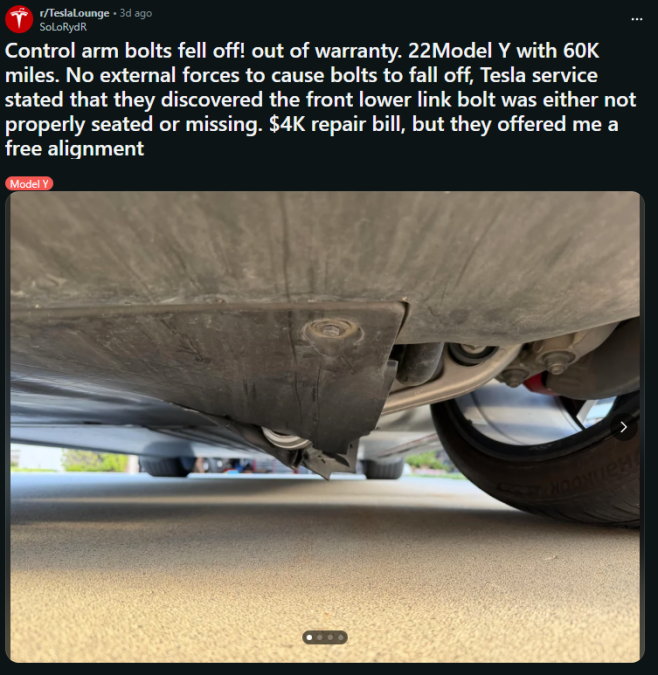
This incident, occurring at 60,000 miles, points to a fundamental issue that extends beyond typical wear and tear. A lower control arm bolt, integral to maintaining wheel alignment and structural stability, should not simply "fall off" or be "missing" without external impact. Tesla's own assessment that the bolt was "either not properly seated or missing" suggests a manufacturing defect or an assembly error, not a component failure due to owner negligence or road hazards. This distinction is crucial, as it shifts the burden of responsibility squarely onto the manufacturer, regardless of warranty status.
Tesla Model Y: Scrutinizing Suspension Assembly Quality
- The 2022 Tesla Model Y, a compact electric SUV, typically offers an EPA-estimated range of around 330 miles for the Long Range variant. Its dual-motor all-wheel-drive system provides robust acceleration, achieving 0-60 mph in as little as 4.8 seconds for the base model.
- Suspension design in the Model Y features an independent setup, with a multi-link system at the rear and a double-wishbone front suspension. This configuration is intended to provide a balance of comfortable ride quality and agile handling characteristics.
- The vehicle's curb weight ranges from approximately 4,400 to 4,500 pounds, placing significant stress on suspension components during normal operation. Critical fasteners, like those for control arms, are designed to withstand these forces over the vehicle's lifespan.
- Standard Tesla warranty coverage for the Model Y includes 4 years or 50,000 miles for the basic vehicle, and 8 years or 120,000 miles for the battery and drive unit. The incident at 60,000 miles falls outside the basic vehicle warranty period.
One commenter, dantodd, questioned the manufacturer's stance on warranty coverage for such issues, stating, "Can't apply service bulletin repairs if you are out of warranty? Huh, I did not know that." This shows a common misconception among consumers regarding service bulletins and recalls. While service bulletins address known issues and often provide guidelines for repairs, they typically do not mandate free repairs outside of warranty unless they are upgraded to a full safety recall.
However, the notion that a manufacturer can simply shrug off a clear assembly defect because a vehicle has crossed an arbitrary mileage threshold is a dangerous precedent for the industry. When a critical safety component's failure can be attributed to improper installation from the factory, the warranty period becomes irrelevant in the context of ethical manufacturing and consumer safety. This isn't about a worn-out bushing; it's about a foundational error that could have catastrophic consequences.
Another user, EmergencyMonitor6117, echoed this sentiment, asserting, "Yeah, I think that is total BS…Tesla needs to stand up on this one, especially if there is no collision or undercarriage damage." This perspective is entirely justified. The absence of external damage, explicitly stated by the owner, reinforces the argument that this is an internal failure. For Tesla to demand a $4,000 repair bill for what appears to be a factory defect is not merely poor customer service; it's an abdication of manufacturing responsibility that would be unthinkable from legacy automakers like Toyota or Honda for similar issues.
The expectation that a premium-priced vehicle like a Tesla Model Y should maintain its structural integrity well beyond 60,000 miles, particularly concerning fundamental assembly, is not unreasonable. This isn't a cosmetic flaw; it's a direct threat to vehicle control. The industry standard for critical suspension components, even on economy cars, far exceeds such an early failure point, especially when the cause is traced back to improper installation.
Fataldeadlock urged the owner to "Definitely report it to NHTSA, though they specifically state that NHTSA will not force manufacturers to take action. These types of issues that are clearly due to a failure on Tesla's part need to be reported so that they can be held accountable if/when enough numbers accumulate." This advice is sound. While individual reports may not trigger immediate action, a pattern of similar failures documented with the National Highway Traffic Safety Administration is precisely what leads to investigations and, eventually, mandatory recalls.
The collective weight of consumer reports is the only mechanism that can compel a manufacturer to address systemic issues that fall outside the typical warranty framework. Relying solely on a manufacturer's goodwill for what should be a safety-related recall is a gamble no owner should have to take. It is a stark reminder that consumer vigilance remains paramount in holding manufacturers to account.
Jeffp007 wisely advised, "And save your receipts for when it is a recall and they need to reimburse you." This is practical advice that every owner facing a potentially systemic issue should heed. Should NHTSA eventually issue a recall for improperly seated control arm bolts on the 2022 Model Y, owners who paid for the repair out of pocket would be eligible for reimbursement. Documentation is key to reclaiming funds for repairs that should have been covered by the manufacturer from the outset.
The owner later clarified that Tesla service indicated "both drive shafts needed to be replaced," which significantly escalates the severity and cost of the repair. While u/YouKidsGetOffMyYard initially suggested the $4,000 estimate might be high and that "the bolts are still there even," the revelation of drive shaft damage points to a cascade failure. The loss of a critical suspension bolt can lead to severe misalignment and stress on other components, such as drive shafts, causing them to fail prematurely. This chain reaction reveals the critical nature of the initial defect and further solidifies the argument for manufacturer responsibility.
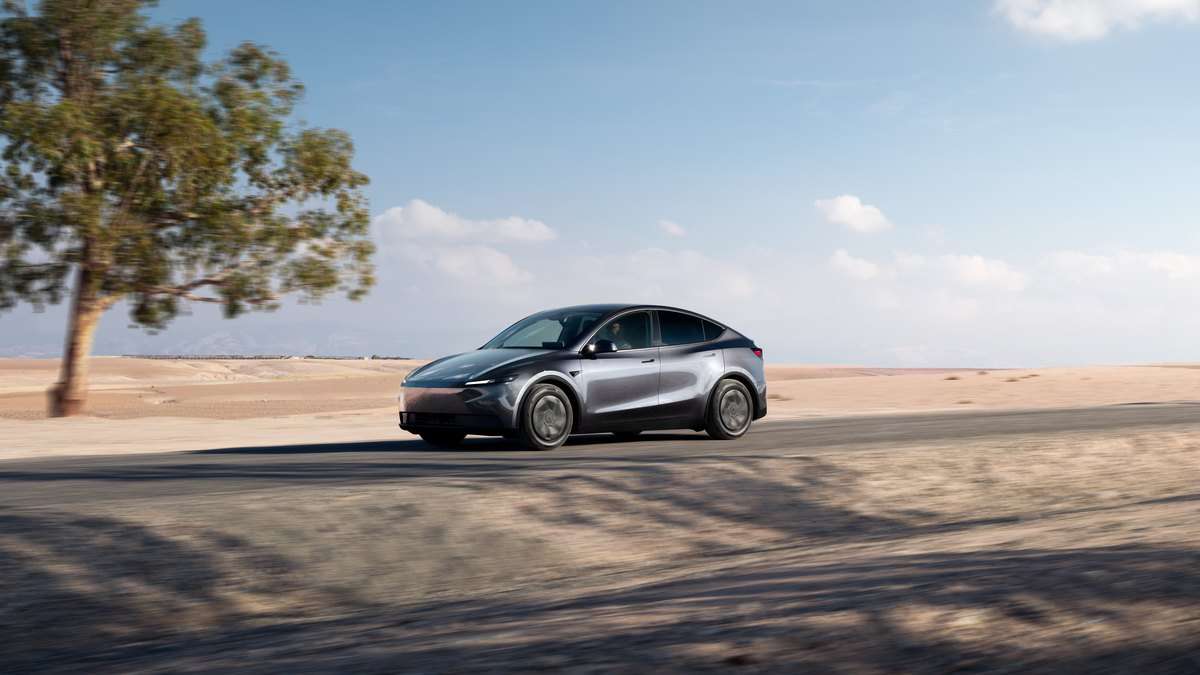
Image Sources: Tesla Media Center
Noah Washington is an automotive journalist based in Atlanta, Georgia. He enjoys covering the latest news in the automotive industry and conducting reviews on the latest cars. He has been in the automotive industry since 15 years old and has been featured in prominent automotive news sites. You can reach him on X and LinkedIn for tips and to follow his automotive coverage.
Set Torque News as Preferred Source on Google
Follow us today...