
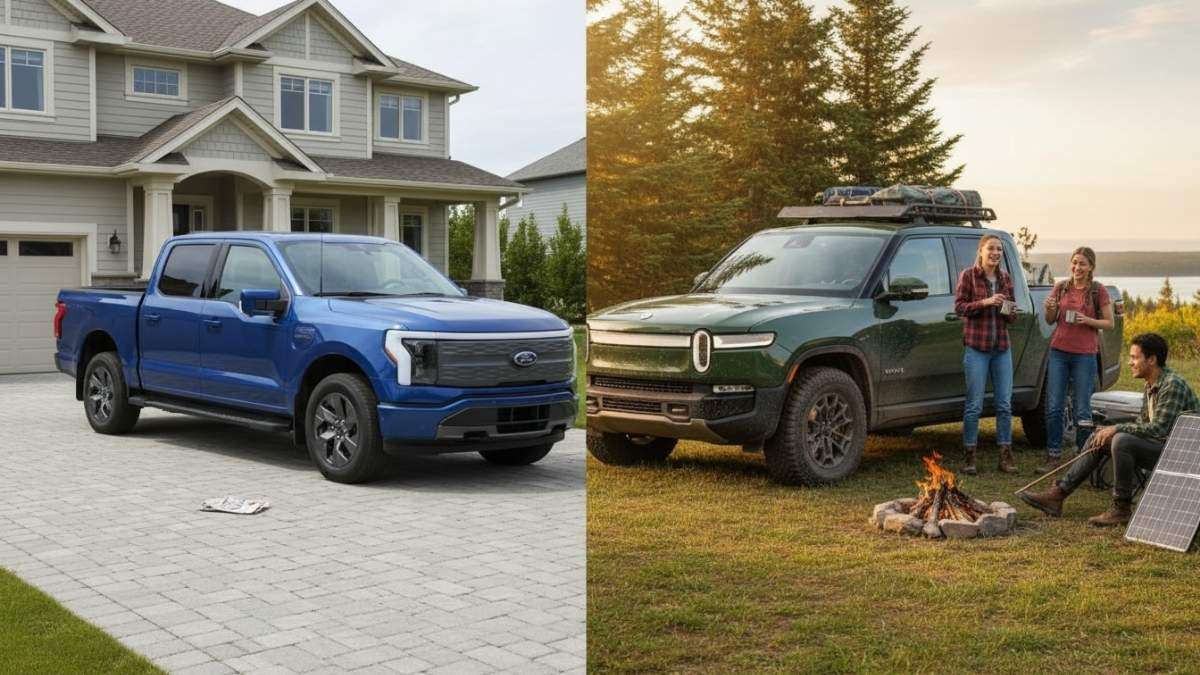

The automotive world is bracing for what could be the first great casualty of the EV transition. Reports are swirling that Ford, after losing a staggering $13 billion on its EV division since 2023, is strongly considering axing the F-150 Lightning. This news is rattling an industry already nervous about slowing EV demand.
But let’s be clear: If the Lightning fails, it won't be because the truck was bad. It will be because Ford committed a catastrophic, unforced marketing error. They built the right truck but aimed it at the wrong customer, failed to build advocacy, and ultimately misunderstood the electric revolution entirely.
The Lightning vs. The Cybertruck: Why Practicality Lost
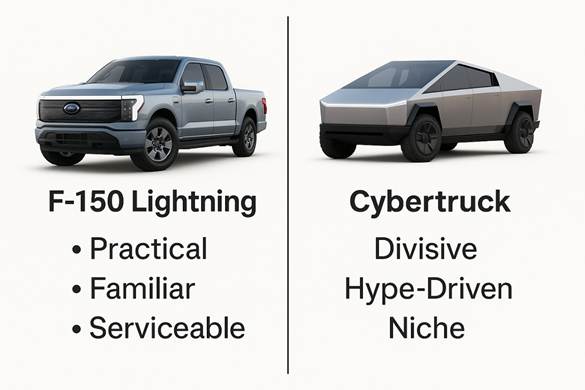
On paper, the F-150 Lightning should have buried the Tesla Cybertruck. The Lightning is, by almost every objective metric, a far better truck.
It has a standard aluminum body that can be easily repaired. It has normal paint. It has a functional bed that works with existing accessories. It utilizes the largest and most established dealer service network on the planet (Ford Dealer Network). It’s a practical, proven, and reliable platform electrified.
The Tesla Cybertruck, by contrast, is an engineering and practical novelty. It is a divisive stainless-steel wedge that requires specialized (and reportedly nightmarish) cleaning, shows every fingerprint, and is difficult to repair. It is, essentially, a sci-fi prop for tech enthusiasts.
And yet, the Cybertruck has a multi-year waiting list fueled by hype and a cult of personality. The Lightning is facing cancellation. Why? Because Tesla understood its buyer. Tesla didn't try to sell the Cybertruck to traditional F-150 owners; it sold it to its existing base of tech evangelists who wanted the future, no matter how impractical. Ford tried to sell the Lightning to its existing base, and that base simply wasn't interested.
The Real Failure: Marketing to the Wrong Customer
Here is the core of Ford’s failure: They never figured out who the F-150 Lightning was for.
The traditional F-150 buyer—the rancher, the contractor, the long-haul tower—views a truck as a tool. Their primary concerns are towing capacity and range. The moment the Lightning demonstrated a dramatic drop in range while towing, it was dead on arrival for this core audience. They don't care about a silent ride or 0-60 times; they care about getting their trailer to the next state, and the Lightning couldn't do that.
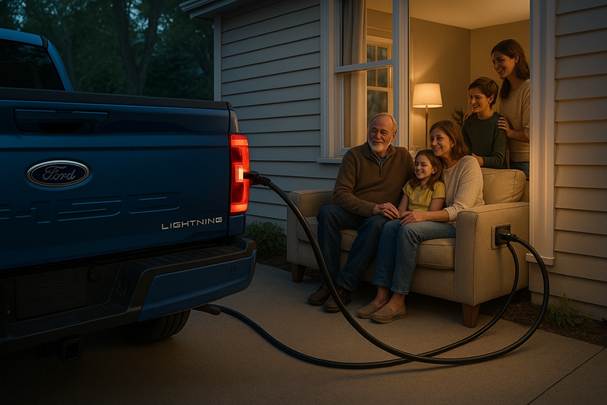
But there is a massive market the Lightning was perfect for: the Suburban Professional or the Tech-Savvy Homeowner. This is the buyer who drives 30 miles a day, values technology, and uses a truck for weekend trips to Home Depot, not for hauling cattle. For this buyer, the Lightning’s "killer app" wasn't its electric motor; it was the Pro Power Onboard system. The ability to power your entire house for three days during a blackout is revolutionary.
Did Ford market this? Barely. They sold an "F-150 that's electric," which was the one thing their traditional base didn't want. They should have sold it as a silent, powerful, tech-forward home utility vehicle that happens to have a truck bed. They failed to create advocacy or a new community, assuming the "F-150" name was enough. It wasn't; it was a liability.
The Scout Playbook: Building a Tribe Before the Truck
If Ford wants to know how this should have been done, they need only look at the playbook being run by Scout Motors. Scout, backed by Volkswagen, is re-launching a classic brand as an all-electric, rugged utility line.
What is Scout selling right now? Nothing. They don't have a truck in showrooms. Instead, they are meticulously building a lifestyle and a community. Their website and social media are filled with images of adventure, rugged individualism, and nostalgia. They are building a tribe of "Scout" people first. By the time the truck arrives, that tribe will be desperate to buy the badge that represents their identity.
Rivian did the same, positioning itself as the "Patagonia of trucks." Ford, with arguably the most valuable truck nameplate in history, failed to do this. They didn't build a new community; they just confused their old one.
What Ford Must Do Next (If They Want to Win)
The potential death of the Lightning is a $13 billion lesson in marketing. To have a successful electric pickup, Ford must stop trying to convert its existing base and instead build a new one.
- Rebrand: The next electric truck cannot be called an F-150. It needs its own name, its own identity, its own brand (perhaps under the "Model E" division).
- Target the Right Buyer: Stop marketing it to ranchers. Market it to the tech worker, the suburban family, the modern contractor.
- Market the Unique Benefits: The Pro Power Onboard system should have been the entire marketing campaign. It is the single greatest competitive advantage any EV truck has, and Ford barely mentioned it.
- Build Advocacy: Create a community. Host events. Market the lifestyle of a silent, powerful, utility-focused EV, not the compromises it makes compared to its gas-guzzling parent.
Wrapping Up
The likely discontinuation of the F-150 Lightning is a self-inflicted wound. Ford built a superior product to the Cybertruck but marketed it to the wrong people. They had a practical, serviceable, and revolutionary vehicle (a 9.6kW home generator on wheels!) and sold it as a neutered version of their gas workhorse. If the Lightning fails, it's not because electric trucks are a bad idea; it's because Ford forgot that a revolution requires evangelists, not just existing customers. They failed to create advocacy and left the door wide open for competitors like Scout and Rivian who understand that in the EV space, you sell the identity first and the truck second.
Disclosure: Images rendered by ChatGPT 5.0
Rob Enderle is a technology analyst at Torque News who covers automotive technology and battery developments. You can learn more about Rob on Wikipedia and follow his articles on Forbes, X, and LinkedIn.
Set Torque News as Preferred Source on Google
Follow us today...




Comments
They started lying to people…
Permalink
They started lying to people about it the day they started taking reservations. It's ugly and boring, of course catering to boring conservatives. I never expected it to be a big deal. Rivian is on an entire different level in comparison in every aspect - strategy, value, quality, design, vision. Ford was afraid to commit because they bent over to their ignorant customer base.
Scout hasn't won anything,…
Permalink
Scout hasn't won anything, it isn't even on the market. The EREV is a gimmick to also pander to the ignorant conservative customer. It will get them reservations, but it doesn't make it a better vehicle. The Cybertruck os on it's death bed, certainly isn't winning anything and has no mass appeal. What are you all smoking over there?