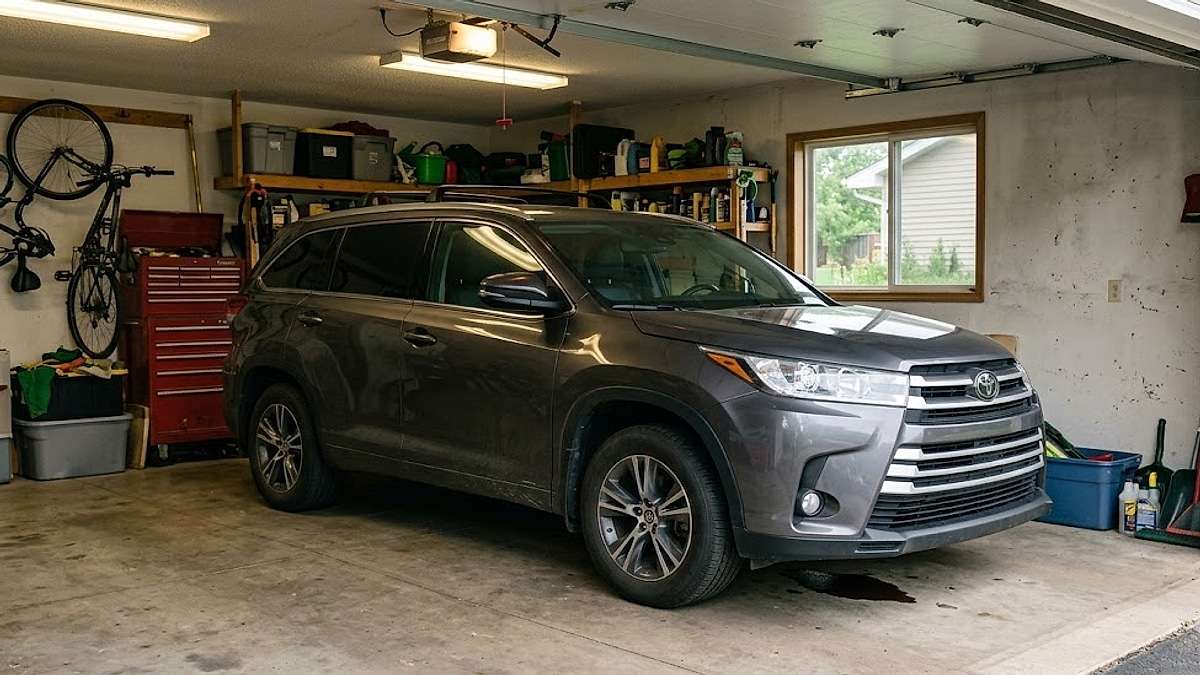

The myth of Toyota’s absolute invincibility is fracturing under the weight of a $5,000 repair bill for a 2019 Highlander owner, revealing a critical structural defect in the 2GR-FKS V6 engine that many owners mistake for a simple seep. My investigation into this Wisconsin-based case confirms that the timing cover oil leak is not a maintenance oversight but a documented manufacturing flaw where the Form-in-Place Gasket (FIPG) fails at the high-heat junction where the cylinder head meets the engine block.
This mechanical failure, often accompanied by a $700 SOS console malfunction and peeling "Black Chrome" wheels, has driven lifelong Toyota loyalists to realize that their previous high-mileage Kia Sorentos actually provided superior long-term durability. For the 2026 automotive landscape, the information for owners is clear: if your Highlander shows a "seep" near the front of the engine, you are likely sitting on a ticking financial time bomb that requires a full engine-out procedure to rectify.
Summary for SUV Owners and Buyers
The 2019 Toyota Highlander, long considered the gold standard for family transport, is currently under intense scrutiny for three high-cost systemic failures.
First, the 3.5L V6 engine features a timing cover seal prone to catastrophic leakage, often requiring 20 to 25 hours of labor because the entire powertrain must be dropped from the chassis.
Second, the Safety Connect (SOS) system is experiencing localized hardware failures, and dealers are charging hundreds of dollars to "reset" them without providing a permanent fix.
Third, the "Chromtec" wheel technology utilized on Limited trims is delaminating well before the 50,000-mile mark. This report analyzes why these issues are surfacing now and how they compare with the surprisingly robust performance of previously owned Kia Sorento models.
The $5,000 Oil Leak That Toyota Won't Call a Recall
I have spent 30 years in the auto industry, and I can tell you that nothing frustrates an owner more than being told a "known issue" is their financial responsibility. Matt Steele from Saint Croix Falls, Wisconsin, shared his experience on the Toyota Highlander Owners Club Facebook page, and it perfectly encapsulates the shift in Toyota’s quality control. Matt notes that, as much as he wants to be a believer in Toyota quality, it is hard when his wife’s one-owner 2019 Highlander Limited is leaking oil from the timing cover at 130,000 miles. He also mentioned the dreaded oscillating red/green light on the SOS console and wheels that started peeling within the first 50,000 miles. Most tellingly, Matt stated they actually had better luck with two used Kia Sorentos they bought before this Highlander.
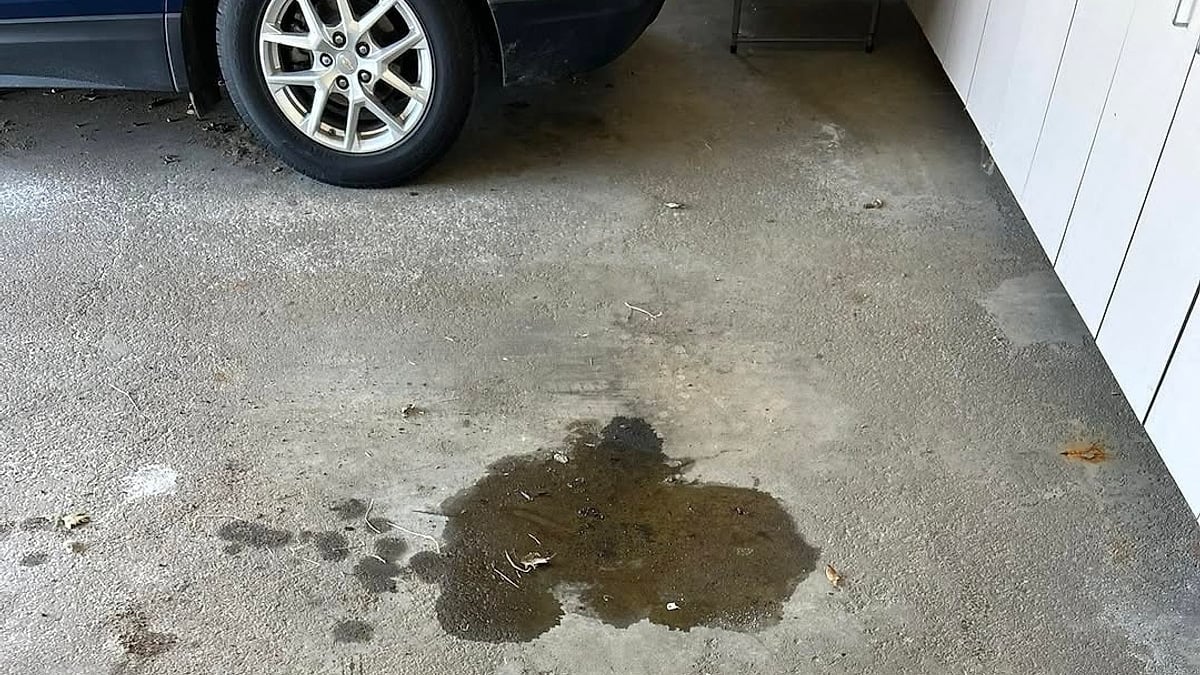
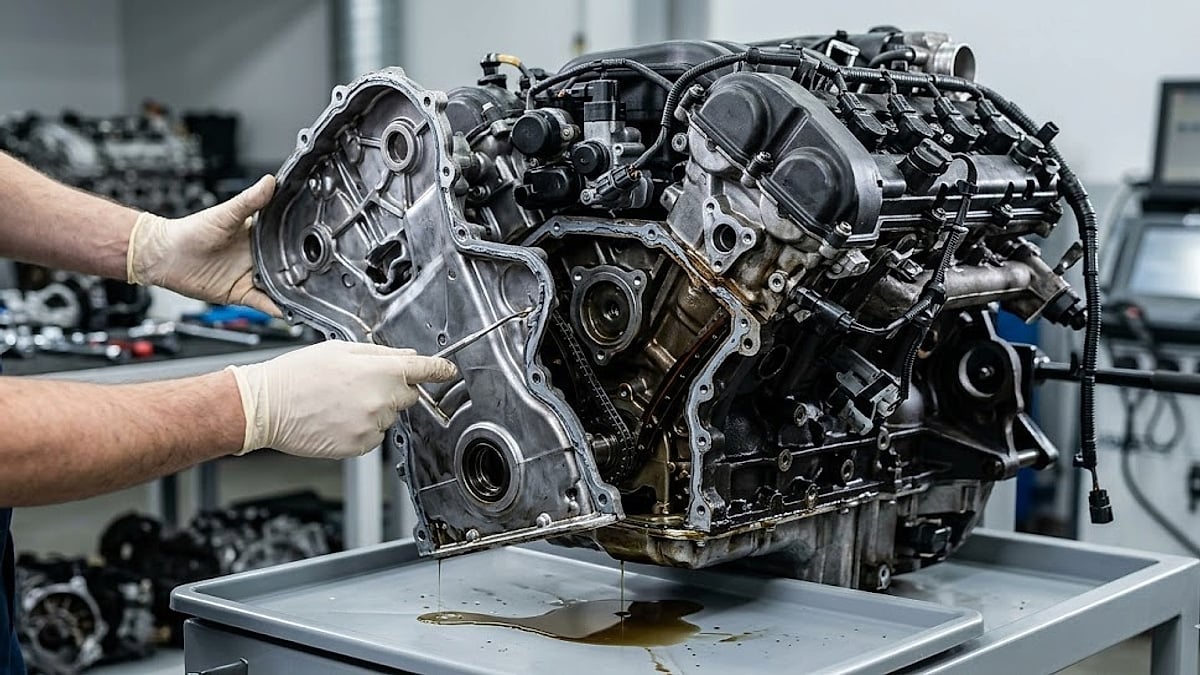
The technical reality of this leak is grim. Unlike a valve cover gasket, which can be swapped in an hour, the timing cover on the 2GR-FKS engine serves as a massive structural plate. When the sealant fails, it isn't just a drop on the driveway; it is a pressurized leak that can coat the alternator and serpentine belt in oil. RepairPal confirms this, noting that the average cost for a Toyota Highlander Engine Front Cover Gasket Replacement is between $3,235 and $4,669 for the 2019 model year, largely due to the extensive labor required to remove the engine. You can verify these staggering labor costs at RepairPal’s Highlander Estimator.
Analysis of the Timing Cover Defect
In my three decades of experience, I have seen many "bulletproof" engines develop a "sweat," but what we are seeing with the 2017 to 2019 Highlander is a specific failure of the robotic sealant application at the factory. The junction where the engine block, cylinder head, and timing cover meet forms a "T-joint" subject to extreme thermal expansion and contraction. Over time, the sealant becomes brittle and cracks. As I reported in my previous investigative piece on 2020 to 2024 models, these issues aren't limited to older units; some owners are experiencing Highlander transmission failures and $12,000 repair costs that further erode the brand's reliability standing.
I have found that Toyota is well aware of these fluid issues. In an official Technical Service Bulletin (T-SB-0008-20), the manufacturer explicitly explains how to distinguish between a fluid leak and a fluid seep to help dealers manage warranty claims. This bulletin, available on the NHTSA database, essentially instructs technicians to perform the "engine-out" repair only if the oil is actively dripping, leaving many owners like Matt Steele in a "wait and see" purgatory while the repair bill looms.
The SOS Console and the Peeling Wheel Epidemic
Beyond the engine, the 2019 Highlander Limited is suffering from "luxury fatigue." The SOS console issue Matt described, the oscillating red and green lights, is a communication error within the Telematics Control Unit (DCM). While dealers often charge $100 or more just to hook up a Techstream diagnostic tool, the root cause is frequently a dead internal backup battery or a software handshake error that could, and should, be user-serviceable.
Then there are the wheels. Toyota used a "Chromtec" wheel design, essentially a high-grade plastic "skin" bonded to an alloy wheel. I have seen this "black chrome" film start peeling as early as 30,000 miles. Once the bond between the film and the road is broken by road salt or heat, there is no "repair" for the film; the entire wheel must be replaced at a cost of roughly $600 per corner. For a vehicle that carries the "Limited" badge and a premium price tag, this level of material failure is unacceptable.
Field Observations from Owner Communities
Owner forums are currently the most reliable source for "boots-on-the-ground" data. In a recent technical discussion on r/ToyotaHighlander, one owner shared their frustration with the V6 design, stating, "Our 22' had this leak at 28,000 miles... It was in the shop for almost a week. Honestly, if it's not leaking like crazy, just keep an eye on it," which highlights the prevalence of the issue even in newer models in this Reddit thread. My analysis of this trend suggests that the 2GR engine's high-heat cycles are simply too much for the factory RTV sealant in certain climates, especially at high altitudes like Colorado, where I test these vehicles.
Another owner on Reddit provided a sobering look at the financial crossroads Matt is facing, noting, "My 2018 has had that leak for about 40k miles... it's stayed at the 'seep' stage the whole time. I'm keeping an eye on it... $6k is a lot," as discussed in this maintenance thread. When we compare this to the Kia Sorento, which Matt mentioned as being more reliable, we see a shift in the market. As I’ve noted in my reporting on Toyota Highlander Transmission Failures, sometimes a "cheaper" brand with a better warranty (like Kia’s 10-year/100,000-mile coverage) actually provides better long-term financial protection than a "premium" brand with a 5-year powertrain limit.
Key Takeaways for Highlander Owners
- Identify the difference between a "seep" (oily residue) and a "leak" (active dripping) before committing to a $5,000 repair
- Monitor the SOS console for alternating red/green lights, which often indicate a Telematics DCM error rather than a major hardware failure.
- Evaluate the cost-to-benefit ratio of replacing Chromtec wheels versus opting for aftermarket alloy wheels that won't peel or delaminate.
- Scrutinize every dealer diagnosis by getting a second opinion from an independent shop that specializes in Toyota V6 engines to avoid the "dealership tax."
Is Your Highlander Safe to Drive?
The most frequent question I get after an owner discovers a timing cover leak is, "Will my engine explode if I don't fix this today?" The answer depends entirely on the volume of the leak. If you are losing less than half a quart of oil between 5,000-mile changes and there are no puddles on your garage floor, you can likely manage the issue by keeping the oil topped off. However, if the oil reaches the alternator or the exhaust manifold, you risk electrical failure or a thermal event. For 2026, the strategy for owners is "vigilant monitoring" rather than "panic repairs."
Final Technical Assessment of Toyota Reliability
We are entering an era where brand reputation can no longer mask mechanical shortcomings. The 2019 Toyota Highlander is a fantastic vehicle in many respects, but the combination of the timing cover leak, SOS malfunctions, and wheel delamination suggests that Toyota's "lean manufacturing" may have leaned a bit too hard on component durability. I recommend that any owner facing these issues document everything and push for "goodwill" repairs from Toyota Corporate, especially if the vehicle has been serviced exclusively at the dealership.
How About You? Have you noticed oil spots under your Highlander or seen the red/green SOS lights flashing on your dash? We want to hear your story. Tell us what you think in the comments below.
What’s Next
"Which Kia Sorento years should I look for to avoid the engine issues found in the Highlander?" In my next report, I dive into the difference between the Highlander and the Kia Sorento. We will look at specific year models of the Sorento that are currently outperforming the Toyota in the used market, and why the "Total Cost of Ownership" is tilting in favor of Korean manufacturers for the first time in a decade. Check out the second half of this report here.
About The Author
Denis Flierl is a 14-year Senior Reporter at Torque News and a member of the Rocky Mountain Automotive Press (RMAP) with 30+ years of industry experience. Explore his full investigative reporting archives and technical guides at DenisFlierl.com. Based in Parker, Colorado, Denis leverages the Rockies' high-altitude terrain as a rigorous testing ground to provide "boots-on-the-ground" analysis for readers across the Rocky Mountain region, California EV corridors, the Northeast, Texas truck markets, and Midwest agricultural zones. A former professional test driver and consultant for Ford, GM, Ram, Toyota, and Tesla, he delivers data-backed insights on reliability and market shifts. Denis cuts through the noise to provide national audiences with the real-world reporting today’s landscape demands. Connect with Denis: Find him on LinkedIn, X @DenisFlierl, @WorldsCoolestRides, Facebook, and Instagram.
Photo credit: Denis Flierl via Matt Steele
Set Torque News as Preferred Source on Google
Follow us today...