
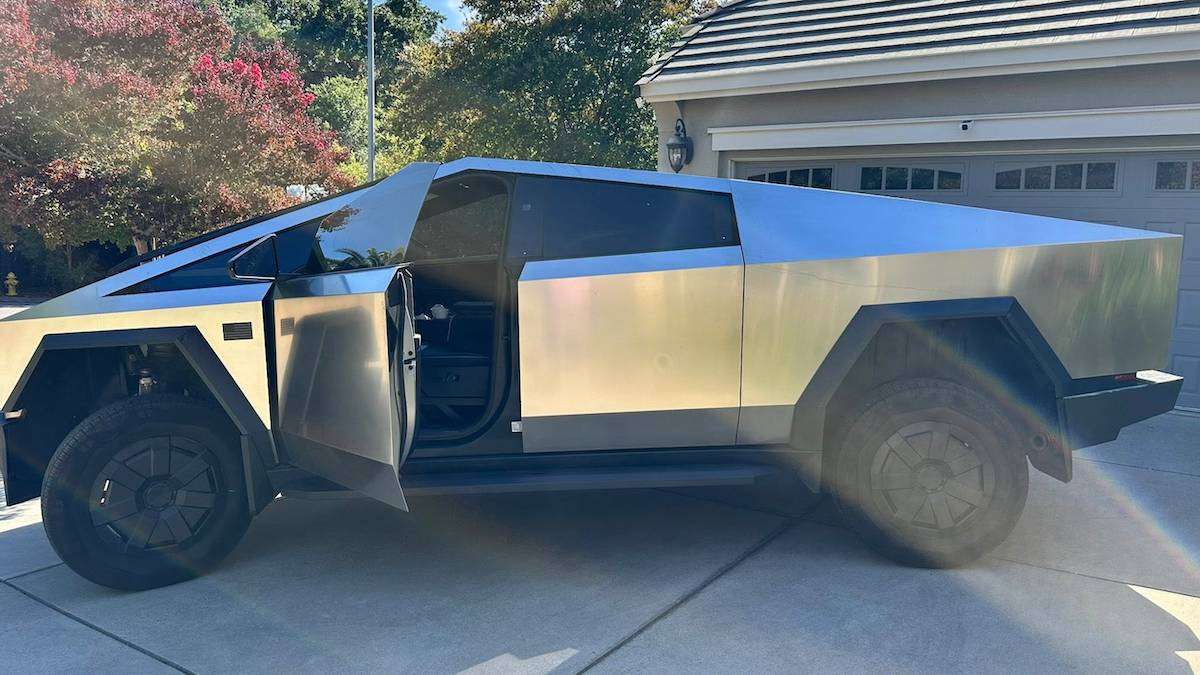

The Tesla Cybertruck is not merely a pickup truck; it is a polarizing disruptor designed to shatter the automotive status quo and force everyone on the road to take notice.
As an artifact of the future that has arrived in the present, it challenges conventional driving norms, but recent reports suggest its advanced software might be taking that aggressive mission too literally.
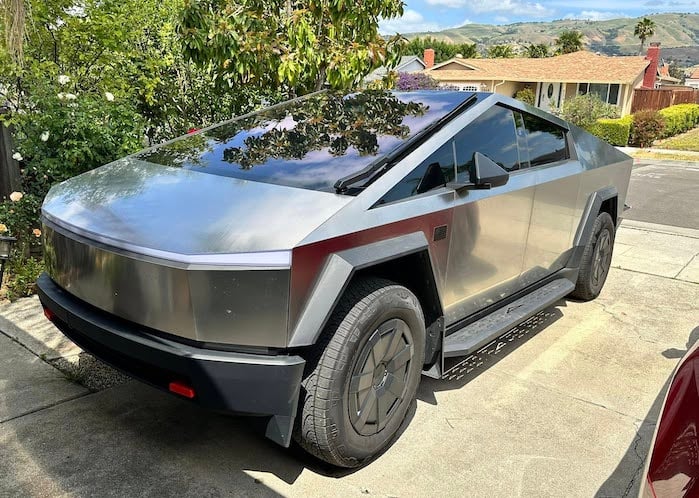
BC LeViet took to social media to share a hair-raising experience in which his vehicle appeared to develop a mind of its own during a road trip. The owner describes a journey marked by unprovoked aggression and erratic maneuvers that left him feeling like he was the target of a high-speed chase rather than the driver.
BC LeViet on the Tesla Cybertruck Owners Facebook page says,
"Holy smoke, Max, my Tesla Cyberttruck is super mad changing lanes and accelerating more times on one trip than the sun has set in all of my days alive, cutting people off, once passing a car using a wide right shoulder crossing the solid white line at 80mph. I felt like my ex was chasing me, trying to get back with me. Has anyone experienced a similar adrenaline rush?"
My Analysis
This account of the Cybertruck acting "super mad" is a troubling but increasingly common narrative among owners testing the limits of Tesla's Full Self-Driving (FSD) software. The behavior BC LeViet describes, crossing solid white lines at 80 mph and using the shoulder to pass, suggests the vehicle's software may have been operating in an assertive profile that misinterpreted safety boundaries for efficiency.
It is important to note that Tesla's FSD includes different driving profiles, including "Chill," "Average," and "Assertive," the latter of which allows for shorter follow distances and more frequent lane changes. However, what LeViet describes goes far beyond assertive driving; it mimics road rage.
In my coverage of these vehicles, I have seen a pattern where the machine's programming prioritizes speed and dominance over defensive driving. For instance, in a recent report, Tesla Cybertruck Owner Says, "I Don't Just Drive, I Deploy, Because This Isn't Just a Truck, It's a Statement, I'm Not Here To Fit In, I'm Here To Disrupt." I highlighted how owners feel they are "deploying" a weapon rather than driving a car.
This mindset is reflected in the software itself. The comparison to an ex-partner "chasing" him perfectly encapsulates the feeling of loss of control that many drivers experience when the AI makes split-second, high-stakes decisions that a human driver would deem reckless.
Other users in the same Facebook thread are echoing similar concerns, with some noting that their trucks have behaved like "drunk teens," hugging lane lines too closely or making indecisive, jerky movements in traffic.
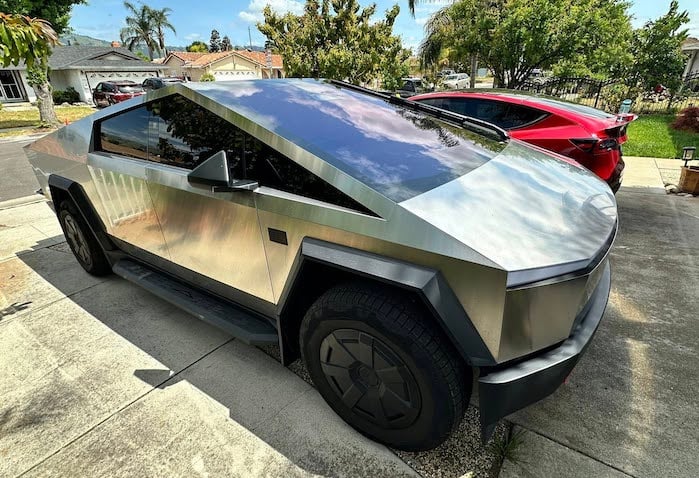
Why The Cybertruck Was Made and Why It Is Acting Mad
- Disruption by Design: Elon Musk intended the Cybertruck to be an "apocalypse-proof" vehicle that looks and acts like nothing else on the road; its aggressive software behavior is likely a feature, not a bug, intended to match its "Cyberbeast" persona.
- FSD Profiles: The software includes an "Assertive" mode that is programmed to perform rolling stops and make frequent lane changes to maintain speed, which can feel like "mad" or aggressive driving to the uninitiated user.
- Instant Torque: The electric powertrain delivers massive torque instantly, meaning when the computer decides to change lanes or accelerate, the physical motion is violent and immediate, contributing to the sensation of being "chased."
Beta Software Variance: The FSD software is still in a supervised beta phase, meaning it can misinterpret lane markings, such as the solid white line LeViet mentioned, leading to illegal maneuvers that a human would know to avoid.
The Owner's Experience
Expanding on LeViet's story, the detail about "crossing the solid white line at 80mph" is particularly alarming because it represents a fundamental failure of the system to adhere to traffic laws. A vehicle that utilizes the right shoulder to pass is not just aggressive; it is operating unpredictably. In my analysis, these incidents often stem from the vision-based system misidentifying the road shoulder as a viable travel lane, especially when lane markings are faded or the "neural net" prioritizes maintaining velocity. It is a terrifying paradox where the safest vehicle on paper becomes a hazard in practice due to software overconfidence.
Another member of the community, Fernando Diaz, noted his own issues with the software's spatial awareness. In my report titled "First Try at FSD With My Cybertruck, V14 Was Good Until It Backed Up Into a Pole, Denting My Bumper," but I'm Not Criticizing Tesla, Elon, or the CT, I Still Love My CT. I detailed how the software failed a basic low-speed maneuver.
If the system struggles with static poles in a parking lot, it is no surprise that it struggles to interpret complex high-speed highway etiquette. LeViet's experience of the truck "accelerating more times... than the sun has set" indicates a phantom braking and acceleration loop, where the computer constantly corrects itself, creating a nauseating ride.
Ultimately, LeViet's situation highlights a growing divide in the automotive community. On one side, you have the "100K Mile" owners who see the vehicle as a tool for efficiency, as seen in 100K Mile Tesla Cybertruck Owner Reveals In Interview, 'I Don't Use FSD Much, Mostly Because I Text While Driving, I Don't Need Two Women Nagging Me At Once.'
On the other hand, you have owners like LeViet who are unwittingly testing the boundaries of AI behavior. Until Tesla reins in the "madness" of its algorithms, Cybertruck owners will continue to be test pilots in a public experiment, experiencing adrenaline rushes that should be reserved for roller coasters, not highway lane changes.
I'm Denis Flierl, a Senior Torque News Reporter since 2012, bringing over 30 years of automotive expertise to every story. My career began with a consulting role with every major car brand, followed by years as a freelance journalist, test-driving new vehicles, which equipped me with a wealth of insider knowledge. I specialize in delivering the latest auto news, sharing compelling owner stories, and providing expert, up-to-date analysis to keep you fully informed.
Follow me on X @DenisFlierl, @WorldsCoolestRides, Facebook, Instagram and LinkedIn
Photo credit: Denis Flierl via BC LeViet
Set Torque News as Preferred Source on Google
Follow us today...


Comments
Wow, he could have caused…
Permalink
Wow, he could have caused some serious accidents. But then I guess actually driving is hard for Tesla folk, huh? I think FSD needs to be banned. I've seen people sound asleep at 80mph.