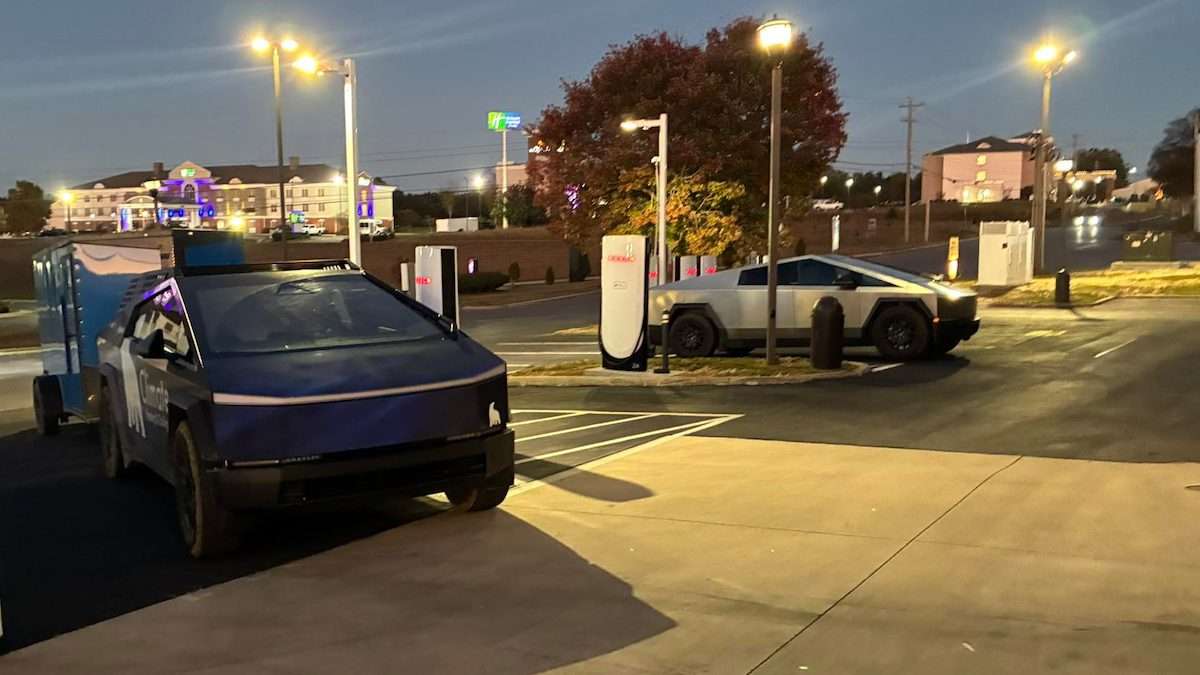

The Tesla Cybertruck has always been more than just a pickup truck; it is an artifact of the future that has decisively arrived in the present. Its presence on American roads fundamentally shifts the conversation around automotive design, utility, and, perhaps most critically, longevity.
With its ultra-hard 30X cold-rolled stainless-steel exoskeleton, the Cybertruck dismisses traditional body-on-frame construction and the notion of easily dented panels, carving out a new, highly visible segment in the competitive light-truck market. This vehicle was designed not just to compete with established giants like the Ford F-150 and the Toyota Tundra, but to redefine what a workhorse is capable of, with performance numbers that rival those of dedicated sports cars. Yet its radical approach raises equally radical questions about its long-term viability, particularly regarding the component that defines every EV: the high-voltage battery pack.
Isaac Bagwell on the Tesla Cybertruck Owners Facebook page says:
"People always say, 'But how long do the batteries last?' "I say, 'The battery warranty is 150,000 miles/8 years. 'They say, 'Better sell it before then." So let's look at the math, I can fill mine up for $14 and go 325 miles. At 150k miles, I would have saved $25,000 in fuel costs compared to my Toyota Tundra. I'll save $2,000 on oil changes, bringing the total to $27,000. If my Cybertruck lasts 300,000 miles, which is reasonable, then I will save $54,000. I hope I never have to replace the battery, but if I do, it will be worth it to drive a fast, bulletproof, self-driving truck."
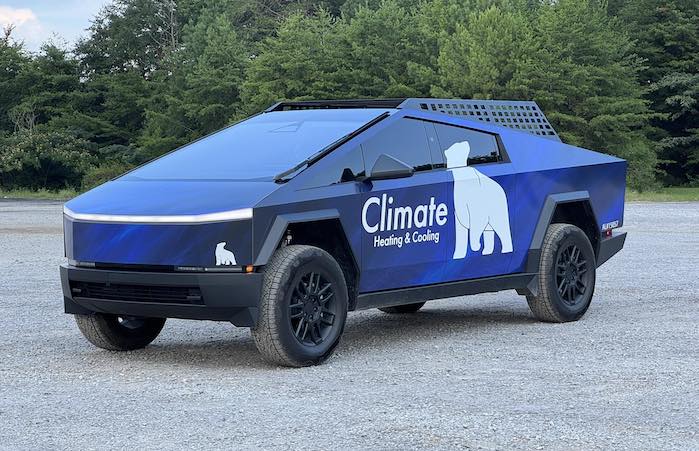
This dichotomy—unprecedented performance and durability coupled with lingering questions about battery lifespan—is the heart of the current Cybertruck owner experience. While the Cybertruck offers undeniable, tangible benefits from the moment it rolls off the lot, notably massively reduced energy and maintenance costs, the public conversation remains focused on the distant but potentially devastating financial hit of a battery replacement. The debate pits guaranteed savings today against the risk of a high-dollar expenditure tomorrow. This is the exact calculation that owners like Issac are currently grappling with and vocalizing across social media, offering a clear, compelling perspective on why they believe the electric leap is worth the risk.
A Calculated Risk, Backed by Savings
Isaac Bagwell's quote is far more than just a defense of his purchase; it is a foundational argument for the electric truck's Total Cost of Ownership (TCO) advantage, framed as a rational calculation. As a former Toyota Tundra owner, Isaac provides a perfect real-world baseline. A conventional gasoline-powered Tundra, particularly a recent model, typically averages around 19 to 20 miles per gallon (MPG). To cover 150,000 miles, that Tundra would consume approximately 7,500 gallons of gasoline. Given fluctuating gas prices, Isaac's estimated $25,000 in fuel savings is mathematically justifiable and likely conservative over the eight-year warranty period. Furthermore, the estimated $2,000 saved on routine maintenance—oil changes, transmission fluid flushes, belts, and spark plugs—is equally credible, bringing the guaranteed savings to a formidable $27,000. This lump sum represents a significant financial buffer, effectively self-insuring the owner against the dreaded future cost of battery replacement.
However, the public's anxiety, which Isaac dismisses, stems from fear of the unknown costs beyond the 150,000-mile mark. The Cybertruck's battery is warranted for 8 years or 150,000 miles, whichever comes first, to retain at least 70% of its capacity. Still, battery replacement costs—while highly variable and dependent on future market conditions—are often quoted in the $15,000 to $25,000 range. While Isaac views the $27,000 in savings as a preemptive buffer against this cost, the risk remains a significant hurdle to mass EV adoption. This is why other users like Skip Van Cel in the same Facebook thread are echoing similar concerns. They are less worried about whether the savings will accrue, and more worried about the logistical headache and potential financial shockwave that an immediate, out-of-warranty battery failure could bring, effectively wiping out years of accumulated savings in a single service invoice.
Why the Cybertruck Exists
A confluence of design philosophy, performance goals, and manufacturing efficiency objectives drove the creation of the Cybertruck:
- To provide a high-performance, sustainable energy substitute for the traditional fossil-fuel-powered pickup truck market.
- To revolutionize vehicle manufacturing by utilizing an ultra-hard stainless-steel exoskeleton, simplifying the production line by eliminating the need for stamping presses and paint shops.
- To offer unparalleled utility and durability, resulting in a vehicle that is dent-resistant, corrosion-resistant, and inherently "bulletproof" against small arms fire, as demonstrated by early prototypes.
- To embody a truly futuristic aesthetic, inspired by dystopian cinematic vehicles like those in Blade Runner, signaling a radical departure from conventional automotive design.
The Reality of Early-Adopter Anxiety
Isaac Bagwell's story highlights a critical distinction between predicted longevity and the current reality of early-generation EV technology. While the mathematical argument for massive fuel savings is sound, the operational reality for some initial Cybertruck owners has complicated the narrative. The anxiety about the battery is not purely hypothetical; we have seen reports, even from reputable news outlets, detailing instances in which Tesla has proactively and quietly replaced high-voltage battery packs in early-production Cybertrucks due to manufacturing defects such as "cell denting." This lack of transparency, in which major components are swapped out for "engineering research initiatives," fuels the very suspicion Isaac's peers voice.
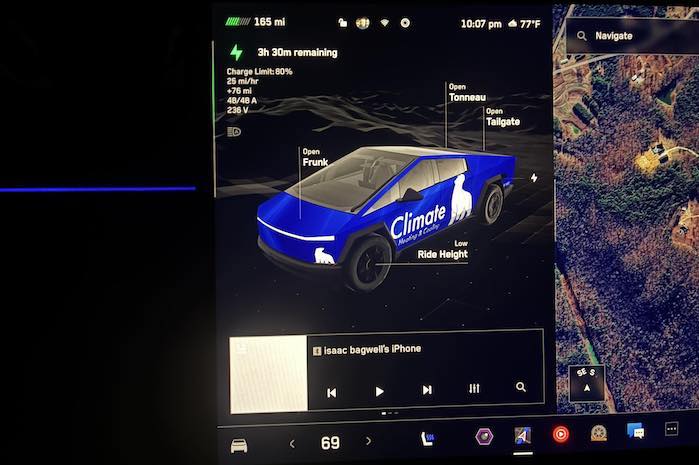
It forces the public to question not just how long the battery will last, but how long Tesla intends for it to last before intervening. For example, another member of the broader owner’s community, who had his truck in for a minor wireless charger issue, expressed dismay when he unexpectedly saw a high-voltage battery replacement added to his service order, highlighting the complex, sometimes confusing reality of being an early adopter in this groundbreaking product line. This experience injects an element of unpredictability that even the most compelling financial projection cannot fully overcome.
Balancing the Ledger of the Future
Ultimately, Isaac Bagwell's argument—that the Cybertruck is worth the risk because the savings cover the theoretical replacement cost—is the definitive philosophical stance of the EV enthusiast. He is not just buying a vehicle; he is investing in a superior Total Cost of Ownership ledger. His figures, demonstrating a $27,000 cushion over the warranty period, solidify the financial advantage of ditching high-maintenance gasoline engines like the Toyota Tundra's V6. This financial buffer allows the enthusiast to rationalize the battery gamble: the joy of driving a "fast, bulletproof, self-driving truck" today is paid for by the gas money saved every time he avoids the pump.
However, as a reporter covering the industry, I must emphasize that this equation relies on two major assumptions: that the savings are responsibly banked and that the battery's failure is singular and immediate. The recent real-world issues of cell-denting and Tesla's proactive replacements show that the journey to 300,000 miles is not guaranteed to be a smooth, linear degradation. While the 150,000-mile warranty provides a strong protective floor, unforeseen early-life component failures keep the anxiety alive, serving as a constant reminder that the future cost is a real possibility, not just a theoretical figure.
The challenge for Tesla, and for the broader EV industry, is to move beyond the warranty minimum and establish a documented track record of battery packs surviving significantly beyond the eight-year, 150,000-mile mark. Isaac Bagwell and others like him are the vanguards making the TCO argument real. Still, their confidence will only become contagious when the industry can definitively prove that the $27,000 in fuel savings is pure profit, not merely a contingency fund for a multi-thousand-dollar service bill. Until then, the Cybertruck will remain the ultimate calculated risk: an undeniable leap forward that still requires a leap of faith.
What Do You Think?
We want to hear from you. Click the red Add New Comment link below and let us know.
I'm Denis Flierl, a Senior Torque News Reporter since 2012, bringing over 30 years of automotive expertise to every story. My career began with a consulting role for every major car brand, followed by years as a freelance journalist test-driving new vehicles—equipping me with a wealth of insider knowledge. I specialize in delivering the latest auto news, sharing compelling owner stories, and providing expert, up-to-date analysis to keep you fully informed.
Follow me on X @DenisFlierl, @WorldsCoolestRides, Facebook, Instagram and LinkedIn
Image Source: Denis Flierl via Isaac Bagwell
Set Torque News as Preferred Source on Google
Follow us today...