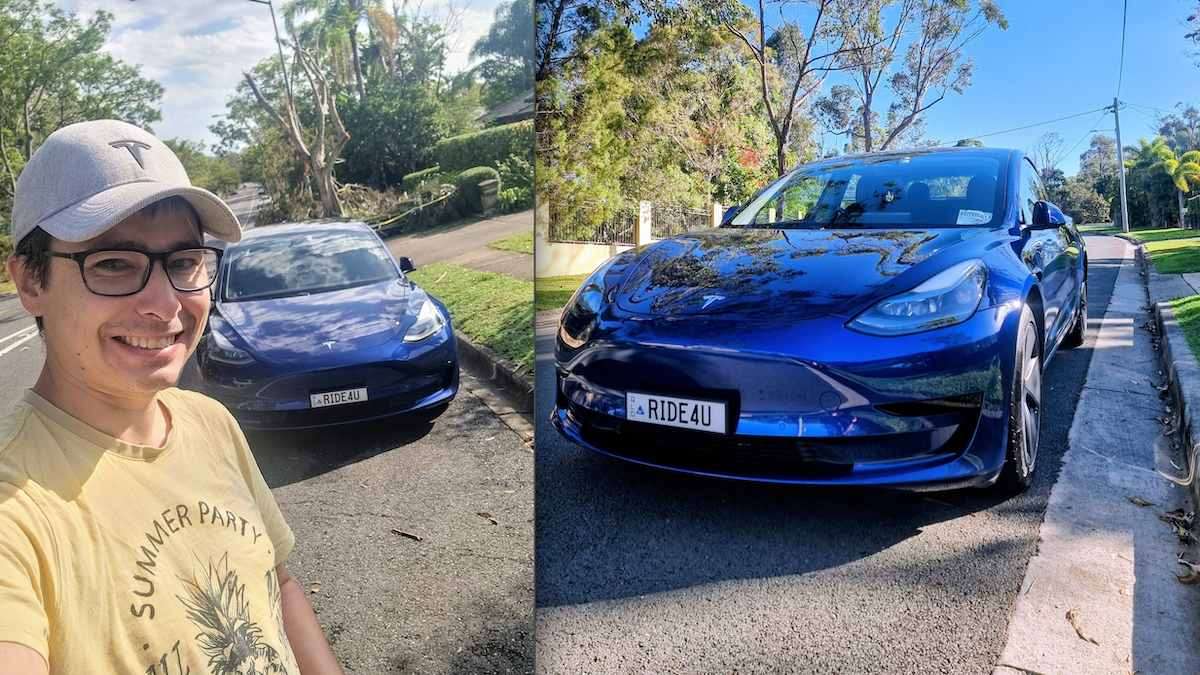

Is 400,000 km (250,000 miles) on a 2021 Tesla Model 3 the limit?
I've been covering Tesla and the rapidly evolving EV space for years, and one question dominates my inbox and my social feeds: How long will the battery really last? People worry that their expensive electric vehicle will turn into a paperweight the moment the odometer rolls past 100,000 miles. It's a legitimate fear, fueled by misunderstanding and the ghosts of old laptop batteries.
But today, I have a story that serves as the perfect answer to that question. It's about Nathan Merritt, an owner in Australia who just pushed his 2021 Tesla Model 3 RWD SR+—which he affectionately calls "Mr. Sparkle"—past a staggering 400,000 kilometers, or 250,000 miles.
Nathan Merritt on the Tesla Owners Australia Facebook page says,
"I have 400,000km on my 2021 Tesla Model 3 RWD SR+, and it's been an absolutely amazing ownership journey! It's also my first EV!"
"I call it Mr.Sparkle, and this Model 3 carries on to amaze the wider community with the longevity of these amazing cars. For those wondering how the battery is doing, it has 88% retained capacity with 375km (233 miles) @100% SoC."
The 250,000-Mile Tesla: Why I Trust EV Longevity More Than Ever
This is a real-world data point that should radically shift the conversation around electric vehicle durability.
For my loyal readers seeking meaningful content with complete solutions, Nathan's experience provides the practical takeaway you need: EVs are built for the long haul.
The 250,000-Mile Benchmark: Debunking the Battery Myth
Nathan's achievement of 250,000 miles in a relatively short timeframe is a benchmark that few gasoline cars reach without major, costly powertrain intervention. But for Nathan's Model 3, the journey has been "absolutely amazing," according to Nathan's post on the Tesla Owners Australia Facebook page.
This longevity directly addresses the central anxiety for prospective EV buyers: the expected lifespan of a Tesla Model 3 high-mileage battery.
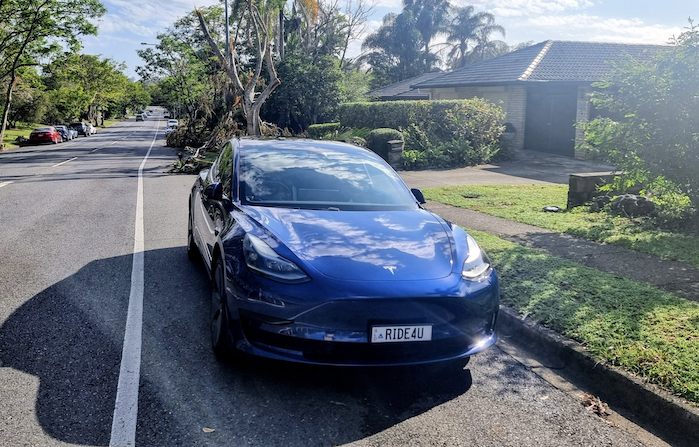
The fact that a 2021 Standard Range Plus model is still performing daily duties after nearly half a million kilometers proves that Tesla's engineering and thermal management systems are vastly superior to what critics fear. We've seen similar data in our own reporting, where internal Tesla figures suggest Model S and Model X batteries generally retain around 90 percent capacity after 200,000 miles, but seeing a newer Model 3 surpass that range is truly definitive.
When we consider the aggressive mileage—this vehicle has been driven like a taxi or commercial fleet unit—it shows that the cycle life (charging and discharging) of modern battery technology is strong. Nathan's car is likely an LFP (Lithium Iron Phosphate) variant, which has a chemistry engineered for high cycle counts, trading a bit of energy density for superior long-term durability and safety.
This is why the conversation about Tesla Model 3 battery degradation after 250,000 miles is so encouraging—it's proving that the car's most expensive component is often the most durable.
Analyzing 88% Retention: A Deep Dive into Real-World Metrics
Now, let's talk numbers: 88% retained capacity, delivering 375 km (233 miles) on a 100% state-of-charge (SoC). This is the key metric that separates facts from fear-mongering.
Why is 88% retention at 250,000 miles so impressive?
The Degradation Curve: Battery degradation is not linear. Nearly all EVs experience the most significant capacity loss in the first 10% or 20,000 miles (what we call the "initial drop-off") and then the rate of loss tapers off dramatically. Nathan's car has already gone through that phase and stabilized. His 12% total loss over 250,000 miles is an astonishingly low annual and per-mile degradation rate, reinforcing the long-term reliability of 2021 Tesla Model 3 SR+ vehicles.
LFP vs. NMC: As a 2021 SR+ model, Nathan's car is equipped with LFP cells. The LFP chemistry actually requires regular 100% charging to calibrate the Battery Management System (BMS) properly. Unlike the higher-density Nickel-based batteries (NMC/NCA) used in Long Range and Performance models, LFP is far less stressed at high states of charge.
This means Nathan was likely following Tesla's recommended charging protocol for his specific vehicle, which is a crucial lesson for all owners.
Nathan's experience offers powerful real-world Tesla Model 3 battery capacity retention data at high mileage, confirming that the vehicle remains highly usable and efficient, with minimal impact on daily life.
The Charging Playbook for Longevity
For my readers, Nathan's story is a mandate for proactive care. You want to know how to maximize the battery life of a Tesla Model 3 RWD SR+? Here are three recommendations, derived from countless high-mileage owner reports, including my own recent reporting on a 200,000-mile Model 3:
- Know Your Chemistry: If you own a Standard Range model with the LFP battery (typically designated by the ability to charge to 100% daily without warning), follow Nathan's likely strategy: charge to 100% at least once a week for BMS calibration. If you own an NMC/NCA Long Range or Performance model, keep your daily charge limit between 80-90% and only charge to 100% right before a long journey.
- Minimize Supercharging, but Don't Fear It: Nathan's exceptional results likely come from relying primarily on Level 2 (AC) home charging. Slower charging generates less heat and places less stress on the cells. Reserve Supercharging for travel. The argument that Supercharging destroys the battery is often overblown, as we discussed in a previous report, but minimizing its frequent use still aligns with the best advice for maintaining an electric vehicle battery for long-distance driving.
- Mind the Temperature: Both extreme heat and extreme cold accelerate degradation. Park in the shade in the summer and precondition your battery in the winter. Tesla's thermal management does the heavy lifting, but minimizing its workload saves battery life in the long run.
These steps directly translate into long-term savings, dramatically lowering the cost of ownership for the Model 3 at 400,000 kilometers compared to an ICE counterpart, which would have required multiple engine or transmission overhauls by now.
What the Community is Saying
While Nathan's battery health figure is excellent, the broader EV community conversation around high mileage often shifts to other factors. On Reddit and various owner forums, users nearing or surpassing the 200,000-mile mark have noted:
- Suspension Concerns: The consensus is that while the drivetrain is rock solid, traditional wear-and-tear items become the real headache. Control arms, struts, and bushings are frequently cited as the primary non-battery repairs needed after 150,000 miles.
- Cost vs. ICE: Most owners agree that even if a battery replacement were necessary out of warranty (a rare event that usually involves a manufacturing defect rather than pure degradation), the cumulative savings from avoiding fuel, oil changes, and complex ICE maintenance still make the EV a winner over the long term.
- The Tapering Effect: The common thread across all high-mileage discussions is that the degradation slows down dramatically after the initial drop. Owners are consistently reporting better-than-expected capacity retention, mirroring Nathan's 88% result.
Conclusion and Your Next Move
Nathan Merritt's "Mr. Sparkle" Model 3 is a powerful testimonial, not just for Tesla, but for the entire EV industry. At 250,000 miles, an 88% healthy battery delivers exceptional performance and proves that the original pack can far outlast most of the vehicle's other components.
However, the most significant variable in long-term EV health is the owner's habits, especially charging and climate exposure, rather than miles driven.
Now, I want to hear from you.
Given Nathan's confirmed 88% battery capacity after 250,000 miles, what is the single biggest non-battery maintenance item you would budget for when buying a high-mileage EV today? Click the red Add New Comment link below and let us know.
The content in the video below was used to support this article: Tesla Model 3 Battery Degradation Update | 27,000 Miles, and How I May Have Recovered My Range. The video discusses an owner's early experience with battery degradation and range recovery methods, providing context for the high-mileage results achieved by Nathan Merritt.
I'm Denis Flierl, a Senior Torque News Reporter since 2012, bringing over 30 years of automotive expertise to every story. My career began with a consulting role for every major car brand, followed by years as a freelance journalist test-driving new vehicles—equipping me with a wealth of insider knowledge. I specialize in delivering the latest auto news, sharing compelling owner stories, and providing expert, up-to-date analysis to keep you fully informed.
Follow me on X @DenisFlierl, @WorldsCoolestRides, Facebook, and Instagram
Photo credit: Denis Flierl via Nathan Merritt
Set Torque News as Preferred Source on Google
Follow us today...