

It was the perfect 2,500-mile road trip, until a 'loud beep' in the middle of the night revealed a terrifying flaw in Toyota’s most advanced safety tech.
Imagine this: You’re cruising comfortably at 85 mph on a cross-country haul, the family is asleep, and the Tundra’s massage seats have you feeling like you’re in a luxury lounge, until a piercing, high-pitched alarm shatters the silence. Your modified rig just hit a technical "dead end" in the middle of the night because your lift kit and the truck’s sophisticated brain are suddenly at war.
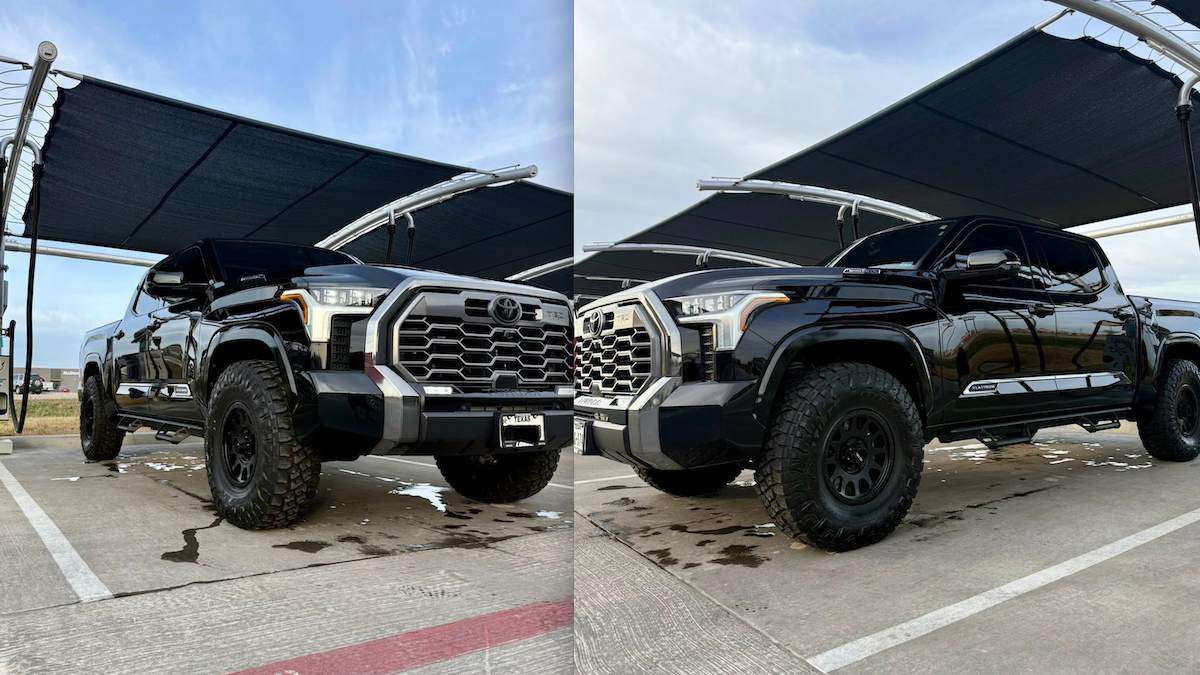
It’s the exact scenario Sean Macalik encountered during his 2,500-mile journey, leading him to post this warning to the 2023-2026 Toyota Tundra Owners Facebook group:
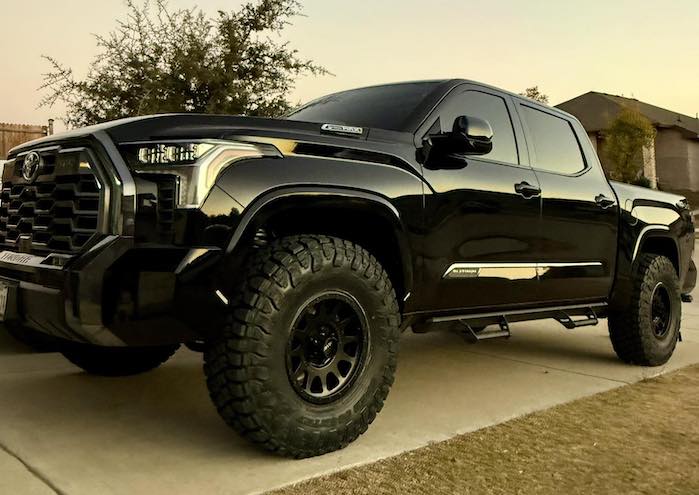
“Much needed bath after a 2,500 mile trip to the south east coast. Notes from the trip… definitely glad we took the Tundra(‘26) over the Sequoia (‘24)… massage seats were clutch. You definitely need to recalibrate the front radar if you plan to use the cruise control after a lift. The loud beep in the middle of the night when it malfunctions will keep you on your toes. And there was plenty of room for the wife, kid, and dog in the back. The truck's retractable aluminum roll-up bed cover seals up nicely, with no leaks in the rain. And the Toyo open country R/T Pros are super quiet and comfortable even with the 37s cruising at 85+.”
The "Glass Jaw" of the 2026 Tundra
I’ve covered Toyota trucks for three decades, and I’ve seen owners modify their rigs since the first T100 hit the dirt. But the 2026 Tundra is a different animal altogether. While its new massage seats make it the ultimate road-trip warrior, the sophisticated Toyota Safety Sense (TSS) 3.5+ suite has a "glass jaw." Sean just found out the hard way that a simple 3-inch lift doesn't just change the look, it "bricks" the very tech meant to keep you alive.
Verified experts at Toyota’s Technical Information System emphasize that even a single degree of sensor misalignment can negatively affect system performance, causing the radar to lose its "eyes" on the road (Toyota Safety System Calibration Guide). I have documented these technical hurdles extensively, particularly how the high-pressure environment of new twin-turbo powertrains is pushing even "fixed" components to their absolute limit, Torque News - Tundra Reliability Report.
Why This Failed for Us
The millimeter-wave radar in the 2026 Tundra is factory-calibrated to a specific height; once you lift the truck and switch to 37s, the sensor "sees" the road at an impossible angle, triggering the fail-safe "nightmare" beep Sean described. Technical bulletins from the NHTSA confirm that changing vehicle height or tilt may prevent sensors from working properly, leading to erratic behavior in pre-collision systems NHTSA Bulletin 10247828.
I have tracked this transition from the tried-and-true V8 to the high-output twin-turbo V6, noting that while the power is there, the secondary quality issues are staining the brand's image for long-term owners. My 2023 Tundra 'Kaboom' Story.
Why Your Lift Kit "Bricks" the Radar
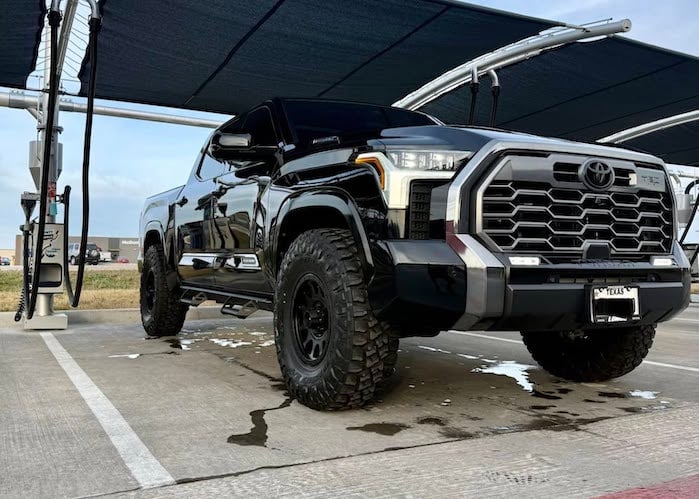
The issue boils down to high-level geometry. The millimeter-wave radar tucked behind the Toyota emblem is the "eyes" of your Dynamic Radar Cruise Control. From the factory, it is precision-calibrated to a specific height and a level horizontal plane.
When you install a lift kit and swap in massive 37-inch Toyo Open Country tires, you aren't just raising the truck; you are tilting the sensor's field of vision. By changing the rake and height, the sensor begins to "see" the asphalt at an impossible angle or loses its reference point for lead vehicles entirely.
This triggers a fail-safe software loop. When the computer can't reconcile the radar data with the vehicle's speed and pitch, it panics. That "loud beep in the middle of the night" Sean described is the system essentially throwing in the towel. At 85 mph, having your safety tech "brick" itself isn't just an inconvenience; it’s a wake-up call that modern trucks are now rolling computers that don't always take kindly to old-school "big truck" mods.
Wait, There's More For Tundra Owners
If you’re planning on going big with 37s, a driveway install isn't enough anymore. To keep your cruise control from becoming a midnight alarm clock, you must perform a professional ADAS (Advanced Driver Assistance Systems) recalibration. This tells the TSS brain your new "zero point" for height, ensuring those massage seats remain the only thing keeping you on your toes during a 2,500-mile haul.
My Personal Take
In my view, the 2026 Toyota Tundra represents a massive leap forward in cabin comfort, yet it demands a higher level of digital respect than the "set it and forget it" trucks of the past. I believe the conflict between old-school modifications and new-school software is the biggest hurdle for the modern enthusiast. When you add a lift kit, you are essentially changing the "zero point" of the truck's central nervous system. I recommend that any owner planning a 2,500-mile road trip or a weekend trail run factor in the cost of a professional ADAS recalibration immediately after their lift is installed. Without it, your safety tech becomes a liability rather than a feature.
What Tundra Owners Are Saying
The community is finding that modern tech requires modern solutions. One user on Reddit noted the severity of the situation, stating, "The sonar will be reading at a higher distance, which will cause it to not recognize smaller/lower vehicles in front of you. This will lead to collisions if you rely on the safety systems," which you can read in the full discussion here.
Another owner highlighted the frustration of seeking a fix, mentioning, "I was just told by the dealer that they can't recalibrate a lifted truck... the front sensors went to shit after the lift," found in this Reddit thread.
Key Takeaways
- Recalibration is Non-Negotiable: A lift kit and 37s will almost certainly trigger sensor malfunctions without professional ADAS tuning.
- Sequoia vs Tundra: While the Sequoia is a monster SUV, the Tundra’s 2026 massage seats and bed utility make it the superior choice for long-distance family hauls.
- The "Loud Beep" Warning: If your radar malfunctions at night, it’s a sign that your sensor pitch is out of spec, not necessarily a hardware failure.
- Quiet 37s Exist: Modern tires like the Toyo Open Country R/T Pro allow for massive looks without the highway hum, provided your tech is aligned to match.
Make It a Priority
The 2026 Tundra is the ultimate road-trip warrior, but its sophisticated safety suite is a delicate balance that can be easily upset by even common modifications. If you want the luxury of the massage seats without the nightmare of a "bricked" safety system, ensure your technical recalibration is as high a priority as your wheel choice.
Tell Us What You Think: Have you faced sensor errors after lifting your new Tundra, or did your dealer handle the recalibration without a hitch? Click the red link below to write your comment and join the community in sharing experiences.
Next Up: I take a closer look at the "Recalled but not Rescued" phenomenon, where 2026 Tundra owners are facing total engine meltdowns despite their VINs being cleared of the initial debris recall. I dig into whether the 2026 Tundra is truly safe or if we are looking at a lingering manufacturing flaw that Toyota has yet to fully acknowledge. Is the 2026 Toyota Tundra Safe? The New Engine Failure Crisis Owners Need to Know
Denis Flierl is a Senior Reporter at Torque News with over 30 years of hands-on experience in the automotive industry. Having served as a professional test driver and industry consultant for major automakers such as Chevrolet, Ford, Toyota, Honda, and Tesla, Denis provides a "boots-on-the-ground" perspective that goes beyond standard reporting. Since joining Torque News in 2012, he has specialized in cutting through market noise to deliver data-backed analysis and real-world owner stories. His work focuses on navigating the transition to EVs and the shifting automotive market.
Have a tip or question for Denis? > Engage with him directly on LinkedIn for industry analysis, or follow his latest updates on X @DenisFlierl and @WorldsCoolestRides. You can also find his latest car features on Facebook and Instagram.
Photo credit: Denis Flierl via Sean Macalik
Set Torque News as Preferred Source on Google
Follow us today...


Comments
RULE: Stay away from lifts…
Permalink
RULE: Stay away from lifts kits.
You're welcome.
Do yourself a huge favor…
Permalink
Do yourself a huge favor. Leave the lift kit on the shelf.
You're welcome.