
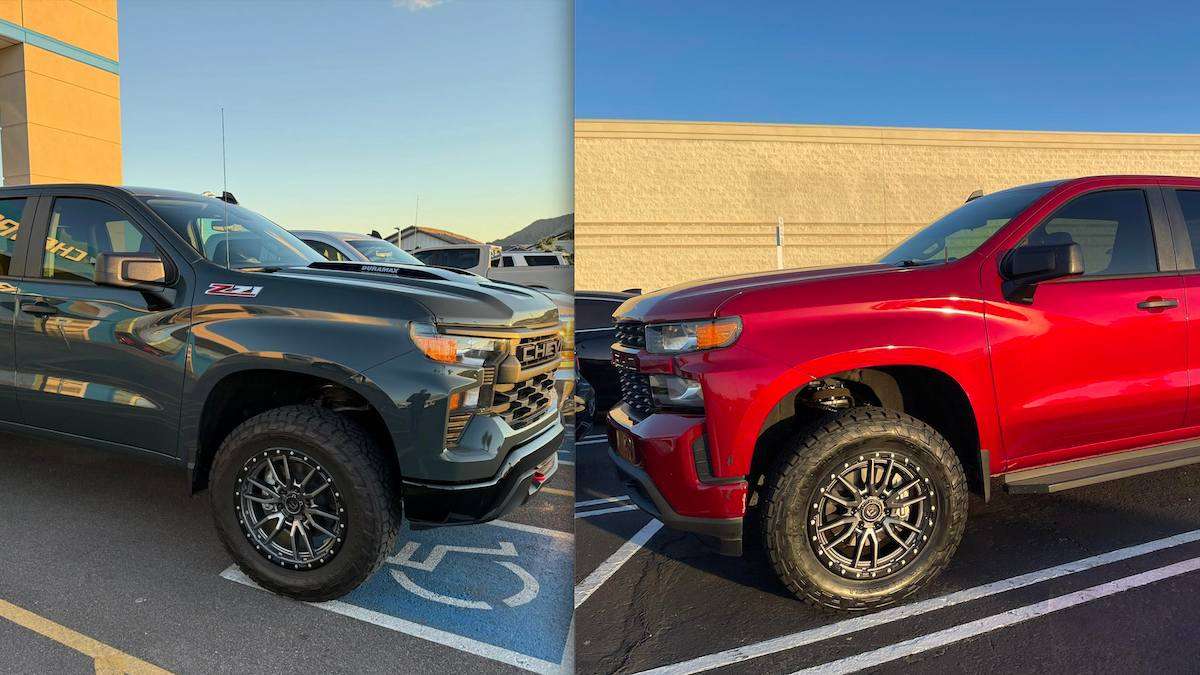

Should you buy a base Chevrolet Silverado 2.7L engine or the 3.0L Duramax diesel? The 3.0L transforms the Silverado from a basic daily driver into a high-torque off-road beast. Which one would you buy?
In my 30-plus years covering the automotive industry, I have seen countless trends come and go, but few debates heat the truck world like the battle over engine displacement.
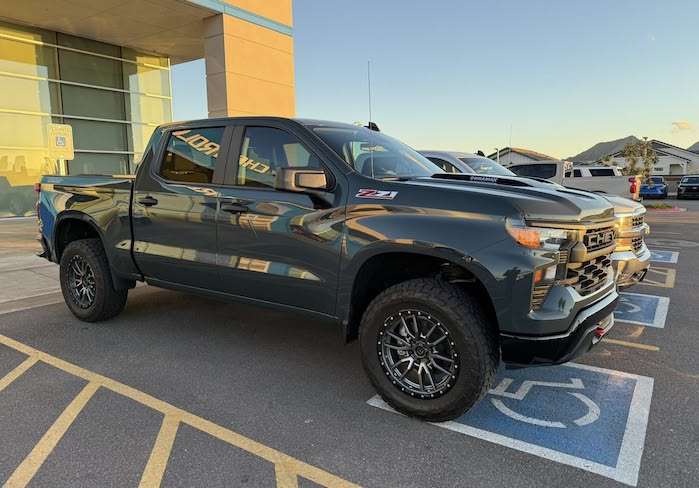
As I was combing through the 2019 - 2026 Chevy Silverado & GMC Sierra Owners Facebook group, I found Bill Rosciszewski, who traded his "wimpy" 2.7L 2WD Silverado for a "muscled up" 3.0L Duramax Trail Boss.
As a Senior Reporter for Torque News, I analyze these owner decisions daily, and this specific swap highlights the drastic difference 495 lb-ft of torque makes in real-world capability.
Bill stated, "I traded my wimpy Chevy Silverado 2WD 2.7L for a muscled-up Trail Boss 3.0L. I'm looking forward to having 4WD and 495 lb ft of torque."
One Man's Opinion?
Is this just one man's opinion, or is it a symptom of a larger realization among truck owners? While the 2.7L TurboMax is a marvel of modern engineering, many traditional truck users are finding that there is simply no replacement for the low-end grunt of a diesel, especially when paired with the off-road capability of the Trail Boss trim.
In this report, I'll break down why this swap is significant, what you gain (and lose) by making the switch, and why that massive torque figure changes everything.
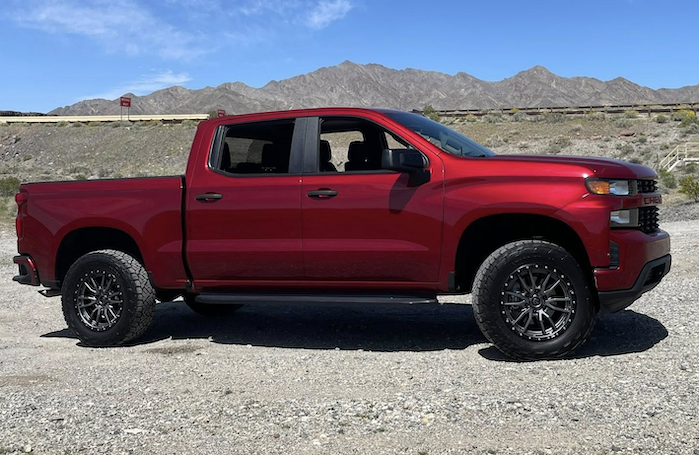
The "Wimpy" Factor: Why Owners Leave the 2.7L
Let's be honest about the 2.7L engine. General Motors has done an incredible job squeezing power out of this four-cylinder unit. It is reliable, efficient for daily driving, and surprisingly capable on paper. However, "on paper" and "towing a boat up a grade" are two very different things. In my experience testing these vehicles, the 2.7L can feel strained when pushed to its limits. It lacks that effortless surge of power that seasoned truck owners expect.
I recently covered a similar situation where an owner felt the 2.7L didn't have the punch they needed. You can read about how a 2024 GMC Sierra 2.7L owner traded it for a 2025 GMC Sierra 5.3L. He says, "I already feel a big difference in power", which highlights that Bill is certainly not alone in his desire for more cylinders or more torque. The "wimpy" feeling Bill describes often comes from the lack of low-end inertia. When you step on the gas in the 2.7L, the transmission has to downshift, and the turbo has to spool before the truck moves with any authority.
Let's Talk Torque
The game-changer here, and the reason Bill calls his new rig "muscled up," is the 3.0L Duramax LZ0 engine. We are talking about 495 lb-ft of torque available at a spectacularly low 1,500 RPM. That is not just a number; it is the force that pushes you back in your seat the moment your foot touches the pedal.
It is crucial to understand that this isn't just about speed. It is about confidence. When you have nearly 500 lb-ft of torque on tap, your truck doesn't hunt for gears on the highway. It holds steady. I have written extensively about owners who grapple with these engine choices.
For instance, in my report, I Just Bought a 2025 GMC Sierra With the 2.7L Engine, I Like the Truck But It's Slow, Now I Wish I Had the 5.3L V8. I detailed the buyer's remorse that often settles in after the initial excitement of a new truck wears off. Bill avoided this long-term regret by cutting his losses and upgrading to the powertrain that actually fits his needs.
Key Takeaways:
- Torque is King: Moving from roughly 430 lb-ft (in the high-output 2.7L) to 495 lb-ft in the Duramax changes the driving dynamic entirely.
- Fuel Efficiency: Real-world testing often shows the 3.0L Duramax exceeding 25 MPG on the highway, something the 2.7L struggles to match when under load.
- Resale Value: Diesel trucks historically hold their value better than their gas counterparts, especially small-displacement gas engines in full-size trucks.
The Trail Boss Advantage
Bill didn't just upgrade the engine; he upgraded the capability. Moving from a 2WD configuration to the 4WD Trail Boss is a massive leap. The Trail Boss includes a 2-inch factory lift, Rancho monotube shocks, skid plates, and aggressive Goodyear Wrangler DuraTrac tires.
I have seen many owners make similar jumps, seeking that perfect balance of daily drivability and weekend-warrior capability. The Trail Boss trim is the sweet spot for value. I discussed this value proposition in my article, "I Traded My Ford F-150 For This 2025 Chevy Silverado Z71 Trail Boss, I've Heard Lots of Negative About New Chevys, But I Got a Great Deal," where another owner found the Trail Boss's feature set irresistible despite competitive options.
For Bill, having 4WD means he is no longer limited to pavement. The G80 automatic locking rear differential, standard on the Trail Boss, combined with that diesel torque, means he can crawl over obstacles at idle speed without ever touching the throttle. That is the "muscle" he was looking for.
Is the Chevy Silverado 3.0L Duramax Reliable?
Of course, no truck is perfect. As an expert who looks at these vehicles with a critical eye, modern diesels come with their own baggage. You have Diesel Exhaust Fluid (DEF) to manage, and the complexity of emissions systems is always a concern for long-term ownership.
However, the second generation of the 3.0L Duramax (the LZ0) has addressed many of the LM2's early concerns. The cooling system has been upgraded, and the turbocharger tuning has been refined.
Yet, You Must Stay Vigilant
I have also documented issues that owners face, such as in my story: My 2025 Chevy Silverado Trail Boss 231 Miles In, Lost Power Steering and Brakes, the Dealer Replaced the PS Unit Twice. While Bill's engine upgrade is solid, he should keep a close eye on the electrical and steering systems, which are common across the Silverado lineup.
What 3.0L Duramax Owners Are Saying
To give you a broader perspective, I searched for feedback from other owners who have lived with the 3.0L Duramax.
- On Reddit: One user, CBR85, shared their experience: "I love my 3.0. I get almost 30 MPG on the highway. Fuel is a bit more, but the added MPG makes up for it. It tows tremendously (30-foot travel trailer)."
- On YouTube: The channel BanditDave's Toy Chest offered this insight: "My wife and I both drive our own 3.0L Duramax Silverados... these things are the quietest diesels I've owned. Both of our trucks have had no measurable oil loss between 5000-mile changes."
Do You Need Off-Road Performance?
The combination of the diesel engine and the Trail Boss suspension is arguably the best all-around setup GM offers right now. You get the suspension travel to handle washboard roads and the range to get you deep into the backcountry without worrying about your fuel gauge. The 2.7L Turbo is a fine engine for a fleet truck or a city commuter, but for a truck that looks and acts the part of a rugged adventurer, the 3.0L Duramax is the superior choice.
Wrapping It Up
Bill Rosciszewski made the right call. In my 30 years of analyzing the auto industry, I have rarely seen an owner regret moving up to a diesel engine in a half-ton truck, provided they drive it enough to keep the emissions systems happy. The trade-off in initial cost is almost always recouped in resale value and fuel economy, but the real return on investment is the smile on your face when you feel that 495 lb-ft of torque launch you off the line. The 2.7L has its place, but the "wimpy" label often sticks because it tries to be a truck engine with a car's displacement. The 3.0L Duramax doesn't have to try; it just is.
We Want To Hear From You
What is your experience with the 2.7L and the 3.0L Duramax? Do you agree with Bill that the 2.7L is "wimpy," or do you think modern turbo-fours are enough for the average truck owner? Would you pay the premium for the 3.0L Duramax? Let us know in the red Add New Comment link below.
I'm Denis Flierl, a Senior Torque News Reporter since 2012, bringing over 30 years of automotive expertise to every story. My career began with a consulting role with every major car brand, followed by years as a freelance journalist, test-driving new vehicles, which equipped me with a wealth of insider knowledge. I specialize in delivering the latest auto news, sharing compelling owner stories, and providing expert, up-to-date analysis to keep you fully informed.
Follow me on X @DenisFlierl, @WorldsCoolestRides, Facebook, Instagram and LinkedIn
Photo credit: Denis Flierl via Bill Rosciszewski
Set Torque News as Preferred Source on Google
Follow us today...







Comments
I'm an owner of a 2022 trail…
Permalink
I'm an owner of a 2022 trail boss 2.7l for the past 3 years. I use my truck to tow a 25 foot travel trailer , 22 foot boat and small utility trailer.
My combined weight with travel trailer and all of our gear comes in at 11,357 pounds. I'm able to maintain 65 mph on the interstate with ease and turn10mpg. The all around MPG is the most disappointing side of this combination.
Over the past 36,000 miles I've averaged 17.5 MPG. With my best MPG 19.89 while traveling in west Texas.
This truck have been taken on two road trips in Colorado, New Mexico and through out southern Texas with ease all while maintaining 17-19 MPG
During a lengthy off road excursion through Big Bend National Park the 2.7 really shined with lots of low end toque making navigating trails easy with the low revs and smooth power delivery.
The notion of this engine performing better with Super, 93, HighTest, or Ethel is only a myth.
The mileage and performance never changes with 93 or 87.
While owning this truck I changed my driving style to better take advantage of the toque curve of the engine. The engine toque is so low you don't need to bring up the revs to take advance of the engines power delivery.
Most people describe their automotive performance like tax returns and penis size. They have more than the next guy.
I went the opposite way (6.2…
Permalink
I went the opposite way (6.2 back to 3.0 diesel) and love my decision. Very quiet, pulls my camper as easy as the 6.2 and left the lifter problems in the rear view mirror. Love the pairing with the 10 speed tranny. Mileage is great, 30+ on easy drives and 26-28 all the time on the highway. Happy I made the switch
I have owned a 2025…
Permalink
I have owned a 2025 Silverado 3.0 diesel now for just over a year and it now has a little over 12,000 miles. Not one problem, two oil changes and I consistently get 34+ MPG driving into work daily. I do get less MPG on the ride home. Higher elevation gets me usually 26 or so MPG. I've even gotten over 40 MPG on numerous trips to work...love this truck. I wouldn't buy the 6.2 as I need better than 15 MPG...