
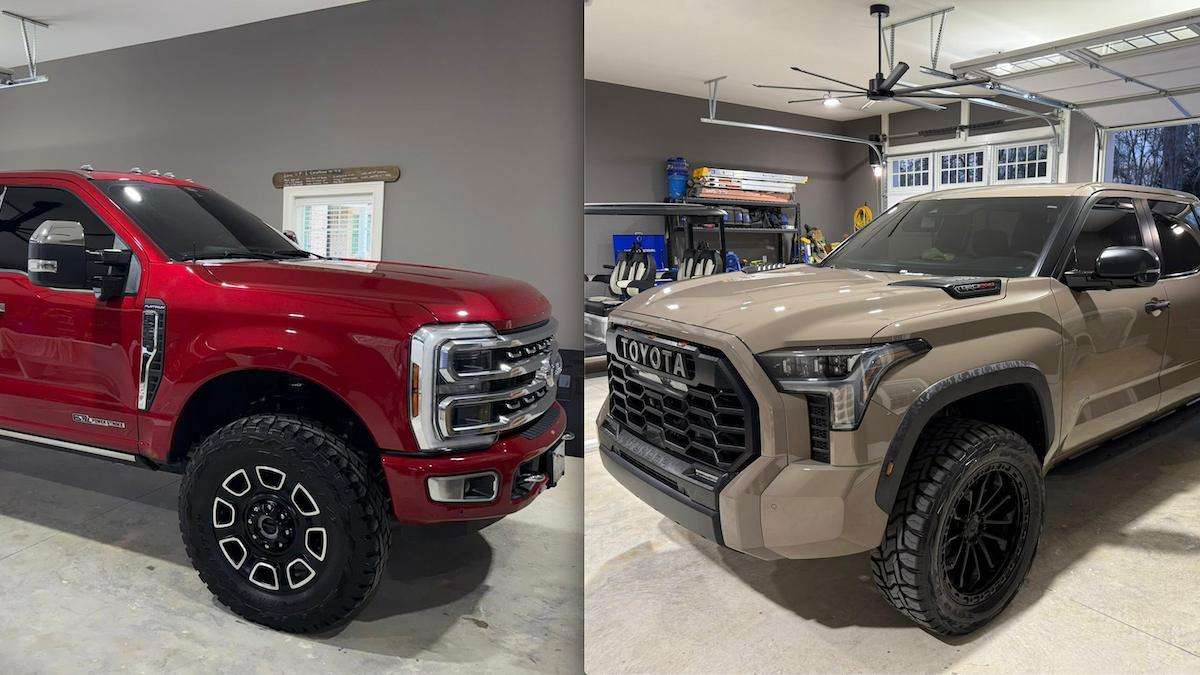

From heavy-duty hauling to high-tech hybrid?
Kelsey traded her Ford F-250 for a 2026 Toyota Tundra, and the results are surprising. Is the "legendary" reliability worth losing that diesel power and storage? Here are 14 things you need to know first.
She traded her heavy-duty Ford for a 2026 Tundra just to "try something different," but is the better ride worth the storage sacrifice?
Imagine this: you’ve spent a decade behind the wheel of a heavy-duty workhorse that never missed a beat, yet the itch for something fresh and modern finally becomes too strong to ignore. You trade the raw, unyielding power of a Super Duty for the sleek, tech-forward promise of a 2026 Tundra, only to find yourself second-guessing every storage cubby and fuel stop in those first few miles.
Kelsey R Thomas on the 2023-2026 Toyota Tundra Owners Facebook page says:
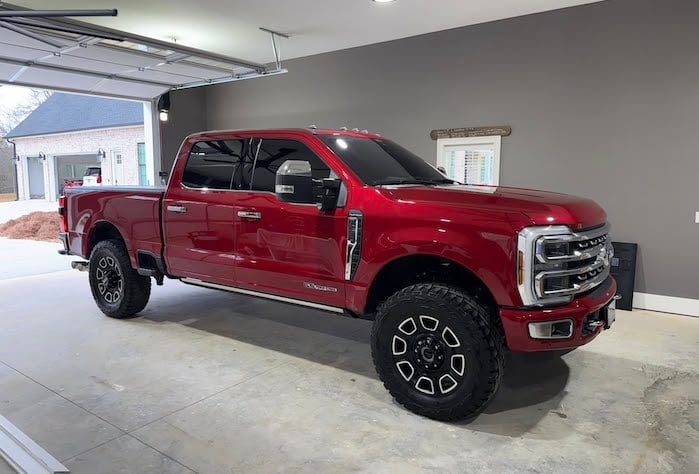
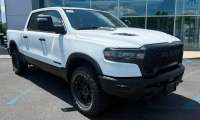
“I made the switch! I’ve owned quite a few Ford trucks, and I had zero issues with the F-250, but I wanted to try something different. I’ve spent countless hours researching the next truck I wanted (which I thought would be the F-150), and it just didn’t seem right. I’ve only put a few miles on the truck, so I don’t have a strong opinion 100% but here are a few points that stick good or bad.”
IMAGE
Pros:
- Easier to park
- Ride quality, of course, is better coming from a super duty
- Full sliding rear window
- Seats are shockingly comfortable
- Plenty of low-end power
- Holds value
- The sound system is decent compared to the B&O
Cons:
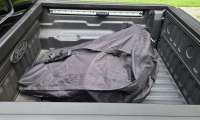
- I lost a bunch of storage (underseat, beside the driver's seat/ passenger)
- No head-up display (TRD model)
- Power telescopic steering wheel
- Gas mileage will be determined, but it doesn’t seem great.
- Don’t care for the Toyota app
- Lacks interior design, but not terrible
- Maybe make a diesel version
Why Tundra Transitions are Trending
As a Senior Reporter at Torque News with over 30 years in the automotive industry, I’ve watched the "Big Three" domestic dominance face a slow, steady challenge from Toyota. But Kelsey’s move is unique. Usually, buyers downsize from an F-150. Jumping ship from a Ford F-250 Super Duty to a 2026 Toyota Tundra is a radical shift in philosophy. You are moving from a truck built for extreme industrial stress to a vehicle engineered for "premium versatility."
Where's the Diesel?
Kelsey mentioned she "wanted to try something different," and she certainly found it. The F-250’s leaf-spring stiffness is legendary, but so is its jarring ride when the bed is empty. The Tundra’s move to a coil-spring rear suspension (and available air bags) makes the 2026 Toyota Tundra's ride quality feel like that of a luxury SUV in comparison. However, the lack of a diesel option is a common lament. While the i-FORCE MAX hybrid delivers incredible low-end torque, it doesn't offer the same "chugging" confidence of a Power Stroke.
I recently explored a similar sentiment in my report: "I Just Traded My 2021 Ford F-150 King Ranch For This 2026 Toyota Tundra, I'm a First-Time Toyota Owner, I Love It So Far, But Now I'm Told There's a Tundra Engine Recall." This anxiety is real for newcomers. Transitioning from a platform with "zero issues" to one currently under the microscope for engine manufacturing debris requires a leap of faith or at least a very good warranty.
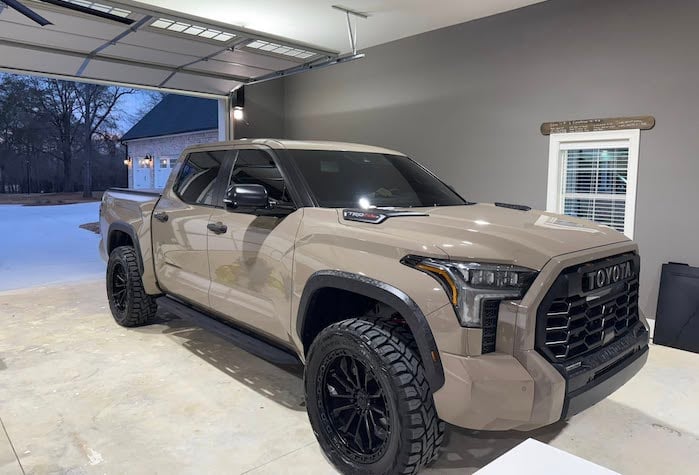
"I lost a bunch of storage."
One of the most frequent complaints about the new Toyota Tundra interior is the loss of utility. Kelsey noted she "lost a bunch of storage," and she is spot on. In the F-250, the cabin is a mobile office. Toyota’s decision to place the hybrid battery under the rear seats in many models effectively kills under-seat storage, a move that frustrates long-time truck owners who carry tools, gear, or emergency kits.
Furthermore, the Toyota Tundra vs Ford F-250 comparison often highlights a gap in tech accessibility. While the Tundra’s 14-inch screen is a marvel, missing features like a power telescopic steering wheel or a Head-Up Display on mid-tier TRD trims can feel like a step backward when you are paying 2026 prices.
Reliability: The Tundra’s Ultimate Selling Point?
Toyota’s biggest hook is resale value. Even with the recent V6 engine recalls, the market still treats a Tundra like gold. In my 30 years of covering these shifts, I’ve seen that Ford owners often leave due to "death by a thousand cuts,” minor electrical gremlins, or transmission stutters.
I discussed this loss of brand loyalty in another piece: Ford F-150 Owner Says He's “Done With Ford,” at 83K Miles With Too Many Issues. When a truck becomes a liability, the Toyota badge looks like a safe harbor. But as Kelsey is finding out, that harbor has smaller closets.
Key Takeaways for Potential Switchers
- Parking and Maneuverability: If you are tired of three-point turns in grocery store lots, the Tundra is a revelation.
- The Storage Trade-off: Be prepared to buy bed storage or a tonneau cover. You will lose the "hidden" cabin spots you loved in the Ford.
- Fuel Economy Reality Check: Don't expect miracles. The hybrid system is designed for power, not Prius-level efficiency.
- Initial Quality Concerns: Keep a close eye on your engine health during the first 5,000 miles to ensure you aren't affected by lingering manufacturing issues.
For those concerned about the long-term health of their new purchase, I highly recommend reading: I Took My '25 Toyota Tundra For Its First Oil Change at 1,500 Miles, and the Dealer Tried Hard to Convince Me To Do Them At 10K. My advice has always been: ignore the 10,000-mile interval if you want that truck to last 20 years.
What Tundra and F-250 Owners Are Saying
The community is divided on whether downsizing to a half-ton Toyota is a brilliant move or a logistical mistake.
On Towing Confidence: "I live in the Rocky Mountains and had too many white knuckle moments in the Tundra... if you plan to tow over 7,000 lbs, the F-250 is a no-brainer." u/basura_trash on Reddit
On Comfort vs. Capability: "The F-250 is a terrible daily driver and misusing it in this manner will be costly... but the Tundra interior feels like it went cheap on build quality compared to previous generations." u/PuzzleheadedCause483 on Reddit
On Reliability Loyalty: "Toyota will fix your vehicle if it needs to be fixed. I just bought a 2026, and I absolutely love this thing. Pick your poison, they all have issues." u/Front_Airline9135 on Reddit
The True Test Is Yet To Come
Switching from a Ford F-250 to a 2026 Toyota Tundra is a move toward refinement at the expense of raw utility. You gain a truck that is easier to live with every day, but you lose the "over-engineered" peace of mind that comes with a heavy-duty frame and massive interior storage. For Kelsey, the "shocking comfort" and parking ease are winning for now, but the true test will be how that twin-turbo V6 handles the long-haul miles she was used to putting on her Ford.
What Would You Do?
Would you trade the "Built Ford Tough" durability of a Super Duty for the modern comfort and resale value of a new Tundra? Click the red link below to write your comment and join the community in sharing experiences.
Next Up: Is the Tundra's new engine finally "safe" from the debris issues of the past? Check out my deep dive here: 2023 Toyota Tundra Owner 44K In, Heard a Loud Bang and the Back Tires Locked Up.
Denis Flierl is a Senior Reporter at Torque News with over 30 years of hands-on experience in the automotive industry. Having served as a professional test driver and industry consultant for major automakers such as Chevrolet, Ford, Toyota, Honda, and Tesla, Denis provides a "boots-on-the-ground" perspective that goes beyond standard reporting. Since joining Torque News in 2012, he has specialized in cutting through market noise to deliver data-backed analysis and real-world owner stories. His work focuses on navigating the transition to EVs and the shifting automotive market.
Have a tip or question for Denis? > Engage with him directly on LinkedIn for industry analysis, or follow his latest updates on X @DenisFlierl and @WorldsCoolestRides. You can also find his latest car features on Facebook and Instagram.
Photo credit: Denis Flierl via Kelsey R Thomas
Set Torque News as Preferred Source on Google
Follow us today...


Comments
I have had buyers remorse…
Permalink
I have had buyers remorse like that before. Judging by some other details in the images, it doesn't look like it's going to be that damaging of a decision for the owner. Luckily I was able to trade out after 6 months for an $800 gain but best thing to do is try before you buy if such a radically different vehicle class from what you're used to.
What a mistake!
Permalink
What a mistake!
Never will I leave ford for…
Permalink
Never will I leave ford for Toyota, my 2013 f150 5.0 has 195k and has been completely trouble free, and it can tow, and pass when needed. It still runs very strong and I'll keep it indefinitely, at this point it will be cheaper to replace an engine or transmission or even both before I'd buy a newer truck, in fact 2013 is almost too new. Cars and trucks today are built for obsolescence, meant to go 100k or so and be thrown away. No thanks I'll stick to the older stuff that was actually built well.
I've read toyota wont take…
Permalink
I've read toyota wont take these trucks back on a trade in. That says it all. They know these
motors are junk!
Tundras are trash.
Permalink
Tundras are trash.
No mistake that half-ton…
Permalink
No mistake that half-ton trucks are comfortable and easier to maneuver no matter which one you buy. I’ve owned an F 250 with a 6.7 Powerstroke for 12 years. Extremely reliable vehicle with all of the power and creature comforts you could ask for. As for being a horrible daily driver, I don’t agree with that. A little harder to maneuver, yes. But if you need a real truck that will do anything you want, the Super Duty is the way to go! I love my F250. Would definitely buy another one.