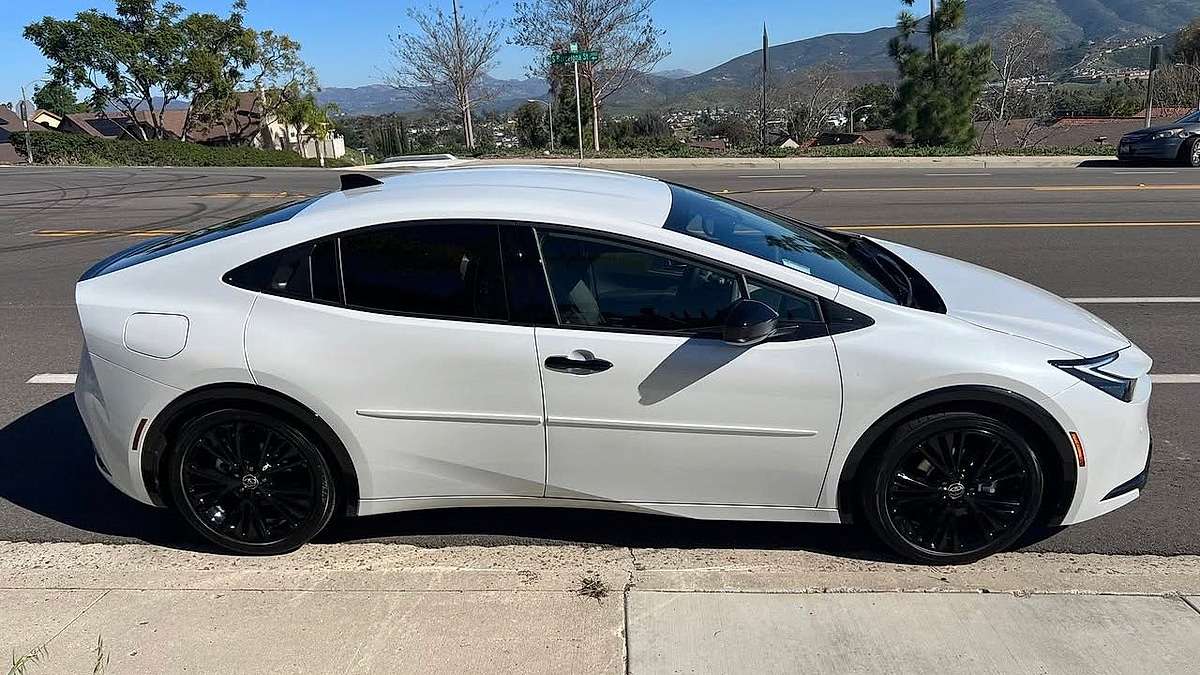

The 2026 Toyota Prius is proving to be more than just a hybrid; it’s a tool for energy independence. In an era of record-high energy costs, one owner in San Diego has cracked the code by integrating home solar and clever charging hacks to achieve 1,200 miles on a single 7.5-gallon fill-up.
This report investigates how the 5th Gen Prius outperforms factory expectations, why the dashboard caps at 99.9 MPG, and how savvy owners are bypassing California's high gas prices. We explore the "Who, How, and Why" behind this 160 MPG reality to provide insights for every hybrid driver.
1,200 Miles, 7 Gallons: How a San Diego Prius Owner Defies the Pump
I have spent 30 years tracking the evolution of the Toyota hybrid system, and I can tell you that what we are seeing with the 2026 Toyota Prius 5th Gen is a fundamental shift in how owners interact with their vehicles. A San Diego owner recently reported a staggering 1,200 miles on just 7.5 gallons of gas, equating to a monthly fuel bill of only $45. This isn't just a lucky commute; it's a calculated win against California’s soaring energy prices.
As I recently documented in my report, a 2024 Toyota Prius Prime owner discovered that sporty acceleration simply cannot compensate for the dead 12-volt battery and winter power-loss issues now plaguing the newest generation. You can read my full report on Prius reliability here. Yet, for those who master the charging ecosystem, the rewards are immense. T.A. Geairn from San Diego, California, shared his experience on the Toyota Prius 5th Gen Club Facebook page:
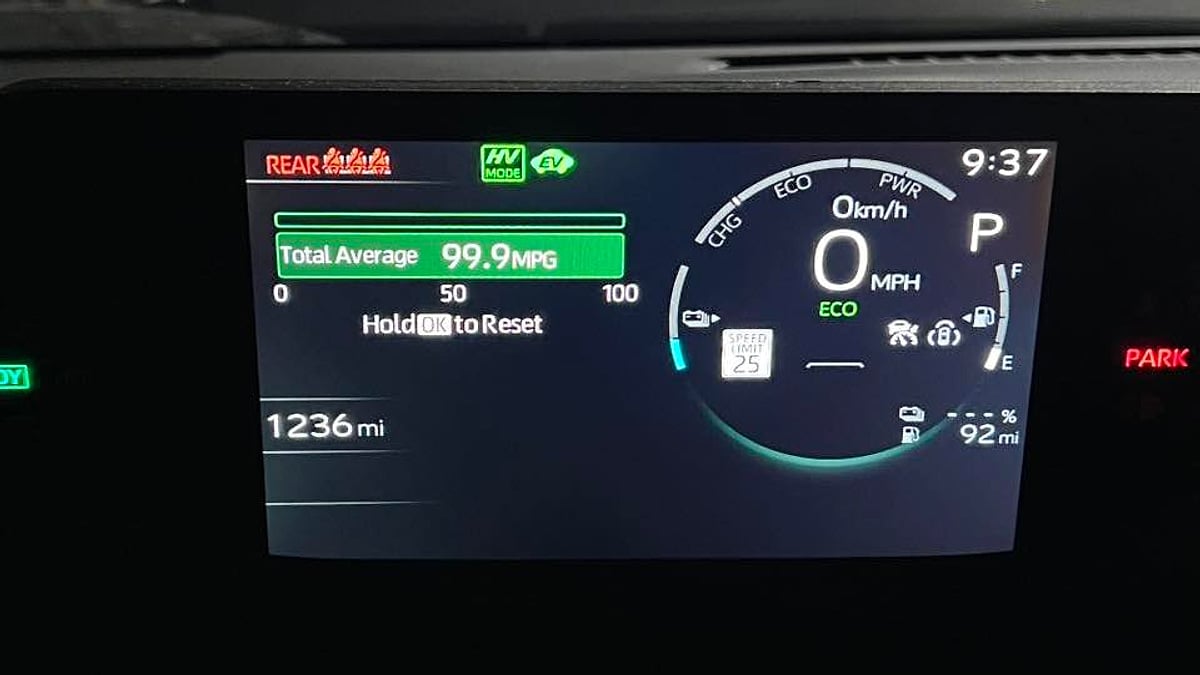
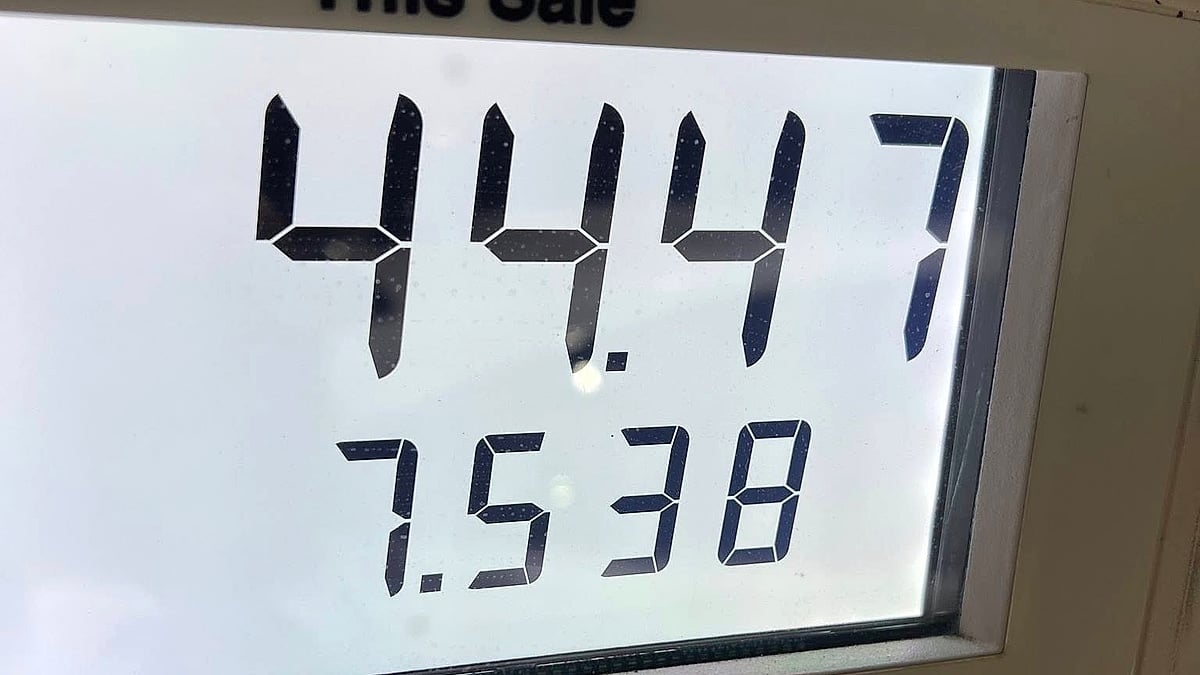
“Our first fill-up after bringing it home a month ago. 1,200 miles, 7.5 gallons, $45 a month in gas, yes…California has high gas prices, and they are just getting higher. Averaging 160 mpg, plugging it in every night at a cost of 75 cents a charge. We will take it. I guess the dash only goes up to 99.9. Oh, yes, we have solar on the house, so the charging is basically free. We have it scheduled to charge from 12 to 3 in the morning with a 220 splitter from our dryer.”
Who, How, and Why?
- Who: T.A. Geairn, a San Diego-based owner utilizing the Prius Prime's plug-in capabilities in a high-cost energy market.
- How: By combining home solar panels with a 220V dryer splitter to charge during off-peak hours (12 AM to 3 AM), reducing the cost per charge to nearly zero.
- Why: To maximize the "EV Mode" utility of the 5th Gen powertrain, effectively staying within the battery's range for daily commutes and using the gasoline engine only as a backup.
From My View: The 160 MPG Myth vs. Reality
From my three decades of auto testing, I know that when an owner claims "160 MPG," they aren't literally getting that from the combustion engine alone. They are living in the "efficiency sweet spot" where the gas engine rarely turns on. My own engineering evaluations of the 5th-generation Toyota Prius confirm a significant efficiency delta by wheel diameter, with the 17-inch alloy configuration yielding higher gains than the 19-inch variants, detailed in my efficiency analysis here.
However, the hardware has its limits. Outside experts at Edmunds have noted that while the car is "outstanding," the high, forward instrument cluster offers a unique view but can be polarizing for some drivers. You can find their full 2026 Prius Plug-In review here. This leads to the most common question I get:
"Why does my dash stop at 99.9 MPG?”
If you are seeing a constant 99.9 MPG on your 2026 Prius display, you haven't broken the car; you’ve simply outrun the software. Over my 30 years in the industry, I’ve seen manufacturers struggle to display "infinite" efficiency. Toyota’s engineers programmed the 5th Gen Prius multi-information display (MID) to display a three-digit value with a decimal point. Because the system is designed to calculate a rolling average of fuel consumed over distance traveled, once your fuel consumption drops to a negligible amount, usually because you are staying within your EV range, the math dictates a number far north of 100.
The 99.9 cap is essentially a digital "ceiling" inherited from older software architectures. In reality, as T.A. Geairn’s 160 MPG average proves, the mechanical efficiency of the vehicle is far higher than the dash can communicate. Toyota likely keeps this cap to prevent driver distraction or "score-chasing" that could lead to unsafe hypermiling. To find your true efficiency, you have to divide your total trip miles by the actual gallons pumped at the station; the car is doing the work, it just doesn't have the "room" on the screen to brag about it.
Field Observations from Owner Communities
In a recent technical discussion on r/PriusPrime, several owners noted that the MPG behavior is strange when fuel usage approaches zero. One owner highlighted the software limitation, mentioning, "Why on a car so capable of high MPG would they cap the display at 99.9? The first year Gen 4 Prime was limited to 199.9... Seems odd they reverted this in the Gen 5," which you can read in the full Reddit discussion here.
Another owner in the community offered a practical workaround, stating, "If you want the real MPG, you need to reset the meter after you run out of charge and you're on the HV engine," found in this thread.
My Take: The 220V Splitter Hack
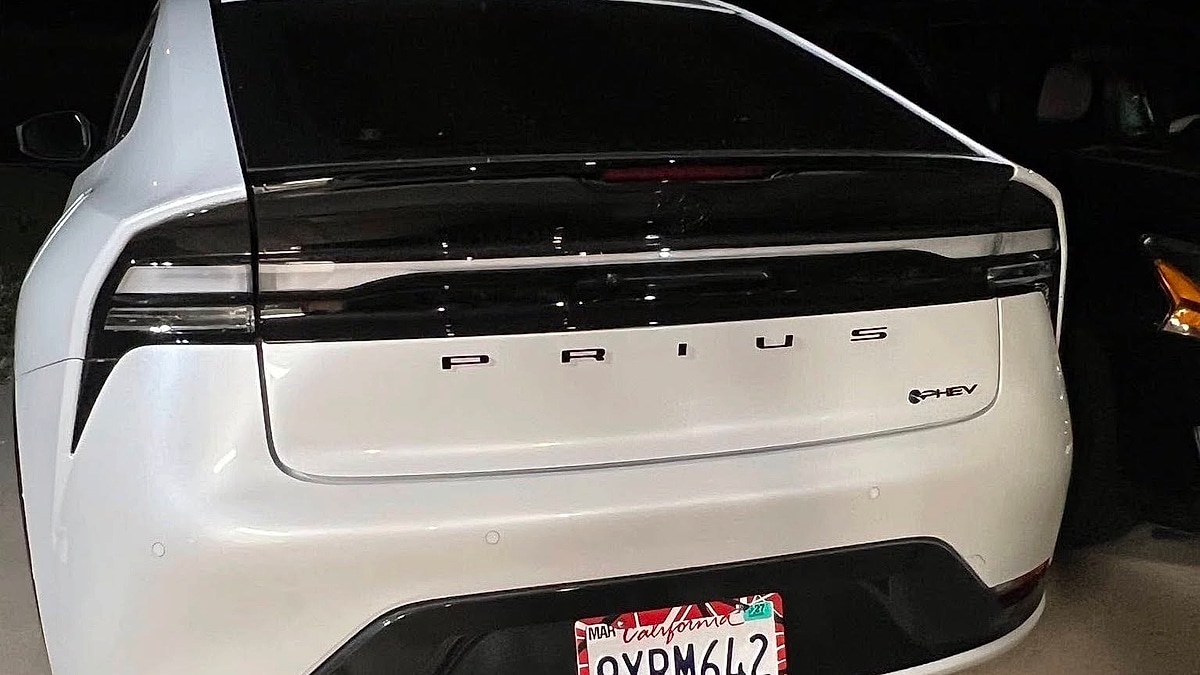
The real genius in Geairn’s story isn't the car itself; it is the charging setup. Using a 220V dryer splitter allows for Level 2 charging speeds without the $1,500 expense of a dedicated home charger installation. By scheduling the charge between midnight and 3 AM, the owner taps into the lowest possible utility rates (or uses stored solar energy).
Industry experts at CNET have highlighted that the Prius Prime is "one of the few PHEVs with enough electric range to make it worth plugging in regularly," as documented in their expert gateway to electrification report. When you pair that 40+ mile EV range with a "basically free" solar charge, you aren't just driving a car; you are beating the system.
What You Need To Know
To get the most out of your 2026 Prius and replicate these results, keep these points in mind:
- The 99.9 MPG Ceiling: Toyota’s software is programmed to cap at 99.9. If you are seeing this number, you are likely operating at 150+ MPG. Use a third-party app like Fuelly to track actual consumption.
- Solar Synergy: Home solar makes the "cost per charge" negligible. Even without solar, off-peak charging is essential for ROI.
- Wheel Size Matters: Stick to 17-inch wheels to maximize your EV range. The 19-inch wheels look better but create more rolling resistance.
- The 220V Advantage: Charging at 220V is more efficient than 110V because less energy is lost to heat during the shorter charging window.
Key Takeaways for Readers
- Home Setup is King: Your MPG is determined by your garage setup as much as your driving style.
- Don't Trust the Dash: The 5th Gen Prius is more efficient than its display can show.
- Regional Savings: In states like California, the gap between gas prices and off-peak electricity makes the Prius Prime the most cost-effective vehicle on the road.
The Next Question: How Long Does the Battery Last?
The very next logical question you might have is: "If I charge my Prius every single night to 100%, will I kill the battery in three years?"
The answer is a resounding no, provided you follow the "Buffer Rule." Toyota builds in a significant software buffer. When your dash says 0% EV range, the battery actually has about 15-20% charge left to protect the cells. Furthermore, using a 220V splitter to charge for only 3 hours (as Geairn does) is gentler on the battery than a long, 12-hour 110V "trickle" charge that keeps the battery chemistry active for longer.
Consumers Need To Adapt
The 2026 Toyota Prius 5th Gen has proven itself to be a masterclass in efficiency, but only for those willing to adapt their lifestyle to its strengths. By leveraging solar power and smart home charging, owners are seeing "impossible" numbers that traditional gasoline cars can't touch. If you are tired of the $6-a-gallon cycle, the solution might already be in your dryer outlet.
How About You? Are you getting triple-digit MPG in your hybrid, or is the 99.9 limit driving you crazy? Tell us what you think in the comments below!
About The Author
Denis Flierl is a 14-year Senior Reporter at Torque News and a member of the Rocky Mountain Automotive Press (RMAP) with 30+ years of industry experience. Based in Parker, Colorado, Denis leverages the Rockies' high-altitude terrain as a rigorous testing ground to provide "boots-on-the-ground" analysis for readers across the Rocky Mountain region, California EV corridors, the Northeast, Texas truck markets, and Midwest agricultural zones. A former professional test driver and consultant for Ford, GM, Ram, Toyota, and Tesla, he delivers data-backed insights on reliability and market shifts. Denis cuts through the noise to provide national audiences with the real-world reporting today’s landscape demands. Connect with Denis: Find him on LinkedIn, X @DenisFlierl, @WorldsCoolestRides, Facebook, and Instagram.
Photo credit: Denis Flierl via T.A. Geairn
Set Torque News as Preferred Source on Google
Follow us today...