
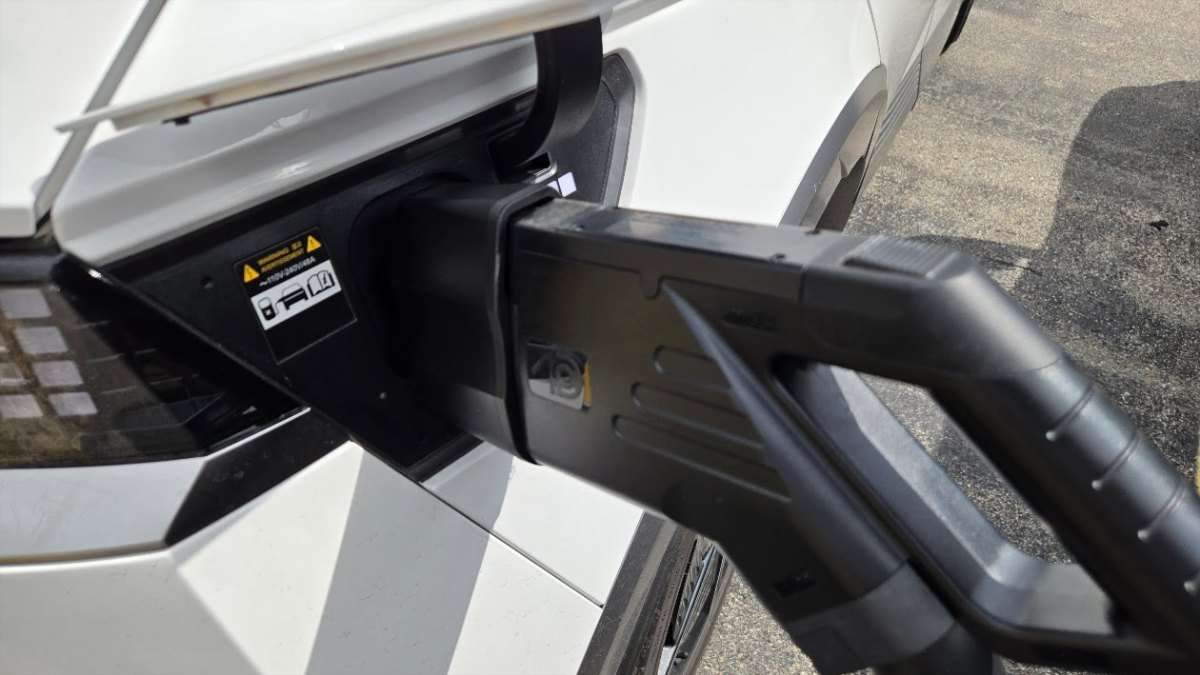

Presently in America, there are four possible EV connection types depending on your model and the charger you are using. Here’s a quick List:
1) Tesla-Style NACS
2) CCS for public DC charging
3) J-plug for home public Level 2 AC charging. (J1772)
4) CHAdeMO, if you have a Nissan Leaf BEV or Mitsubishi Outlander PHEV equipped with DC charging. Both also have a J-Plug.
Tesla has had 50% or more market share for decades, but Nissan’s Leaf beat the Tesla Model S to market and chose the CHAdeMO connector. The Chevy Bolt soon followed and used a J-Plug. Around 2016, we ended up with four different EV plugs, and it's been that way now for over 12 years. Tesla has finally succeeded in getting North America on board with the single standard it aptly named North American Charging Standard (NACS). Sounds great, right? It is, but it now means decades of adapters until the CCS, CHAdeMO, and J-plug-equipped EVs finally reach the end of their lifespan.
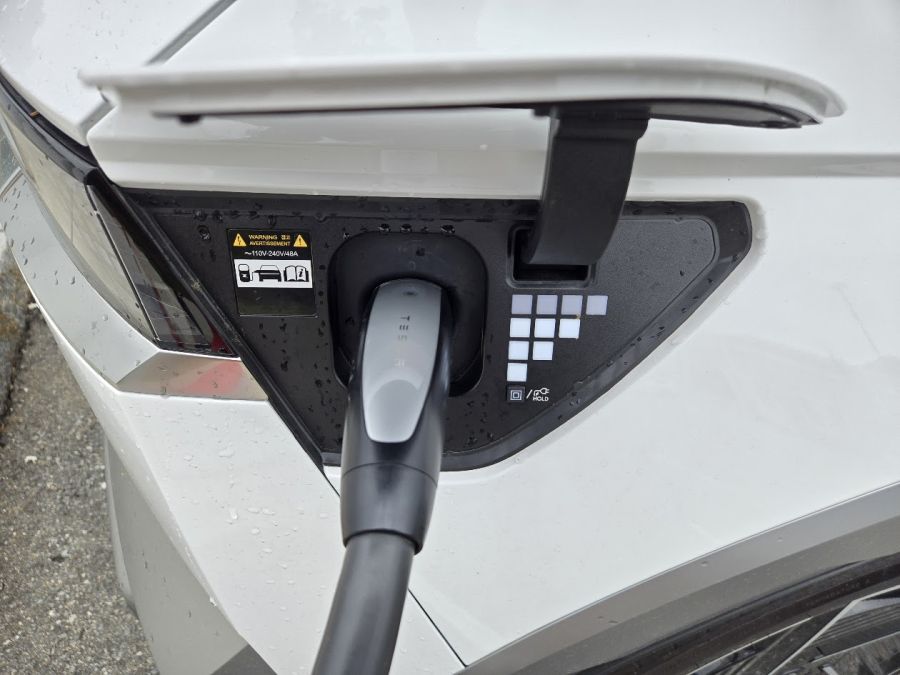
(Opinion alert) The best EV sold in America today is the Hyundai Ioniq 5 Limited. Many other EVs are almost as good or are better in one way or another, but the Ioniq 5 Limited is the best in a long list of ways. One way is that it has an NACS connection for 2025 and can be charged at Tesla Supercharger locations. We took the Ioniq 5 to a Supercharger and successfully charged. It took a bit of preparation, including the addition of a new app to add to the dozen we already use for charging, but it succeeded. You can read a detailed story on this right here. These are our general impressions.
- Not all Superchargers work with non-Tesla EVs.
- The cord on many Superchargers is so short that you need to occupy two spaces.
- It’s wicked expensive. Much more costly per mile than filling a hybrid with liquid fuel in Metro Boston.
- Definitely get the Tesla app.
- The power rating is imaginary. We observed less than half of what the Supercharger and car said was possible, and we were alone at the Supercharger, having preconditioned the battery properly. That means charging takes longer than expected. Sometimes a lot longer
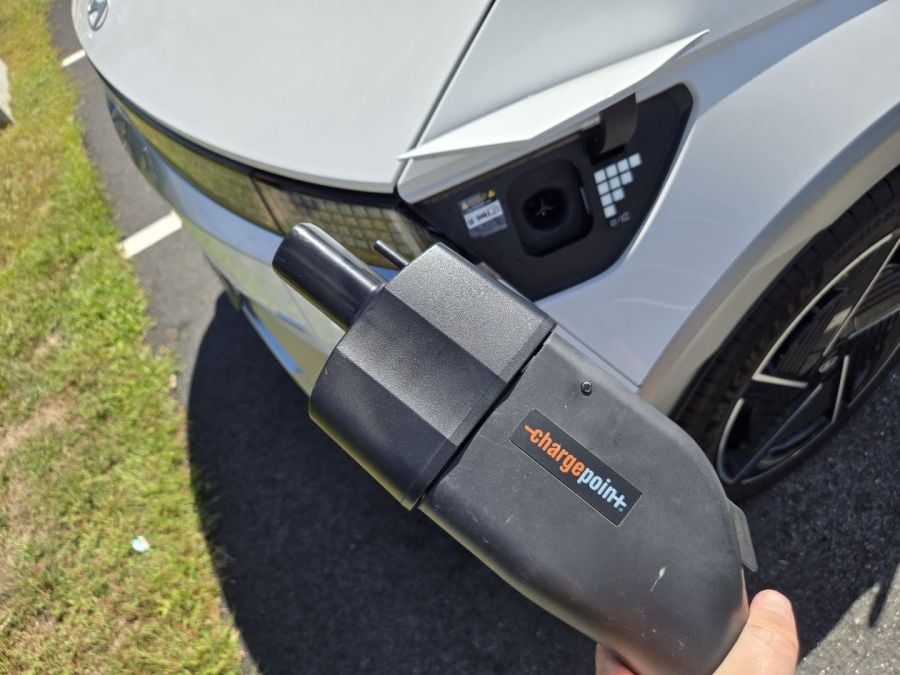
Next up, we took our NACS-equipped Ioniq 5 to charge at public DC chargers that offer CCS connections. We opted to do this at two Ford dealers. Over the past year or so, Ford has quietly rolled out a fantastic public charging network called Blue Oval that uses CCS. Here we employed the big, heavy NACS to CCS adapter. You simply plug it into the end of the charger handle, which is surprisingly heavy. It then is super duper heavy when the two join forces. But it works. At one dealer, we paid using our ChargePoint app, and at another, we paid with a credit card swiper. Our impressions:
- Also crazy expensive compared to powering a hybrid with liquid fuel.
- The adapters and handles are stupid heavy. - Your grandma with bad shoulders and arthritic hands is never going to succeed in doing this.
- The Ford chargers were closer to the promised power ratings, but also way lower than advertised as we approached 70% or greater SOC. (This is due to the charging curve of EVs, not necessarily the DC charger)
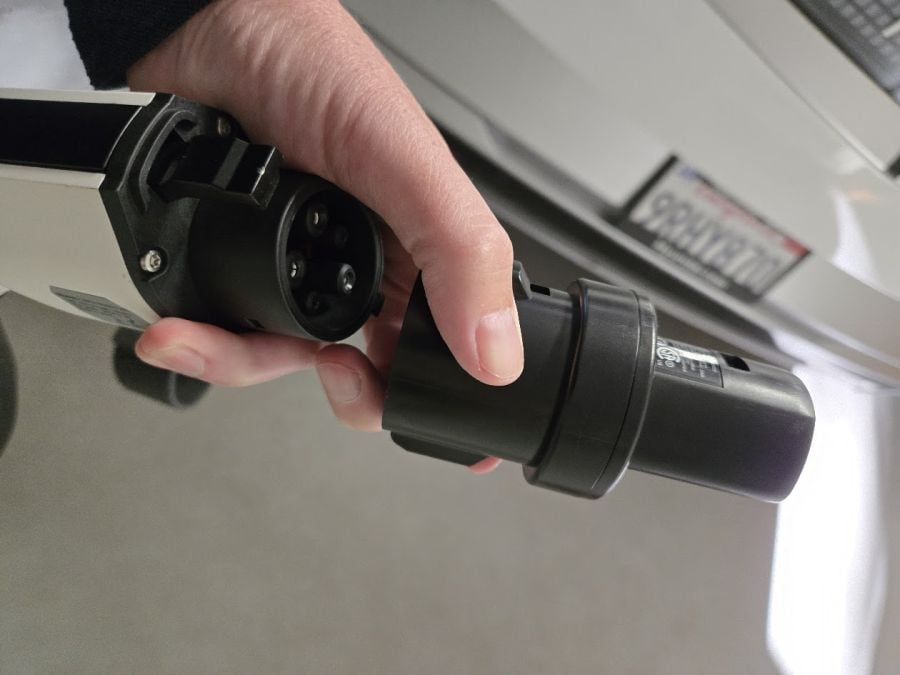
Finally, we charged both at home and also in public on Level 2 chargers using an NACS to J-plug adapter. It’s much lighter and smaller than the big, bulky CCS one. Here, we had no issues whatsoever. No surprises. You slap on the adapter and it works. Just don’t pull it out and forget it when you hang up the charger handle.
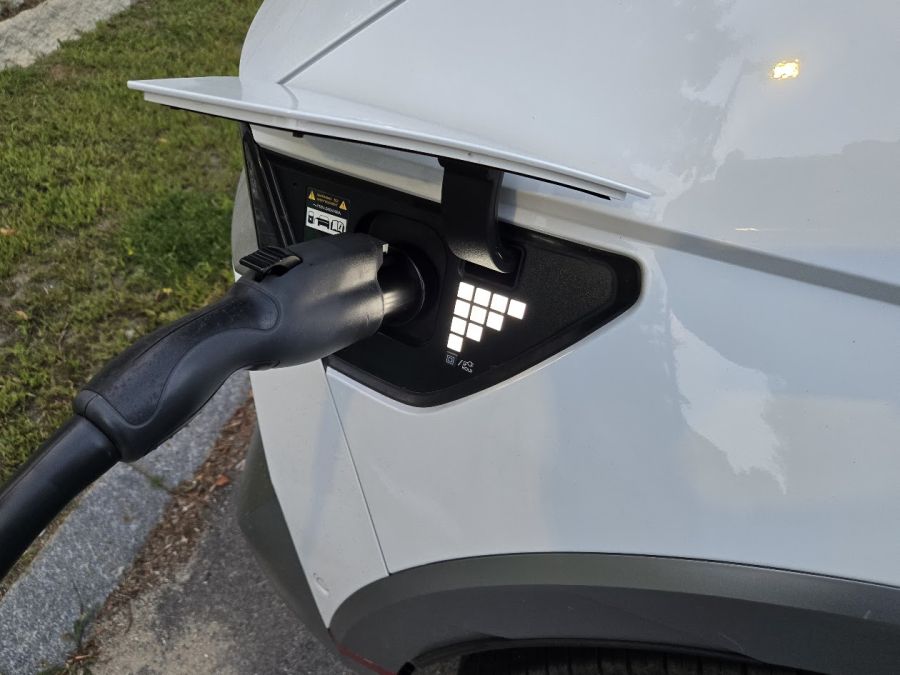
EV charging has a lot of challenges related to availability, capacity, location, and reliability. Adding the NACS charger to more and more cars makes sense in that it will allow us to eventually have just one type of charger since it works for both DC and Level 2 charging. However, the adapters are cumbersome, heavy in the case of the DC adapter, and will be needed for tens of years to come. Unless you don't drive an EV.
John Goreham is the Vice President of the New England Motor Press Association and an expert vehicle tester. John completed an engineering program with a focus on electric vehicles, followed by two decades of work in high-tech, biopharma, and the automotive supply chain before becoming a news contributor. He is a member of the Society of Automotive Engineers (SAE int). In addition to his eleven years of work at Torque News, John has published thousands of articles and reviews at American news outlets. He is known for offering unfiltered opinions on vehicle topics. You can connect with John on LinkedIn and follow his work on his personal X channel or on our X channel. Please note that stories carrying John's by-line are never AI-generated, but he does employ grammar and punctuation software when proofreading and he also uses image generation tools.
All images by John Goreham.
Set Torque News as Preferred Source on Google
Follow us today...



Comments
"The Chevy Bolt soon…
Permalink
"The Chevy Bolt soon followed and used a J-Plug. Around 2013, we ended up with four different EV plugs..."
John, the Chevy Bolt began shipping in limited quantities in the last few days of 2016, not in 2013. Maybe you were thinking of the ill-fated Chevy Spark instead?
Yes! Thank you very much for…
Permalink
In reply to "The Chevy Bolt soon… by ricegf (not verified)
Yes! Thank you very much for spotting that. I am going to make a correction. Shame on me for getting it wrong. I remember covering it. The first car went to a person in Fremont, CA.