
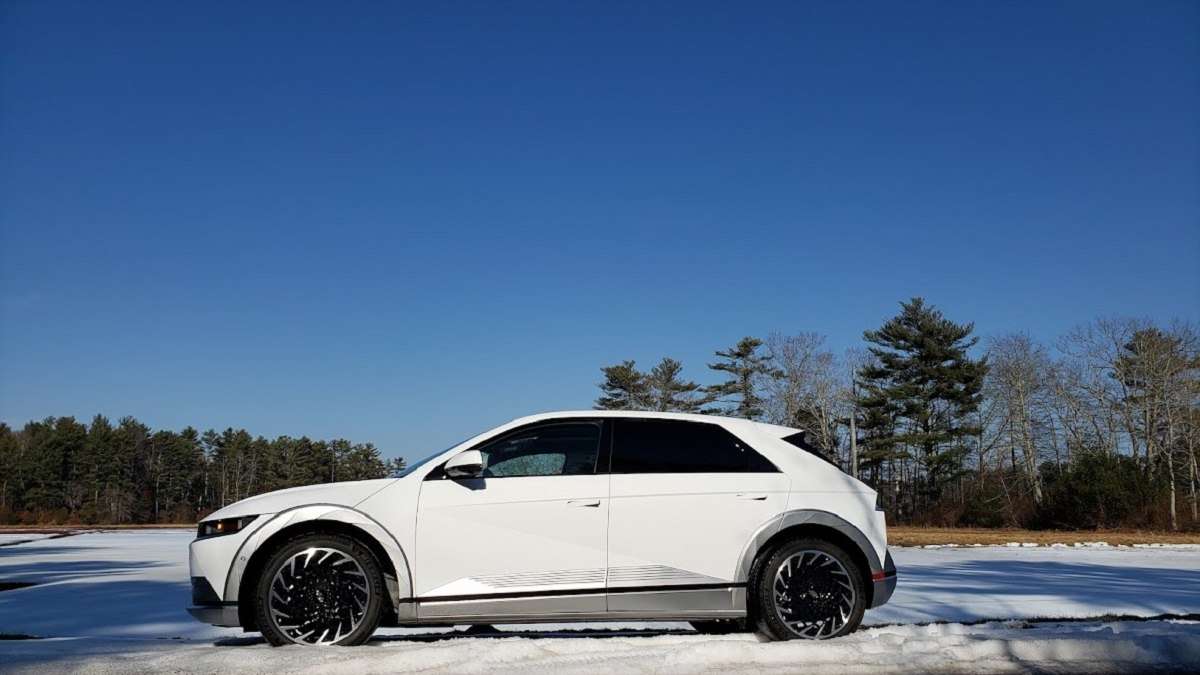

It's starting to become cold again in America, and everyone is discussing vehicles and how good or bad they are in winter. I’m testing a MINI Coppr Convertible this very week, and I evaluated it on its winter abilities. Is it “Good” in winter? Compare to what? Good how? With EVs, it is the same story. Let’s examine EVs and discuss the ways that vehicles equipped with a battery-electric powertrain are good, bad ,or so-so in winter. This is also a good time to remind ourselves that a Ford F-150 Lighting on Michelin X-ICE Snow tires is worlds different than a Tesla Model 3 Performance on Michelin Pilot Sport Summer Performance tires. There is no “EV” in the sense that they are a uniform type of vehicle.
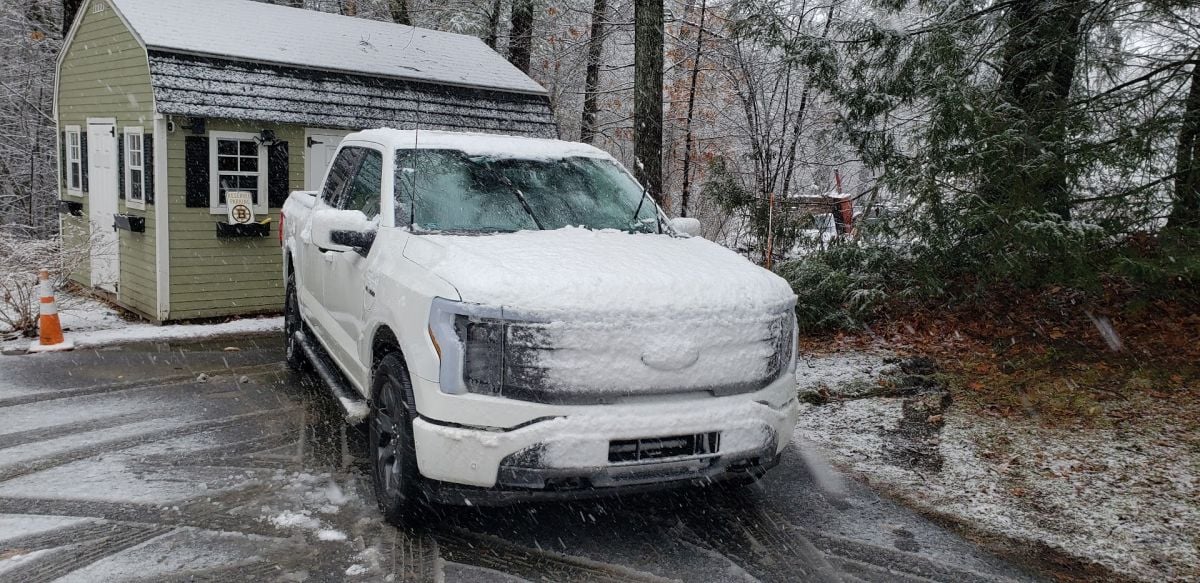
Before you judge me anti-EV, have a read of this story: Let’s Stop Pretending Electric Vehicles Like Ford’s Lightning Won’t Work In Winter
Who Is This Person, and Why Does What He Says Matter On This Subject?
I’ve tested virtually every EV brand and type of EV over the past 14 years, starting with the Leaf and Model S, and leading up to the Dodge Charger Daytona and Hyundai Ioniq5 N (back to back). I also test and review tires and EV chargers for a living. My driveway, garage, and shed are filled with test cars and parts. And I head straight into bad weather to test them. My opinions are also formed from having graduated from the two-day Team O’Neil Rally School Winter Driving Course, one of many such schools I’ve attended. Finally, I’m a media member credentialed by two organizations who has been invited to vote on the New England Motor Press Association’s Winter Car of New England each year for the past 14 years.
The Bad News For EV Advocates and Drivers
Here is one example pointing to EVs being “not good in winter.” It was posted by an owner this very week in a popular online Tesla Model Y club, and I like it because it has nothing to do with driving on snow:
Yesterday, in my second winter with my Model Y, I experienced Model Y frozen door handles and charging port for the first time. It was truly a struggle when I got home and was not able to open it. I tried with a defroster and scraping it for a while, but it didn’t work. My hands were freezing, so I had to go to other options. Once I got my hair dryer, there was nowhere to plug in, so I found an outlet outside of the garage, but on the opposite side of where I charge. I froze myself for a solid 20 mins. Couldn't feel my hands anymore.
Many fellow Tesla owners chimed in and had sympathy for this Model Y owner. Here are some supportive comments from owners who had such a struggle themselves:
- “I had to do this the other day! So glad that we had a hair dryer.”
- “Run hot water onto a towel, fold it into a small square and press it on the door area for a couple of minutes. Worked for me.”
- “Tesla definitely need to add heating to the door handles and charge port.”
- “I am thinking about carrying a de-icer spray can in the trunk.”
We started with the Model Y because it alone accounts for about 25% of the total EV market in America. It’s a crossover SUV, has all-wheel drive, can be remotely warmed if plugged in, and has been recently updated to a new generation. Yet, as you can see, even before it was started, it failed to be what is called a “Good car in winter.”
Can any car’s door handles freeze? Sure, they can. Are they more likely to do so if they are aero designs? Sure, they are. With nothing to pull on, Tesla’s handles are a weak point in the design as relates to winter. Can the gas port on a car freeze shut? Absolutely, but gas cars and hybrids can go weeks without using that port, and fuel is everywhere in America. Having to plug in or remove a charger handle in winter stresses out a lot of owners. Stress is not good.
The “My Electric Car Is Amazing In Snow” Argument
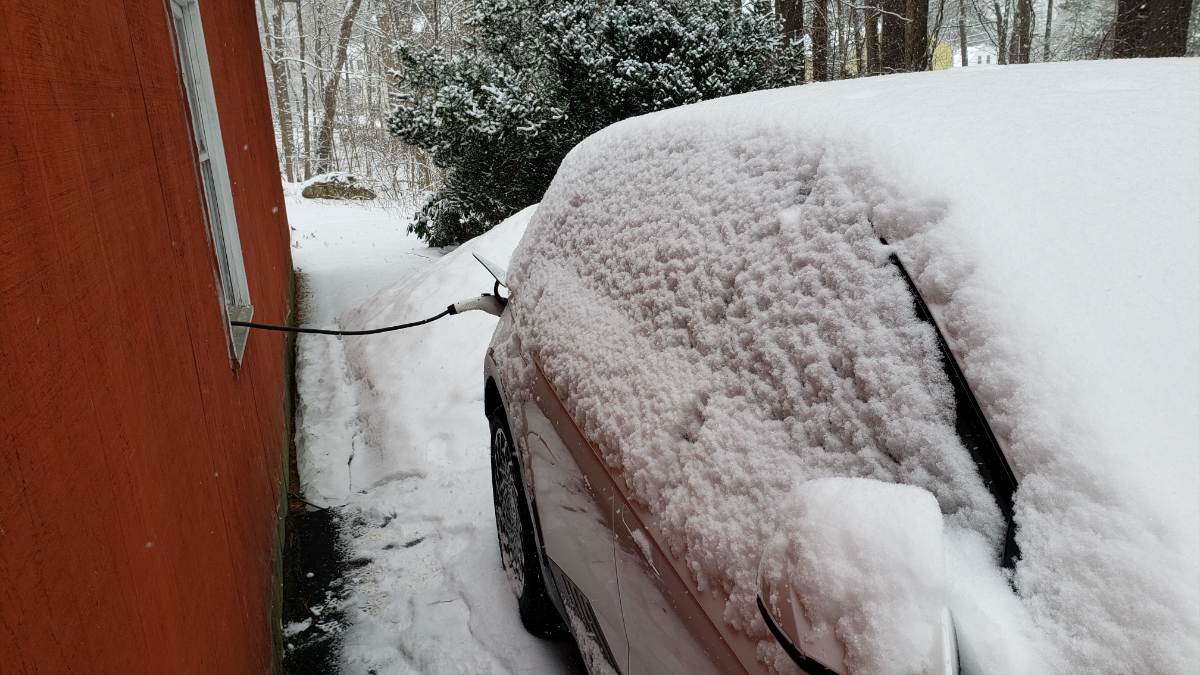
Also this week, InsideEVs spotlighted a Hyundai Ioniq 5 Limited driver who praised the car in winter driving. Here’s a summary of what was posted by the “Ohio bureau chief” of InsideEvs:
This week, a new Hyundai Ioniq 5 in Snow Mode during a heavy snowstorm quickly rocketed to the top of my list of 'good snow cars. In Snow Mode, the car significantly eases throttle inputs, smoothing them out and reducing the likelihood of spinning the wheels and losing traction. The regenerative braking is turned down to avoid any sort of wheel lock when decelerating, and it can’t be adjusted unless you exit snow mode. If the car is AWD, the AWD system is locked into 50-50 mode for traction.
There is an awful lot of good here, and the post is absolutely valid. The summary of the post is that this $60K automobile has all-wheel drive and a snow mode. That’s very helpful in winter, and adding these features definitely improves the car’s ability in snow. If you are waiting for the “But, but, but…” I don't have one. Hyundai makes fabulous EVs, and this person’s experience is genuine. Could that vehicle be better in winter? Yes, and back in 2022, when I was fortunate enough to test it in winter, I made that the focus of my coverage. The story was called “5 Ways Hyundai’s Ioniq 5 EV Could Be Improved For Winter Climates.”
Things That Are a Must For a Car to Be Good In Winter
The very first thing to consider when discussing whether a car is “good in winter” is its tires. Not long ago, the best one could expect from a vehicle manufacturer was an all-season standard touring tire. The best we can say about such tires is they are borderline acceptable in mild winter driving. That’s because there are far better tires available.
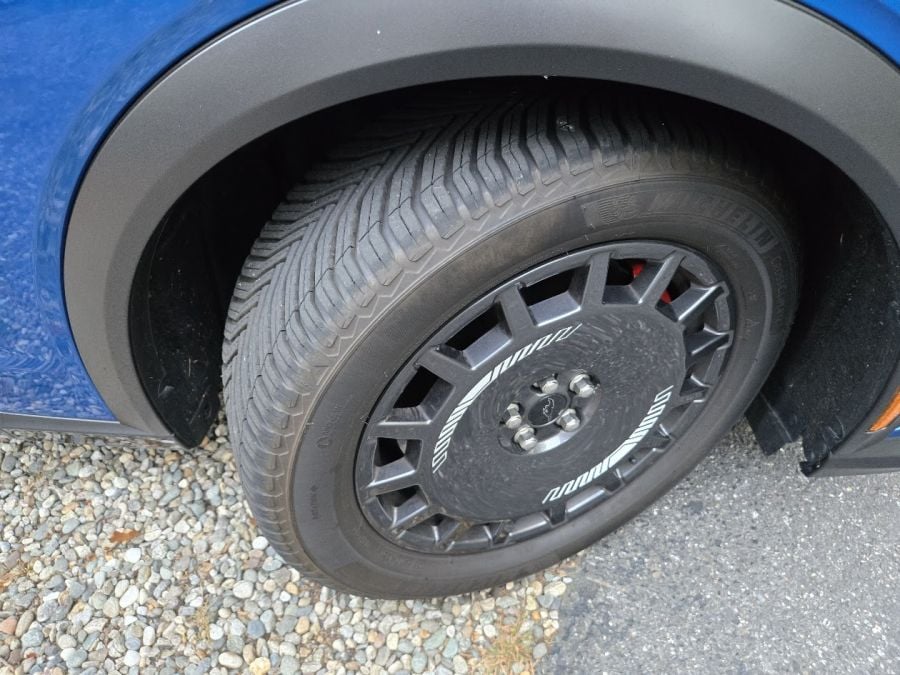
The Ford Mustang Mach-E Rally has the best winter driving tires mounted to any EV in America. Ford uses Michelin CrossClimate2 tires - from the factory. They are tested and approved for severe snow duty, and they proudly sport the three-peak mountain snowflake symbol (3PMSF). Tires such as these are worlds better than standard all-season tires. By contrast, the Hyundai Ioniq 5 N has summer-only performance tires. It is unsafe to drive in winter on those tires, even in dry conditions, because the compound is designed for temperatures above 40°F. Two similar EVs. One we would call great in winter and one we would call dangerous in winter, as delivered from their manufacturers. Both are awesome cars, both are battery-electric, but one is winter-focused, and the other is dangerous in winter unless modified.
There are other aspects of vehicle design that make a car “good in winter.” Here is a quick rundown on things we want to see in any vehicle that is to be judged as winter acceptable:
-Winter-focused tires
-All-wheel drive
-Heated seats and steering wheel
-Compact spare tire
Now, let’s look at some features that are easy to find on many cars that elevate an acceptable winter vehicle to what we would call good:
1) A heated windshield (We tested a Kia Sportage last month with one)
2) The ability to clean and de-ice LED headlights (The Toyota Crown Signia we tested can do this)
3) Wipers one can lift with a finger to prevent freezing to the windshield (many cars)
4) Heated windshield frame and wiper area (too many to count)
5) Heated side mirrors (very common)
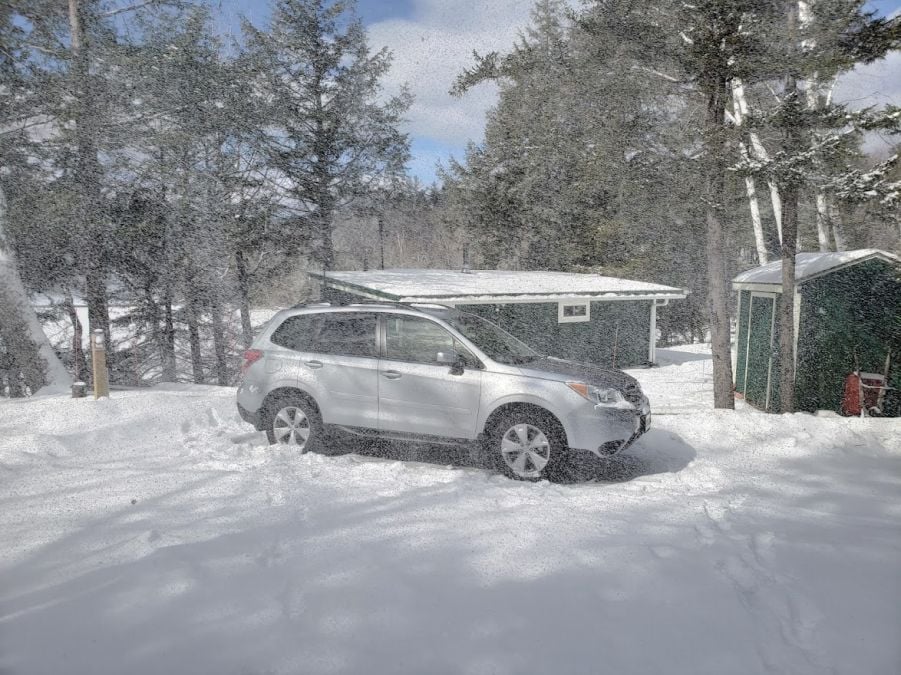
8+ inches of ground clearance (every Subaru crossover)
6) Multiple snow modes (every Subaru crossover)
7) Downhill braking assist (Most SUVs, Trucks, and many crossovers)
8) Remote start with HVAC controls that can be pre-set
9) All-weather waterproof floor mats and cargo liner
10) Front recovery hooks and rear hooks or tow hitch (Mostly an SUV feature)
11) Matching spare tire
Looking back to the example of the Ioniq 5 that handled snow well when driven by an EV advocate, does it make it to our list? No, it does not because it lacks a spare tire. Puncture repair kits are useless if you damage a sidewall in a snowstorm, and even the perfect puncture would be hard to change in temperatures below freezing. Being towed home rather than having roadside assistance mount your spare tire, which disqualifies a vehicle from being “good in winter.” The powertrain has nothing to do with this. Many EVs do have spares (Audi E-Tron), some have matching spares (Ford’s F-150 Lighting), and one offers two matching spare tires (GMC Hummer EV). It’s not a dig at the Ioniq 5 that we feel it is disqualified from being a “good winter car.” It just does not have some features we think elevate it to that status.
Vehicles You Cannot Call Anything But Good In Winter
Vehicles that are “good in winter” rise above and beyond having all-wheel drive and a snow mode. All-wheel drive is great, but it does not help you stop or turn in winter. Most crossovers have AWD, and good is a relative term. Some Subarus are good in winter right off the factory line. All of the “Wilderness” series crossovers from Subaru are fantastic in winter. The Subaru BRZ is terrible for winter. Same brand, same type of engine, completely divergent results
Now let’s get even more picky. The 2025 Ford Bronco Sport has all-wheel drive standard. However, most of its trims ship with regular all-season tires, and most have no spare tire at all. Some trims have 3PMSF-stamped severe snow duty tires and full-size spares. One trim is not “good.” One is outstanding.
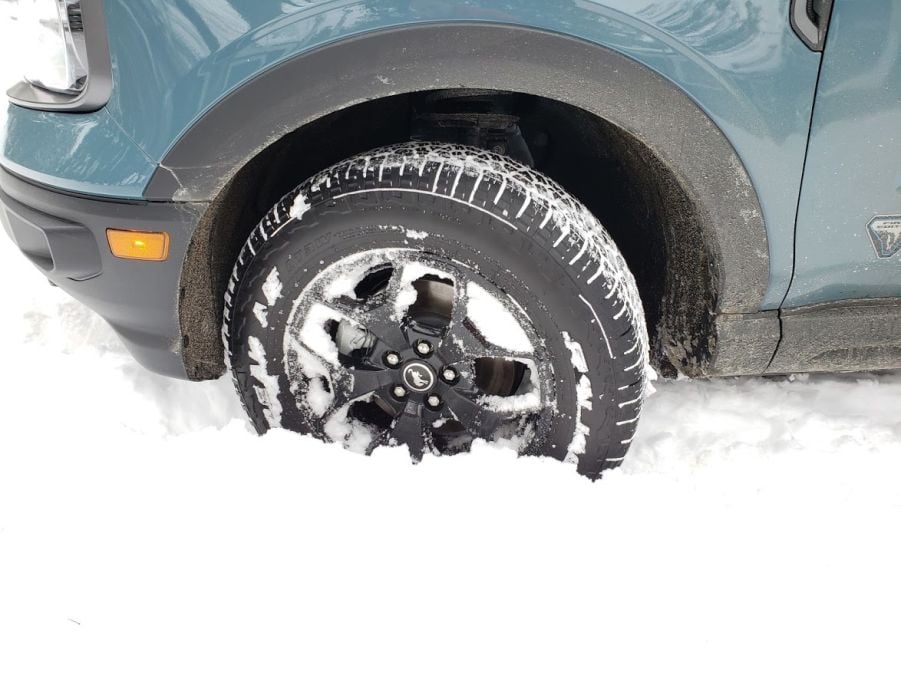
EV advocates want to paint EVs as a type of car, and they really are not a type. There are many types of cars with battery-electric powertrains. Some are terrible winter vehicles. Some are acceptable. Very few are good. This is also true of hybrids and gas-powered vehicles. In our social media divide-and-conquer world, we all want things to be yes-or-no answers. My team or your team. I win, and you lose. In the case of what vehicles are good in winter, it’s a nuanced discussion, and even in a given model line, there can be good and not-so-good winter vehicles.
Do you own a winter-capable battery-electric vehicle? Tell us your insights in the comments below.
John Goreham is the Vice President of the New England Motor Press Association and an expert vehicle tester. John completed an engineering program with a focus on electric vehicles, followed by two decades of work in high-tech, biopharma, and the automotive supply chain before becoming a news contributor. He is a member of the Society of Automotive Engineers (SAE int). In addition to his fourteen years of work at Torque News, John has published thousands of articles and reviews at American news outlets. He is known for offering unfiltered opinions on vehicle topics. You can connect with John on LinkedIn and follow his work on his personal X channel or on our X channel. John employs grammar and punctuation software when proofreading, and he sometimes uses image generation tools.
Set Torque News as Preferred Source on Google
Follow us today...


Comments
I do not have an EV. One…
Permalink
I do not have an EV. One thing I'd like to see journalist tested (hint) is a Li-iron phosphate car (as the affordable cell chemistry), left out in sub-0 overnight at full charge. Brought in to a heated garage to be warmed up, then driven to test cold soak charge/range loss versus starting same weather from the garage. If cold soak (Li-FePO4's are supposed to struggle with cold) on it's own doesn't ruin that battery's charge...
If I lost you: high heater demand happens warming from deep cold, and also keeping windshields clear in sleet and freezing rain. Also considering warm-ups to free up a door or hatch, they should drop the eco chauvinism and put a kerosene heater in mainstream BEVs. Really, why blow battery power on heating? Really. Something cheap for heat, useful in winter, allows a cheaper smaller battery, win-win-win.
The small, subcompact crossover segment is the commuter runabout choice. Setting aside deep snow. Good for a few inches of snow/slush/ice and cold? Narrow tires with front weight bias (if just fwd) to push through slush to the surface easier. Don't make it too heavy, so less likely to slide off on an on-ramp curve.
Product brainstorming doesn't seem that hard. Amazes me how the OEMs often botch it.
Thanks for the comment. You…
Permalink
In reply to I do not have an EV. One… by anonymous (not verified)
Thanks for the comment. You did lose me, I will admit, but I get the gist. I think what some EV owners may say about the topic is that you can plug in an EV (if you are lucky enough to have a home charger), and then you need not use the battery to keep the car conditioned and the windshield de-iced. You are spot on about the compact crossover segment. 5 passenger crossovers outsell full-size trucks in America, and have for years now.
5 years in with a awesome 21…
Permalink
5 years in with a awesome 21 mach e GT Performance in western pa weather that doesn't stop this ev from anything. Michelin cross climate tires are perfect even in 6 inches. Even our Tesla y has been terrific with no problems even the door handles covered in snow opened every time. My classic car cruiser is used in emergencies in blizzard conditions, a 06 Jeep Commander 4x4 with 53000 miles always garages and ready for winter action. Even lowered snow doesn't affect performance in deep snow. Ev and ice can coexist in a family of car people. My daughter's 12 challenger SRT 8 392 and son in laws monster 2500 ram modded out is proof families have fun in winter and summer.
Impressive list of vehicles!…
Permalink
In reply to 5 years in with a awesome 21… by Automotive (not verified)
Impressive list of vehicles! You won my heart with the CrossClimate2 mention. Thanks for commenting.