

Nobody wants to feel as if they are being taken advantage of by a mechanic. Women, in particular, sometimes get the impression that they are targets for unnecessary vehicle maintenance work. We found this post by a Honda CR-V owner on a popular social media group’s page, and it is a perfect introduction to the topic of changing rotors - or not - when brake pads are ready for replacement. First, let’s look at exactly what this owner posted in a search for help:
A mechanic said that I must replace rotors while replacing brake pads without even looking at the car. This is for my 2019 CR-V. Do they really need to be changed?
A Common Brake Job Question - Pads and Rotors Both, or Just Pads?
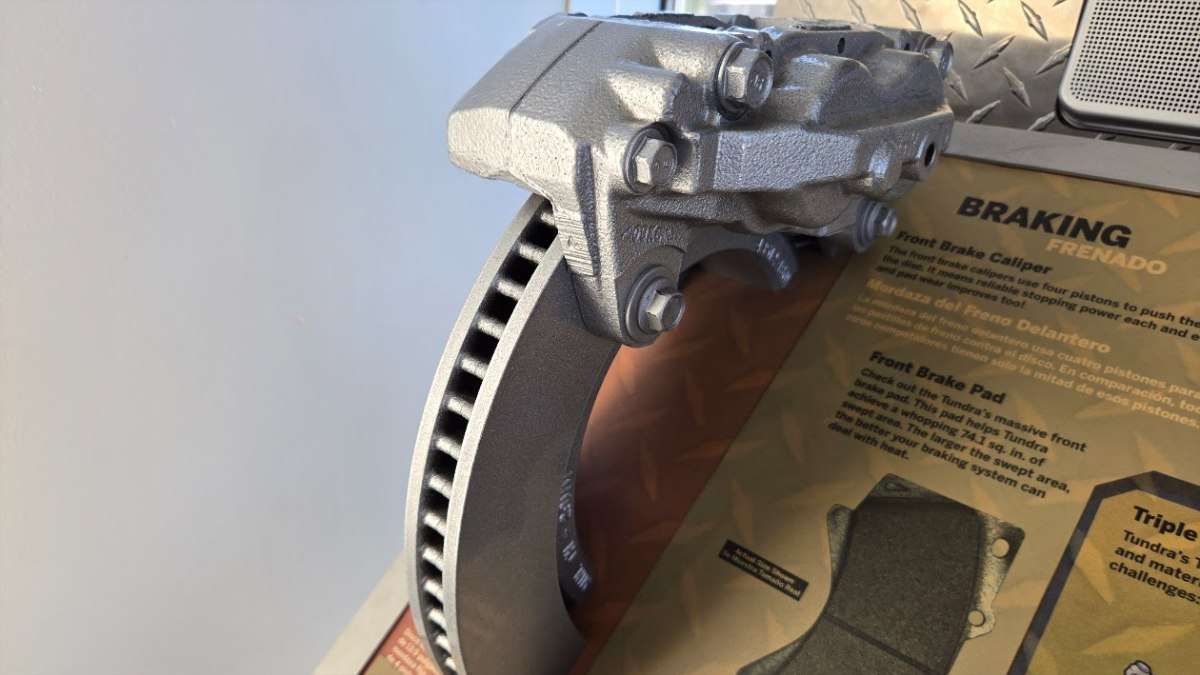
The brake pads on all mainstream vehicles were specifically designed to be the wear item in the braking system of cars with disc brakes. They are quick and easy to swap out, assuming nothing goes sideways, and they are inexpensive compared to most car parts. The brake pad serves as the friction surface through which the calipers pinch the rotor to slow the car. As such, they must be made to wear out to preserve the rotors from being gouged by the brakes. Most vehicle owners know a brake pad when they see one, and we all can agree that they are wear items. But what about the sturdy-looking metal rotors? They look like the kind of part that should last a long time, and certainly longer than the sacrificial brake pads.
Indeed, the original idea of disc brakes was precisely what we might imagine. The pads are easy to remove and replace, making the brakes affordable and straightforward to service, perhaps even by the vehicle owner at home. However, times have changed, and the design has evolved over time, primarily due to real-world conditions that make rotors sacrificial as well.
Mixed Advice From Fellow Owners
Under the post we are using as our story premise, many folks weighed in with opinions. Some say, “Yes, replace the rotors,” and others say, ‘No, you can just replace the pads.” Here are some examples:
- “If the rotors measure thick enough to cut, then they can be cut.”
- “Measure thickness and check for warping. Replace only if it is below the service limit. Turning the disc (resurfacing) is a good practice when changing pads. Make sure to break in the pads for optimum output.”
- “Rotors have a minimum thickness measurement on the inside. Use a micrometer to measure and compare.”
These comments all have one thing in common. They are assuming that the shop in question will use a lathe. If the shop will not, then the advice really doesn’t apply. Now let’s look at a few different takes on this:
- “Rotors are so cheap now compared to years ago, it’s better to just replace than risk a bad resurface job, and you’re stuck with a shaking steering wheel every time you hit the brakes.”
- “By the time you get them machined, it doesn't cost much more for new ones.”
Changing Designs of Brakes - Sacrificial Rotors
Over time, disc brake rotors became less and less robust. Automakers dislike heavy brakes because they increase costs, add weight, which is always undesirable, and are considered “unsprung weight,” meaning they sit below the suspension. That hurts handling. In the old days of wooden ships and iron men, the rotors were thick, made of high-quality metal, and intended to last many brake jobs. No more.
Changing Repair Shops - Lathes Going Away
With the old design, those heavy, thick rotors could be machined flat. A lathe would either be placed over the rotor or the rotor removed and put into a lathe—usually the former. The machine would strip away a bit of the surface of the rotor, which would eliminate any grooves or gouges. The result was a flat, even rotor that was like-new except for one little detail. The rotor got thinner. When the machining was done, it made the rotor thinner, and that can cause some issues. A significant side effect was the warping of the rotor due to heavy braking and the resulting heat. Manufacturers designed those old rotors to be thick enough to handle a few machinings before they were “out of spec” by being too thin. The rotors were then changed - at great expense - to new ones made by the car manufacturer or a respected aftermarket company.
Today, it’s rare to find any shop that will machine a rotor. The lathes are either gathering dust in a corner or gone altogether. The skill of machining a rotor flat, though not rocket science, is also fading from memory.
Modern Rotors - Thinner, Lighter, Disposable (Recyclable)
As automakers began making rotors more and more affordable (cheaply) and with less and less mass, they became disposable. The idea being that they would not be re-machined flat during brake jobs, but instead be recycled and replaced. What an outrage, right!? Not really. That lathe was expensive and required regular care and maintenance. Employing the lathe required some practice and time to master, including measuring the rotor's thickness and learning to place and remove it from the lathe. Time is money. And at some point, the expensive, heavy, and thick rotor was going to need replacing anyway. So, on balance, disposable rotors that are less costly and require less skilled labor to mount became the de facto standard in the industry.
Brake Job - Do It Right The First Time, Or Roll the Dice To Save a Few Bucks
If you look online, you'll find many well-intentioned do-it-yourself shade tree mechanics who claim, “You can replace those pads yourself and then you’re good to go.” They are not really wrong. Assuming you are not an 81-year-old grandmother with a bad hip and fading vision. Let’s face it, vehicle maintenance is not for everyone. Most owners of mainstream vehicles let their dealer or a local shop replace their brakes. They are not up under the car on nights or weekends after they get back from their day jobs, hoping the brake job goes well so they can drive to work the next morning.
If a mechanic or a homeowner replaced just the brake pads, it might work out OK. Or, the brakes might squeal or squeak. And then the whole thing needs to be done over again. The brakes may also pulse due to rotor warp. Or the brake pads, now installed over grooved rotors, may wear more rapidly and need replacing in a short time. All of these scenarios mean lost revenue for shops. So, almost no respectable mechanic will change just your brake pads. It’s not a wise choice for them. Unhappy customers who come back with a problem are not profitable.
Hybrids and EVs Have Longer-Lasting Brakes and Rotors
There is some good news on the brake front. An increasing number of new vehicles now feature standard electrification in the form of a battery-electric or hybrid-electric powertrain. These all share an essential commonality - regenerative braking. The electric motors can slow the car and put back some of that energy into your battery, saving you a lot on gas. They also help prevent your brake pads and rotors from wearing out. As we detailed in our story, Hidden Benefit - Toyota Prius Owners Find Their Brakes Last Over 100,000 Miles, many Toyota hybrid owners find that their brakes last two to three times longer than those of their prior gas-only cars. This is a well-known plus of electrification.
Summary - Replace Your Rotors When You Have Brakes Serviced
The upshot of this story is that it is not a scam when a mechanic tells you that you will need rotors when you replace your brake pads, and he does not even have to look at the car to know this is true. You won't pay more than you would have if the car were equipped with long-life rotors, as they would require machining and eventually become too thin to be reused.
Do you agree with our conclusion? Tell us your thoughts in the comments section below.
John Goreham is the Vice President of the New England Motor Press Association and an expert vehicle tester. John completed an engineering program with a focus on electric vehicles, followed by two decades of work in high-tech, biopharma, and the automotive supply chain before becoming a news contributor. He is a member of the Society of Automotive Engineers (SAE int). In addition to his fourteen years of work at Torque News, John has published thousands of articles and reviews at American news outlets. He is known for offering unfiltered opinions on vehicle topics. You can connect with John on LinkedIn and follow his work on his personal X channel or on our X channel. Please note that stories carrying John's by-line are never AI-generated, but he does employ grammar and punctuation software when proofreading and he also uses image generation tools.
Top of page image taken by John Goreham.
Set Torque News as Preferred Source on Google
Follow us today...






Comments
Ok...Just One Mechanic's…
Permalink
Ok...Just One Mechanic's Opinion..If He Is Going To Repair Your Brakes With New Rotors And Brake Pads..This Means..He Does Not Want To Measure And Resurface Your Vehicle Rotors..You Can Always Get..A Second Or Third Opinion..From Another Mechanic Shop...Every Mechanic Has Their Own Procedure For Brake Servicing And Warranties.....
Unfortunately, not all…
Permalink
In reply to Ok...Just One Mechanic's… by Anthony B. (not verified)
Sadly, not all mechanics have the skill to grind the rotor down correctly. I had rotors machined, thinking it would be cheaper. I paid about half the price of new rotors, my brakes started squealing every time like the car was dying, and a few months later ended up replacing the rotors anyway, because the machining was horrible, and the rotors were too thin to fix anymore. It cost me more in the long run. Oh yeah, the shop offered me a "great deal" on new rotors, ten dollars off, when i went back to complain about the squealing. If a mechanic offers to machine rotors, ask them about the warranty on the machining.
Thank you for offering this…
Permalink
In reply to Unfortunately, not all… by Santanu Lahiri (not verified)
Thank you for offering this first-hand experience, Santanu. There is a good lesson here.
Ok any A,B or C technician…
Permalink
In reply to Unfortunately, not all… by Santanu Lahiri (not verified)
Ok any A,B or C technician can machine rotors . Its not an incompetent tech by any means . Its Time vs money. machining rotor takes alot more than replacement . its cheaper to machine than replace. No one in their right mind would give a warranty on machined rotors because you are removing metal which now makes the rotors thinner and cant dissipate the heat properly.
Yup Rotors get rplaced too!!…
Permalink
In reply to Unfortunately, not all… by Santanu Lahiri (not verified)
Yup Rotors get rplaced too!!
All you shadetree mechanics out there that do half assed work.
The Honda CRV, much like most moder cars use "throw away" parts. The rotors are not designed to be "cut" but jalf you morons will cut them and guess what?
They are now UNDER specs and the pads will not do thier job.
This is called lean disposable manufacturing.
You all complain about mechanics and what we charge, we try to tell you how do do it right , safe, and DEPENDABLE, but your poor broke a!! dont want to pay for a proper repair, but will be the first to cry like a little girl and complain when your heap breaks.
Buy a car your broke a$$ can afford, quit complaing and questionong the mechanic, OR get a bike!!!
DIY, preferred for just this…
Permalink
In reply to Ok...Just One Mechanic's… by Anthony B. (not verified)
DIY, preferred for just this reason...if your too lazy to even inspect before telling me to replace everything, thenI go elsewhere on the spot, or do it myself!! COMPLETELY UNTRUSTWORTHY!! AND WOULD NEVER USE EVER!!
DIY, preferred for just this…
Permalink
In reply to Ok...Just One Mechanic's… by Anthony B. (not verified)
DIY, preferred for just this reason...if your too lazy to even inspect before telling me to replace everything, then I go elsewhere on the spot, or do it myself!! COMPLETELY UNTRUSTWORTHY!! AND WOULD NEVER USE EVER!!
Very true, thanks, Anthony.
Permalink
In reply to Ok...Just One Mechanic's… by Anthony B. (not verified)
Very true, thanks, Anthony.
See, you are making an…
Permalink
In reply to Ok...Just One Mechanic's… by Anthony B. (not verified)
See, you are making an assumption that this other mechanic is "lazy" and " dont want to cut the rotors". How is it that you came to this conclusion? You are bad mouthing another professional in your field. Not cool. How do you know that the guy doesn't do her State Inspections and knows the Car. He already knows from maybe inspecting her car on a previous date that her front rotors were shaky and made mental note about such, I do exactly that almost every day. I tell people all the time when let's say they are getting oil change. Ill mention that their brakes will need servicing soon and yes just by looking at a rotor, I been around long enough to tell you with 95% or better accuracy whether its too thin or not. You just gotta know what to look at and what to look for. If im not sure, I'll stop being "Lazy" as you point out and I'll break out my dusty micrometer. Maybe Snap On started selling Crystal Balls and thats why you said that about her mechanic. Im just tired of us getting a bad rap by ungrateful people you bend over backwards for and they stick a dagger right in your back as thanks. Nothing personal.
Just swap the rotors out…
Permalink
Just swap the rotors out
Resurfacing makes them
Likely to warp later on even
If they're above minimum
Thickness
Thank you, Mike. You are…
Permalink
In reply to Just swap the rotors out… by Mike morris (not verified)
Thank you, Mike. You are validating what we have heard from many mechanics.
No one near me cuts rotors…
Permalink
No one near me cuts rotors any more, not even local machine shop
Thanks for commenting, Jeff…
Permalink
In reply to No one near me cuts rotors… by Jeff Sill (not verified)
Thanks for commenting, Jeff. In my area of New England, this is definitely true. Mechanics we spoke to said they simply don't have he machinery anymore.
Rotor surfaces become…
Permalink
Rotor surfaces become polished over time, increasing stopping distance. Lathing also provided a fresh, rough surface long enough for the new pads to "bed-in" and match the rotor surfaces. Driving the car "two-footed" up to 35, then slowing it down to 25 without letting off the gas, then making a hard stop several times is also part of this process. Polished rotor surfaces from a previous set of pads reduce friction and increase stopping distance. The only time I would "pad-slap" a brake job would be if it was my car, and I would never let anyone else drive it. If the rotors are grooved or lipped, they should be replaced. Always replace rotors in pairs. If you can't afford to replace the rotors, you *can* replace only the pads. But IMHO, you never should. Your mileage may vary...
Thank you, Louis. Great…
Permalink
In reply to Rotor surfaces become… by Louis Deering (not verified)
Thank you, Louis. Great advice.
Sad but true. The only thing…
Permalink
Sad but true. The only thing to add is brake pad design has evolved too and they last a lot longer now. A 100,000 miles on your factory pads and rotors is not that uncommon anymore unless your name is Mario Andretti. Brake pads are not cheap either with good quality set of pads setting you back $100 to $150 versus a new rotor that can be had for as little $30 each. At this rate possibly brakes will be good for the live of the vehicle some day.
That is good news. Thank you…
Permalink
In reply to Sad but true. The only thing… by Sebastian H. (not verified)
That is good news. Thank you, Sebastian.
Why do you guys even post…
Permalink
Why do you guys even post something this ridiculous? Its a dealer scam. ! Sounds like BMW
As long as your pads wore…
Permalink
As long as your pads wore evenly and smoothly with no damage to the rotors as far as gouging, rust, scoring, or warping you'd be fine in just replacing your pads. It's cheaper and less time consuming to grind rotors which tales metal away from the rotor. Best decision is replace the rotors with new ones.
I went to became a tech in…
Permalink
I went to became a tech in 1996 and even back then they were trying to phase out cutting rotors as there was no money in it..it cheaper faster and better to replace the rotors at every brake job..and I still to this day do that and the rotors I use are lifetime warranty so replace each time when the pads are done....we were always told to NEVER PAD SLAP A CAR