
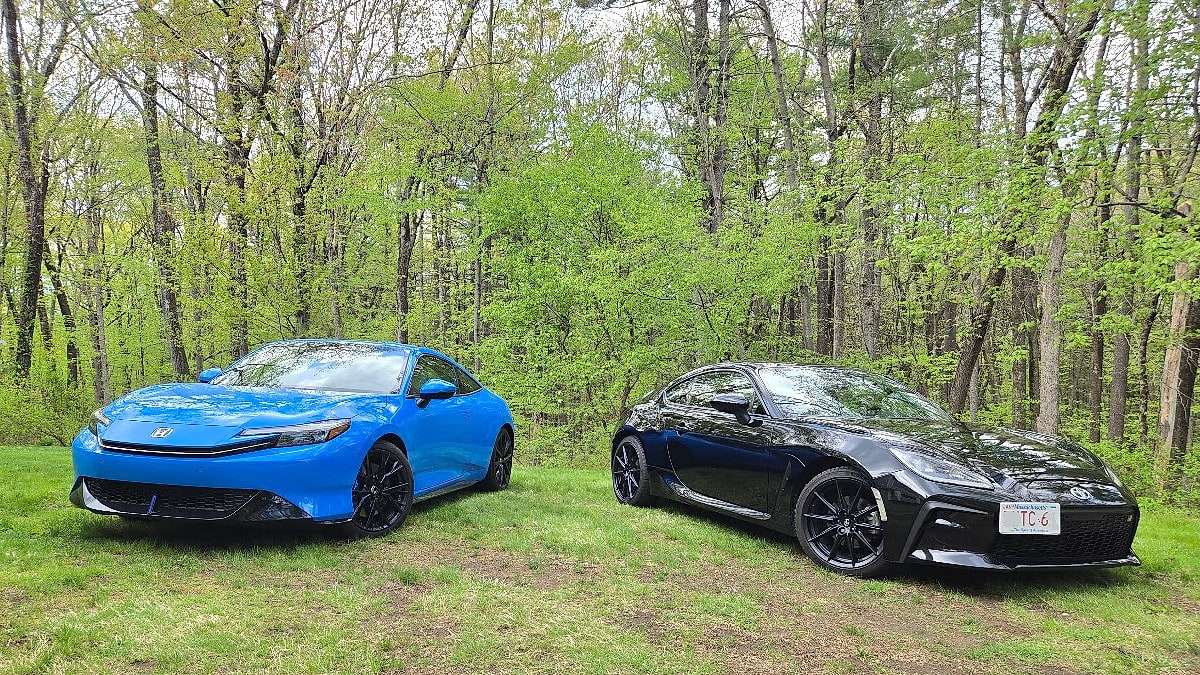

It’s easy to pick apart this comparison and list the differences, but the 2026 Honda Prelude and the Toyota GR86 Premium are a lot more alike when driven back to back than GR86 fans will ever admit.
This week, the Torque News team and I had the chance to test the Honda Prelude back-to-back with my own Toyota GR86. This was a big moment for me personally, because now I’ll never trust anything I read at Car and Track ever again. The Prelude is virtually identical in speed and quickness to the GR86. We had the chance to drive the cars side by side and head-to-head on twisty rural New England roads, on the highway, in town, and, in one case, we could run them from a dead stop to 60 MPH.
Torque News checked some of the online reviews and discovered that outlets that timed the Prelude found it had a 0-60 MPH time of about 6.5 seconds. That’s within a fraction of a second of what the GR86 can run. I can tell you that on the road, behind the wheel, you can’t tell which is quicker. Why the automotive press decided to beat on the Prelude and call it slow is a mystery to me.
Why I Bought a GR86 Instead of Waiting for the Prelude
When Honda announced it, I was convinced The prelude would be my first new car. I read everything I could about it before the launch, and decided that unless something went wrong, I’d be buying one to replace my well-worn V6 Accord. It looked great in pictures, seemed to nail the sport coupe aesthetic I was looking for, and I already knew that Hondas are great to own if you value a fun driving experience, reliability, and affordability.
Then came the online reviews. Torque News examined them and found that they were not as favorable as we expected. This was a big disappointment to me, since I wanted a fun, quick car, having enjoyed the pretty quick Accord for many years. Finally, the Prelude launch took longer than expected, and I ended up in a 2025 Toyota GR86 Premium that I love.
GR86 vs. Prelude - The Biggest Difference - Brakes
If you want one reason to buy the Prelude instead of a GR86, it’s the brakes. The Prelude is heavier than the GR86, and I expected the GR86 to have better braking, but in fact, the Prelude’s Brembos and larger tires make it stop amazingly well. The pedal feel is perfect. The GR86 requires too much force. My car only has 13K miles, so it should be stopping as well or better than new. Its summer only Michelin Pilot Sport 4 tires are outstanding, so we can’t blame them.
GR86 vs. Prelude - Handling - Shockingly Similar
The GR86 is rear-drive, and the Prelude is front-drive, so we expected them to handle differently on twisty roads. Both are outstanding. Whoever tuned this Prelude has worked some magic. At speeds that won’t get you arrested, it never understeers, and its turn-in is laser sharp. It hangs on more in a high-G corner than the GR86. Owners would need a skidpad or a racetrack to find the Prelude’s limit. Although it is impressive, you can't steer with the throttle like you can with a GR86 at the limit.
GR86 vs. Prelude - Styling
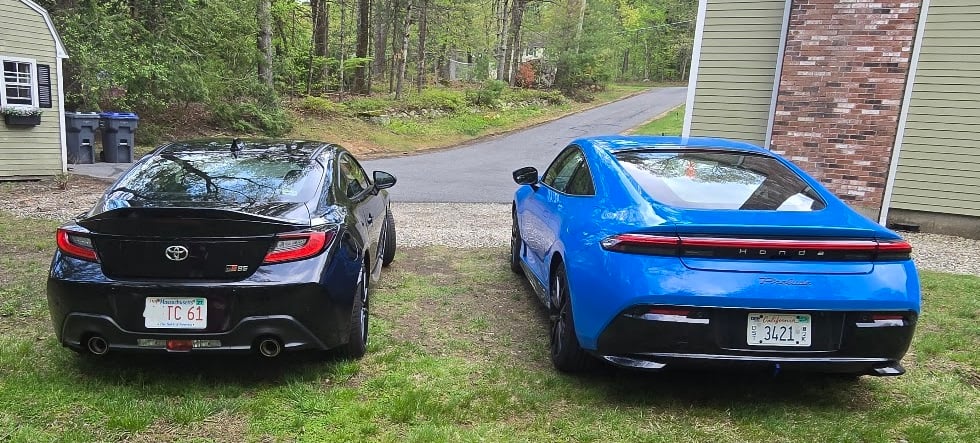
In person, both of these cars are gorgeous coupes. The Prelude has the edge from the front, and the GR86 is better looking from the rear. The GR86 is a bit narrower, and your eye picks up on the six-inch width advantage the Prelude has.
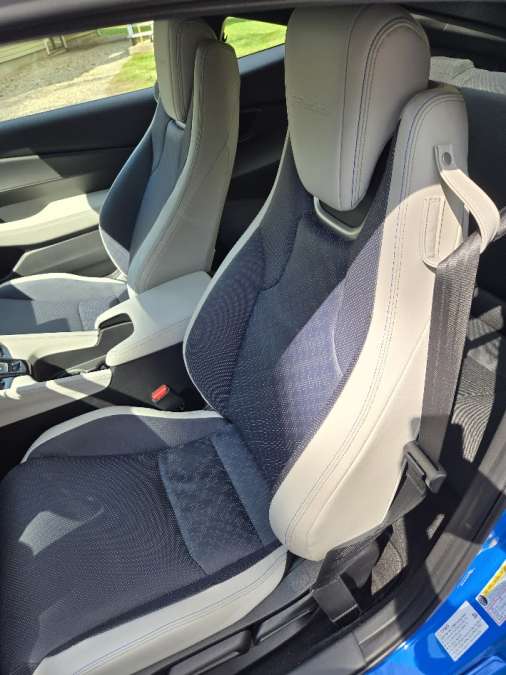
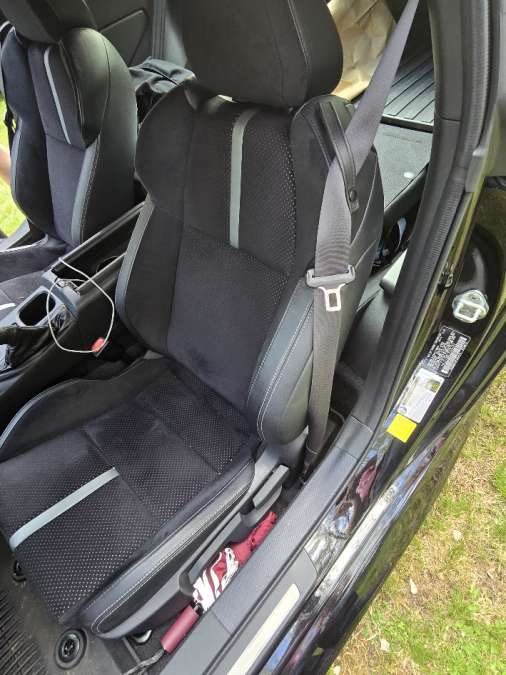
Inside, I expected the Prelude to look like a Civic, but it’s more upscale than that. The air vents and infotainment screen are the same, but other than that, the Prelude looks like an Acura to my eye. The seats are wider than the GR86 seats. If you are a hefty person, go with the Prelude.
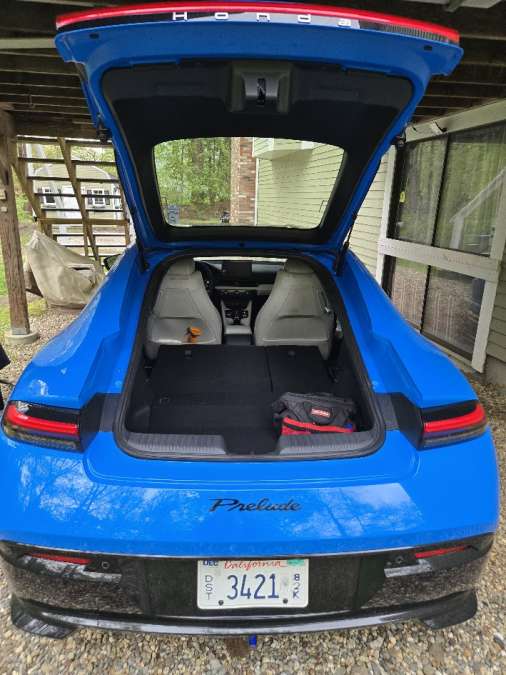
Cargo and Rear Seats: The Prelude's Quiet Edge
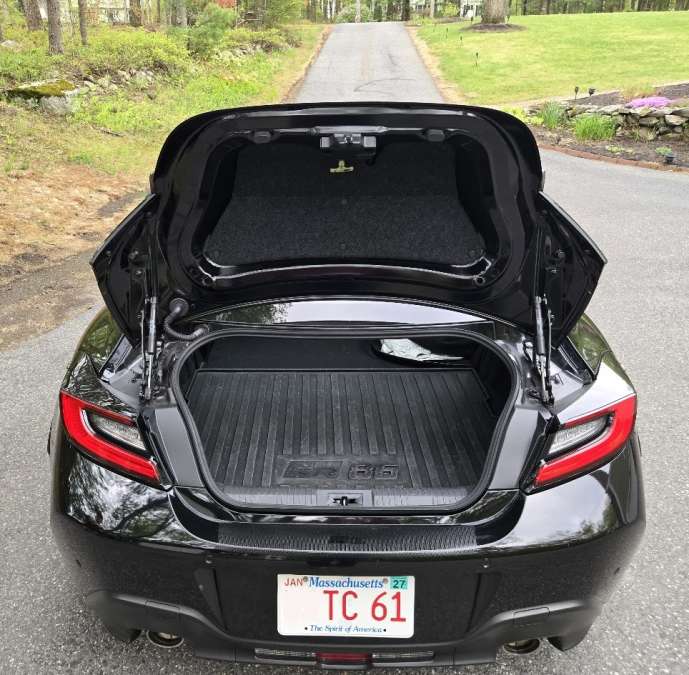
Both cars have decent cargo space for small coupes, but the openings tell different stories. The GR86 has a small trunk opening. The Prelude has a wide rectangular hatch that easily swallows awkward shapes. I could hoist my hockey bag in without a fight, and a bike would fit with the front wheel off. The GR86 has more space under the cargo floor cover, but the Prelude's hatch makes its space far more usable. Both can hold a set of four tires.
The rear seats in both cars are token, temporary use perches. Side by side, they look identical, and neither will move a happy adult any meaningful distance. Treat them as extra cargo room with seatbelts.
The Vibe: Elemental vs. Refined
The GR86 is more elemental. More visceral. More connected to the road. The Prelude is quieter and smoother, with a refinement the GR86 doesn't attempt. The GR86's geared transmission gives it a mechanical honesty the Prelude's hybrid drivetrain can't match. It sounds better too: urgent on upshifts, nasty on downshifts into corners. The GR86's Sport mode is also more aggressive than the Sport mode in the Prelude.
The Prelude's electric drive is the most interesting thing about it. The gas engine only couples directly to the wheels on the highway in specific conditions; the rest of the time, the electric motor is doing the work, and you feel it in the immediate, flat torque off the line. If you like the way EVs drive, you'll like the Prelude. If you want a car that talks back, the GR86 is still the answer.
Price: The Cheaper Car Isn't the Cheaper Car
The closest trim match to the Prelude is the GR86 Premium automatic with the Performance Package at $37,895. The Prelude is $43,195, a difference of about $5,300. On the sticker, the GR86 wins.
Then you look at fuel. My GR86 averages 26 MPG and requires Premium. The Prelude returns 46 MPG on Regular. The $5,300 premium for the Prelude pays itself back inside three years of normal driving, and the savings keep compounding from there. If you're buying one of these as a weekend toy, the math does not favor the Honda. However, as a daily driver, the Prelude is the cheaper car to own by a wide margin. Here is a lifetime fuel cost comparison between the two.
Which One I'd Buy, and Which One You Should
I'd buy the GR86 again. The modification path is the deciding factor for me. Intakes, exhaust, a tune, and eventually a turbo are all on the table for my Toyota, and none of that is realistic with the Prelude's hybrid drivetrain. I also want the more elemental car as a weekend driver, even knowing the Prelude is more rational for my slogs to TD Garden and Gillette Stadium.
If my life looked different, I'd choose the Prelude. A long highway commute, regular snow, or a desire to keep the car stock all tilt the math toward the Prelude. It's quieter, more efficient, easier to live with, and as this back-to-back test showed, it gives up far less in driving fun than the reviews led me to believe.
We recently interviewed the owner of a Nissan 300ZX and a former GR86 owner who purchased a new Prelude. Pick the GR86 if you want a project and a personality. Pick the Prelude if you want a great coupe you can live with. Either way, do not pick based on a 0-to-60 number you read online. Drive them both. They are closer than you think.
Which one would you pick, and why? Tell us in the comments section below.
About The Author
Ean Goreham is a long-time behind-the-scenes contributor to Torque News. He holds a B.A. in Communications and is a fan of Formula 1 Racing. In his spare time, Ean enjoys performing as a member of a professional drumline at Boston Celtics and New England Patriots games and during concerts. His favorite online driving experiences are Need For Speed, Forza Horizon 5, Assetto Corso, and Wreckfest. You can also reach Ean on LInkedIn to follow his writings and comments about cars.
Set Torque News as Preferred Source on Google
Follow us today...






Comments
Even when picking between…
Permalink
I still want both.
If there's room for a Miata and Impreza, I buy them as well. But if we get into the real knacks of the automotive industry, the Prelude is very ahead of the Civic Type-R in many aspects, but I find it strange that the Type-R in other times was the peak of the cheap sport compact, whereas any other basic FR car would be ahead of the FF in terms of pricing and accessories. Type-R today is the very contrary of what it was; its begins as a US$ 47.000 sport compact sedan, just like the current Impreza WRX sedan. But for the US$ 50.000, you'd rather think about a proper efficient tourer Fairlady or Supra. And, if you only opt for the good sport accessories, its exactly US$ 55.000.
Also, there's some quirks on the driving dynamics of Miata and BRZ/86. The Miata tends to be very sharp on cornering, so you have to me more careful in the trajectory, otherwise you risk to spin and crash just like many Swinger 2000 did to their excited owners, you cannot have too much power on a Miata. The BRZ/86 has good front/rear weight distribution, but the proportion of its base at 1.45 (wheelbase / width) is kinda similar to the old Celicas and Supras, so you'll have to throw it a bit more while cornering and probably will spend some more in parts to keep up with the 1.38 of the Prelude.
In fact, the same 1.38 of base is the same for those grand tourers: Fairlady Z32, Supra A80, Savanna FD3S and NSX NA! At this point you want to swap and modd a V6 into the rear seat of the Prelude, but even a basic 250 hp "K20+6" recipe is enough to keep the wallet full. Even if you manage to squeeze some extra 30 hp from the current LFC-H4 engine, it might not hurt the fuel consumption at all. Prelude called my heart.
Its been more than 20 years without even american options: Avenger, Neon, Probe, Cougar, Beretta and Cavalier. And these were proper coupes, not "sporty coupes" made using the same long wheelbase sedan platform. Legend, Accord, Integra and Civic used to be that way, but the only thing Prelude kept in common with Accord was the width. The floorpan was very unique. A proper coupe with its own short wheelbase.
Patrick, please come write…
Permalink
In reply to Even when picking between… by Patrick (not verified)
Patrick, please come write for Torque News. Outstanding analysis of this topic. I'm not joking. Reach out.
Surprisin thing: I'm…
Permalink
In reply to Patrick, please come write… by John Goreham
Surprisin thing: I'm brazilian. I'm the guy (international) who spoke fondly about the Prelude recently. But you touched an interesting point. I really want to work directly with cars, I have technical course on auto mechanics (and recently graduated in English language at a Federal University) and I really know how to analyze them even without seeing them personally.
Also, I've been thinking about having a project car here where I live, about a clunky Chevrolet Omega 2.0 litre, but I really wanted to do tuning and analyze cars under an independent media. The biggest publishers sometimes tend to generalize information instead of really talking what the car is really about. Even here the brazilian media doesn't seem to take the engineers hardships seriously, being biased towards the consumer who don't really know what to buy in the first place.