
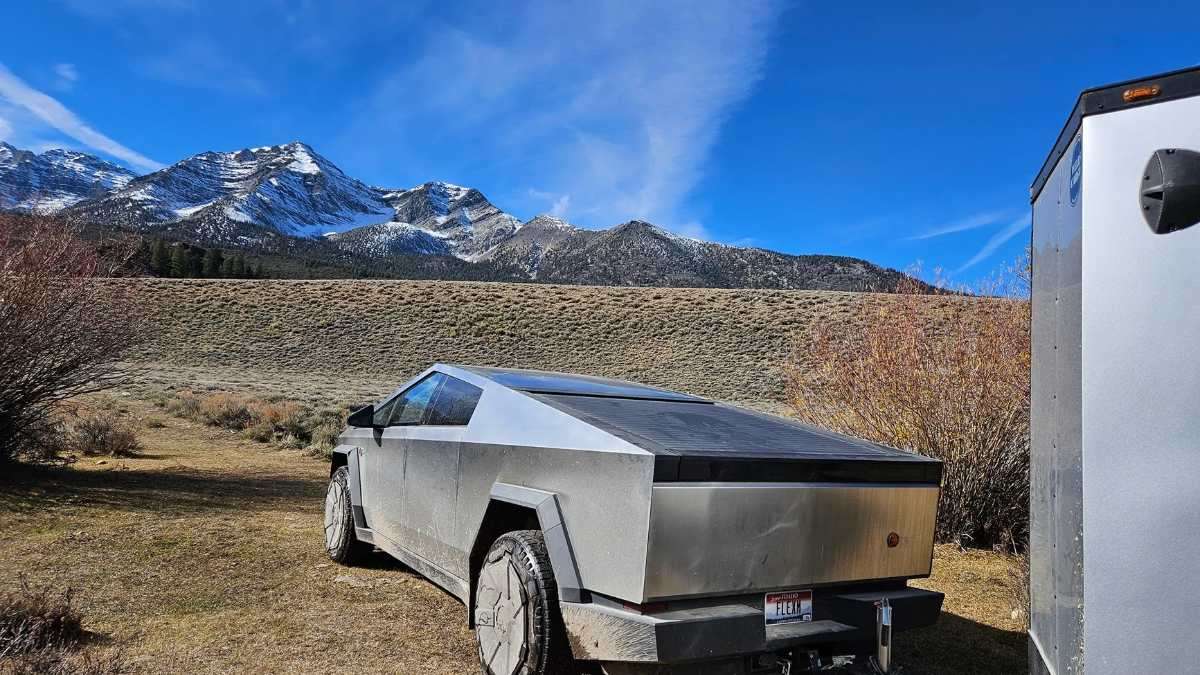

There are vehicles people debate, and then there are vehicles people argue about. The Tesla Cybertruck sits firmly in the second category. It’s not just a pickup truck, it’s a rolling cultural argument about design, innovation, electric vehicles, and what we expect cars to be. Under one recent Torque News story about a Cybertruck owner experiencing a frustrating issue, two reader comments captured that divide perfectly. One dismissed the truck outright. The other pushed back in a way that deserves more attention than a typical comment reply.
Before unpacking why this exchange matters, and why Weldon’s response hits closer to the truth than many casual critics might admit, it’s worth reading both comments in full.
“I think the Cybertruck is a ridiculous looking automobile if you can call it that. It reminds me of something from a child's Hot Wheels collection. One of the ugliest contraptions on the road. IMHO, just a piece of junk with wheels.”
- Tom
And the reply:
“And yet a lot of people disagree. Cybertrucks sell out daily. I don't know why people like you feel the need to be so negative towards something that has zero effect on their own lives.
Electric vehicles are still a new concept, and will only improve by the minute. Innovation requires being unique and not copying everyone else. And at the end of the day, you aren't the target car buyer of the Cybertruck, and thus, your opinion is irrelevant.
Years ago, people said that the FJ Cruiser looked like a child's toy as well, and that it was a hideous novelty truck. It's now one of the most sought-after 4x4 trucks to ever be made, and the value only goes up. One sold for $112k last year.
So when people like you don't like something, I would say the project is headed for success!”
- Weldon Rodriguez
This exchange isn’t really about two commenters disagreeing. It’s about how people react to disruptive vehicles, and why negativity often says more about the critic than the product.
The Cybertruck Hate Is Usually About Looks - Not Experience
Let’s be honest: calling the Cybertruck ugly is not a new or insightful criticism. The stainless-steel wedge design practically invites it. But what Weldon points out - without saying it directly - is that aesthetic rejection isn’t the same thing as informed judgment.
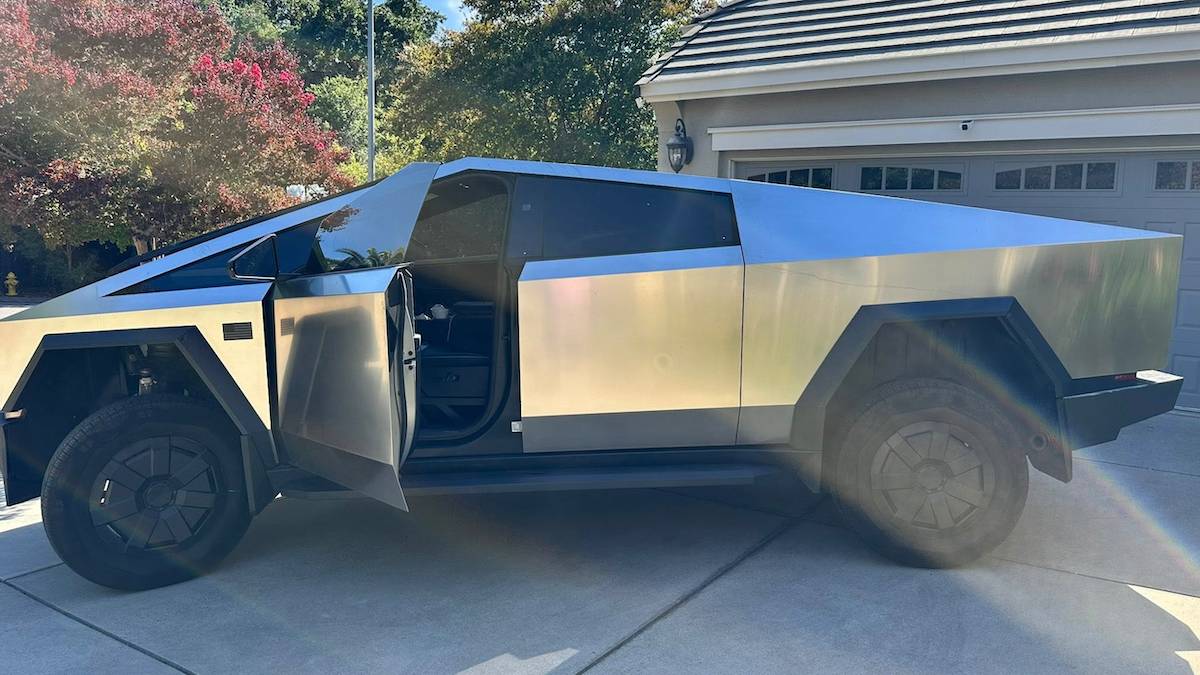
Many of the loudest critics of the Cybertruck have never driven one, towed with one, or lived with one. Meanwhile, owners are starting to rack up real miles and real stories. One particularly telling example comes from a Torque News piece where a Cybertruck owner directly compared it to his previous Ford, GMC, and Chevy trucks and explained why the Cybertruck surprised him in daily ownership, challenging the idea that it’s just a novelty toy on wheels:
👉 Tesla Cybertruck owner says compared to my previous Ford, GMC, and Chevy trucks, the Cybertruck has been…
You may still hate the design after reading that, and that’s fine. But dismissing the truck as “junk” becomes harder when real owners are making direct comparisons to America’s most established pickup brands.
“You Aren’t the Target Buyer” Isn’t an Insult - It’s Reality
Weldon’s most important line may be the simplest: “You aren’t the target car buyer of the Cybertruck.” That’s not gatekeeping; it’s market reality.
No vehicle is designed to appeal to everyone. The Cybertruck isn’t trying to convert traditionalists who want a chrome grille and a familiar silhouette. It’s aimed at buyers who value technology, novelty, EV performance, and standing out, even if that means being polarizing.
Even journalists who approach the Cybertruck skeptically often admit that the driving experience defies expectations. One writer described spending a day behind the wheel and coming away conflicted, calling it an oversized go-kart with surprisingly quick, almost tiny-feeling steering, a description that sounds dismissive until you realize it also hints at agility and performance you wouldn’t expect from something this size:
👉 I drove the Tesla Cybertruck for a day and honestly think it’s just an oversized go-kart with tiny steering
That kind of reaction doesn’t come from a vehicle that’s irrelevant.
Innovation Always Looks Wrong at First
Weldon’s FJ Cruiser comparison is more than nostalgia, it’s a reminder of how automotive history actually works. The vehicles that age best are often the ones people mocked early on.
At launch, the Toyota FJ Cruiser was dismissed as cartoonish and impractical. Today, it’s one of the most sought-after modern 4x4s on the used market. The Cybertruck is following that same early arc: ridicule first, reassessment later.
Early adopters seem to understand this. In one detailed first-impressions piece, a new owner openly discussed why he knowingly bought the most controversial truck in America, fully aware of the criticism, and why living with it has been more nuanced than the internet noise suggests:
👉 I bought the most controversial truck in America — my honest Tesla Cybertruck first impressions
That kind of self-awareness matters. These buyers aren’t blind fans. They’re participants in an experiment.
Real-World Use Keeps Undermining Simple Narratives
What makes the Cybertruck debate so persistent is that real-world stories keep complicating it. For every complaint, there’s an ownership experience that doesn’t fit the “junk” label.
One owner described a terrifying highway incident and credited his Cybertruck’s structure and safety systems, saying the truck likely saved his life when another vehicle ran a red light - not exactly the outcome you’d expect from a flimsy novelty:
👉 Tesla Cybertruck owner says the truck saved his life on the highway after another vehicle ran a red light
Another owner put the truck to work, towing over long distances, and reported that hauling a load for 350 miles from Los Angeles to Lake Havasu was far less stressful than expected, challenging assumptions about electric truck capability:
👉 I just towed my new Tesla Cybertruck 350 miles from Los Angeles to Lake Havasu and I hardly felt it
None of this means the Cybertruck is flawless. It isn’t. And that’s where nuance matters.
Loving a Truck Doesn’t Mean Ignoring Its Problems
Ironically, the article that sparked this comment thread wasn’t even glowing praise. It centered on an owner who openly admitted frustration, saying he loved his Cybertruck but regrettably didn’t have something positive to say about a recurring issue, a reminder that honest ownership includes criticism:
👉 Tesla Cybertruck owner says, “I love my truck, but regrettably I don’t have something positive to say…”
That kind of transparency is exactly what makes owner reporting valuable. It also undercuts the idea that Cybertruck supporters are blindly defensive. Many are simply realistic.
How Online Comment Culture Shapes Public Perception of the Tesla Cybertruck
One closely related angle we didn’t directly address is how comment-section culture itself influences public perception of controversial vehicles like the Tesla Cybertruck - often more than formal reviews or owner data. For many casual readers, the comments are where opinions harden. When extreme negativity goes unchallenged, it can create the illusion of consensus, even when sales data and real-world ownership tell a very different story. That’s why exchanges like the one between Tom and Weldon matter. Weldon’s response doesn’t just defend the Cybertruck; it disrupts the echo chamber and forces readers to reconsider whether they’re reacting to the vehicle itself or to a socially reinforced narrative that rewards outrage over nuance.
This dynamic is especially important for electric vehicles and electric pickup trucks, which already face skepticism from buyers worried about reliability, longevity, and real-world usability. When dismissive comments dominate the conversation, they can discourage genuine curiosity and slow broader EV acceptance, even as owners report towing success, crash safety benefits, and daily usability that contradict the loudest critics. In that sense, Weldon’s comment acts as a form of consumer advocacy. It reframes the discussion from “Do I personally like how this looks?” to “Why does this vehicle exist, who is it for, and what does the evidence say so far?” Inserted before the conclusion, this perspective helps readers understand that the Cybertruck debate isn’t just about stainless steel and sharp angles; it’s also about how modern car culture decides what deserves fair evaluation versus instant dismissal.
Why Weldon's Response Matters More Than Tom’s Insult
Calling something ugly is easy. Engaging with why it exists - and why others choose it - takes effort.
Weldon’s comment isn’t about silencing criticism. It’s about questioning why some people feel compelled to be aggressively negative about a product that doesn’t affect their lives at all, especially when evidence shows that real buyers are finding real value in it.
You don’t have to like the Cybertruck. You don’t have to want one in your driveway. But dismissing it as “junk with wheels” ignores a growing body of ownership data, real-world performance, and historical precedent showing that polarizing vehicles often outlast polite ones.
The Cybertruck may evolve. It may improve. It may even fail. But right now, it’s doing exactly what disruptive vehicles do best: forcing uncomfortable conversations.
Now let’s hear from you:
Do you think the Cybertruck’s extreme design and early real-world performance are signs of long-term success, or evidence that Tesla went too far this time?
And should opinions about vehicles carry more weight when they’re backed by ownership and experience rather than first impressions alone?
Drop your thoughts in the comments below and join the discussion.
Armen Hareyan is the founder and Editor-in-Chief of Torque News. He founded TorqueNews.com in 2010, which since then has been publishing expert news and analysis about the automotive industry. He can be reached at Torque News Twitter, Linkedin, and Youtube. He has more than a decade of expertise in the automotive industry with a special interest in Tesla and electric vehicles.
Image source: Denis Flierl via BC LeViet and Tesla Media Center.
Set Torque News as Preferred Source on Google
Follow us today...







Comments
It's OK. The CT won't be…
Permalink
It's OK. The CT won't be around after 2026 anyway. More CT's are getting cubed everyday.
What makes you to think that…
Permalink
In reply to It's OK. The CT won't be… by Buzz Wired (not verified)
What makes you to think that the Tesla Cybertruck won't be around after the 2026? I see the otherwise, in fact.