

Key Takeaways Before You Read:
- A Torque News Facebook post ignites a 302-comment debate over whether electric semis are already flipping the economics of short haul trucking.
- Drivers are converting mandatory rest breaks into full recharge windows, collapsing the biggest argument against electric long haul.
- One reader's comment on battery swap technology points to the move that could push electric semis into over the road trucking next.
A single Facebook comment started a firestorm. Two days ago I posted an opinion on our Torque News Facebook page about electric semi trucks cutting emissions by up to 90% compared to diesel. That post now has 302 comments and counting. And somewhere inside that thread, a reader named Jeff Southern said something that stopped me cold. He wrote that EV semi trucks will soon dominate short haul trucking because they are simply much cheaper to operate. He is right. And the conversation that followed his comment reveals exactly how close we already are to a massive shift in American freight.
With 15 years covering the automotive industry, I have watched a lot of technology get overpromised and underdelivered. Electric semi trucks are different.
Here is what I wrote in my original post that kicked off the whole debate:
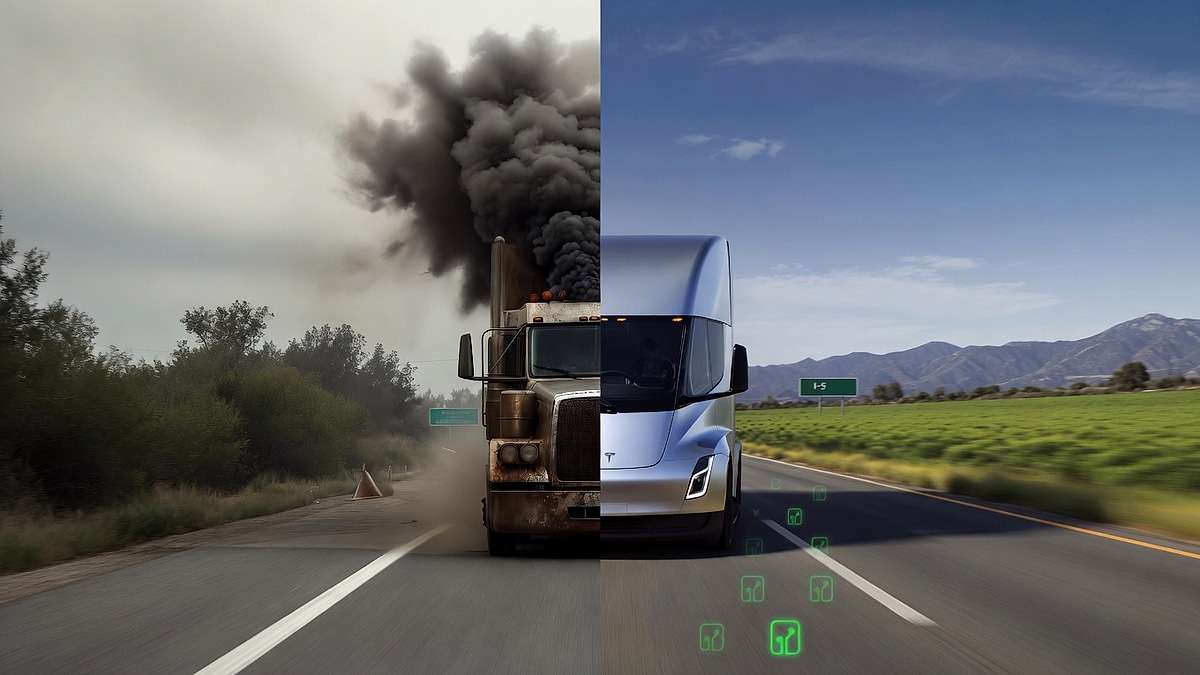
"Switching to an electric truck like the Tesla Semi changes the game. Tailpipe emissions drop to zero, and overall greenhouse gas emissions, including electricity generation, can fall by up to 90% compared to a typical diesel truck, especially when charged with clean or renewable energy. They're also much quieter, cheaper to operate with lower fuel and maintenance costs, and more efficient at turning energy into motion. As more fleets go electric, we could see dramatically cleaner air and a big step toward greener freight transport."
That paragraph triggered 302 responses. Most of them did not argue with the emissions claim. They argued about charging time, infrastructure gaps, and whether long haul routes are even feasible. Those are fair concerns. But they are also solvable problems. And some readers already figured out the solutions.
Why Short Haul Trucking Falls First to Electric Semis
Short haul trucking is the low hanging fruit here. Most people picture trucking as cross country marathon drives. But a significant share of commercial freight moves in relatively tight loops. Distribution centers, port runs, regional food delivery, retail restocking. These are routes where a truck leaves a depot, runs a circuit, and returns. That is exactly where an electric truck like the Tesla Semi already thrives in real world conditions, without needing a single charging stop along the route.
Short haul also means stop and go traffic. Think about urban delivery routes, warehouse districts, port access roads. A diesel engine burns fuel every second it idles. An electric motor does not. And every time an electric semi slows down, the regenerative braking system recovers energy and puts it back into the battery.
That brings up a point that gets overlooked. The Tesla Semi's regenerative braking system means the friction brakes are nearly impossible to wear out, especially on steep downhills or in stop and go urban conditions. A diesel semi running city routes chews through brake pads constantly. That is money. Brake maintenance savings alone, on a heavily cycled urban route, can justify switching to electric. Add zero oil changes, no DEF fluid, no transmission service, and you are looking at an entirely different cost structure.
The Math That Fleet Operators Cannot Ignore
Let us talk numbers. A diesel semi gets roughly 6 miles per gallon. At current fuel prices, that burns cash at a rate that would alarm any accountant. The Tesla Semi runs at approximately 15 cents per mile in operating costs, compared to nearly 50 cents per mile for a diesel equivalent. That is not a small edge. That is a structural cost advantage that compounds over time.
PepsiCo verified Tesla's efficiency claims in real world testing and calculated a 23% savings in fuel costs, with drivers reporting overwhelmingly positive experiences behind the wheel. And that was before the current ramp in production and charging network buildout.
The economics of the Tesla Semi show it is roughly 83% cheaper to operate per mile than a standard diesel truck, not counting the reduced maintenance costs from having no engine oil, no transmission fluid, and nearly zero brake wear. For a fleet running hundreds of trucks, that math changes everything. The upfront cost difference becomes irrelevant when you calculate three year operating savings. For larger fleets, that payback period arrives fast.
How a Mandatory Rest Break Becomes a Recharge Moment
Here is where the conversation inside our Facebook post got genuinely interesting. Reader Karl Hering replied to Jeff Southern with a point that directly addresses the long haul skeptics.
He wrote that he sees electric semis taking over long haul too. His reasoning, "Once we have enough charging stations, a driver can make his mandatory break be a recharge moment, and he can drive 11 hours, which is the legal daily limit. Then he can charge while he's resting, and repeat the next day."

That is not wishful thinking. That is already technically feasible. Federal DOT regulations require a 30 minute break after 8 hours of consecutive driving. Tesla's Megacharger can deliver up to 60% of the Semi's range in that exact 30 minute window. The charging speed that critics said would make electric trucking impractical lines up almost perfectly with required federal rest breaks. The driver takes the legally mandated break. The truck charges. Nobody loses time. The argument that charging takes too long collapses when you realize the truck is charging while the driver is resting anyway.
And the overnight rest period is equally powerful. A driver legally requires a 10 hour off duty break between shifts. That is more than enough time for a full charge at a depot. Short haul fleets in particular almost always return to a central facility at night. A plugged in truck overnight is a fully charged truck in the morning. The problem most people imagine does not actually exist on most short haul routes.
The Charging Network Problem Is Already Being Solved
The biggest legitimate objection to widespread EV semi adoption is infrastructure. You cannot electrify American freight without a serious charging network along major corridors. That buildout is now happening faster than most people realize.
Tesla has announced 64 Megacharger locations mapped across the country, with Texas leading at 19 planned sites and California with 17. Electrek reported that Tesla has partnered with Pilot, the nation's largest truck stop operator, to install Megachargers along I-5, I-10, and other major freight corridors, with first sites expected to open in summer 2026. Each Pilot location will have 4 to 8 charging stalls capable of 1.2 megawatts per stall. The company is also aiming for 46 Megacharger stations operational by early 2027.
This is not a promise. Construction on the first sites is already underway. The network is forming around the corridors where freight actually runs.
What About Over the Road Trucking? Battery Swap May Be the Answer
One of the most provocative comments in the thread came from reader Dwayne Talkington. He pointed out that if the United States follows what some other countries are already doing, electric semis can take over OTR, meaning Over the Road trucking, as well. He wrote, "if we follow other countries it can take over OTR also. Many Chinese companies are designed with batteries that take about 5 minutes to switch out."
A five minute battery swap is faster than a diesel fuel stop when you factor in the time to pull into a truck stop, handle paperwork, and get back on the road. Battery swap technology for heavy trucks is already deployed at scale in China. The question for American fleets is whether the infrastructure investment makes sense here. For high volume freight corridors, the economic case is strong.
As Torque News has reported on the rapid advancement of the Tesla Semi factory toward 50,000 units per year, volume production is now a reality, not a projection. Volvo has already delivered its 5,000th electric semi truck. The industry is moving, quietly but steadily, toward a tipping point.
The Pressing Problem for Small Trucking Companies
Here is the issue that does not get enough attention in this conversation. Large fleets like Walmart, Sysco, DHL, and PepsiCo can absorb the upfront cost of electric semis and negotiate fleet pricing. Small independent trucking operators, running one to ten trucks, face a harder situation.
The Tesla Semi's price is a significant barrier for small operators without the scale to negotiate and without the capital reserves to absorb a longer payback period. This is a real problem that the industry needs to solve, and it will require leasing programs, financing tools, and possibly policy support to make electric semis accessible to small carriers.
The moral lesson here matters. The benefits of lower emissions, cleaner air in cities, and cheaper freight should not accrue only to the largest corporations. If the electric trucking transition leaves small operators behind, that is not progress. That is consolidation wearing a green badge. Understanding how the Tesla Semi's autonomous future could reshape trucking employment is just as important as understanding its fuel savings. Decisions made now about infrastructure, financing, and policy will determine whether this transition is equitable or exclusionary.
The best version of the electric trucking future is one where a small family owned carrier in the midwest can access the same cost advantages as a Fortune 500 logistics company. That requires deliberate effort, not just market forces.
The Uphill Test Has Already Been Passed
Some skeptics still question whether electric semis can handle heavy loads and challenging terrain. That question has been answered. The Tesla Semi has already demonstrated it can pass diesel trucks on the Verdi grade in California, carrying significant weight, in real world conditions. Electric motors deliver full torque instantly. They do not need to downshift and build power the way a diesel does.
The Tesla Semi has racked up 13.5 million combined real world miles, with 95% uptime across the fleet, and one truck has already crossed 440,000 miles with the battery performing well. The technology is proven. The production is ramping. The charging network is growing. The economics are overwhelming.
Short haul trucking is not waiting for the future. It is already in the middle of the transition. The question is not whether electric semis will take over short haul routes. The question is how fast, and whether the people who depend on trucking for their livelihoods will be brought along or left behind.
The drivers who make those mandatory rest stops every day deserve trucks that work as hard as they do, cost less to run, and come back clean on the other side.
What has your personal experience been with electric trucks or EVs in commercial settings? Have you seen electric semis on your local routes yet, and do you think small trucking companies will get a fair shot at making this transition? Share your thoughts in the comments section below, this conversation is just getting started.
About The Author
Armen Hareyan is the founder and Editor-in-Chief of Torque News and an automotive journalist with over 15 years of experience writing car reviews and industry news. Now based in the Charlotte region (Indian Land, SC, he founded Torque News in 2010, which since then has been publishing expert news and analysis about the automotive industry. He can be reached at Torque News on X, Linkedin, Facebook, and Youtube. Armen holds three Masters Degrees, including an MBA, and has become one of the known voices in the industry, specializing in the landscape of electric vehicles and real-world stories of actual car owners. Armen focuses on providing readers with transparent, data-backed analysis bridging the gap of complex engineering and car buyer practicality. Armen frequently participates in automotive events throughout the United States, national and local car reveals and personally test-drives new vehicles every week. Armen has also been published as an automotive expert in publications like the Transit Tomorrow, discussing how will autonomous vehicles reshape the supply chain, and emerging technologies in vehicle maintenance.
Set Torque News as Preferred Source on Google
Follow us today...







Comments
It would work great for…
Permalink
It would work great for running relays.
Why not charge the Tesla…
Permalink
Why not charge the Tesla Semi at the loading dock? Makes much more sense.
Oh - this is funny ""soon to…
Permalink
Oh - this is funny ""soon to take over." Uhm - how many of these multi MW chargers for tricks do you see around today at truck stops? AND - do you know how expensive they are per kWh....