
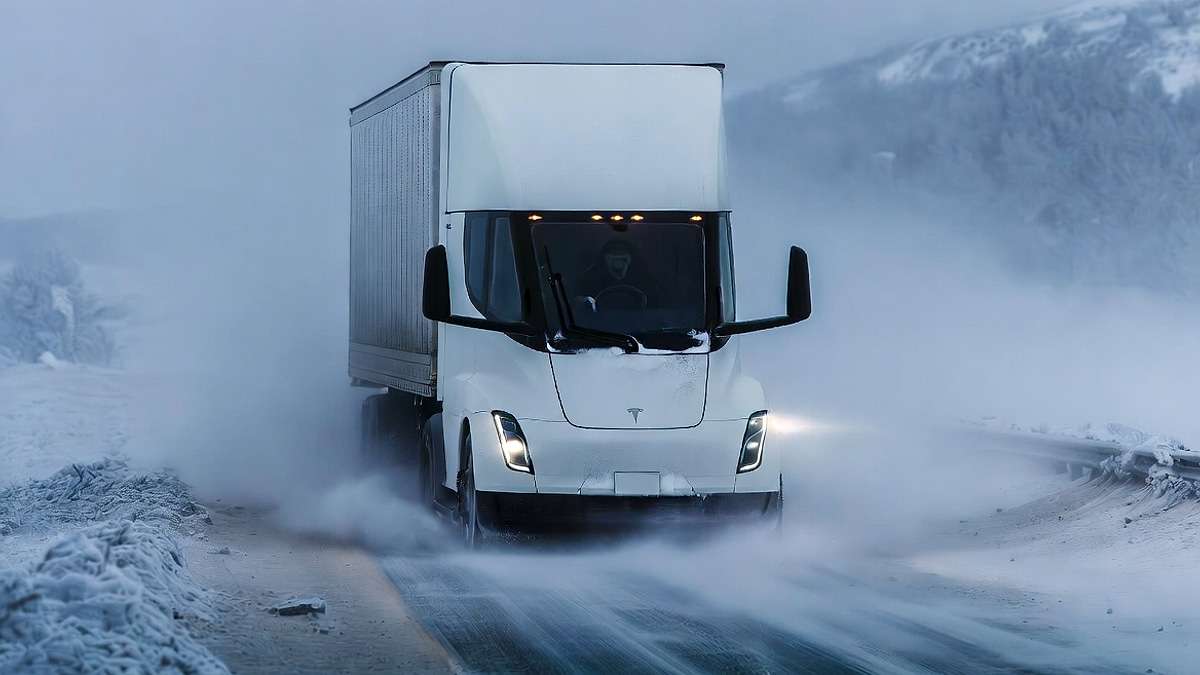

Here is a problem that keeps fleet managers and long haul truck drivers up at night, and it is not the one you expect. It is not fuel prices, not driver shortages, not even tire wear on those brutal northern routes. It is a simple, maddening question: will my truck make it through a Canadian winter without costing me an extra stop, an extra hour, or a blown delivery window? If you run electric trucks through freezing temperatures, you already know the answer has not been great. Until now. Tesla just pulled a move that is as clever as anything in modern automotive engineering, and the key to understanding it starts with a battery shape that almost nobody is talking about. If you want to know why the Tesla Semi Long Range is quietly becoming the most serious cold weather hauling tool the electric trucking world has ever seen, read this all the way through. There is a lesson buried in this story that matters not just for truck operators, but for anyone making big decisions about electric vehicles in 2026. We have covered how real world cold weather range loss has been hitting Cybertruck owners hard this winter, and we have also tracked why the Tesla Semi's 95 percent uptime record is so hard to ignore for fleet operators. Both of those stories feed directly into what Tesla is doing here.
Tesla Semi program chief Dan Priestley explained the engineering decision in plain English during a recent Jay Leno's Garage episode that offered one of the most candid technical deep dives into the Semi since the truck entered production. "We're using essentially the same cell out of Cybertruck, but our car packs are more like a pancake. Whereas these are more like a cube. You get a lot of energy stored in a small space. You can only do this if you design the vehicle to be electric from the ground up."
Read that last sentence one more time, because it is the whole story.
What "Born Electric" Actually Means in Practice
The phrase "designed from the ground up to be electric" gets thrown around a lot in automotive journalism. Tesla uses it. So do legacy truck manufacturers trying to put a positive spin on converted diesel platforms. But there is a real engineering difference between the two, and the Tesla Semi's cubic battery pack is the clearest proof of that difference you will find anywhere in trucking right now.
When you take a diesel truck and electrify it, you are working around a chassis that was optimized for a fuel tank, an engine block, and a transmission tunnel. The battery has to fit into whatever space is left. That forces engineers into a flat, pancake shaped pack that spreads the cells horizontally across the frame. That shape is not bad, but it exposes more surface area to the cold. A flat pack has a higher ratio of outside surface to interior volume, which means the cold gets in faster and the thermal management system has to work harder to keep the cells at their operating temperature. The cells lose efficiency, the range drops, and you end up burning stored energy just to stay warm instead of moving freight.
Tesla built the Semi around the battery, not the other way around. The cubic pack design stacks 4680 cells vertically into a dense, tall block. Think of it this way: a pancake left outside in January gets cold all the way through almost instantly. A dense cube of the same material stays warmer in the middle far longer, because the ratio of surface area to interior volume is much smaller. That geometry is not an accident. It is a deliberate thermal advantage, and it is something that cannot be reverse engineered onto a converted diesel platform no matter how much money a legacy manufacturer throws at the problem. This matters enormously if you are running routes in Canada, Minnesota, Scandinavia, or anywhere the overnight temperature routinely drops below zero. If you want to understand the baseline cold weather challenge all EVs face, this breakdown of what cold temperatures actually do to Tesla LFP battery chemistry gives you a clear picture of what engineers are working against.
The Heat Pump Connection Nobody Is Explaining Clearly
The cubic pack does not work alone. Tesla paired it with a heat pump system that recycles thermal energy from the three motors and from regenerative braking to keep the pack at its ideal operating temperature. This is the same principle that makes modern heat pumps in homes so efficient compared to simple electric resistance heaters. Instead of generating heat from scratch by burning energy, the system moves heat from where it already exists to where it is needed. The motors generate heat as a byproduct of running. The braking system generates heat every time the driver slows down. In a diesel truck, all of that heat goes nowhere useful. In the Semi, it goes back into the battery pack.
The result is a system that holds the pack closer to its ideal temperature range even after sitting overnight in sub zero conditions. This means fewer unplanned charging stops, more predictable route planning, and reduced energy drain on cold mornings. We have covered essential cold weather charging strategies for Tesla vehicles in depth, and the same logic that helps a Model Y owner survive a Minnesota winter applies at a much larger scale to a Semi hauling 80,000 pounds of cargo through Alberta.
What Fleet Operators Need to Know Right Now
Here is where this gets practical, and it is worth slowing down to look at the numbers clearly. Cold weather range loss for electric trucks on older or converted platforms runs anywhere from 20 to 40 percent. That is not a rounding error. For a truck rated at 300 miles of range in ideal conditions, a 30 percent cold weather penalty leaves you with 210 miles of real world range. That changes route planning, charging infrastructure requirements, and payload calculations in ways that make the economics painful. That is the problem Tesla is directly addressing with this battery architecture.
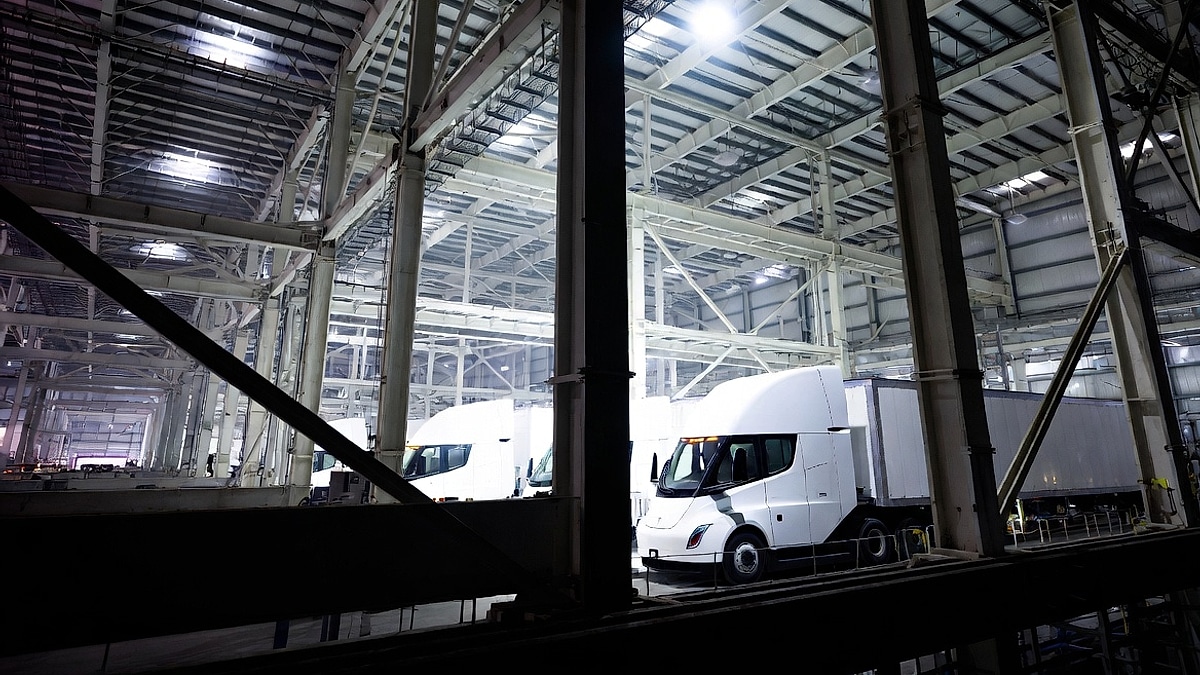
Teslarati has reported that volume production of the Semi began in March 2026 at the new Tesla Semi factory, which is located directly adjacent to Gigafactory Nevada, with the 4680 battery cells that power the Semi manufactured in the same complex, significantly streamlining supply logistics. That is not just a supply chain efficiency story. It means Tesla can tune and refine the battery chemistry and pack design in real time, informed by data from trucks already on the road, without the lag of dealing with a third party supplier.
The 2026 production model also carries a 1,000 pound weight reduction, updated aerodynamics, and support for 1.2 MW Megacharger speeds that can restore 60 percent of range in around 30 minutes during a mandatory driver rest break. Think about that from a driver's perspective. You are required by federal DOT regulations to take a 30 minute break after 8 hours of driving. The Megacharger adds 300 miles of range in that exact same window. The charging penalty critics have been complaining about for years has essentially been engineered away.
For additional context on how the Tesla Semi already convinced skeptics with 13.5 million real world miles and California diesel topping 7 dollars a gallon, the economics of electric long haul trucking have shifted faster than most people realize. And the cold weather battery architecture is the piece of that story that has been underreported.
Why Tesla's Legacy Competitors Cannot Simply Copy This
This is the part of the story that should make Volvo, Freightliner, and Kenworth engineers genuinely uncomfortable. It is not that their trucks are badly designed. It is that they started from the wrong place. Converting a diesel platform to electric power means the battery has to compromise. The cubic pack geometry Tesla uses requires the entire chassis to be planned around it from day one. You cannot retrofit that advantage.
We covered how Pepsi's Frito Lay operation in California revealed real world Tesla Semi range numbers that validated exactly this point: trucks running predictable routes with depot charging perform differently than critics who never modeled those use cases expected. Now add the cold weather advantage of the cubic pack, and the gap between Tesla's ground up design and converted diesel platforms grows wider, not narrower.
It is worth understanding the full 4680 technology picture here. We have previously examined how Tesla's new patent promises significantly lower production costs for the 4680 battery cells that power the Cybertruck and now the Semi, which means the economic advantage of the battery technology should grow over time as manufacturing costs fall. That is the kind of compounding advantage that reshapes industries.
What This Means for Truck Drivers Who Live Through Cold Winters Every Year
If you are a truck driver working routes in the northern United States or Canada, the conversation around electric semis has probably felt distant, theoretical, or even hostile to your daily reality. Range anxiety on a long haul route in January is not an abstract concern. It is a schedule, a paycheck, and a delivery commitment all wrapped into one.
The thermal advantages of the cubic 4680 pack address that concern directly. This is not marketing language. It is geometry and thermodynamics. We have written before about how Tesla Model Y owners in Minnesota and Alberta manage cold weather range loss with practical real world strategies, and the core principle carries forward: vehicles that were designed with cold weather in mind from the beginning perform better in cold weather than vehicles that were adapted to it after the fact. The Semi is simply applying that principle at a commercial scale.
The wisdom in all of this extends beyond trucking. It is a lesson worth sitting with. The best decisions, whether in engineering or in life, are the ones made when you have the freedom to design for the real goal from the very beginning, rather than adapting an old structure to a new purpose and hoping the compromises do not catch up with you. Tesla did not take a diesel Semi and bolt batteries onto it. They asked what a long haul truck should look like if electricity was the starting assumption, not the afterthought. That mindset produced the cubic pack, the heat pump integration, the ground up thermal system, and the 95 percent uptime record that no converted diesel platform has come close to matching. In your own decisions, whether you are choosing a vehicle, a career path, or a business strategy, building from the right foundation matters more than most people admit.
The Tesla Semi is not a perfect truck. No truck is. Range in extreme cold is still being mapped across real routes and real operators. The Megacharger network is still growing. Small trucking companies cannot yet access the Semi the way large fleets can, as we noted when we covered why the Tesla Semi's progress matters even for operators who are not yet ready to make the switch. But the direction is clear, and the cubic 4680 pack is one more piece of evidence that Tesla is solving the right problems in the right order. For fleet operators making purchasing decisions for cold climate routes in 2026 and beyond, this battery architecture story is not a footnote. It is the headline.
If you run an electric fleet or drive an EV through northern winters, has cold weather range loss actually changed your route planning or charging habits in ways you did not expect, and what would it take for a truck like the Semi to become a real option on your routes? And for those of you watching the electric truck space as owner operators or independent drivers, do you think the "born electric" design advantage is enough to overcome the infrastructure gap in cold weather states, or does the Megacharger network still need to grow before this becomes a practical reality for most haulers? Drop your experience and your take in the comments section below.
About The Author
Armen Hareyan is the founder and Editor-in-Chief of Torque News and an automotive journalist with over 15 years of experience writing car reviews and industry news. Now based in the Charlotte region (Indian Land, SC, he founded Torque News in 2010, which since then has been publishing expert news and analysis about the automotive industry. He can be reached at Torque News on X, Linkedin, Facebook, and Youtube. Armen holds three Masters Degrees, including an MBA, and has become one of the known voices in the industry, specializing in the landscape of electric vehicles and real-world stories of actual car owners. Armen focuses on providing readers with transparent, data-backed analysis bridging the gap of complex engineering and car buyer practicality. Armen frequently participates in automotive events throughout the United States, national and local car reveals and personally test-drives new vehicles every week. Armen has also been published as an automotive expert in publications like the Transit Tomorrow, discussing how will autonomous vehicles reshape the supply chain, and emerging technologies in vehicle maintenance.
Set Torque News as Preferred Source on Google
Follow us today...





Comments
Ahhh! For a guy with a…
Permalink
Ahhh! For a guy with a master's degree in Heat Transfer and Thermodynamics you "speak my language"! How refreshing. Maybe one day they get to make that battery spherical, and the problem would be optimized. (For those wondering: the sphere has the lowest surface to volume ratio of any solid).