
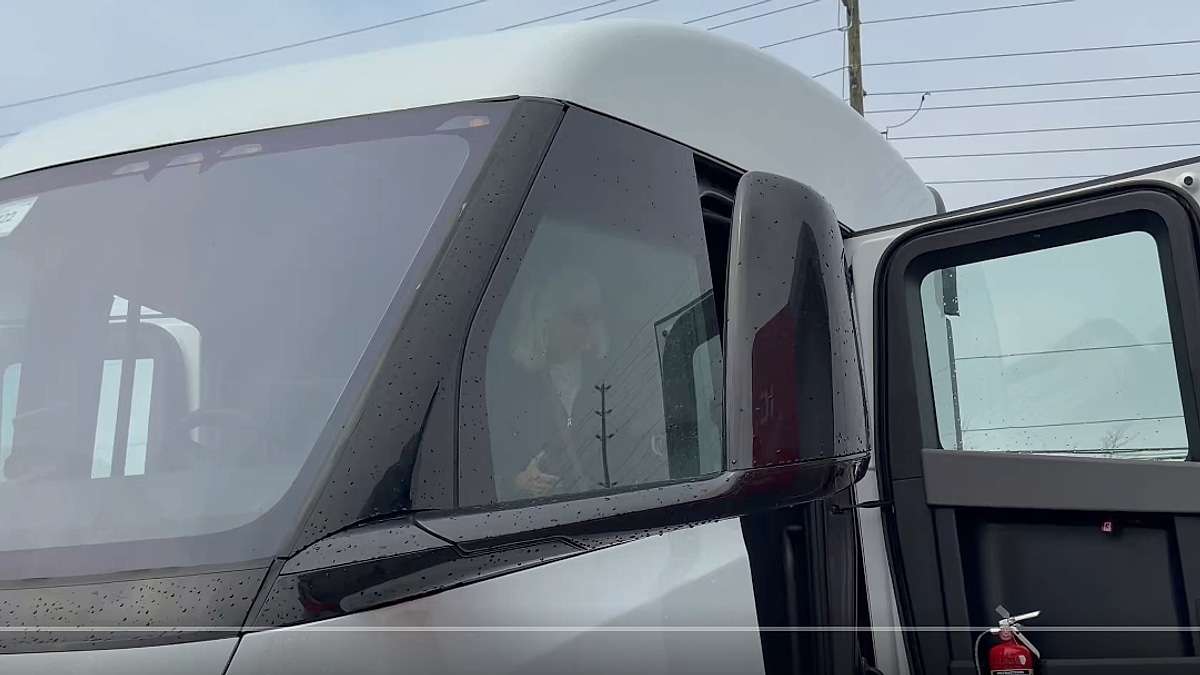

Something caught my eye on X this afternoon, and if you follow the electric vehicle space at all, you need to stop and pay attention to what Tesla analyst Nic Cruz Patane just shared. He posted a video showing the camera array on the production Tesla Semi, and the caption is as blunt as it gets: "Tesla Semi AI4 cameras. The production version has 10 cameras on its exterior. These trucks are designed to be autonomous." Ten cameras. AI4 hardware. Designed to be autonomous. Let that land for a second. With 15 years in the automotive industry, I have watched a lot of technology claims come and go, but this one is different. This is not a concept. This is production hardware, rolling off a real assembly line right now. If you have ever wondered whether Tesla's real-world approach to electric trucking economics was ever going to connect with autonomous capability, or if you have been tracking how Tesla Semi's born-electric architecture is solving problems competitors cannot simply copy, this post from Patane is the moment you have been waiting for.
So let me walk you through exactly what this means, why it matters, and what question you should be asking that almost nobody is.
Why 10 Exterior Cameras Change Everything About This Truck
Here is what most people miss when they hear "10 cameras." This is not about parking sensors or helping a tired human driver avoid clipping a curb. This is about building a full 360-degree vision platform from the ground up, with overlapping fields of view, so that no single point of failure can compromise the system. Forward-facing cameras for long-range detection, side cameras embedded in the mirror housings for blind-spot elimination, rear-facing units for trailer monitoring and reversing, and additional angles covering the wheel wells and low-visibility zones.
What Patane's video also shows is subtle red indicator lights on those AI4 camera units, signaling that these are active systems, not passive lenses. Tesla's vision-only philosophy, the one the company has refined across millions of miles on consumer vehicles, is now being scaled to a Class 8 truck, which means the neural networks trained on all that consumer fleet data are now being asked to handle 80,000-pound payloads at highway speeds. That is a serious engineering commitment, and it did not happen by accident.
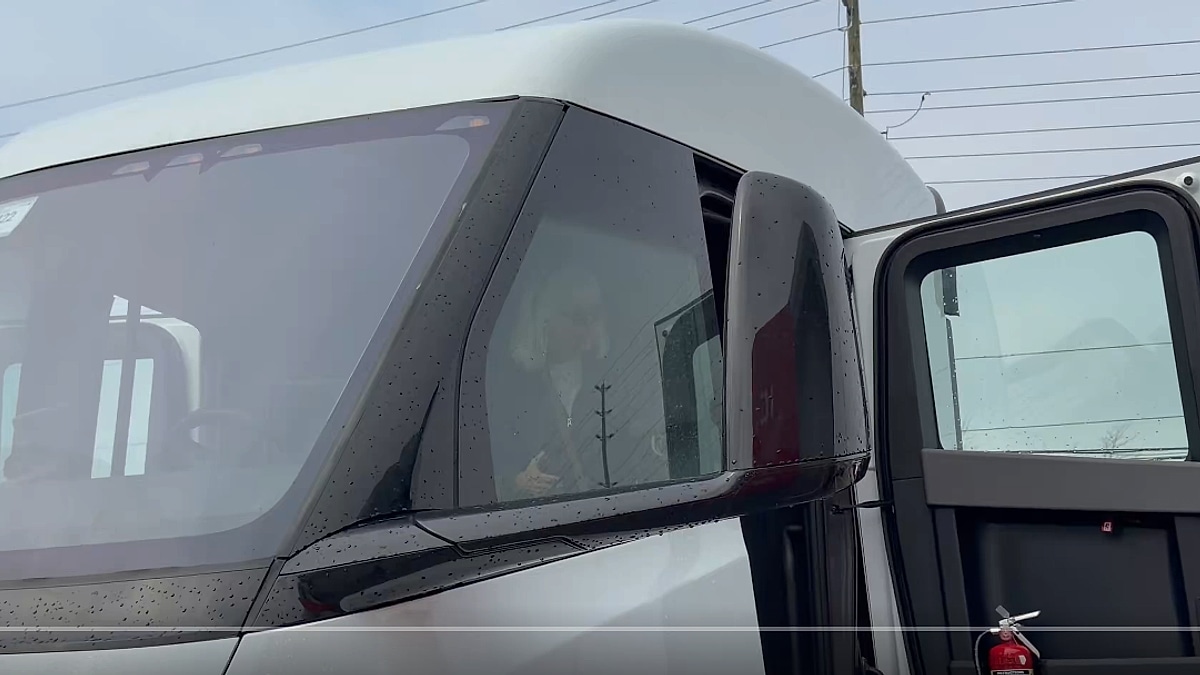
Tesla's AI4 hardware is a meaningful step beyond the HW3 that powered earlier vehicles. It brings higher resolution front-facing cameras, a more powerful FSD computer, and a sensor suite tuned for the demands of real-world autonomy. The fact that the production Semi ships with this hardware baked in, rather than as a retrofit, tells you everything about Tesla's long-game strategy. The debate about whether Tesla Semi would ever truly change the trucking industry has been running since 2017. The answer is sitting right there in Patane's video, staring back at you from those mirror-mounted camera pods.
Tesla Semi AI4 cameras. The production version has 10 cameras on its exterior.
These trucks are designed to be autonomous. pic.twitter.com/GH3BamxIBQAdvertising
— Nic Cruz Patane (@niccruzpatane) April 14, 2026
This Is Not a Surprise. It Has Been the Plan All Along.
Remember back when Pepsi first started running Tesla Semis out of their Frito-Lay facility in Modesto, California? Pepsi's VP of Supply Chain told CNBC directly that the autonomous functionality was not activated yet, but the hardware was already there, saying it would come as "an additional capability down the road." That was 2023. This is 2026. And right now, PepsiCo's real-world Tesla Semi mileage numbers show trucks delivering Frito-Lay products across 425-mile routes, with one truck logging over 1,076 miles in a single day. The foundation was always there. What Patane's post confirms is that the production version of the Semi is not waiting for autonomy to catch up. The autonomy hardware is riding along from day one, waiting for the software and regulatory green lights to unlock it.
This is what Tesla does. It ships the hardware ahead of the software, collects data, trains the neural networks, then activates capabilities through over-the-air updates. It worked with Autopilot. It worked with FSD on consumer vehicles. And now, with Tesla's brand new Semi factory in Nevada ramping toward 50,000 trucks per year, each of those trucks will carry this same AI4 camera platform, building the dataset that makes full autonomy possible. Volume production that started in March 2026 at the Nevada facility adjacent to Gigafactory Nevada means this is not a small-batch experiment. According to Teslarati, this factory houses a 1.7 million square foot facility with 4680 battery cells manufactured on the same campus, giving Tesla an integrated supply chain no competitor can match.
The Human Element Nobody Wants to Talk About
Now here is where I have to be straight with you, because this story has a side that deserves real thought, not cheerleading. The American trucking industry is currently short over 80,000 drivers, with some analysts projecting that gap could widen past 160,000 by 2031. Trucking is a grueling career. Long-haul isolation, fatigue-related accidents, brutal schedules, and the physical toll of years behind the wheel. The question of what happens to 3.5 million truck drivers in the United States when full self-driving autonomy comes to the Semi is one of the most important questions in the American economy right now.
The honest answer is that change will not happen overnight. Regulatory approval for Level 4 autonomy on public highways, insurance frameworks, and public trust all have to be earned. Short-haul and depot-to-depot routes will almost certainly be the first corridors to go autonomous, because the argument that Tesla Semi will not change trucking ignores how massive the short-haul market really is. Long-haul highway driving, which is actually the simplest driving in terms of environmental complexity, comes next. Human drivers will not vanish from trucking on a Tuesday. But the direction is not ambiguous. The hardware Nic Cruz Patane filmed is not going back in the box.
What responsible people in this conversation should be asking is not whether autonomous trucking is coming, but how the transition happens with the least possible disruption to the millions of families who depend on trucking income. That is a conversation for policymakers, industry leaders, and workers themselves, and it deserves more seriousness than either the pure optimists or the pure doomsayers bring to it.
What the Comments Section on X Told Us
After Patane's post, the replies gave a clear read on how the community is processing this. One commenter simply confirmed the intent, saying the trucks are indeed designed for autonomous operation. Another framed it as a safety upgrade for an industry with a well-documented fatigue and accident problem. A third, who identified as an engineer, pointed to the redundant camera systems as the critical piece, noting that overlapping fields of view are what separates real autonomous engineering from science fiction. The skeptics asked why Tesla is still running physical mirrors instead of going full digital. That is a fair question, and the honest answer is that U.S. regulations still require physical mirrors for human-operated vehicles. Tesla is threading the needle: physical mirrors now for compliance, hardware ready for the driverless future when the rules catch up.
The Moral of This Story Is Bigger Than Any One Truck
Here is what I want you to take away from this, beyond the specs and the strategy. The best decisions, in business and in life, are the ones made with the long view in mind. Tesla has been criticized for years for delays, for missing production targets, for promising autonomy before it was ready. But look at what they actually built. A truck with 95 percent uptime, running at 15 cents per mile against diesel at nearly 50 cents, with autonomous hardware already installed and waiting. The lesson is not that perfection happens fast. The lesson is that patient, systematic investment in the right foundation eventually produces something no shortcut can replicate. Whether you are evaluating a vehicle purchase, a career decision, or a business investment, that principle holds. Build the platform right, even if it takes longer than you planned.
The 10 cameras on the Tesla Semi are not just hardware. They are a commitment. A statement that the people who designed this truck believed the autonomous future was real and built for it from the very first bolt. That kind of conviction, backed by real engineering and not just press releases, is what moves industries.
So here is what I want you to weigh in on, because this affects all of us, not just Tesla owners or fleet managers.
If Tesla's AI4-equipped Semi receives regulatory approval for Level 4 autonomous operation on American highways in the next two to three years, do you think the trucking industry and federal regulators are actually ready to manage that transition responsibly, or will the technology outpace the rules once again?
And for those of you who drive for a living, whether that is a Semi, a delivery van, or even a rideshare vehicle, how are you personally thinking about what autonomous driving hardware like what Nic Cruz Patane just showed us means for your career in the next five to ten years? Share your thoughts and your experience in the comments section below.
About The Author
Armen Hareyan is the founder and Editor-in-Chief of Torque News and an automotive journalist with over 15 years of experience writing car reviews and industry news. Now based in the Charlotte region (Indian Land, SC, he founded Torque News in 2010, which since then has been publishing expert news and analysis about the automotive industry. He can be reached at Torque News on X, Linkedin, Facebook, and Youtube. Armen holds three Masters Degrees, including an MBA, and has become one of the known voices in the industry, specializing in the landscape of electric vehicles and real-world stories of actual car owners. Armen focuses on providing readers with transparent, data-backed analysis bridging the gap of complex engineering and car buyer practicality. Armen frequently participates in automotive events throughout the United States, national and local car reveals and personally test-drives new vehicles every week. Armen has also been published as an automotive expert in publications like the Transit Tomorrow, discussing how will autonomous vehicles reshape the supply chain, and emerging technologies in vehicle maintenance.
Set Torque News as Preferred Source on Google
Follow us today...


Comments
Waiting to see how well…
Permalink
Waiting to see how well these ten cameras perform in fog, a downpour, snow and ice. It is a major accident that is going to happen.
That's a really good point…
Permalink
In reply to Waiting to see how well… by Don Shuart (not verified)
That's a really good point. How do your eyes perform in fog? How do your headlamps and windshield perform in a downpour, snow and ice? How's your reaction time when something goes wrong? How's your 360° vision? 40,000 plus people die a year on US roads, every year. Glad we've got you looking out for our safety, otherwise there might be a major accident.....