

Key Takeaways Before You Read:
- A New York attorney's complex Rivian L2 charger at Yosemite exposed the structural flaw draining EV adoption nationwide.
- The charger that finally worked asked nothing from the driver, and that gap reveals everything broken about how the industry built this network.
- One proposed fix realigns the financial incentive so that every charging failure costs the operator, not the driver.
- Scroll to see the comments or be the first to voice your opinion.
With more than 15 years covering the automotive industry here at Torque News, I have seen wave after wave of EV optimism crash against the rocks of real-world infrastructure. The charger that does not work. The app that will not load. The account that will not authenticate. These are not edge cases. They are routine. And now an attorney from New York has put the clearest name yet on the root cause, after a single trip to Yosemite made the whole problem impossible to ignore. This connects directly to the broader challenge we have explored at Torque News about how rental EV drivers were stranded for hours because an Electrify America app lock blocked their charging access, a problem that stems from exactly the same overcomplicated, over-networked system. And it echoes what we have reported about how EV road trips have gone from miserable to enjoyable in the last couple of years, though miserable is still very much on the table when the infrastructure refuses to cooperate.
What One Attorney Discovered About Broken EV Chargers at a National Park
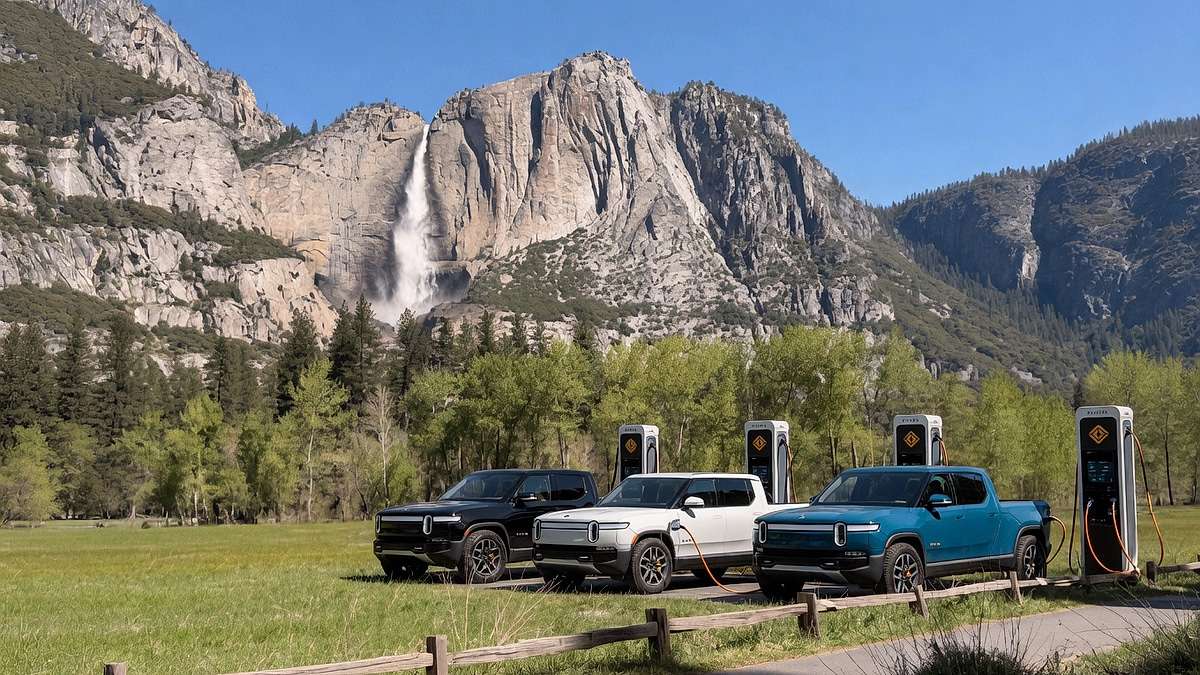
Vartan Badalian, an attorney based in New York, recently posted a detailed account of his EV charging attempt at Yosemite National Park on LinkedIn. His post reached thousands of people, and for good reason. He described exactly the kind of experience that drives potential EV buyers back toward gasoline. Here is what Badalian wrote in full:
"I recently tried to charge my EV at Yosemite. Two of four Rivian L2 chargers were showing available. Neither worked. Others before me and after me equally struggled, laughed, and left with a look on their face of 'what else would we have expected.' I needed an app, a account, and a network connection just to attempt a charge that never happened. I clicked the button to initiate charge and nothing happened. Thankfully, I didn't really need to charge. But what if I did? Then my entire trip would have changed, I would have had to wait, until the other chargers opened up. Then I plugged into my camp site's Level 2 'dumb' charger. It was a Tesla Level 2 Wall Connector. It just worked. Same trip. Completely different experience. And it told me everything about what's wrong with how we're building EV charging infrastructure. But honestly it's something I've been thinking about for a while. Amazon didn't win by building the most sophisticated retail technology. They won by making it effortless to buy something. One click. Done. The complexity is invisible. Apple didn't win by building the most powerful phone. They won by making the most powerful phone feel simple. The EV charging industry went the opposite direction. We added apps, accounts, cloud dependencies, and networked session initiation to a product that is fundamentally just an outlet. And every failure point we added became a reason for a driver to tell their friends EVs aren't ready."
That is a precise diagnosis. And it deserves a precise response.
Why Public EV Charging Fails When Simpler Technology Works Fine
Here is the fundamental problem. A networked Level 2 charger is not just an outlet. It is an outlet connected to a cloud server, a payment processor, an authentication system, and a network that has to be alive at the moment you need it. Every one of those links is a potential failure point.
Badalian saw this play out in real time. The networked Rivian chargers showed as available. Neither worked. The Tesla Wall Connector at the campsite asked nothing of him. Plug in. Power flows.
The data supports what he experienced. According to the 2025 J.D. Power U.S. Electric Vehicle Experience Public Charging Study, only 14 percent of EV owners reported a failed charging visit this year, which is actually an improvement from prior years. But before you take comfort in that, consider what The Drive reported from the same study: customer satisfaction scores are still dropping, and the biggest complaints center on cost, payment complexity, and the friction of getting a charge started in the first place. Progress is real but uneven.
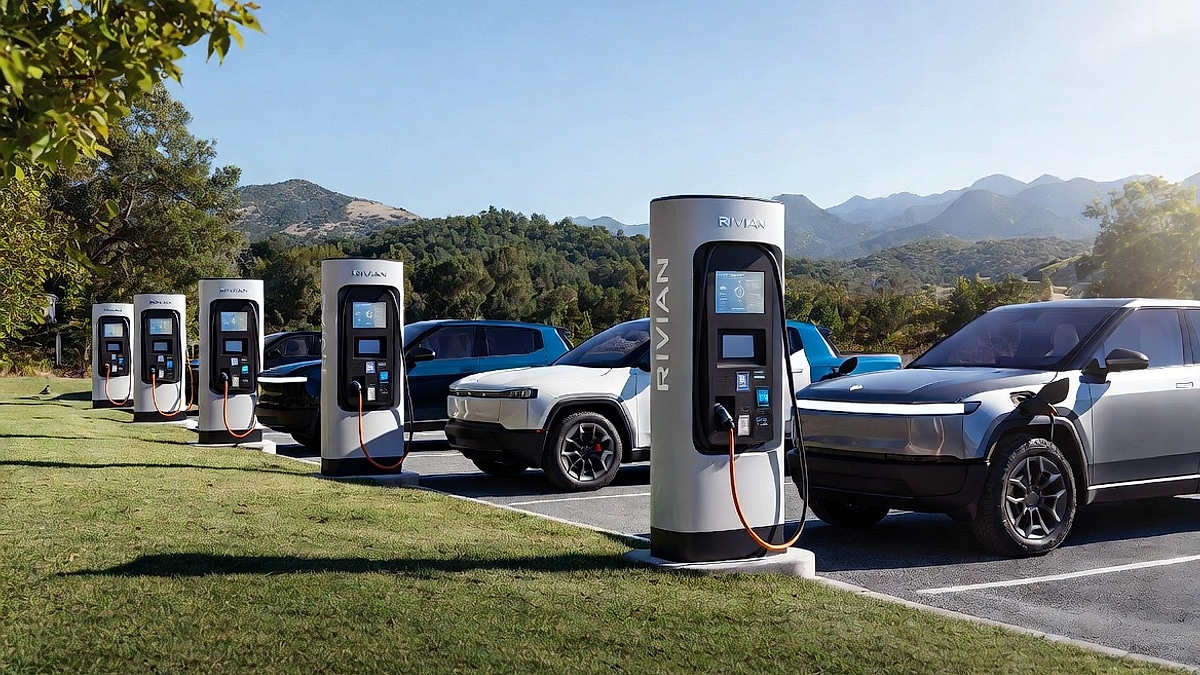
This is the paradox. The industry built complexity into a product that was supposed to replace a very simple act, pulling into a gas station, inserting a nozzle, and pumping fuel. The pump does not require a cloud connection.
We have covered similar frustrations at Torque News when examining why a Rivian owner hitting charging errors twice in one day started to worry about a deeper problem hiding behind the charger. The errors were recoverable but the anxiety they created was not.
The Tesla Wall Connector Lesson That Every Charging Network Needs to Learn
Badalian's experience at the campsite was the most important part of his story. The charger that worked was the simplest one on the property. No app. No account. No server sitting in a data center somewhere authenticating his session. The Tesla Wall Connector delivered 240 volts to his vehicle because that is what it is designed to do.
This is not an accident. Tesla has consistently prioritized the user experience of charging over everything else. The Tesla Supercharger network ranks highest in J.D. Power's satisfaction studies for both Level 2 and DC fast charging for that exact reason. Plug in and charge. The authentication happens automatically, at least for Tesla vehicles and now for many others through NACS compatibility.
We have reported here at Torque News on how Tesla is fixing charging transparency problems with new business tools and infrastructure goals, and the pattern is consistent. Tesla builds for the outcome, which is electrons moving into a battery, not for the software layer.
The Rivian chargers at Yosemite are built for a different outcome. They are built for data collection, billing control, and network management. All of those things have legitimate value. But they placed all of that infrastructure between the driver and the charge. And when any layer in that stack fails, the whole experience collapses.
Brad Templeton, a consultant on autonomous vehicles, replied to Badalian's post and noted that he had never had trouble with the Rivian chargers at the Yosemite lodge. He said they required no app or interface, just plugging in. That reveals another layer of the problem. The experience varies wildly depending on which station you find, what software version it is running, and what the network status is at that exact moment.
That inconsistency is itself a failure mode. Drivers cannot plan around infrastructure that works sometimes.
How Over-Engineering EV Charging Infrastructure Became a Business Model Problem
Badalian raised a point that deserves more attention than it usually gets. He asked what all of the networked complexity was actually for. His answer was direct. It was for VC metrics and user growth.
That is worth taking seriously. When a charging company raises venture capital, it typically has to demonstrate user acquisition, session data, and engagement metrics. A dumb charger that just works generates no data. It cannot report back to a dashboard. It cannot be monetized through subscriptions or dynamic pricing. It does not give an investor a compelling slide.
So the incentives pushed the industry toward complexity. Not because complexity serves the driver. Because complexity serves the business model.
Stephanie McGreevy from Battery Integrated DC Chargers pushed back thoughtfully in the LinkedIn thread. She argued that networks and software are not inherently the problem, but reliability has to come first. She made the point that the sites which actually succeed are not always the most sophisticated ones. They are the ones that work when a driver needs them.
That distinction matters enormously. We have seen at Torque News how managing multiple EV charging apps and charger networks is a real challenge that EV owners face on every long road trip. The community consensus is to plan ahead, verify charger status before departure, and always have a backup plan. That is a reasonable strategy. But it should not be necessary for something as basic as plugging in a car.
Badalian proposed an interesting solution. When a networked charger fails two consecutive connection attempts, it should default to dumb mode and simply deliver power at no cost to the driver. The financial incentive then falls on the network operator or site host to keep their equipment maintained. If failure means free charging, downtime becomes expensive very quickly.
That is actually elegant. It aligns business incentives with customer experience in a way that current models do not.
What EV Drivers Can Do Right Now When Public Chargers Fail Them
Let me give you something practical. Because you will face this problem if you own an EV and you drive to national parks, rural destinations, or unfamiliar charging networks.
First, use PlugShare to verify charger status before you arrive. Do not trust the map inside your car or the network's own app. PlugShare relies on crowdsourced check-ins from other drivers and shows recent failures in real time.
Second, carry enough buffer range to reach an alternative charger. When traveling to areas like Yosemite, plan your charge stop one step earlier than your car's navigation suggests. Build in a margin.
Third, know which networks your vehicle can access natively. A non-Tesla vehicle with a NACS adapter can now access the Supercharger network in many cases, which remains the most reliable public charging option in the country. We covered exactly this when reporting on how a Chevy Equinox EV owner completed a 320-mile road trip and found Tesla Superchargers outperformed Electrify America significantly.
Fourth, if you encounter a failed networked charger, try the other stalls at the same location before leaving. Sometimes the failure is specific to a single unit. We have covered how one Rivian owner hit charging issues on a road trip where a Tesla charger also died and ChargePoint was slow, and how switching stalls resolved part of the problem.
Fifth, report every failed session. To the network, to the site, and publicly on PlugShare. Data drives maintenance. Silence does not.
The Moral Case for Simpler and More Reliable EV Charging
There is an ethical dimension to this that almost nobody talks about.
EV adoption is being sold partly as a public good. Lower emissions. Less dependence on imported oil. Cleaner air for communities near highways and ports. Those are real benefits.
But if the charging infrastructure fails at a rate that makes EV ownership feel unreliable, the people who suffer most are not the early adopters with home charging and flexible schedules. They are the drivers who cannot install a home charger, who live in apartments, who depend on public infrastructure for every mile they drive.
Building a charging network that requires apps, accounts, and cloud connectivity to function is building a network that excludes people who lack the tech familiarity or the patience to troubleshoot software failures on the side of a road. A dumb charger that just works is not a lesser product. It is a more equitable one.
Stephan Johnson from Electrifying Transportation pointed out in the LinkedIn thread that the submetering model Badalian proposed works well when there is an accountable relationship between the user and the site host, like a campsite with known tenants. The challenge gets harder at fully public stations with anonymous visitors. That is a real constraint. But it is a solvable engineering problem, not a reason to abandon the goal of simplicity.
The charging industry should take the lesson from that Tesla Wall Connector at the Yosemite campsite very seriously. It did not need to be smart to be good. It needed to be reliable. And reliability, as Badalian discovered, converted his skepticism in a single session.
Every failed charge makes the case against EVs louder. Every effortless one makes the case for them quieter, in the best possible way. We have an obligation, as an industry, to build infrastructure that serves the driver first and the business model second.
That is not a naive position. That is the position that actually grows the market.
The lesson from that campsite in Yosemite is the same lesson that applies to any product in any industry. Complexity that the user cannot see is innovation. Complexity that the user has to manage is a failure. The wall connector got it right. The networked public charger got it wrong. And until the incentives shift, more drivers will leave charging stations with the same look on their face that Badalian described: "What else would we have expected."
We probably can do better than that. So do the communities that EVs are supposed to serve.
Have you ever pulled up to a public EV charger, found it listed as available, and been unable to get a charge started despite multiple attempts? And do you think the EV charging industry should be required to include a fallback mode that defaults to simple power delivery when networked authentication fails, and would that change how you plan your road trips? Tell us about your personal experience in the comments section below.
Images by Vartan Badalian and an Imagination of EV chargers at Yosemite based on his image, and the second image is just a public EV charging imagination.
About The Author
Armen Hareyan is the founder and Editor-in-Chief of Torque News and an automotive journalist with over 15 years of experience writing car reviews and industry news. Now based in the Charlotte region (Indian Land, SC, he founded Torque News in 2010, which since then has been publishing expert news and analysis about the automotive industry. He can be reached at Torque News on X, Linkedin, Facebook, and Youtube. Armen holds three Masters Degrees, including an MBA, and has become one of the known voices in the industry, specializing in the landscape of electric vehicles and real-world stories of actual car owners. Armen focuses on providing readers with transparent, data-backed analysis bridging the gap of complex engineering and car buyer practicality. Armen frequently participates in automotive events throughout the United States, national and local car reveals and personally test-drives new vehicles every week. Armen has also been published as an automotive expert in publications like the Transit Tomorrow, discussing how will autonomous vehicles reshape the supply chain, and emerging technologies in vehicle maintenance.
Set Torque News as Preferred Source on Google
Follow us today...



Comments
What the f do you think a…
Permalink
What the f do you think a gas pump at a gas station does?
Smh
Lol, this guy talking like…
Permalink
Lol, this guy talking like gas stations were always like this. When we went from horses to cars how easy do you think it was to find gas? My grandfather told me it's called pumping gas because there was a glass container at the top of the pump and you had to manually pump the gas into the tank then let it drain into your car and do it for every gallon. "Don't get an automobile, my horse just needs grass." Dude could have kept it really simple and just brought a horse and had free grass his entire vacation.
And THiS is why I bought a…
Permalink
And THiS is why I bought a Tesla not a Rivian POS.
Who's dumb enough to drive…
Permalink
Who's dumb enough to drive an electric vehicle to a national park in the middle of nowhere in the first place?
The batteries should charge…
Permalink
The batteries should charge while driving. How can we make a driverless car, but we can't make an EV that has enough alternators to charge it's own batteries while in motion? e. g. One on every axle...
Spot on. I tried to drive a…
Permalink
Spot on. I tried to drive a Leaf in California in 2017ish and am still scarred by the experience, all due to public charging. Now, as charging is getting a bit better, costs are soaring so my gas for long range driving is cheaper than electrons at 40mpg vs $0.49-$0.59 per kWh. (I drive a plug in now.) And they snake your data and surveil you for the privilege. No thanks.
My problem is when some…
Permalink
My problem is when some genius has their RV parked right in from of the chargers, blocking them all, when there is plenty of space in the empty parking lot that they could have used. It's like they know that they are making life hard for EVs and want them to suffer for their engine trouble too, supposing that their engine trouble is real.
You can have charged and left in the time waiting for them to move. (Three rivers)
Other times, there are simply not enough slots and no lines for slots, so people are like vultures looking to get into a slot as someone pulls out, but you hand no choice but to wait when it's the only charger in the city (Corpus Christi)
No doubt, there is a steep…
Permalink
No doubt, there is a steep learning curve to taking an EV on a multi-day road trip. I drove our Audi Q8 from Steamboat Sorings to San Francisco over Labor Day weekend, I’d loaded all the various apps, planned my stops, etc., but once on the road, reality set in. Rather than getting 250 miles between charging, it was closer to 200 miles. Running my AC impacted mileage a lot. Chargers in small towns were non-existent, broken, had unreadable screens, or almost worse in the blazing hot sun with no shade cover. Eventually, I figured out most Walmart’s have Electrify America plug ins—way back in their parking lots, with no shade cover—it was record heat that weekend—and that solved the issue on the second day of traveling. Bottom line, when the lease is up, we are back to a hybrid.
I had the same problem in…
Permalink
I had the same problem in Yosemite with the Rivian chargers in March 2026. In December 2025 the chargers worked perfectly, but in the 2 1/2 months between my 2 Yosemite trips, Rivian decided to monetize their charging network. After it didn't start charging my Tesla Model Y, I downloaded their app and signed up and added my credit card. It still didn't start charging my car. I did a google search and called them. Rivian could not locate their own chargers in Yosemite for the longest time. When he finally did, he tried multiple resets, and even had me try a different charging stall, still no luck. At the end of it, all he could say was sorry. At this point, after driving 4 hours from SF to Yosemite, I had very little charge remaining (16 miles to be exact). I drove back out of the valley to the Tesla Supercharger at the Yosemite View Lodge and plugged in. 25 minutes later and my car was back to 90%. I sent Rivian an email describing my displeasure with their system. Never got a reply. Btw, I have made multiple trips to Washington (state) from SF (and back) with NO ISSUES charging on the Supercharger network.
I had the same problem in…
Permalink
I had the same problem in Yosemite with the Rivian chargers in March 2026. In December 2025 the chargers worked perfectly, but in the 2 1/2 months between my 2 Yosemite trips, Rivian decided to monetize their charging network. After it didn't start charging my Tesla Model Y, I downloaded their app and signed up and added my credit card. It still didn't start charging my car. I did a google search and called them. Rivian could not locate their own chargers in Yosemite for the longest time. When he finally did, he tried multiple resets, and even had me try a different charging stall, still no luck. At the end of it, all he could say was sorry. At this point, after driving 4 hours from SF to Yosemite, I had very little charge remaining (16 miles to be exact). I drove back out of the valley to the Tesla Supercharger at the Yosemite View Lodge and plugged in. 25 minutes later and my car was back to 90%. I sent Rivian an email describing my displeasure with their system. Never got a reply. Btw, I have made multiple trips to Washington (state) from SF (and back) with NO ISSUES charging on the Supercharger network.
Early tesla charging had…
Permalink
Early tesla charging had inconsistent chargers at the beginning. Some stalls worked for me and not others or the reverse, not for me... once had to get my car port replaced, then it seems like the figured things out to make the tesla plug n play. I think the author hit the point, get your stall working consistently and make it simple.
Just took a 1200 mile round…
Permalink
Just took a 1200 mile round-trip in my Rivian R1S and had no problems with the Rivian or Tesla chargers. On a previous trip a Tesla charger wouldn’t start, it said my charge card was invalid on my Rivian account. Changed chargers and even changed credit cards but the thing that fixed it was rebooting the display computer in the Rivian. That was a one off but I think it would have really frustrated some people. That said, I know one of my friends won’t buy his wife EV because some EV chargers are all by themselves and he’s afraid of what might happen to her while she’s charging her car. My beef with the chargers is that they don’t have a way to wash your windshield. Both of these problems are taken care of when the charger is associated with an attended gas station. It was good to see some TA truck stops, advertising EV charging on their signs.
This is why I have not…
Permalink
This is why I have not purchased an ev. I want trips to be relaxing, not a test of my tech prowess
What is that about a gas…
Permalink
What is that about a gas pump not needing a cloud connection? It certainly does and sometimes they fail. What it doesn't have is an app to control it the pump.
I don't have an EV, nothing…
Permalink
I don't have an EV, nothing against EVs, and rooting on the people that have them. But nothing works properly these days. Nothing is fast and easy. I cannot get half the GD gas pumps to work properly, I wouldn't expect some EV chargers in a remote area to work properly either.