
As electric vehicle sales climb across the United States, it seems obvious to assume that the electrical grid must deliver a massive new wave of energy. Even with minor losses of heat in home charging systems and the electrical transmission system, the surprising truth is that the grid impact is smaller than many expect. Electric vehicles simply need far less energy to move people and goods than gasoline powered cars. With today’s electricity mix, an EV uses roughly half the total energy required by a comparable internal combustion vehicle to travel the same distance.
It's interesting to see the social media EV community discuss ways to find inefficiencies and make improvements. Here and interesting post on the Hyundai Ioniq 5 Facebook group page by David Meiland:
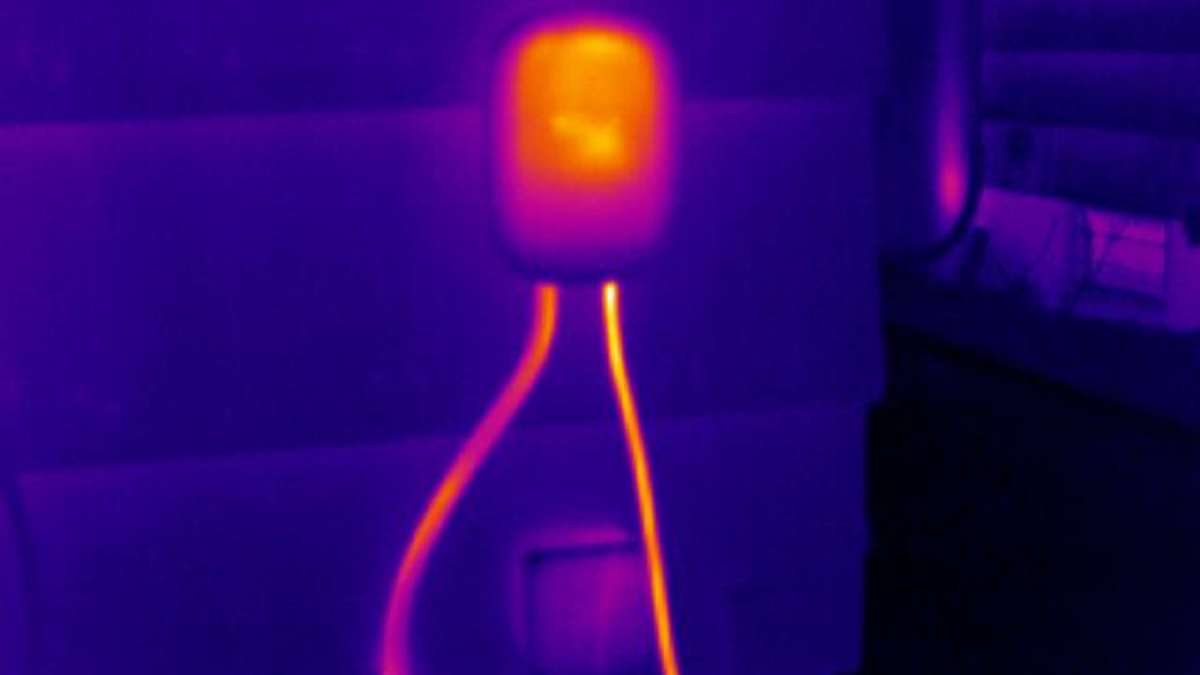
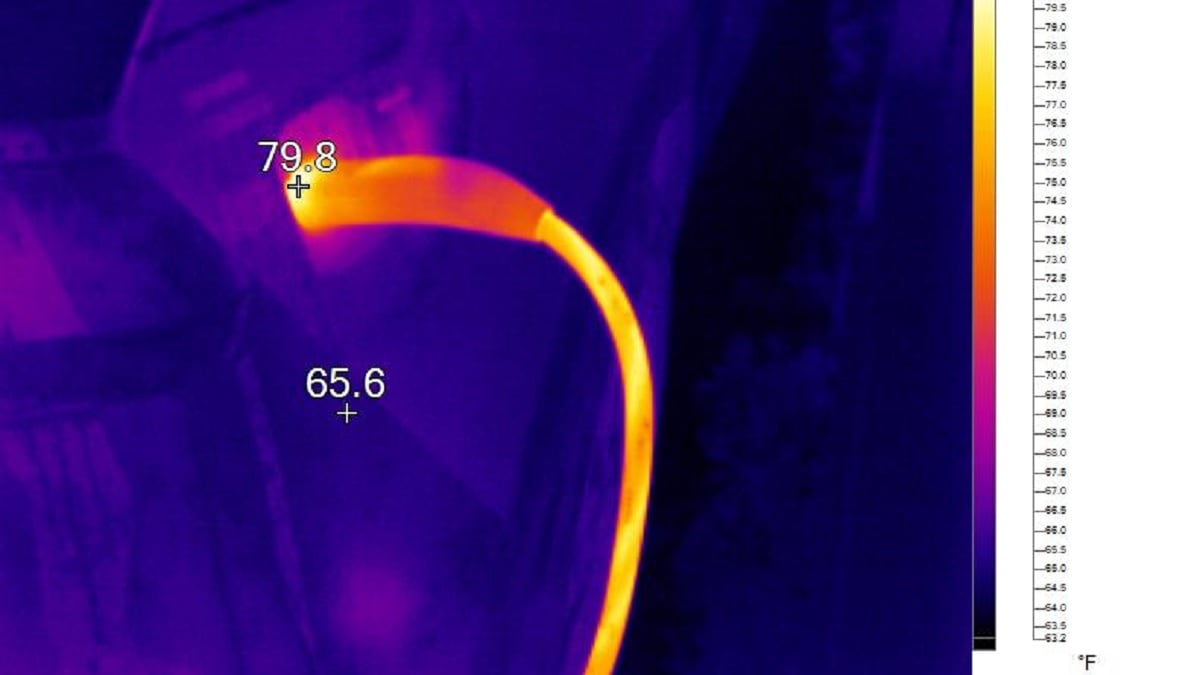
“Here's where some of the power that you pay for when charging your car gets lost. In the thermal images, the orange/yellow areas are warm and the blue/purple areas are cold. The waste heat from the charger cord and the charger itself are helping to heat the night sky.”
Cory MacSween suggested design changes to reduce heat loss/energy waste:
“If the cord had less resistance there would be less heat, meaning less waste. On the other hand, if they went with a thicker gauge wire, people would be complaining about cost and how awkward the cable is to handle.”
Christopher Marshall brings it home with his comment comparing about gas cars”
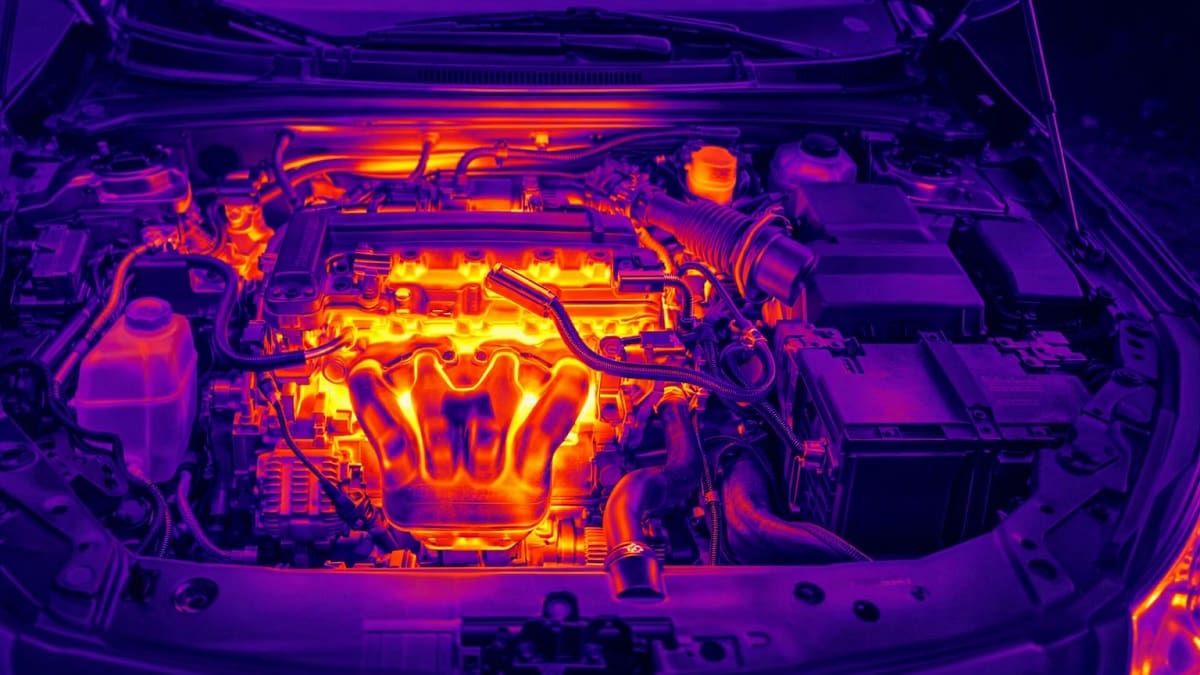
“Just for comparison, point that at your gas car after a drive, half the car will be glowing from inefficiency.”
Why Gas Engines Waste So Much Energy
Americans still burn close to 8.9 million barrels of gasoline each day, which works out to just over one gallon per person. Even after a modest decline from peak usage in 2018, this remains an enormous amount of energy consumption. Most of that energy never reaches the wheels of a gas-powered car because roughly 80% of the energy in gasoline is lost as heat when fuel burns inside the engine. This heat is an unavoidable consequence of thermodynamics. Engines must get hot to operate, yet that heat does not help move the car, as it escapes through exhaust, cooling systems, and engine surfaces.
Why EVs Are Inherently More Efficient
Electric vehicles lose only about 11% of their energy during operation. Most of the electricity delivered to the vehicle ends up turning the wheels. EVs avoid the thermal penalty of combustion because they do not burn fuel. Regenerative braking further improves efficiency by capturing energy that would otherwise be lost during slowing. The result is a drivetrain that converts energy into motion with far less waste.
What About the Energy Wasted to Produce Electricity to Charge EV Batteries
Electricity must be generated somewhere, and fossil fuel power plants also waste energy. Coal, oil, and methane gas plants burn fuel to create steam that spins turbines, releasing a large share of energy as heat. Even so, these power plants outperform car engines by a wide margin. A coal plant loses about 68% of its energy, which is still better than the roughly 80% loss inside a gasoline engine. An EV charged entirely from coal still uses less total energy than a gasoline car. Methane gas plants are more efficient than coal, cutting energy use roughly in half compared with gasoline vehicles.
How Renewables Change the Equation
Renewable energy dramatically improves the picture. Wind, solar, and hydropower avoid combustion entirely, which eliminates most energy loss at the generation stage. Wind turbines spin without fuel, hydroelectric dams use moving water, and solar panels convert sunlight directly into electricity. Pairing renewable electricity with an efficient electric vehicle can reduce total driving energy needs by as much as 77%. This combination delivers both lower emissions and lower energy demand.
Solar is the unsung renewable hero. It has gotten shockingly cheap in just the last few years, to the point where it is now one of the least expensive ways to add a new kilowatt of electricity. New utility scale solar is typically about 30% to 50% cheaper than the cheapest fossil fuel alternative, usually natural gas. Renewable energy expert, Bill McKibben has pointed out that this cost collapse has been faster and deeper than almost anyone predicted. Deployment speed also matters. A new solar power plant can come online in roughly 90 days, while thermal plants often take about five years due to long turbine lead times.
Why Location Matters
Electricity mixes vary widely by state, with some regions relying more on coal and others leaning heavily on renewables. Because of this variation, the energy savings from switching to EVs differ by location. States with cleaner and more efficient electricity grids unlock the biggest gains, though every region still benefits from EV efficiency compared to gasoline vehicles.
How Heat Loss Limits Gas Engine Performance
Heat loss inside a gasoline engine acts like extra weight slowing a runner. Fuel combustion releases heat, yet much of that heat escapes through cylinder walls, coolant, and exhaust before it can do useful work. This loss lowers thermal efficiency and reduces the pressure and temperature that drive the pistons. Warmer cylinder walls also heat incoming air, making it less dense and limiting oxygen intake. The result is reduced power, lower efficiency, and higher emissions. Engineers work to balance cooling and heat retention, but combustion engines remain constrained by physics. It’s simply impossible to design a gas engine that comes anywhere close to the efficiency of a battery electric vehicle.
Bottom Line
Electric vehicles like the Hyundai Ioniq 5 demand less energy not because the grid works harder, but because the technology wastes far less. Gasoline engines lose most of their energy as heat, while EVs convert electricity into motion with remarkable efficiency. Even when electricity comes from fossil fuels, EVs still outperform gasoline cars. As renewable energy expands, the advantage grows even larger. The shift to electric driving is not just cleaner, it is fundamentally smarter from an energy perspective.
The Hyundai Ioniq 5
The Hyundai Ioniq 5 is a sharp looking, easy to live with electric vehicle that blends impressive performance with everyday practicality. It launched in the U.S. for the 2022 model year and quickly stood out thanks to its futuristic design, roomy interior, and fast charging capability using an 800-volt electrical system. Those features let it add meaningful range in a short charging stop, which still sets it apart from many EVs. Pricing typically starts in the mid thirty-thousand-dollar range and can climb into the low fifty thousands depending on trim and options. The Ioniq 5 is sold as a five-seat compact crossover SUV.
What Do You Think?
Have you ever used a thermal camera or energy monitor to see where charging losses show up on your own EV?
How does this kind of energy loss compare in your mind to what you see or smell from gas cars after a drive?
Chris Johnston is the author of SAE’s comprehensive book on electric vehicles, "The Arrival of The Electric Car." His coverage on Torque News focuses on electric vehicles. Chris has decades of product management experience in telematics, mobile computing, and wireless communications. Chris has a B.S. in electrical engineering from Purdue University and an MBA. He lives in Seattle. When not working, Chris enjoys restoring classic wooden boats, open water swimming, cycling and flying (as a private pilot). You can connect with Chris on LinkedIn and follow his work on X at ChrisJohnstonEV.
Photo credit: David Heiland (with permission), Provided by author
Set Torque News as Preferred Source on Google
Follow us today...